
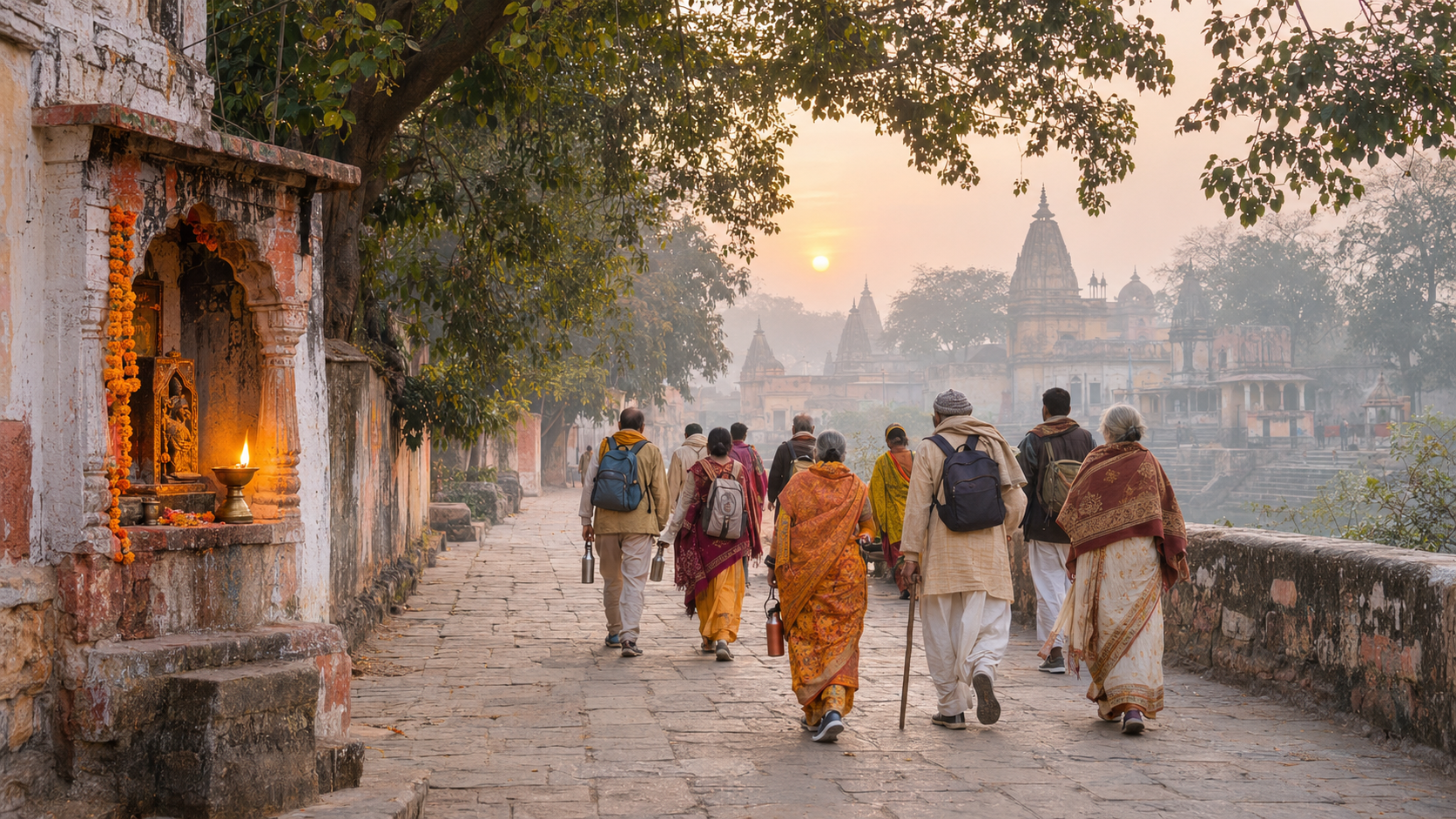
If Kartik Yatra 2026 has moved from something you were watching to a journey you may actually join, your next decision is practical: do you have enough confirmed information to leave home without avoidable confusion?
Kartik Yatra 2026 has reached a public ready-to-serve stage. That answers whether preparations have advanced to an invitation. It does not establish that your registration, transport, accommodation, health needs, or place in the group are settled. Use the checklist below to turn a general readiness signal into a responsible personal decision.
Confirm the facts before you commit money or travel

An event can be ready while your participation remains unconfirmed. Treat those as separate facts. Before you pay, book onward travel, or leave home, obtain written answers to the questions that determine whether the journey is workable for you.
- Registration: Is your place confirmed, wait-listed, or merely requested? What document, message, or receipt proves your status?
- Reporting: What are the exact date, local time, and assembly point? Ask for a map pin or an unmistakable landmark, not only a place name.
- Completion: Where and when does the organized programme end? Do not assume that the dispersal point is the same as the assembly point.
- Transport: Which journeys are organized, which are optional, and which must you arrange yourself?
- Accommodation: What kind of sleeping arrangement is provided, on which nights, and what must you bring?
- Meals: Which meals are included, what dietary arrangements are available, and when must special needs be disclosed?
- Physical demands: How much walking, standing, stair use, or carrying should participants expect? Is assistance available for reduced mobility?
- Cost: What does the stated amount include? What remains payable during the journey?
- Changes and cancellation: What happens if the schedule changes, you cannot attend, or the organizers cannot provide a promised arrangement?
- Contact: Who is the responsible coordinator before departure, and which number should your household use if it cannot reach you?
You can copy this message and adapt it: Please confirm my registration status, the exact reporting and dispersal details, what transport, accommodation, and meals are included, the expected physical demands, the total payment and cancellation terms, and the coordinator’s contact number. A clear reply gives you something concrete to plan from. A verbal assurance that everything will be managed does not.
Pause if the recipient will not identify the organizer, will not explain what a payment covers, pressures you to transfer money without a receipt, or avoids giving an exact joining point. Devotional urgency is not a substitute for administrative clarity. The safe choice is to keep your money and postpone travel until the essential terms can be verified in writing.
Build a door-to-door plan, not just a yatra itinerary

The organized programme covers only part of your journey. Your real itinerary begins when you leave home and ends when you return. Put the entire route on a single sheet: your outbound connections, reporting point, coordinator’s number, accommodation, dispersal point, return booking, and the person at home who has a copy.
Mark every handoff that depends on somebody else. If a train, flight, bus, driver, or group vehicle must connect with another leg, decide what you will do if the first leg is delayed. Do not build an essential connection around an assumed pickup or an unconfirmed arrival time. If missing that connection would leave you stranded, get the arrangement confirmed or choose a route you can manage independently.
Keep registration proof, identity documents, tickets, addresses, and emergency contacts available offline. A screenshot or printed copy remains usable when mobile data, battery power, or signal quality does not. Share the itinerary with a trusted person at home, but do not circulate identity documents or payment details in open messaging groups.
Pack for self-sufficiency without turning your luggage into somebody else’s responsibility. Your actual list should follow the confirmed route and conditions, but these groups cover the essentials:
- Documents and access: registration confirmation, identification required for the journey, tickets, addresses, coordinator details, and any entry information supplied by the organizers.
- Health and comfort: clearly labelled prescribed medicines, necessary mobility aids, suitable footwear, basic personal-care items, and any food or water you must carry because a need has been agreed in advance.
- Communication: a charged phone, charging cable, power bank where permitted, and offline copies of critical information.
- Worship: only the compact items needed for your own practice and permitted by the programme, transport provider, accommodation, and temples concerned.
- Clean travel: a refillable water container where practical and a small bag for personal waste when disposal is not immediately available.
If you have a condition affected by travel, crowds, exertion, altered meal times, or interrupted sleep, ask the organizers what support actually exists. Do not assume that volunteers can provide medical care. Discuss material travel risks with an appropriate clinician, keep necessary treatment accessible, and tell a trusted companion what help you may need. If essential support cannot be confirmed, changing or declining the journey is the responsible decision.
Prepare your physical capacity and your sadhana together
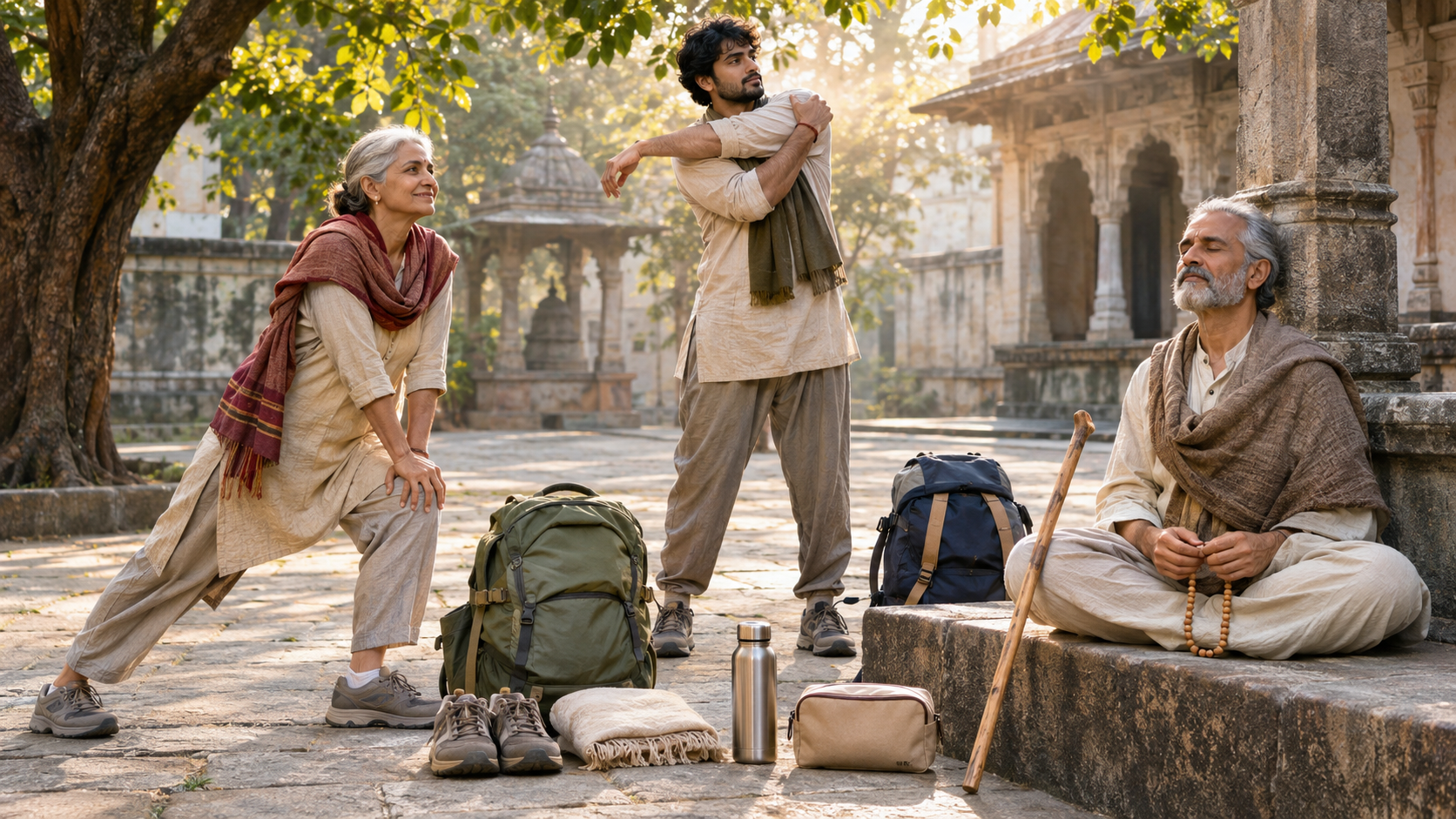
A yatra becomes harder when devotional intention outruns practical capacity. First obtain an honest description of the programme: walking distance, periods of standing, stairs, terrain, rest opportunities, sleeping arrangements, washroom access, and the pace expected from the group. Then compare those demands with what you can ordinarily do, not with what you hope determination will make possible.
If the demands are within reach, prepare through comparable ordinary activity and use footwear you already know is comfortable. If they are not, request an accommodation before arrival. Do not wait until the group is moving to disclose a mobility, dietary, or medical need. Early notice gives coordinators a chance to answer honestly; it also gives you time to make another plan if they cannot support you.
Your spiritual preparation should be just as concrete. Kartik practice is not identical across every sampradaya, community, or household. Ask which observances, dress standards, temple protocols, and daily practices the programme expects. That prevents two opposite errors: arriving unprepared for a genuine requirement, or imposing a practice from elsewhere on the people hosting the yatra.
Choose a simple sankalpa you can keep without competing with the group schedule. It might concern the attention you bring to prayer, the speech you use with fellow pilgrims, the discipline with which you follow the programme, or the habit you intend to continue after returning. The point is not to collect the most demanding promises. It is to make the journey coherent.
Do not use austerity to conceal a health risk. Any fasting or change in medication, hydration, sleep, or diet must remain compatible with your actual needs and professional medical advice where relevant. Spiritual seriousness is not measured by ignoring warning signs or creating an emergency that others must manage.
Let your conduct make the yatra easier for others
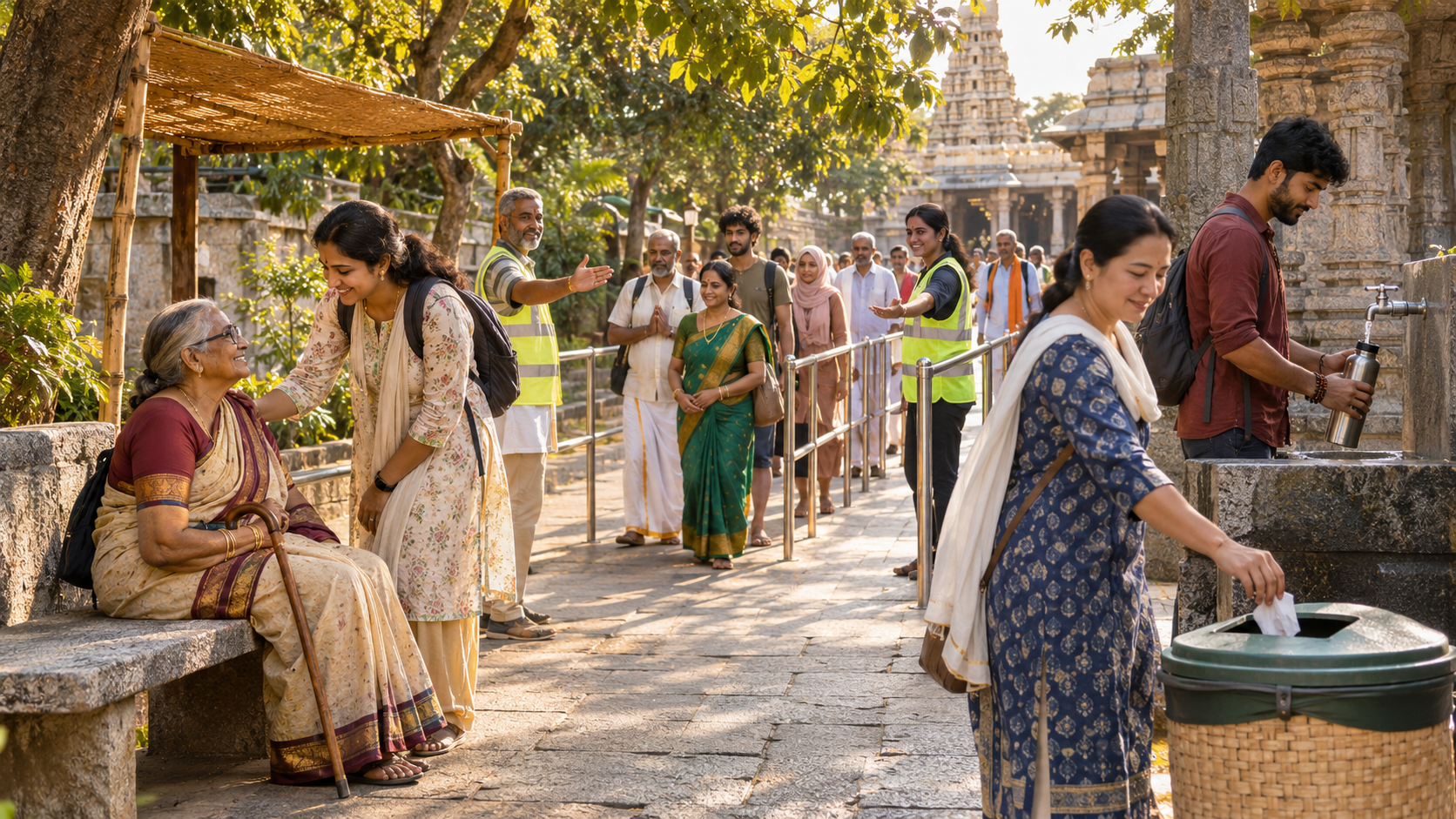
A dharmic journey is shaped by how you move through a shared space. The schedule, queues, vehicles, rooms, meals, and sacred places all depend on cooperation. Treat that cooperation as part of the practice rather than as an inconvenience surrounding it.
- Reach reporting points before the stated time and tell the coordinator promptly if a delay becomes unavoidable.
- Follow local temple, photography, footwear, dress, silence, and queue instructions even when your home practice is different.
- Ask before photographing or recording another pilgrim. A public pilgrimage does not erase a person’s privacy.
- Keep your belongings within your assigned space and carry what you bring unless assistance has been agreed.
- Use water and shared facilities considerately. Remove your own waste instead of leaving devotional materials or packaging for somebody else.
- Offer help through the coordinator when the group is under pressure. Independent intervention can obstruct an existing plan, even when the intention is generous.
- Address friction quietly and directly. Public argument can turn a solvable logistical problem into a disturbance for the whole group.
Before ordinary routines take over after the journey, decide what will remain. Keep the continuation modest and definite: a prayer, a reading discipline, a form of service, a restraint in speech, or another practice appropriate to your tradition. A yatra bears fruit in daily conduct, not merely in the number of places reached.
Key takeaways
- Event readiness does not prove that your registration or personal arrangements are confirmed.
- Get the reporting point, dispersal point, inclusions, payment terms, cancellation terms, physical demands, and coordinator contact in writing.
- Plan from your front door to your return home; do not assume the organized yatra covers every connection.
- Keep critical documents and contacts offline, and give a trusted person your itinerary.
- Compare the programme’s demands with your real capacity and disclose essential needs before departure.
- Choose a sustainable sankalpa, respect the hosting tradition, and treat punctuality, privacy, cleanliness, and cooperation as part of the pilgrimage.
Your next move is straightforward: send the verification message, build your door-to-door plan from the reply, and make your go-or-no-go decision from confirmed facts. Once those details are settled, you can enter the yatra with less distraction and give Kartik the attention you intended to bring.
References

Leave a Reply
You must be logged in to post a comment.