
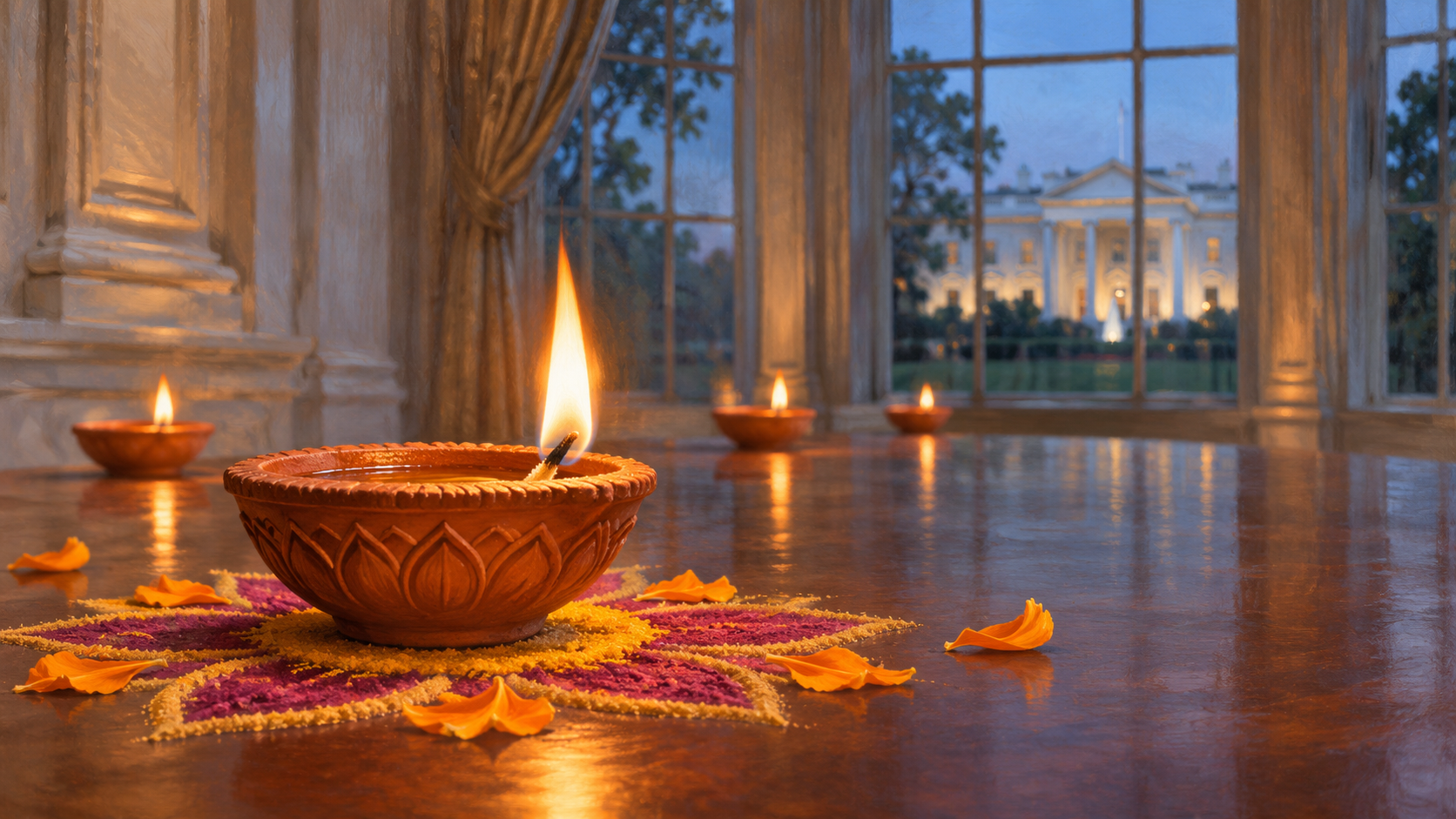
If you saw a diya burning in the White House and wondered whether it represented genuine recognition or merely political theatre, resist both easy answers. The ceremony carries real cultural weight. It also becomes durable only when Hindu Americans turn visibility into understanding, relationships and civic participation.
President Donald Trump joined the White House Diwali celebration and lit traditional diyas with Indian-American guests and members of his administration. Vishal Gondal also presented him with a copy of the Hanuman Chalisa. Those acts did not create the legitimacy of Diwali, which needs no presidential permission. They did place recognisably Dharmic symbols inside one of the world’s most visible seats of political power.
Key takeaways
- A presidential diya-lighting gives Diwali public recognition, but it should not be mistaken for a policy achievement.
- The continuity from George W. Bush through Barack Obama to Donald Trump matters more than partisan claims of ownership.
- The diya and Hanuman Chalisa should be named accurately. Reducing Diwali to a generic celebration of light strips away the tradition being recognised.
- The guest list showed Indian-American presence across government, diplomacy, business, food and entrepreneurship.
- The useful next step is to turn a ceremonial invitation into continuing civic access, accurate public education and local institutional relationships.
Why a diya in the White House matters
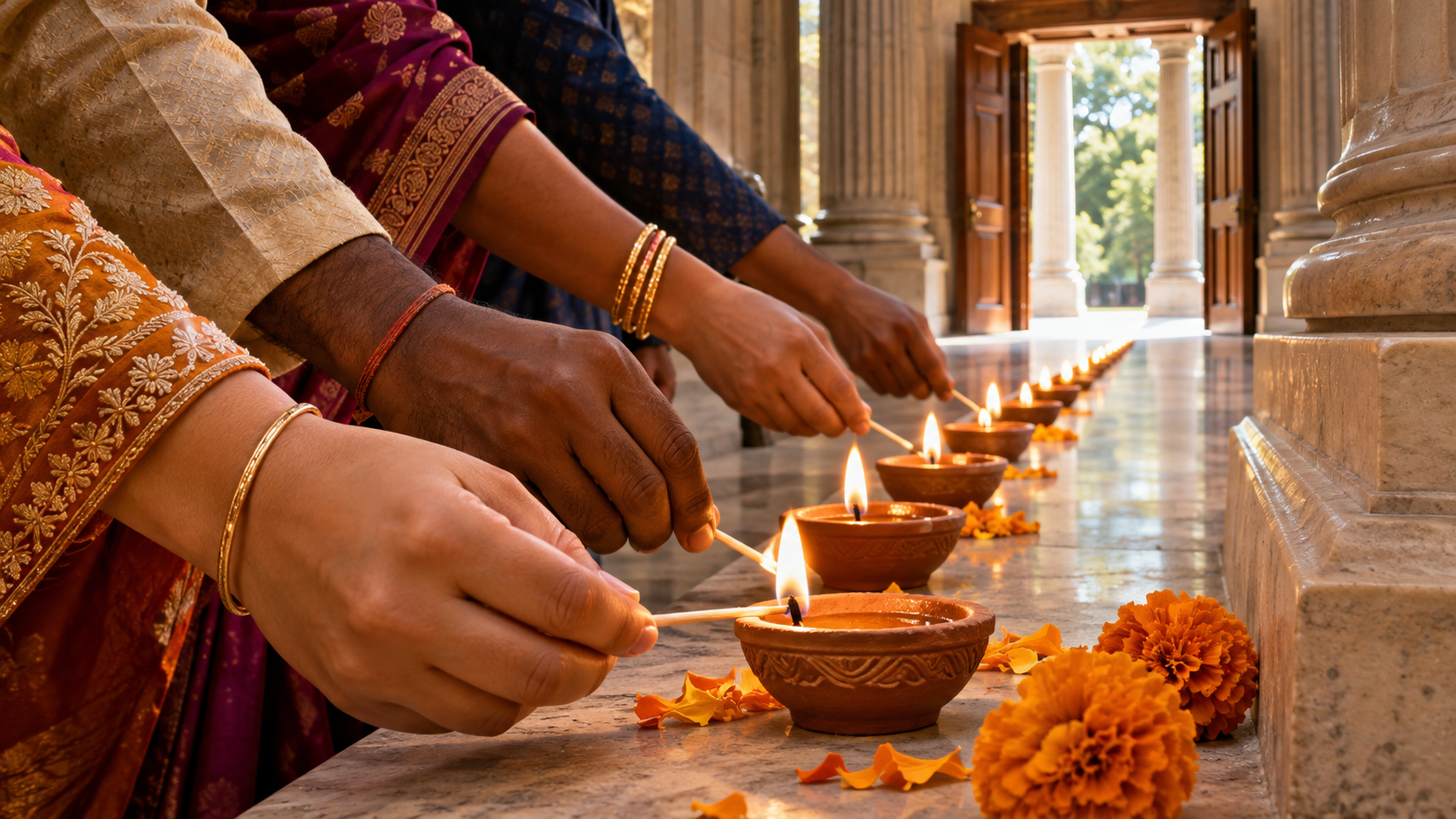
The White House is more than a residence or office. It is a stage on which the United States indicates which people, events and traditions belong within its national story. When a president personally lights a diya, Diwali is no longer being treated solely as something observed inside homes, temples or immigrant neighbourhoods. It is being acknowledged as part of American civic life.
That distinction matters to a Hindu family raising children in the United States. A child should not have to choose between an American public identity and a Hindu religious inheritance. Seeing a familiar sacred object handled respectfully in a national institution can help make that combination seem ordinary rather than defensive.
Yet recognition must not become dilution. A diya is not simply an attractive seasonal lamp. Within Hindu practice, light carries meanings connected with worship, auspiciousness, knowledge and the overcoming of darkness. Diwali itself has several regional and sampradaya-specific narratives and practices. Jain and Sikh observances around the same festive period also have their own histories, which should not be collapsed into a single vague story.
When you explain the White House ceremony to a colleague, classroom or civic group, call it Diwali and call the object a diya. Then explain the meaning your family or tradition gives the festival. You do not need to manufacture one universal account to make the celebration accessible. Honest specificity is a stronger form of inclusion than a description so broad that no living tradition remains.
This is also why Hindus should avoid speaking as though the White House bestowed legitimacy on the festival. The ceremony recognised a reality built over generations by families, temples, cultural organisations and community volunteers. The diya did not become important because it entered the White House. Its presence made the White House more representative of the society beyond its gates.
The guests and the Hanuman Chalisa made the event more specific
The identities in the room reveal more than a ceremonial photograph. The gathering included FBI Director Kash Patel, India’s Ambassador Vinay Mohan Kwatra, IBM CEO Arvind Krishna, chef Vikas Khanna and entrepreneur Vishal Gondal. That combination connected public service, Bharat-US diplomacy, corporate leadership, cuisine and entrepreneurship. It showed that Indian-American public presence is not confined to one profession or one route into civic life.
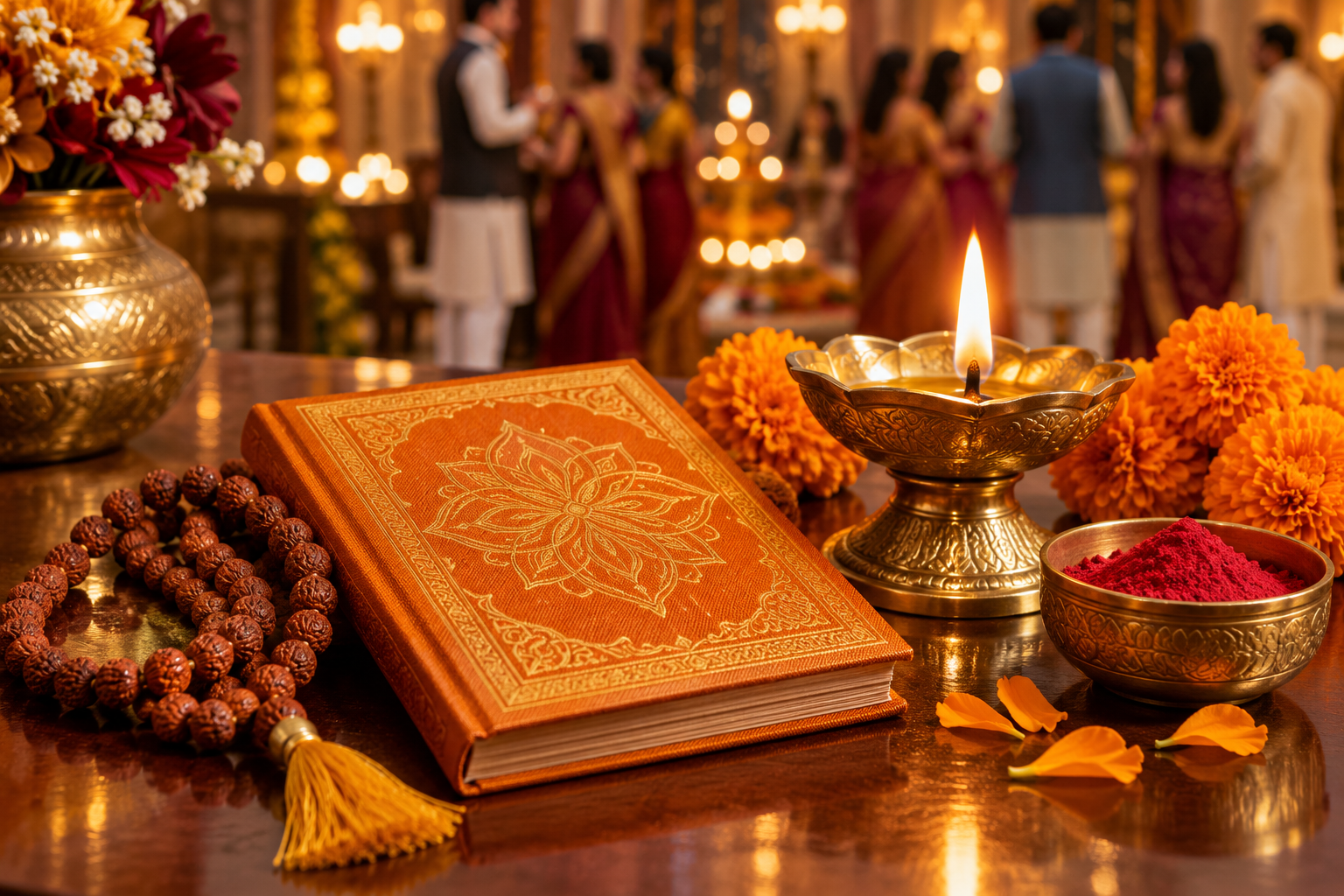
The presentation of the Hanuman Chalisa added a different kind of significance. The Chalisa is a widely recited devotional hymn honouring Hanuman. A copy entering the ceremony brought an explicitly Hindu object into a setting that could otherwise have remained at the level of food, clothing and decorative lamps.
That does not mean the White House adopted the text, endorsed its theology or incorporated it into an official observance. Nor does the available account establish that Trump read or recited it. The accurate statement is both simpler and stronger: Gondal presented Trump with a copy of the Hanuman Chalisa.
This precision matters when you share a photograph or video. Social media enthusiasm can quickly turn a meaningful event into an exaggerated claim. Preserve four details: identify Diwali, name the diya, name the Hanuman Chalisa and describe the presentation without inventing a presidential endorsement. Accuracy protects the credibility of Hindu advocacy.
The event also offers a practical lesson for future organisers. A Diwali reception should include more than prominent names. It needs at least one participant capable of explaining the ritual and theological meaning of what is being displayed. Business and political access are valuable, but they cannot substitute for Dharmic literacy. Otherwise, a Hindu celebration can become culturally visible while remaining religiously unintelligible.
Continuity across administrations is the larger achievement
Diwali’s White House presence has extended across the George W. Bush, Barack Obama and Donald Trump eras. These administrations differed sharply in politics, priorities and constituencies. The festival’s appearance across them indicates that recognition has begun to outlast a single president.
That is more consequential than allowing one party or political personality to claim Diwali as its possession. A tradition becomes institutionally secure when officials with different ideologies understand that it belongs in the public calendar. Hindu Americans should therefore welcome respectful participation from any administration while retaining the freedom to judge every administration independently.
Use two separate ledgers. On the first, record symbolic inclusion: Did the president participate personally? Was the ritual identifiable? Were Hindu and Indian-American participants named? Was the celebration treated respectfully? On those measures, lighting a diya and receiving a Hanuman Chalisa are meaningful.
On the second ledger, examine substantive conduct: Does the administration maintain serious engagement with Hindu communities? Does it hear Hindu voices when issues affecting them arise? Does it approach relations with Bharat with knowledge rather than stereotype? Does public recognition continue after the festive photographs disappear?
Do not transfer credit automatically from one ledger to the other. A Diwali ceremony cannot prove that every policy is favourable, just as disagreement with a policy does not make the ceremony meaningless. Symbolism and policy can reinforce each other, but neither should be used to conceal the other.
This distinction keeps Hindu participation politically mature. Gratitude for a respectful gesture need not become unconditional loyalty. Criticism of an administration need not require contempt for every gesture it makes. A community confident in its own place can recognise progress, identify limits and continue asking for substance.
Turn ceremonial visibility into durable civic presence
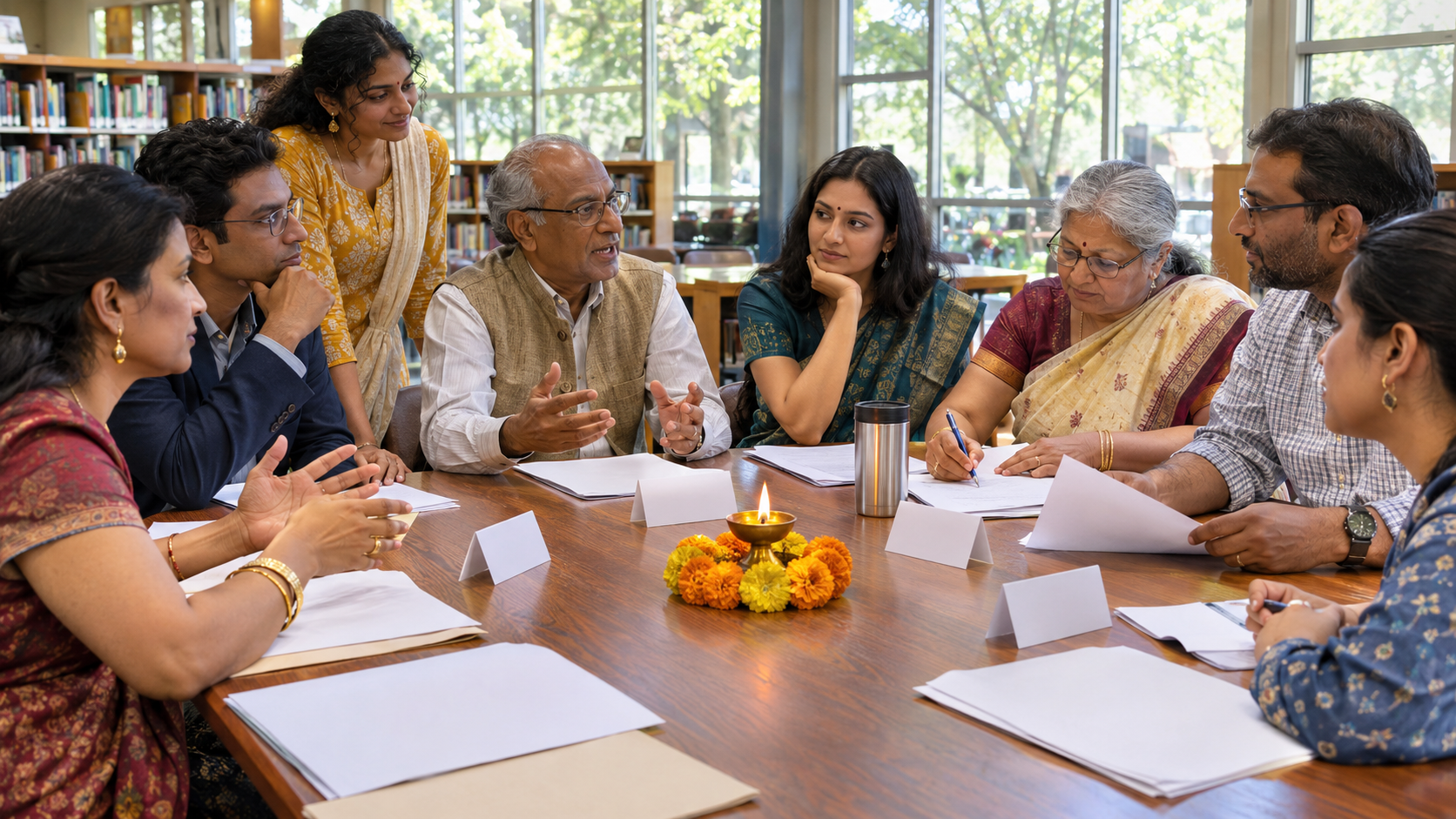
The White House celebration did not emerge in isolation. The wider American landscape included a Times Square celebration on October 24, 2026, festivities attended by thousands at the BAPS Shri Swaminarayan Mandir in Chino Hills, and first Diwali ceremonies involving six Pacific Northwest governors and 21 city mayors. Federal visibility is most durable when it rests on that kind of local civic depth.
If you help run a temple, student association, professional network or cultural organisation, the next move is not to wait for another national invitation. Use the White House moment as an opening for work you can sustain where you live.
First, document the event accurately. Preserve the date, location, participants, photographs, official wording and exact ritual actions of every public Diwali programme your organisation joins. A reliable archive helps future organisers demonstrate continuity and prevents community history from being reduced to fading social-media posts.
Second, prepare a clear Dharmic explanation. Give public officials and their staff a brief account of what Diwali means, why a diya is lit and how practices can differ among communities. Avoid both unexplained Sanskrit vocabulary and generic language that removes the festival’s Hindu roots. Accessibility and accuracy can coexist.
Third, turn the invitation into a relationship. After a ceremony, ask which staff member will remain the community contact. Return before the next festival with a defined request or offer: a temple visit, a discussion with community representatives, an educational session or help with an accurate civic proclamation. A photograph records access for a moment; a known contact makes access reusable.
Fourth, include religious competence alongside public prominence. Executives, diplomats and public officials can open important doors. Priests, acharyas, scholars and informed practitioners can explain what is passing through those doors. A balanced delegation prevents Diwali from becoming an ethnic networking reception decorated with sacred objects no one is asked to interpret.
Fifth, track follow-through. Note which offices maintain contact, repeat the observance, improve their language or engage the community outside the festive season. This gives you a basis for deciding where to invest volunteer energy. It also lets you thank genuine partners without confusing a single appearance with a lasting commitment.
Individual readers can do something simpler. When you share the White House celebration, add a short explanation of the diya or Hanuman Chalisa from within your own tradition. If a school, workplace or local authority marks Diwali, check whether its language is accurate. Offer a correction or explanation when it is not. Public understanding grows through repeated, careful acts of interpretation.
The right response to Diwali at the White House is neither gratitude without questions nor suspicion without purpose. Receive the ceremony as evidence that Dharmic visibility has advanced. Protect the religious meaning that made the moment worth celebrating. Then choose one institution already within your reach and make the relationship continue after the lamps have been put away.
References

Leave a Reply
You must be logged in to post a comment.