
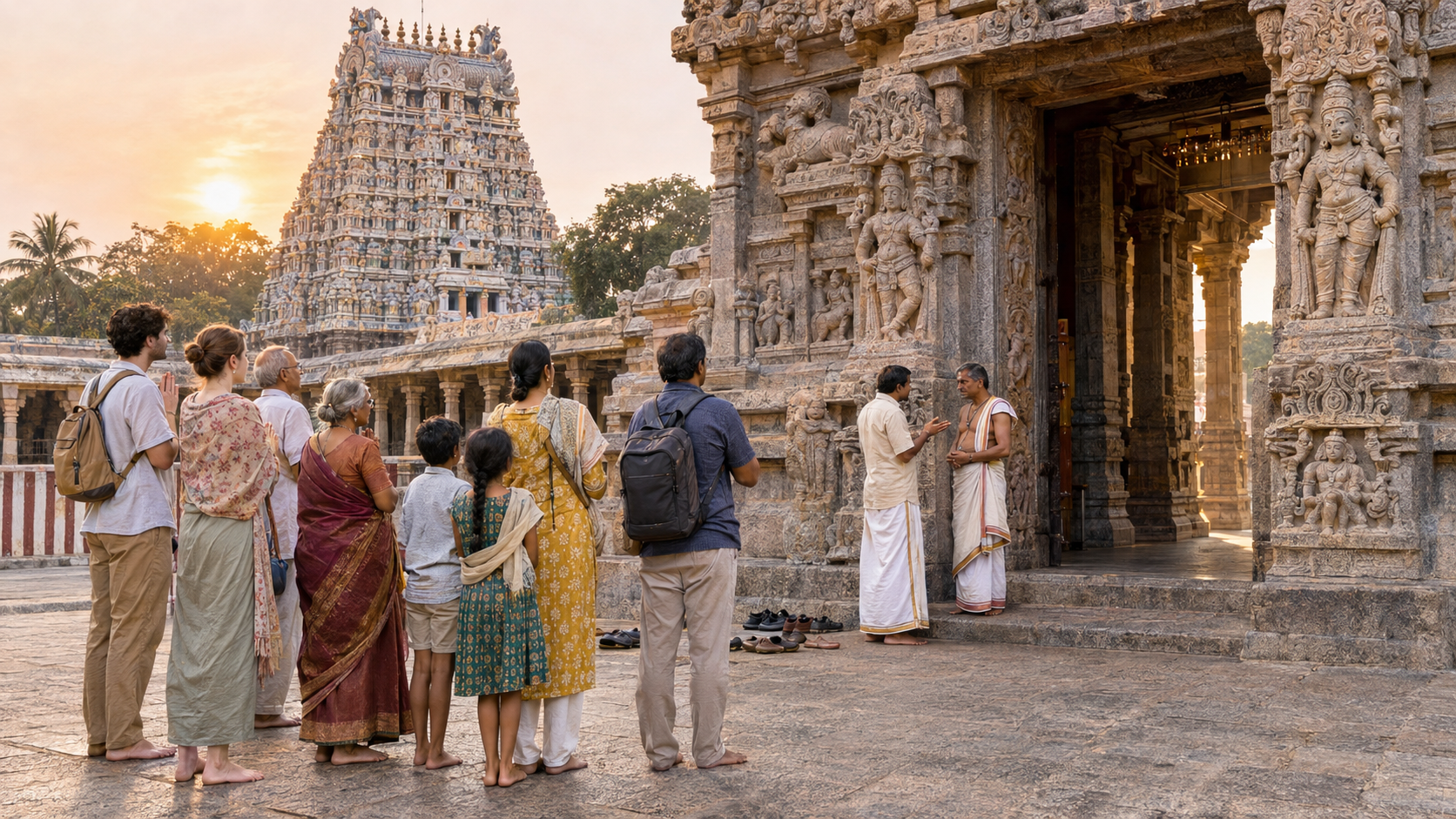
You may be planning to take a non-Hindu spouse, friend, colleague, or overseas guest to a temple in Tamil Nadu. A statewide yes-or-no answer will mislead you. The useful questions are whether the particular temple is Agamic, what it requires a visitor to affirm, and which sacred spaces its rules permit that visitor to enter.
The Madras High Court’s October 2026 ruling protects the integrity of Agamic worship while leaving room for a non-Hindu who sincerely reveres the presiding deity and follows the temple’s customs. That is a conditional path, not an unrestricted visitor pass. Here is how to understand the boundary and avoid a dispute at the entrance.
The answer depends on the temple, the visitor, and the intended access
For an Agamic temple, a non-Hindu who will not affirm reverence for the presiding deity or comply with established temple customs cannot be admitted. The ruling was expressly confined to temples built, consecrated, and maintained under the Agama shastras. It should not be turned into either of two inaccurate slogans: that every non-Hindu may enter every Tamil Nadu temple, or that every non-Hindu is automatically barred from every temple in the state.
Three separate questions therefore matter:
- Is this an Agamic temple? The court’s conditions were framed for that class of temple, not for every religious or heritage site in Tamil Nadu.
- Can the visitor sincerely affirm reverence for the presiding deity? Curiosity, admiration for architecture, or ordinary politeness is not the same claim.
- Will the visitor follow the temple’s established customs and spatial restrictions? Willingness to behave respectfully does not create access to areas that the ritual order reserves for others.
Meeting the stated conditions should not be treated as a guarantee of admission to every part of a temple. The temple’s classification, governing customs, posted notices, and entry procedure still matter. Nationality does not settle any of these questions: an Indian can be a non-Hindu, while a foreign visitor can approach a Hindu deity with genuine devotion.
The bench considered a petition seeking enforcement of the Tamil Nadu Temple Entry Authorisation Act and cited Sections 10 and 24 of the HR&CE Act. This means the issue is not merely a disagreement about etiquette. It sits at the intersection of statutory administration and a temple’s ritual discipline. If you are challenging a refusal or acting for a temple in a contested case, obtain the order and advice from a lawyer familiar with Tamil Nadu temple law; this general explanation cannot decide an individual dispute.
Why Agamic status must be checked before you travel
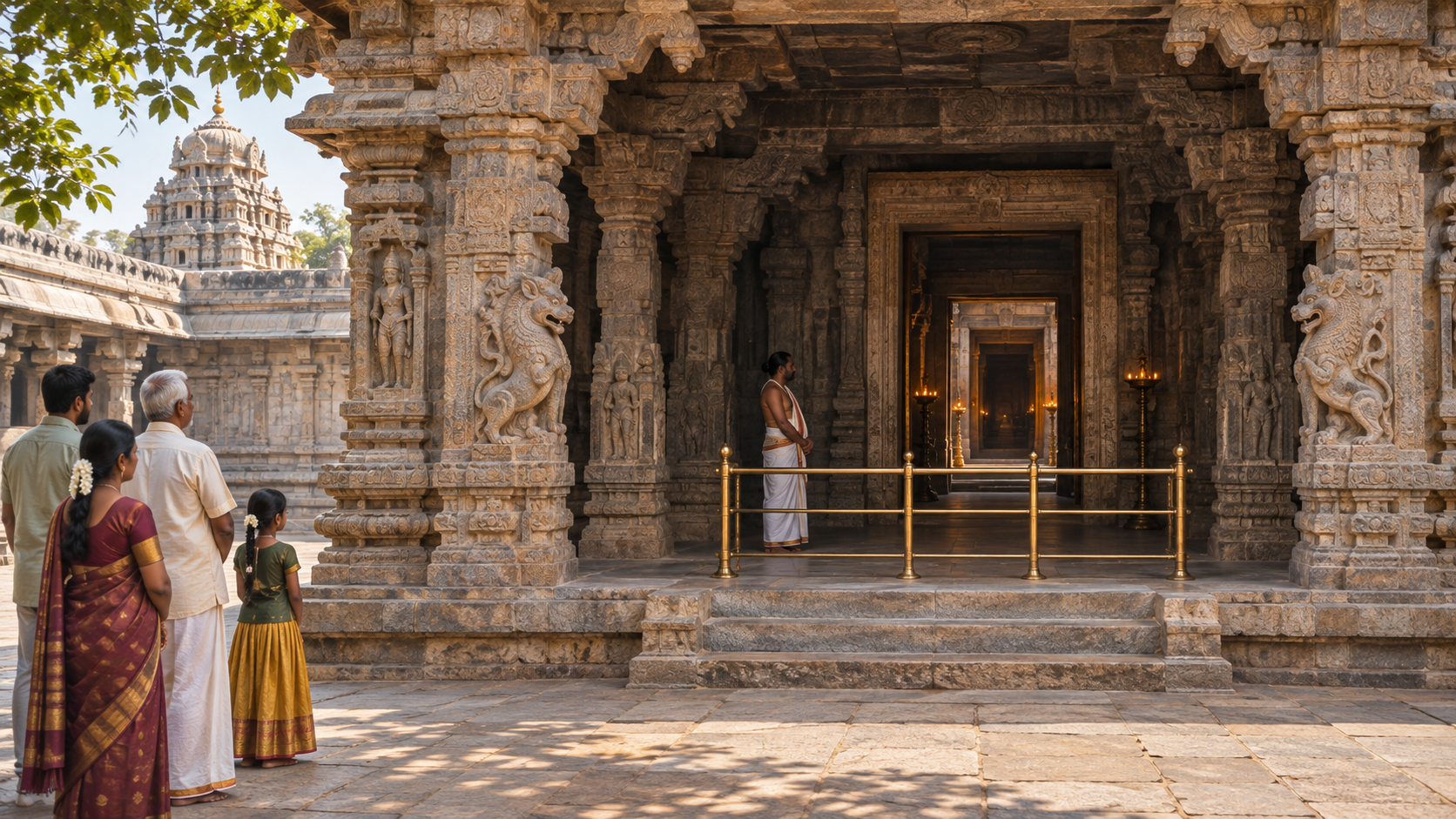
An Agamic kovil is not simply an old building with religious imagery. Its construction, consecration, daily worship, priestly functions, and use of sacred space are ordered by the relevant Agama tradition. Entry rules belong to that living religious framework. They cannot be reduced to the admission policy of a monument or museum.
This distinction also explains why permission to enter a temple does not mean permission to enter every internal space. In an Agamic temple, access to the sanctum is reserved for designated priests. A Hindu devotee does not acquire priestly access merely by being Hindu, and a non-Hindu visitor who satisfies an entry condition does not acquire it either. Admission to the complex, admission to a worship area, and access to the sanctum are three different propositions.
Do not try to determine Agamic status from the temple’s age, fame, architecture, or appearance. Contact the temple office and ask directly. If you are arranging a group visit, obtain the answer before confirming the itinerary. One vague assurance from a driver, tour operator, hotel employee, or acquaintance should not be allowed to override the temple administration at the gate.
Ask the office these precise questions:
- Is the temple treated as an Agamic temple for entry purposes?
- Are non-Hindu visitors admitted if they affirm reverence for the presiding deity?
- Is an oral or written declaration required, and what does it say?
- Which parts of the complex may such a visitor enter?
- Which areas are restricted regardless of the visitor’s religion?
- What dress, footwear, photography, baggage, and conduct rules must be followed?
- Should the visitor report to a particular office or official before approaching the entrance?
These are questions to put to the individual temple, not universal answers to assume. Customs and procedures can differ. A clear reply also protects the Hindu host who might otherwise make a promise that the entrance staff cannot honour.
Reverence is more than tourist courtesy

A visitor can be quiet, conservatively dressed, and careful with footwear while still approaching the temple only as a sightseeing attraction. Those courtesies matter, but the court’s condition goes further: the non-Hindu must be prepared to affirm reverence for the presiding deity.
That distinction should be handled honestly. If the temple requires a declaration, read its exact wording. Do not hide your religious identity, sign a statement you do not believe, or treat the declaration as a verbal trick that unlocks the building. A sacred condition loses its meaning if it becomes a box that every tourist is coached to tick.
At the same time, a non-Hindu should not be presumed incapable of reverence. Someone may belong to another tradition and still approach a Hindu deity in humility, participate in permitted worship, and accept the temple’s discipline. The relevant condition is not casual cultural interest, but the sincere affirmation and conduct required by the temple.
If you cannot truthfully make that affirmation, do not force the visit. Ask whether exterior areas or another clearly identified part of the complex is open to general visitors, or choose a site whose rules permit sightseeing. Respecting a boundary is itself more honourable than gaining entry through a statement you do not mean.
If you are the Hindu host, explain this before the journey. Do not wait until your guest is standing before a sign or being questioned by temple staff. Give the person enough information to decide freely whether the required affirmation is sincere and whether the customs are acceptable. Hospitality does not require you to negotiate away the deity’s house rules.
A practical plan for approaching the temple
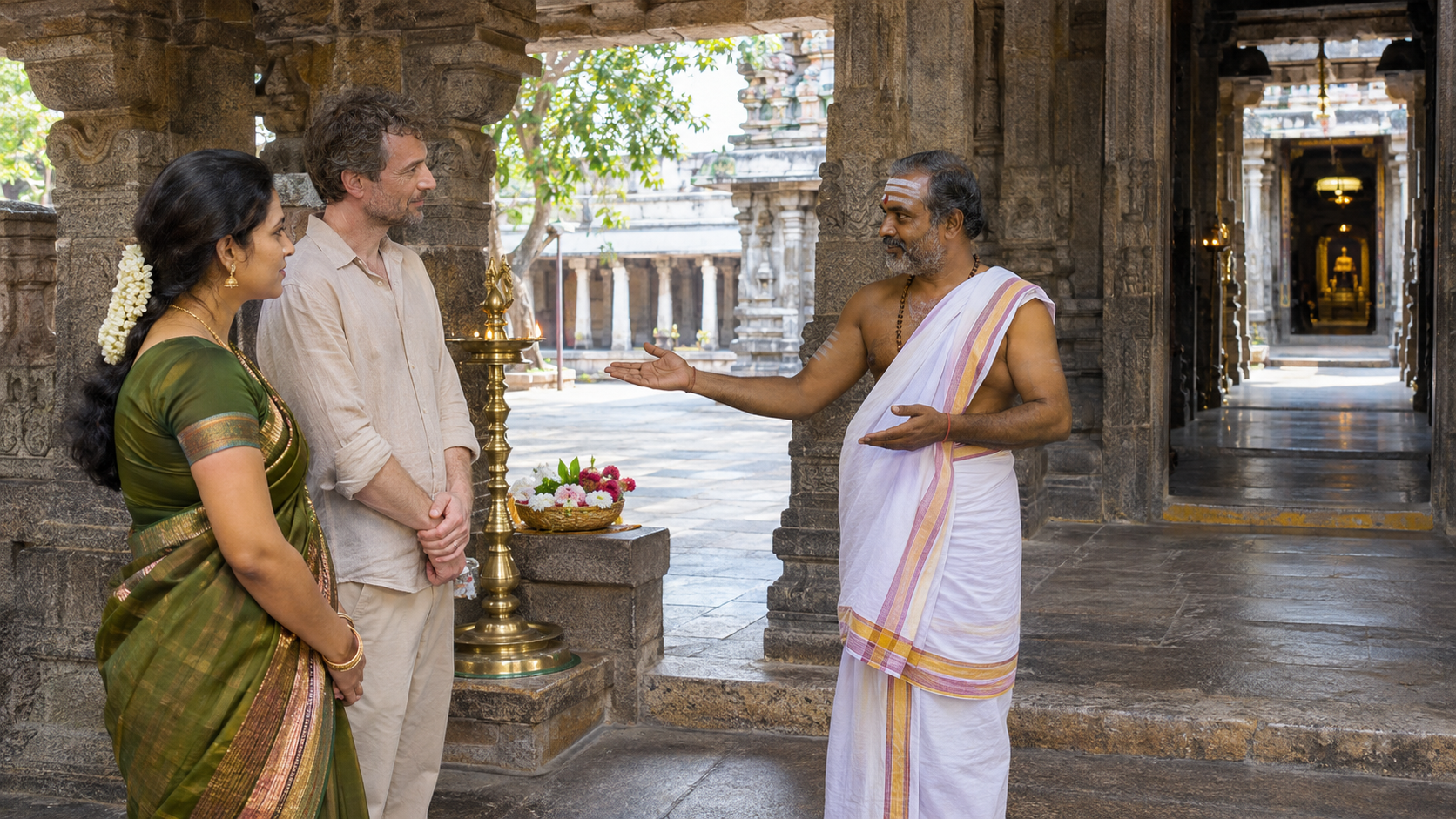
- Name the exact temple. Do not rely on a general claim about temples in Chennai, Madurai, or Tamil Nadu. Entry turns on the particular institution and its ritual status.
- Contact the temple administration. State plainly that a member of your party is not Hindu. Ask whether admission is possible, whether a declaration is required, and which official can confirm the procedure.
- Decide whether the affirmation is truthful. The visitor should consider the actual presiding deity and the declaration’s actual words. A host or tour organiser should never answer this question on the visitor’s behalf.
- Learn the customs before arrival. Confirm dress requirements, where footwear and baggage must be left, whether photography is prohibited, and which worship areas are restricted. Follow the temple’s answer even if another temple follows a different practice.
- Identify yourself honestly at the entrance. If the temple has a declaration or verification process, complete it before joining the flow of devotees. Prior permission from an informal contact is not a reason to bypass entrance staff.
- Observe every internal boundary. Entry into one area does not imply entry into the sanctum or any other restricted space. If an attendant redirects you, stop and ask where you may stand rather than testing the limit.
If access is refused
Do not turn the gateway into the place where a legal or political argument is staged. Step aside, ask which temple rule or condition applies, and find out whether the refusal concerns the entire complex or only a particular area. If you believe the ruling or the temple’s own procedure has been misapplied, keep any posted notice, declaration, or written communication and seek appropriate legal advice afterward.
This approach protects everyone involved. The visitor avoids an unnecessary confrontation, worshippers are not disrupted, and any genuine dispute can be assessed from the actual rule rather than competing recollections of an exchange at a crowded entrance.
Key takeaways for visitors, hosts, and temple authorities
- For a non-Hindu visitor: disclose your status and affirm reverence only if you sincerely mean it. Respectful tourist behaviour alone does not satisfy the stated condition.
- For a Hindu host: call the individual temple before travelling. Do not promise entry based on what happened at another kovil.
- For a sightseeing visitor: accept that a consecrated Agamic temple is governed as a place of worship, not as a public attraction with universal interior access.
- For devotees: protecting sanctity does not require hostility. State the boundary clearly, apply it consistently, and avoid humiliating a visitor who asks in good faith.
- For temple authorities: publish the temple’s classification, declaration procedure, applicable customs, and accessible zones in clear language. Ambiguity at the gate creates avoidable conflict.
- For anyone disputing a decision: obtain the exact rule and address the matter through the proper administrative or legal channel rather than attempting to force entry.
Before you leave home, make one direct call and ask four things: whether the temple is Agamic, whether it admits a non-Hindu who affirms reverence, what declaration is required, and which areas remain restricted. Those answers will tell you whether to proceed, adjust the visit, or choose another destination while preserving both personal honesty and the sanctity of the temple.
References
- Hindu Post – Temples are not tourist spots: Madras HC sets rules for non-Hindu entry
- India Today – Agamic temples not tourist spots: Madras HC sets conditions for entry of non-Hindus

Leave a Reply
You must be logged in to post a comment.