
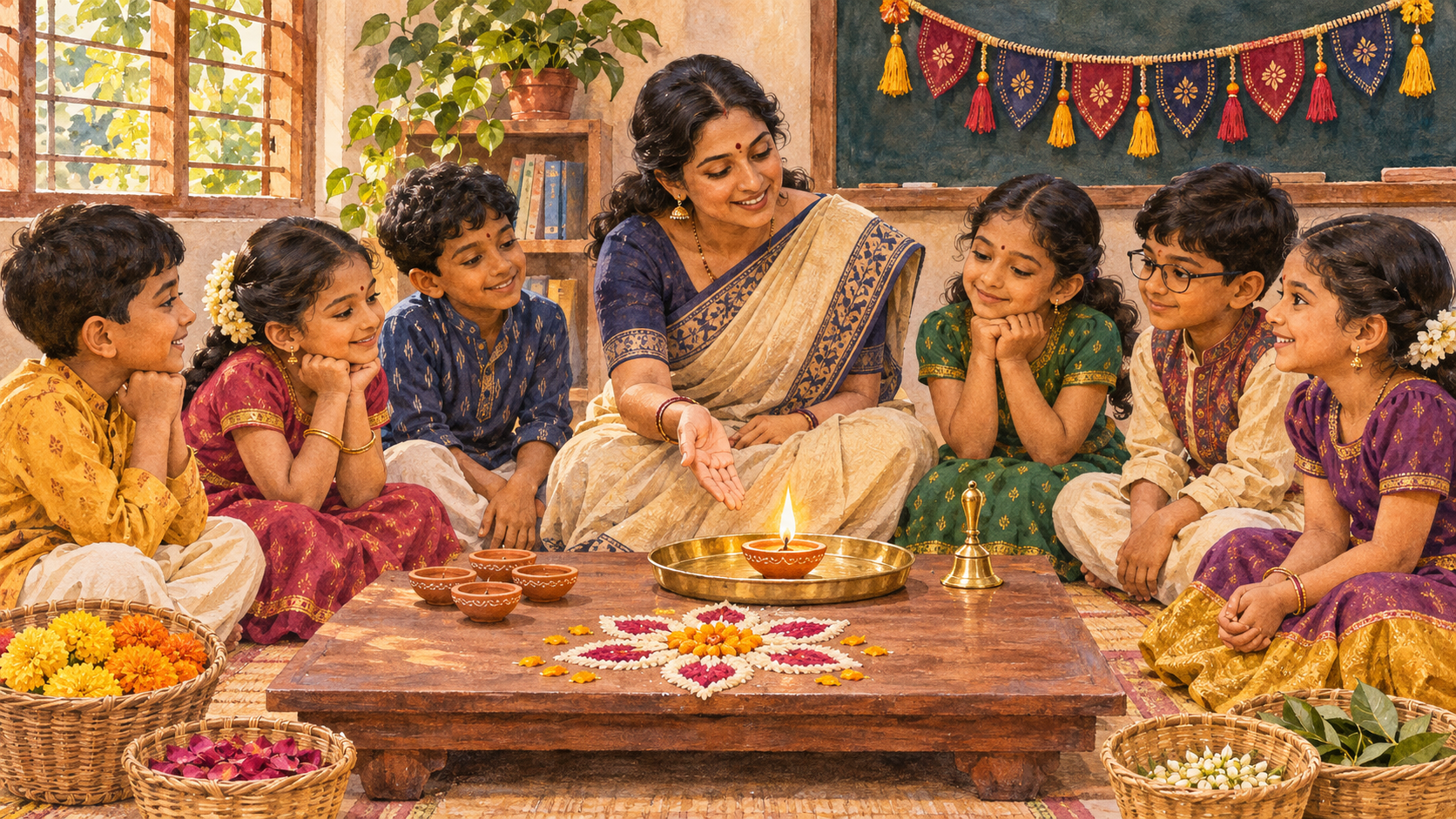
If you have been asked to deliver an eco-friendly Diwali lesson, the easy version is a poster about pollution and a warning against firecrackers. The useful version answers the question a child will actually carry home: What can we do instead, and why will it still feel like Diwali?
Build the answer around positive practice. Let students encounter the diya as an object of worship, Dharmacharan as conduct they can live, sadhana as disciplined attention, and a firecracker-free celebration as a meaningful choice. You are not asking them to celebrate less. You are teaching them how to distinguish the sacred centre of the festival from an optional spectacle.
Begin with the meaning of Diwali, not a list of bans
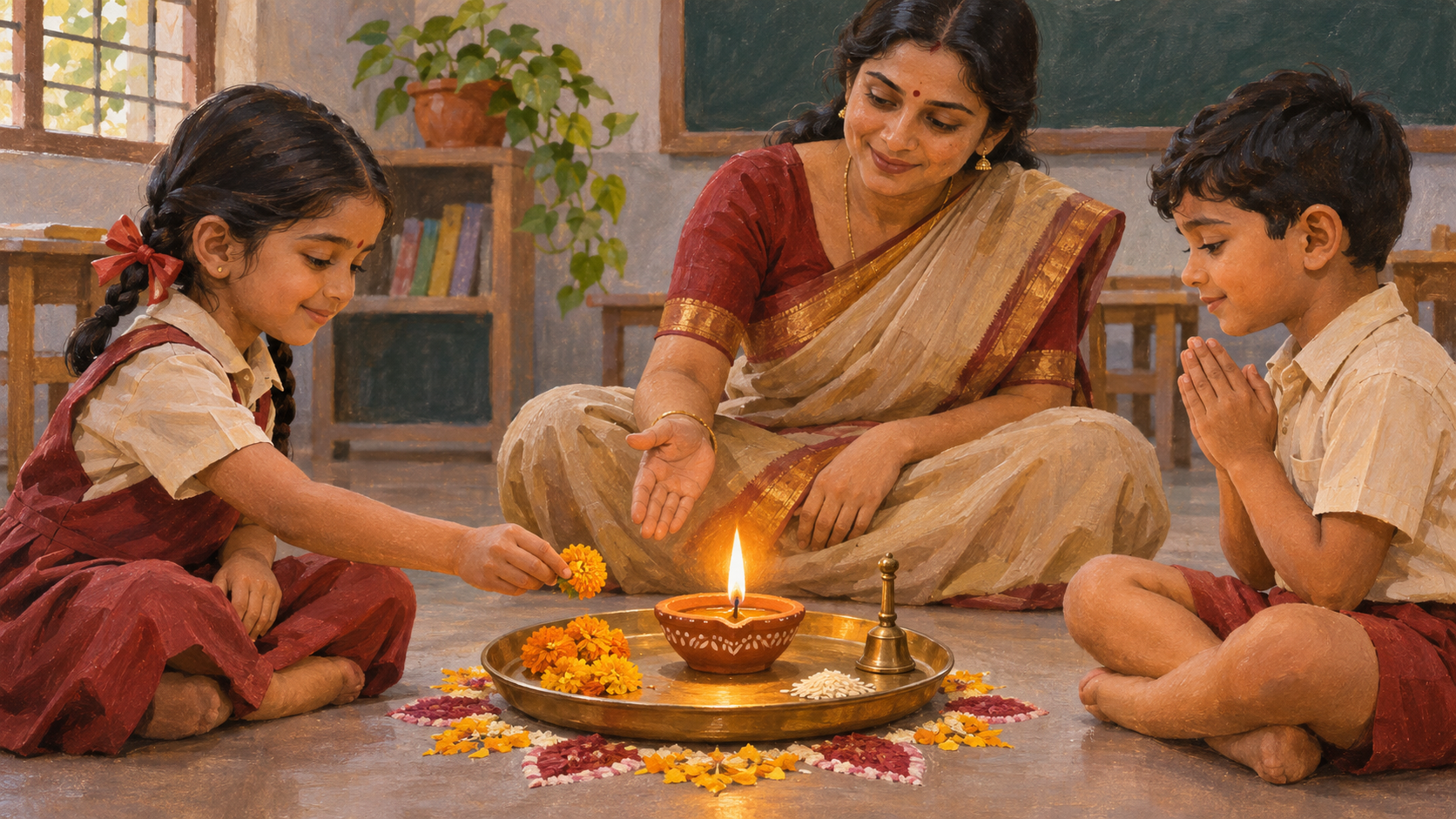
An environmental lesson becomes culturally thin when a Hindu festival appears mainly as a problem to be corrected. Begin inside the tradition. Ask students what their families worship, remember, prepare, light, recite or practise during Diwali. Customs differ across regions, communities, families and sampradayas, so the classroom should make room for those differences rather than impose one supposedly universal script.
Then make a distinction children can use: something can be popular without being indispensable. Firecrackers may be familiar to many families, but removing them does not remove the diya, family worship, sacred remembrance, prayer or self-discipline. This distinction allows a child to consider change without hearing that Diwali itself is environmentally suspect.
A Faridabad education programme gave 805 students at Pandit Amarnath School a firecracker-free message connected with oil lamps, Dharmacharan and sadhana. That combination is instructive: the alternative to firecrackers was not an empty evening, but a more deliberate observance.
Set learning goals that reflect that balance. By the end of the session, a student should be able to:
- Explain one Diwali practice followed by the student’s own family or community.
- Distinguish a sacred or family observance from optional entertainment.
- Describe why avoiding firecrackers prevents the smoke, sudden noise and debris produced by that activity.
- Choose one tradition-centred action that can replace passive spectacle.
- Discuss a different household choice without mocking or embarrassing the family that made it.
This gives you a dharmic lesson with an environmental consequence, rather than a generic environmental lecture wearing a Diwali label.
Build a lesson students can repeat when they get home
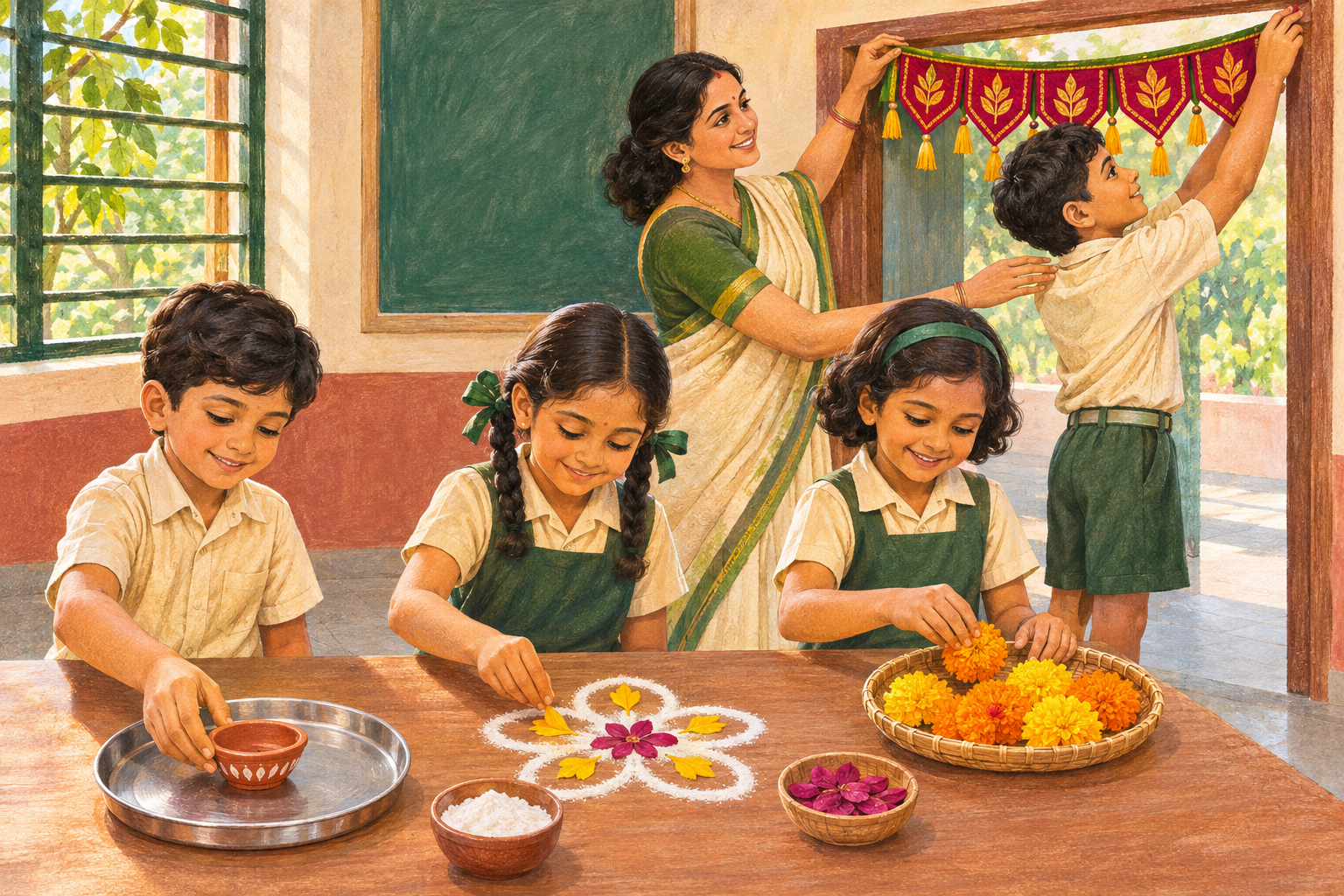
A child cannot carry home a slogan that has no practical next step. Use a sequence that moves from memory to meaning and then to a household decision.
- Open with a family question. Ask what makes Diwali recognisable in each student’s home. Accept different answers, and do not make a child defend an unfamiliar custom.
- Create three classroom columns: what we worship or remember, how we prepare and participate, and what we can change. This keeps the festival’s sacred content visible while making room for practical choices.
- Place the diya in the centre of the discussion. Ask what changes when a family gathers to prepare, place and light an oil lamp with attention instead of waiting for an explosive display.
- Invite each student to choose a participatory alternative: helping arrange the lamps, joining the household prayer or recitation, listening to a sacred narrative, performing seva, or helping prepare the worship space.
- Have the student complete a simple home intention: During Diwali, I will help my family by doing this practice. The answer should name an action, not an abstract promise to be good.
- After the festival, invite reflection on what the family kept, what it changed and what the student would choose again. Grade the quality of the reflection, not the family’s compliance.
Keep the materials consistent with the message. Do not turn the assignment into a craft competition that requires new glitter, plastic decorations or packaged kits. A lesson about restraint that sends home a shopping list quietly teaches the opposite lesson. Students can draw a diya, annotate an existing family tradition, write a short intention or plan how to reuse decorations already available at home.
If you demonstrate a real oil lamp, treat fire safety as part of the teaching. An adult should light and extinguish it on a stable, heat-resistant surface, with paper, loose fabric and hair kept clear. Never leave the flame unattended. If school rules do not permit an open flame, use an unlit diya and explain the lighting practice without staging it. The aim is understanding, not a risky demonstration.
Send the family message before household plans have hardened. Use plain wording: the class is learning to celebrate Diwali through family tradition, oil lamps, Dharmacharan and sadhana while avoiding firecrackers. Ask the family to help the child select one practice in keeping with its own tradition. This is clearer than sending a vague request to celebrate responsibly.
Discuss firecrackers clearly without shaming children
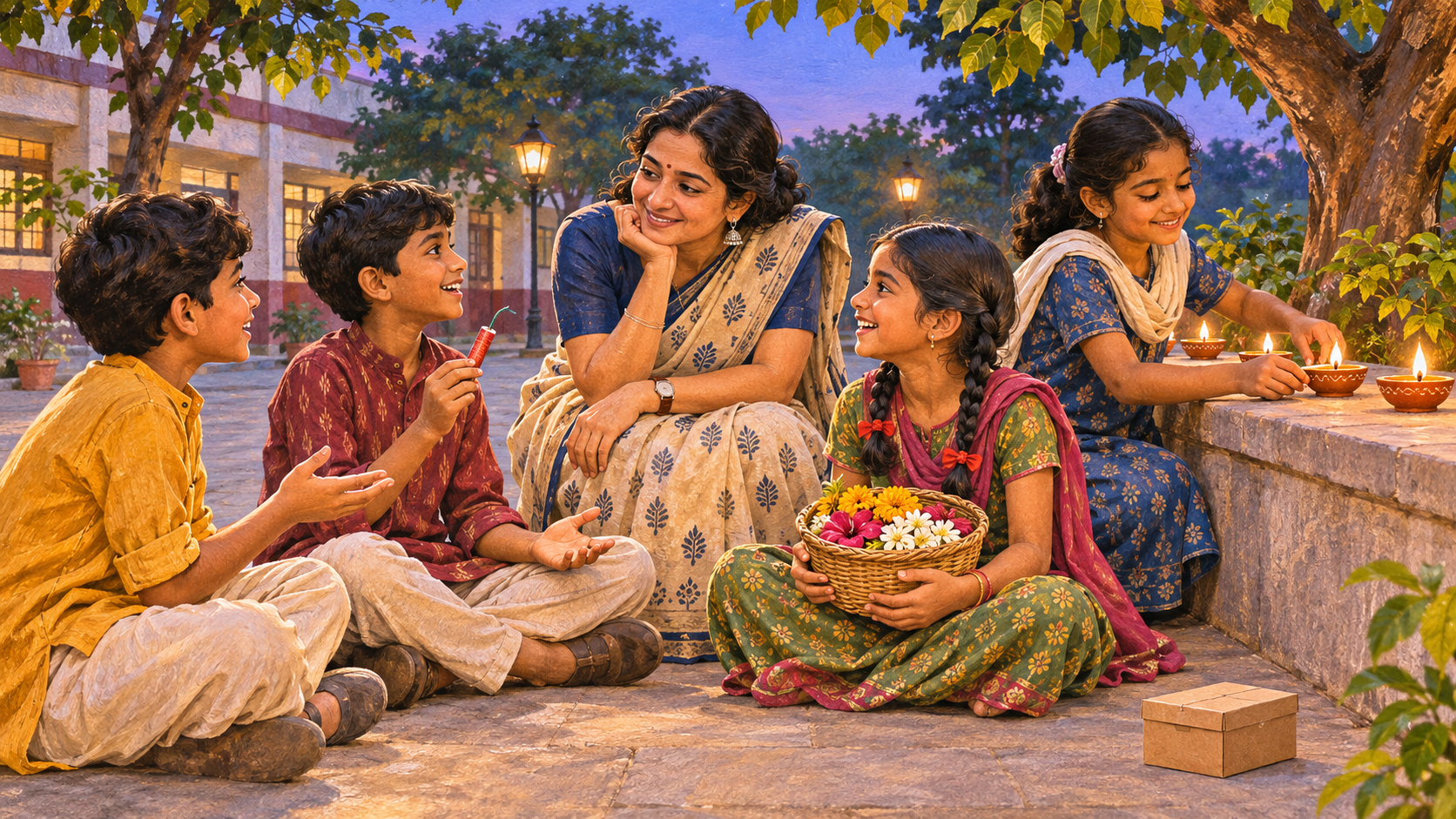
Do not evade the mechanism. A firecracker produces smoke, a sudden loud report and spent material. Choosing not to burst it avoids that household’s contribution from that activity. You do not need inflated statistics, frightening claims or the suggestion that one decision solves every environmental problem. The narrower explanation is concrete enough for a child to understand and defend.
Frame the choice through self-restraint rather than cultural guilt. In a dharmic setting, freedom does not mean doing every pleasurable thing available. It also includes the capacity to make a sankalpa, keep it and direct attention toward a higher purpose. A firecracker-free Diwali can therefore be taught as an exercise of agency, not as a punishment imposed on the festival.
Three objections are likely to arise. Answer them without turning the classroom into a contest over whose family celebrates correctly:
- If a student says firecrackers are the enjoyable part, acknowledge the enjoyment and ask what active role could replace it. Lighting diyas with an adult, preparing the worship space, reciting, telling a sacred narrative or serving the family gives the child something to do rather than merely something to lose.
- If a student says everyone else will use them, explain that a household choice remains meaningful even when it is not universal. The child can make a respectful request at home but is not responsible for controlling neighbours or adults.
- If a student asks whether Diwali is harmful, correct the premise. Diwali is not identical to every activity associated with it. The lesson is about changing an optional practice while preserving and deepening the observance.
Avoid public pledges that expose children to ridicule if their parents decide differently. Do not ask for photographic proof, require a purchase or award moral status based on what happened in a household the child does not control. Invite commitment, but evaluate what the student understood and communicated.
Measure whether the teaching changed participation
For this kind of education, the most colourful poster is not the best measure of success. The useful question is whether a student can explain one tradition, make one feasible choice and take one active role at home.
Give families a menu rather than a rigid performance. A child might help clean and prepare a safe place for diyas, reuse an existing thali or decoration, join the family’s prayer or recitation, perform a suitable act of seva, listen attentively to the tradition taught at home, or request a firecracker-free celebration. The family should choose what fits its sampradaya and circumstances.
After Diwali, use reflective questions that reveal understanding without turning the child into an inspector of the household:
- Which practice helped you participate rather than merely watch?
- What did an oil lamp, prayer, recitation or act of service mean in your home?
- Was there a choice you asked your family to consider?
- What would you keep or change during the next celebration?
- How can you explain your choice respectfully to someone who chose differently?
Listen for a connection between meaning and action. A student who says, for example, that the family avoided firecrackers and spent more attention on lighting diyas has understood the structure of the lesson. A student who can only repeat that crackers are bad needs another conversation about what Diwali positively asks of the family.
This also protects the lesson from becoming anti-Hindu in tone. Environmental responsibility should deepen cultural literacy, not erase it. When children learn the sacred practice, the reason for restraint and the respectful language needed at home, they are better equipped to preserve tradition thoughtfully.
Key takeaways
- Begin with Diwali’s religious and family meaning before discussing environmental change.
- Present firecrackers as optional, not as the defining feature of the festival.
- Give students a positive replacement centred on diyas, Dharmacharan, sadhana, family participation or seva.
- Explain the direct effects of firecrackers plainly, without unsupported statistics or exaggerated claims.
- Keep any oil-lamp demonstration under adult control and within the institution’s fire-safety rules.
- Evaluate understanding and respectful communication, never a child’s power to control the household.
If you are preparing a Diwali session, write the sentence you want the student to say at home before you design the poster or activity. If that sentence contains a sacred meaning, a feasible action and a respectful request, the lesson has somewhere to go. Let the diya provide the centre and chosen restraint provide the discipline.
References

Leave a Reply
You must be logged in to post a comment.