
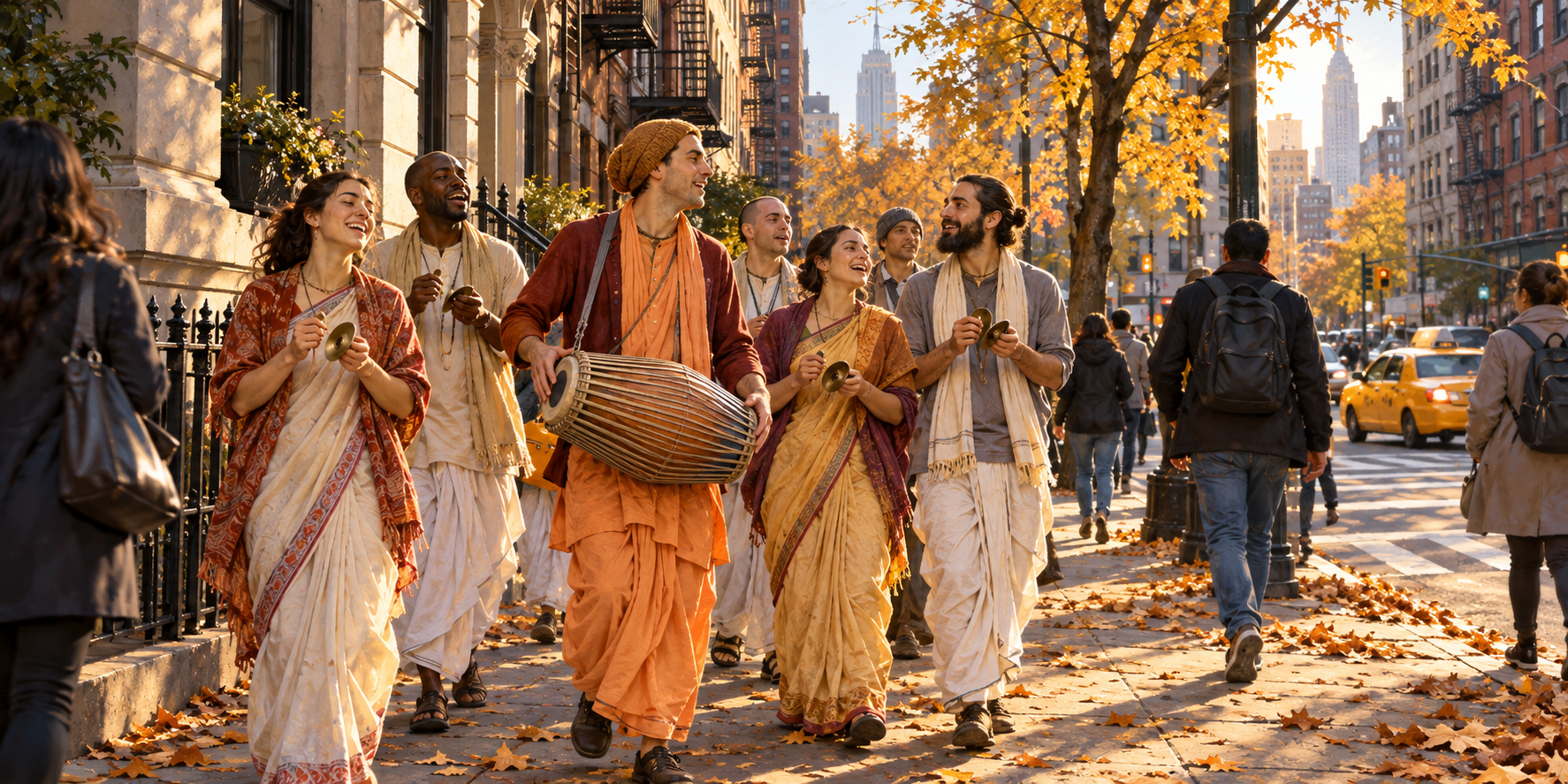
If you encountered a brief mention of New York Harinam on 31 October 2026, you may be trying to determine what happened, what the gathering represented, or how you should approach a similar event. The first step is to separate the confirmed occasion from details that have not been established.
What can be said securely is simple: a harinam took place in New York on 31 October 2026. That narrow fact identifies the occasion. Understanding its significance requires knowing what harinam is, while resisting the temptation to invent a route, crowd size, organizer, or motive.
What is confirmed, and what should remain unclaimed
The confirmed event details are the place, the devotional form, and the date: New York, harinam, and 31 October 2026. No route, starting time, duration, borough, participating temple, attendance figure, or organizational affiliation has been established here.
Those limits matter. An attractive photograph or a short recording can show one moment without establishing the scale of the whole gathering. The word “New York” should not silently become a particular neighborhood. Familiar devotional clothing should not be used to assign every participant to a specific institution. A visible group should not be described as a large turnout unless a reliable count exists.
The date needs the same discipline. October 31 is associated with Halloween in New York, but sharing a calendar date does not prove that the harinam was organized as a protest, rebuttal, or alternative to Halloween. Unless organizers explicitly state such a purpose, describe the event as a harinam held on that date and leave the presumed cultural message out.
If you share the occasion with others, the accurate caption is also the simplest: “Harinam in New York on 31 October 2026.” Do not upgrade it into a parade, festival, demonstration, or mass movement without evidence for those descriptions.
Harinam is devotional practice, not merely street music
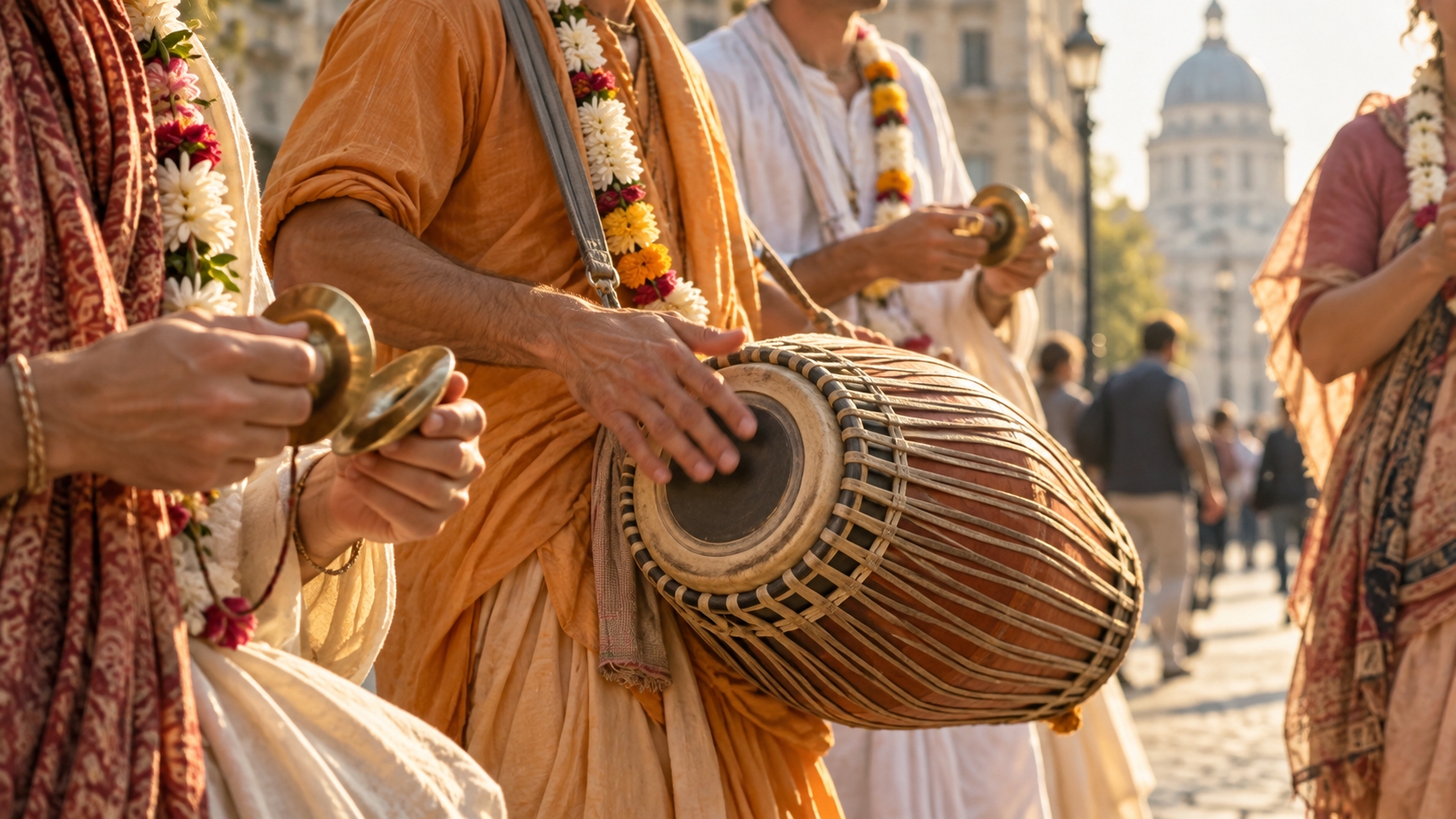
Harinam points to the name of Hari, a name for the Divine. In public and congregational practice, it usually takes the form of repeated chanting in which voices, rhythm, and remembrance work together. The related term sankirtan emphasizes collective glorification through chanting.
In Gaudiya Vaishnava settings, the Hare Krishna maha-mantra is often central to harinam. That general context should not be turned into an unsupported claim about every mantra sung at this particular gathering. Different groups can use different melodies, instruments, sequences, and additional divine names.
The easiest way to understand the practice is through three connected actions:
- You hear the divine name rather than merely hearing an explanation of it.
- You can respond to a repeated line, so the boundary between performer and audience becomes less important.
- You direct attention back to remembrance whenever the mind wanders, using sound and rhythm as supports.
This is why judging harinam only by musical polish misses its purpose. Melody, drums, hand cymbals, movement, and repetition can make participation easier, but they serve the devotional act. A technically imperfect response can still be sincere chanting; a polished performance without devotional attention would be something different.
You also do not need to settle every theological question before listening respectfully. Harinam makes the first encounter unusually direct: hear the refrain, notice the response, and decide whether to participate without pretending to possess commitments you do not yet hold.
What public chanting places in the life of a city

Temples give devotion a consecrated home. Harinam carries remembrance into shared space, where it can be encountered by people who did not plan a religious visit. For a Dharmic community, that movement from the temple into ordinary civic life is meaningful. It says that bhakti is something practiced through the body and voice, not only discussed in private.
Public visibility, however, should not be confused with social proof. One gathering confirms that the practice occurred. It does not by itself measure the number of Vaishnavas in New York, public approval of the tradition, institutional growth, or the effect of the chanting on passersby. Those would require different evidence.
The more useful observation is qualitative. Harinam allows several levels of encounter to coexist. One person may chant attentively, another may walk with the group, another may listen for a minute, and another may simply make room for it to pass. Public bhakti does not require every nearby person to have the same relationship to the sacred sound.
That distinction can improve the way you speak about Dharmic visibility. Do not reduce the gathering to “Indian culture,” because harinam is a devotional act with theological meaning. Do not describe every observer as a participant, either. Call the practitioners devotees when that is evident, call the activity chanting, and leave unknown reactions unknown.
How to approach a future harinam respectfully
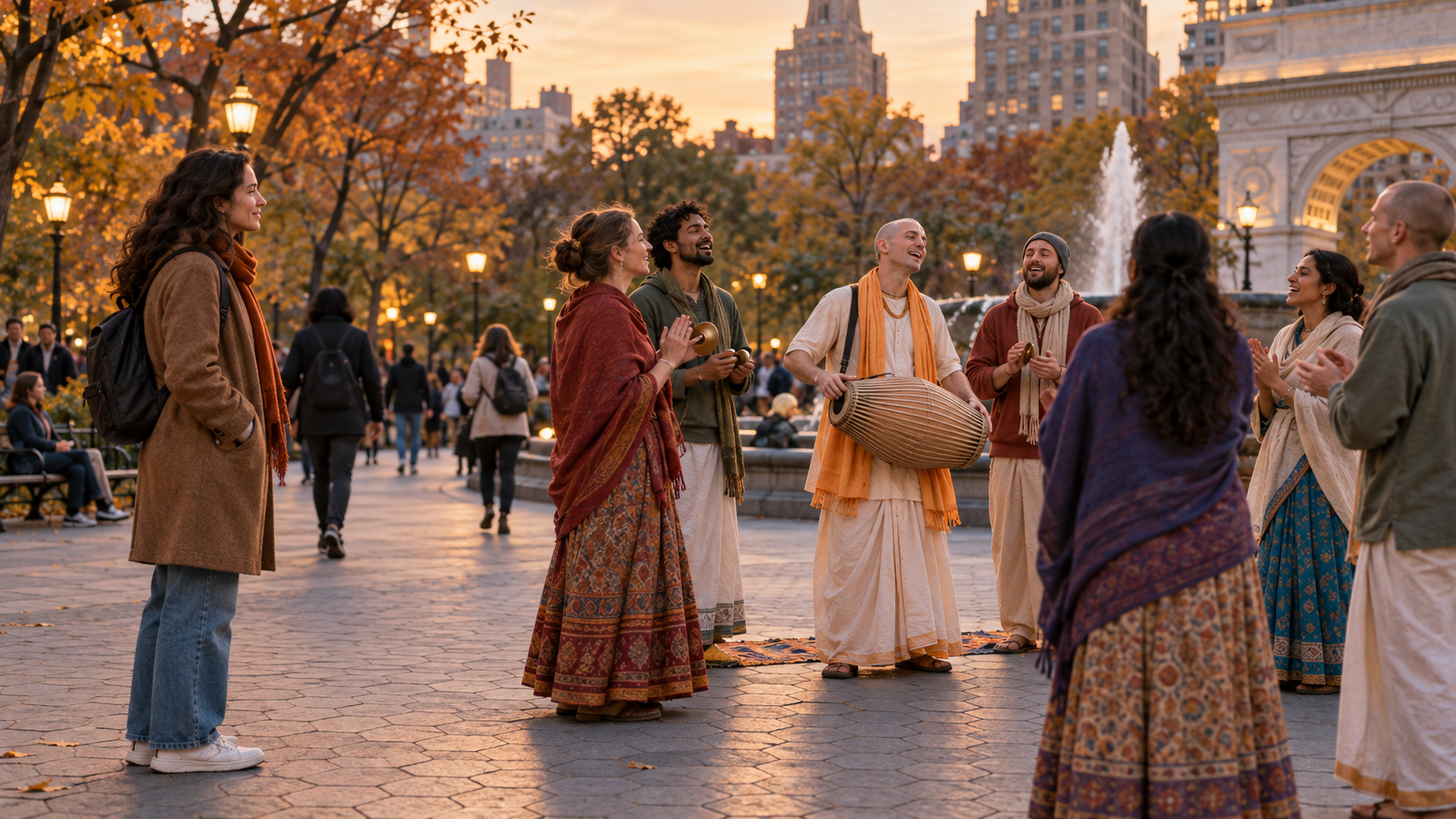
If you meet a harinam in New York or elsewhere, you can engage without needing prior experience. Watch the group’s cues first, then choose the level of participation that is honest for you.
<!– wp:list {
Leave a Reply
You must be logged in to post a comment.