
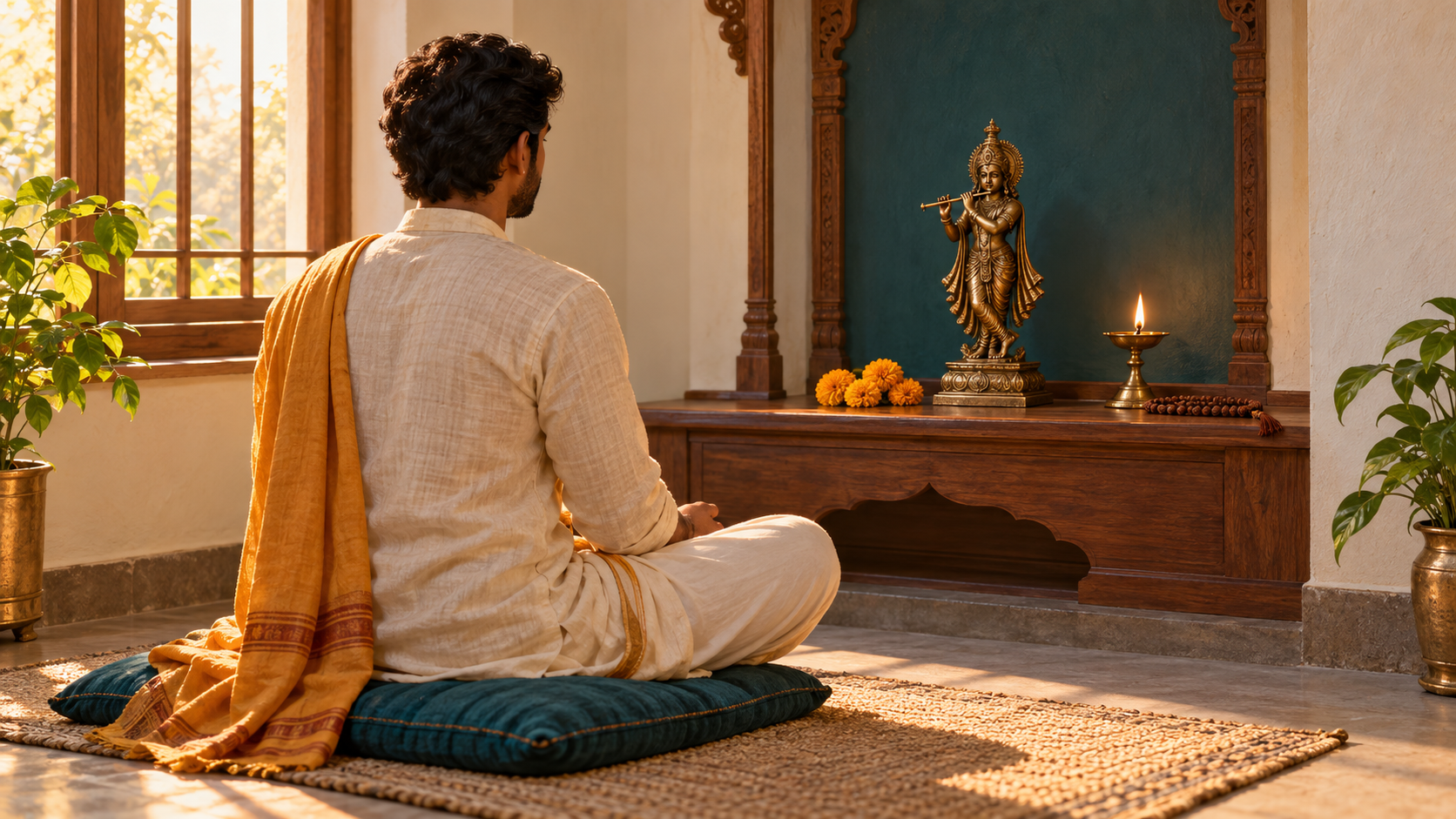
You may be drawn to meditation yet wonder whether using a deity’s image or sacred symbol is somehow less advanced than meditating without one. That doubt can make you discard the very support that would help your practice become steady.
Start with the support you can actually return to. In form-based meditation, success is not producing a flawless mental picture or forcing the mind to become blank. It is learning to gather your attention around a sacred form, notice when attention wanders, and return without agitation.
Why form is a sound beginning rather than a lesser practice
An untrained mind benefits from a definite anchor. A deity, sacred image, or symbol gives you a positive instruction: attend here. That is more workable than repeatedly commanding yourself not to think.
Form also reveals distraction quickly. You may begin by observing an image, then discover that you are planning tomorrow, replaying a conversation, or judging the meditation. The moment you notice that movement, the form gives you somewhere precise to return. This cycle of noticing and returning is not an interruption of the practice. It is the practice.
A sacred form is not merely a visual concentration target. If it already carries devotion, reverence, or remembrance for you, those qualities help collect parts of the mind that an emotionally neutral object may leave untouched. You do not have to manufacture a special feeling. Attend respectfully and allow the relationship to deepen through repetition.
This is why you should not rush to abandon form in order to appear spiritually advanced. A vague meditation on the formless can easily become daydreaming, dullness, or abstract speculation. Form lets you see whether attention is present.
Choose one form you can approach with continuity
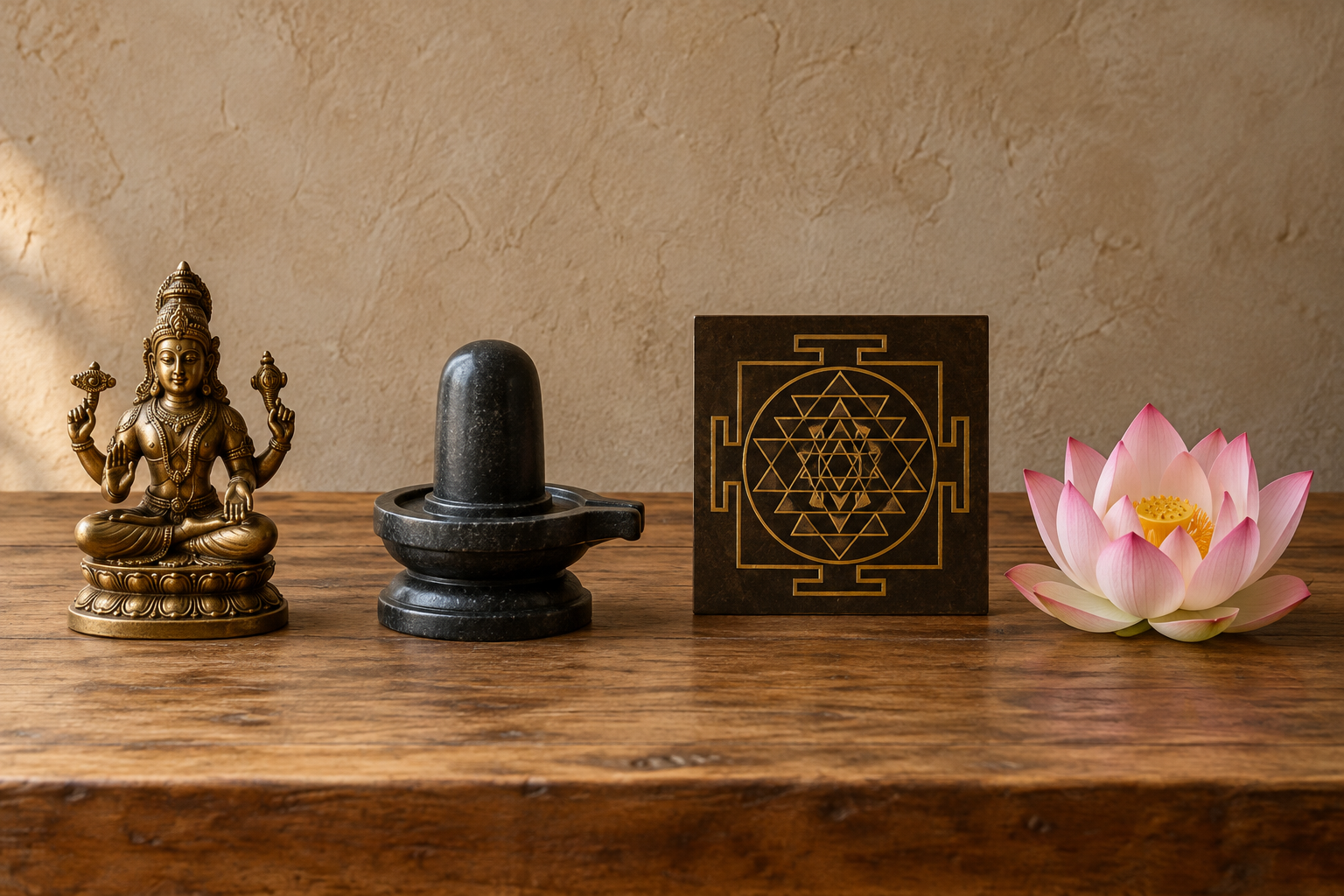
If your family tradition, temple practice, guru, or established discipline has already given you a form, begin there. Continuity usually matters more than novelty. Do not replace received instructions with a generic technique merely because another image seems more dramatic or promises a faster experience.
If you have not received a particular practice, use these criteria to make a modest choice:
- Reverence: Choose a deity, symbol, or sacred image you can regard sincerely, not one selected only because it is visually striking.
- Clarity: Use an image whose main features are easy to recognize. An overloaded composition gives a beginner too many possible anchors.
- Continuity: Keep the same primary form from one sitting to the next. Constantly changing the image prevents you from discovering how your attention behaves once novelty fades.
- Traditional fit: If the form belongs to a living practice you follow, respect that practice’s way of handling, placing, and contemplating it.
Choosing one primary form does not require you to deny other forms of the Divine. It simply gives this meditation a clear centre. Plurality belongs to theology and worship; a single-pointed session still needs a single main anchor.
Keep supporting elements subordinate. A familiar divine name or prayer can accompany the form when that is already part of your practice. Avoid piling together several images, several prayers, music, breath control, and changing visualizations. When attention wanders, you should know exactly what you are returning to.
A repeatable form-based meditation session
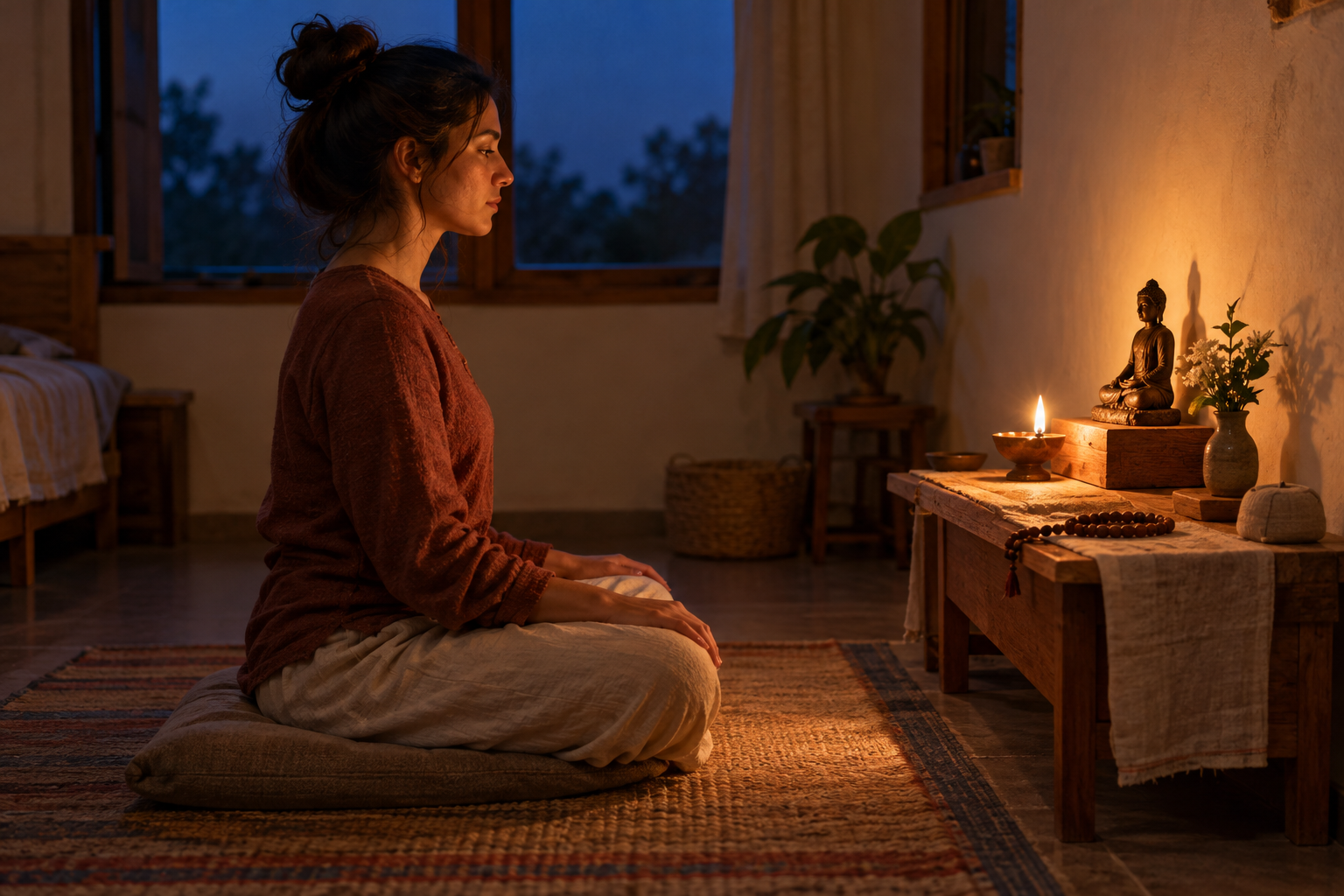
The following is a conservative practice template. It is not a replacement for instructions received from a qualified teacher or lineage.
- Prepare a stable place. Put the image where you can see it without bending your neck or straining your eyes. Sit in a position that is alert but sustainable. Silence avoidable interruptions before you begin.
- Mark the beginning. Use the simple gesture customary in your practice, such as a bow or brief prayer. Then make one clear inward commitment: for this sitting, every noticed distraction will become a return to the form.
- Look before visualizing. Observe the form as it is. Notice a few features that are actually present: the outline, expression, colour, central symbol, or another unmistakable detail. Do not invent complexity.
- Let the gaze soften. After the form feels familiar, close your eyes if that is comfortable and recollect it inwardly. If the image disappears, becomes distorted, or turns vague, reopen your eyes. Looking again is part of the method, not a failure.
- Use one point of return. When thought carries you away, return first to one recognizable feature. If a familiar divine name or prayer belongs to your practice, repeat it gently while attending to the same form.
- Release unnecessary effort. You need enough effort to remain present, but not so much that the face, eyes, or forehead tighten. Let the image be remembered rather than mentally squeezed into place.
- Close deliberately. Toward the end, stop adding new effort. Rest quietly with the recollection of the form, then conclude with the gesture or prayer appropriate to your practice. Do not move straight from meditation into notifications if you can avoid it.
What to do when the practice becomes difficult
- The mental image will not stay clear: Keep the eyes open and meditate through direct observation. Vivid visualization is not the measure of spiritual seriousness.
- Thoughts keep arriving: Do not begin a second argument with each thought. Name its function lightly – planning, remembering, worrying – and return to the chosen feature.
- You become sleepy: Open your eyes, sit more upright, and make the external form clear again. A dim internal image is not useful when awareness itself is fading.
- You develop visual strain: Relax the attempt to hold every detail. Return to the physical image or one simple feature instead of forcing an internal picture.
- The sitting feels emotionally flat: Do not chase a manufactured devotional mood. Maintain respectful attention. A quiet, ordinary return is more dependable than trying to reproduce an exceptional feeling.
- Unusual imagery appears: Do not make it the goal or immediately assign it spiritual authority. Return to the form and discuss persistent or troubling experiences with a qualified teacher.
If meditation repeatedly produces panic, dissociation, overwhelming memories, or a serious decline in daily functioning, stop the session and seek appropriate professional support. Spiritual practice should not be treated as a substitute for mental-health care.
Let form become subtle without forcing it to disappear
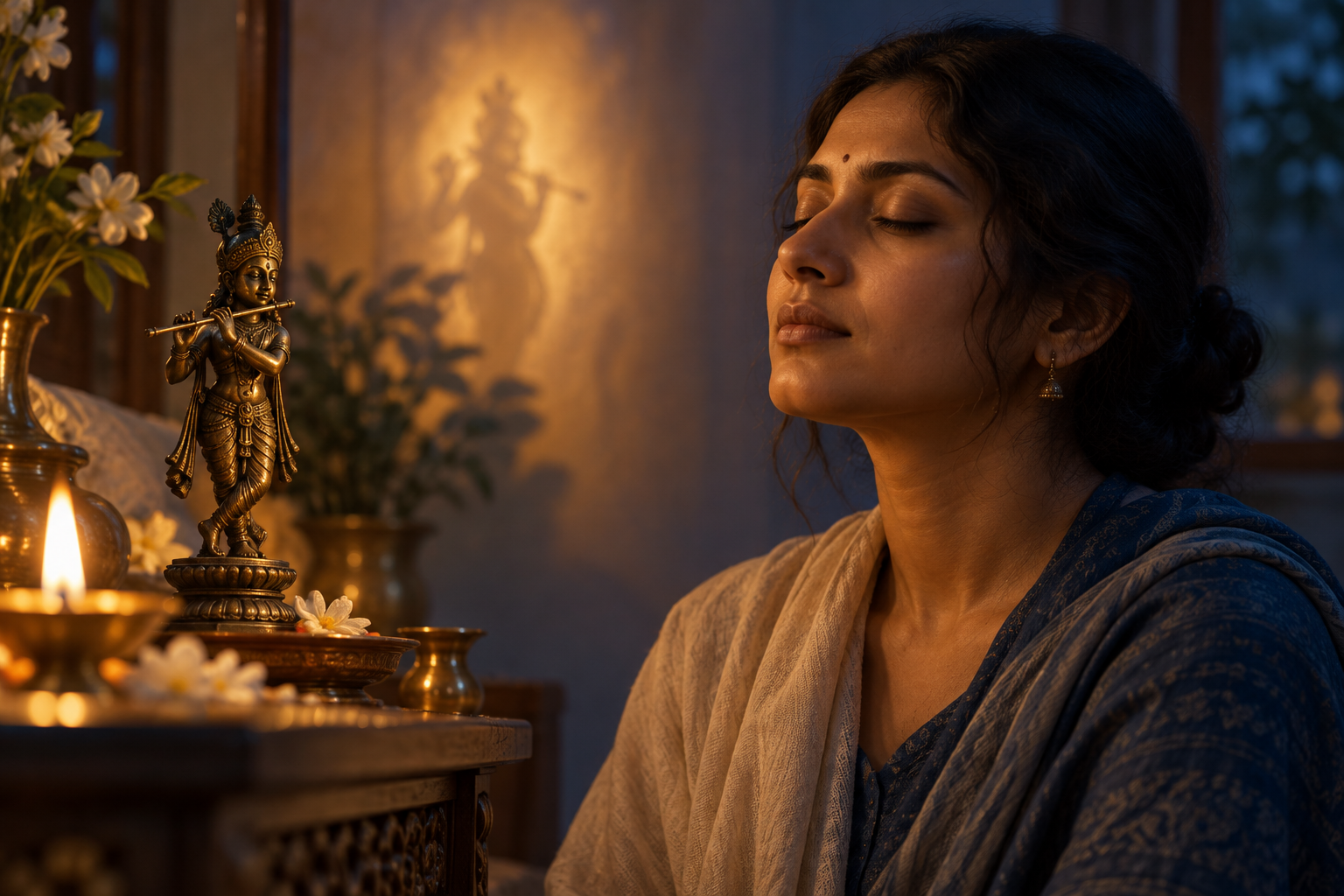
The movement from form toward the formless is easily misunderstood as a demand to erase the image. That turns the later stage into another act of strain. A more careful transition begins only after returning to the form has become familiar.
Toward the end of a settled sitting, allow attention to include the reverence, presence, or stillness awakened through the form. Let the visual outline become less prominent on its own. Do not push it away. If awareness remains clear and collected, rest there briefly. If it becomes foggy, scattered, or absorbed in unrelated thought, reopen your eyes and return to the form.
This gives you a practical test: formless meditation should not mean vague meditation. The absence of a visible support is useful only when clarity remains. When clarity drops, returning to form is not regression. It is an intelligent use of the foundation you have built.
Do not turn this transition into a universal theological claim. Hindu traditions do not all explain divine form and ultimate reality in the same way. Follow the interpretation and discipline of your own tradition where you have one. The practical point is narrower: form can gather attention so thoroughly that you no longer need to force either its presence or its absence.
Key takeaways for your next sitting
- Using a deity, symbol, or sacred image is a legitimate foundation for meditation, not an admission that you are incapable of a higher practice.
- Choose one primary form with reverence, clarity, and continuity. Do not change anchors whenever novelty fades.
- Begin with direct observation, then recollect the form inwardly. Reopen your eyes whenever the mental image becomes strained or indistinct.
- Measure the sitting by honest returns, not by visual brilliance, emotional intensity, or unusual experiences.
- Allow the form to become subtle only when attention remains clear. Return to it as soon as the supposedly formless state becomes dreamy or scattered.
For your next sitting, make only the decisions the practice requires: one sacred form, one stable place, and one unmistakable point of return. Stay with that arrangement long enough to observe your mind after novelty has passed. Steadiness, not spiritual theatre, will show you what the form is teaching.
References

Leave a Reply
You must be logged in to post a comment.