

If you came to this case asking whether it was merely a relationship that ended badly, look closely at the alleged sequence. A 20-year-old woman says a man met her under a Hindu name, concealed his Muslim identity, promised marriage, and later used intimate material to demand money before attacking and threatening her. Those are distinct allegations, and each requires evidence.
That distinction should guide how you read the case and how you respond if a similar pattern appears around you. You can take the danger seriously and defend Hindu women without declaring guilt before trial, exposing the complainant, or allowing political labels to replace a careful examination of the conduct.
What the Bhubaneswar complainant alleges
Commissionerate Police identified the accused as SK Irfan, alias Pintu, a 21-year-old man from Aul in Kendrapara district. The complainant works at a private establishment in Bhubaneswar. She says they met through Instagram in March 2025, when he was using the name Kumar Pintu and representing himself as Hindu. After he promised marriage, she moved into a rented house with him near Garage Chhak, within the Lingaraj police-station area.
She later discovered his actual name and religious identity. She also alleged that he had relationships with other Hindu women and minor girls and possessed intimate photographs or videos involving some of them. These wider allegations are not established findings. They are part of an inquiry that may identify additional victims, or may narrow as investigators verify the material.
The woman says the relationship deteriorated after she confronted him and tried to leave. He allegedly continued contacting and harassing her, sent her intimate material, and demanded money in return for not misusing or circulating it. A demand backed by the threatened exposure of intimate material is not an ordinary relationship dispute; it is coercive leverage.
At about 3 p.m. on October 24, while the woman was travelling to work, the accused allegedly intercepted her, struck her with a wooden stick, attempted to strangle her, and took her gold chain and cash. She also accused him of threatening to kill her if she went to the police.
She nevertheless approached the Mahila Police Station in Bhubaneswar. Police later arrested the accused at Tinimuhani bus stand in Kendrapara district and produced him before a court. Examination of his phone reportedly opened further inquiries into possible relationships with other women, recordings allegedly made in hotels without consent, possible minor victims, sharing of material with associates, and potential organized links.
Those last points remain investigative questions. A phone can supply evidence, leads, or context, but an allegation of multiple victims or coordination becomes a finding only after the people, files, accounts, dates, and communications have been authenticated. An arrest is not a conviction, and the accused’s guilt must be determined through evidence and due process.
The label cannot substitute for evidence

Many readers will recognize the phrase “love jihad” in the public discussion surrounding such cases. This case has been described as being investigated through that lens. But the phrase cannot answer the questions that police and a court must answer.
An adult interfaith relationship is not, by itself, proof of exploitation. At the same time, describing a relationship as consensual does not resolve an accusation that a person adopted a false identity, made a marriage promise to obtain trust, retained intimate material, and used threats to prevent the other person from leaving. The relevant distinction is not simply interfaith versus same-faith. It is honest choice versus choice manipulated and later constrained by deception or coercion.
If you want to assess this case responsibly, keep the inquiry tied to concrete questions:
- Which names, photographs, phone numbers, and accounts did the accused use, and can investigators connect them to him?
- What did he represent about his identity and intention to marry, and is that representation preserved in messages, account records, or witness testimony?
- Were intimate images created, retained, or shared with the woman’s knowledge and consent?
- What exact threats and monetary demands were made, through which accounts, and at what times?
- Does the evidence connect the alleged assault to her attempt to leave or her refusal to pay?
- Does the phone contain evidence of separate victims, a repeated method, recipients of intimate material, or participating associates?
- Are any possible victims minors, requiring confidential and child-sensitive handling rather than public exposure?
These questions do not erase a possible religious or organized dimension. They determine whether the evidence supports personal deception, repeated targeting, coordinated exploitation, or some narrower account. At present, police are probing possible additional victims and organized links; the existence of that probe must not be misreported as proof that a network has already been established.
A Dharmic response needs both satya and raksha: truth and protection. Truth requires us to preserve the difference between an accusation, corroborating evidence, and a judicial finding. Protection requires us to take the woman’s report seriously, guard her privacy, and prevent further harm while the facts are tested.
Notice the escalation, not just one identity detail

No single warning sign proves criminal intent. Risk rises when several forms of control begin to stack: an unverified online identity, a marriage promise that accelerates trust, possession of intimate material, persistent contact after a breakup, a monetary demand, and violence when the demand is refused.
- Verify basic identity independently before cohabitation, shared finances, or other commitments that are difficult to unwind. A profile name, a photograph of a document, or information supplied only by the person being verified is not independent confirmation.
- Keep at least one trusted person informed about where you live, whom you are meeting, and how to reach you. The purpose is not family control over an adult’s choice; it is to prevent an abusive person from making secrecy another source of leverage.
- Maintain control of your phone, cloud account, passwords, and recovery methods. Consent to a relationship is not consent to covert recording, indefinite storage, blackmail, or distribution.
- Treat refusal to accept a breakup as a safety signal. Repeated contact, threats, monitoring, or demands for a private meeting should change the plan from relationship discussion to supported separation.
- If intimate material is mentioned as leverage, do not assume one payment or one meeting will end the threat. The person making the demand may retain copies and ask for more.
None of these precautions transfers responsibility to the person who was deceived. Deliberate deception works precisely because it defeats ordinary trust. The practical purpose of verification and a trusted safety contact is to reduce the deceiver’s control, not to blame someone for having believed a marriage promise.
If blackmail or violence has begun, act in this order
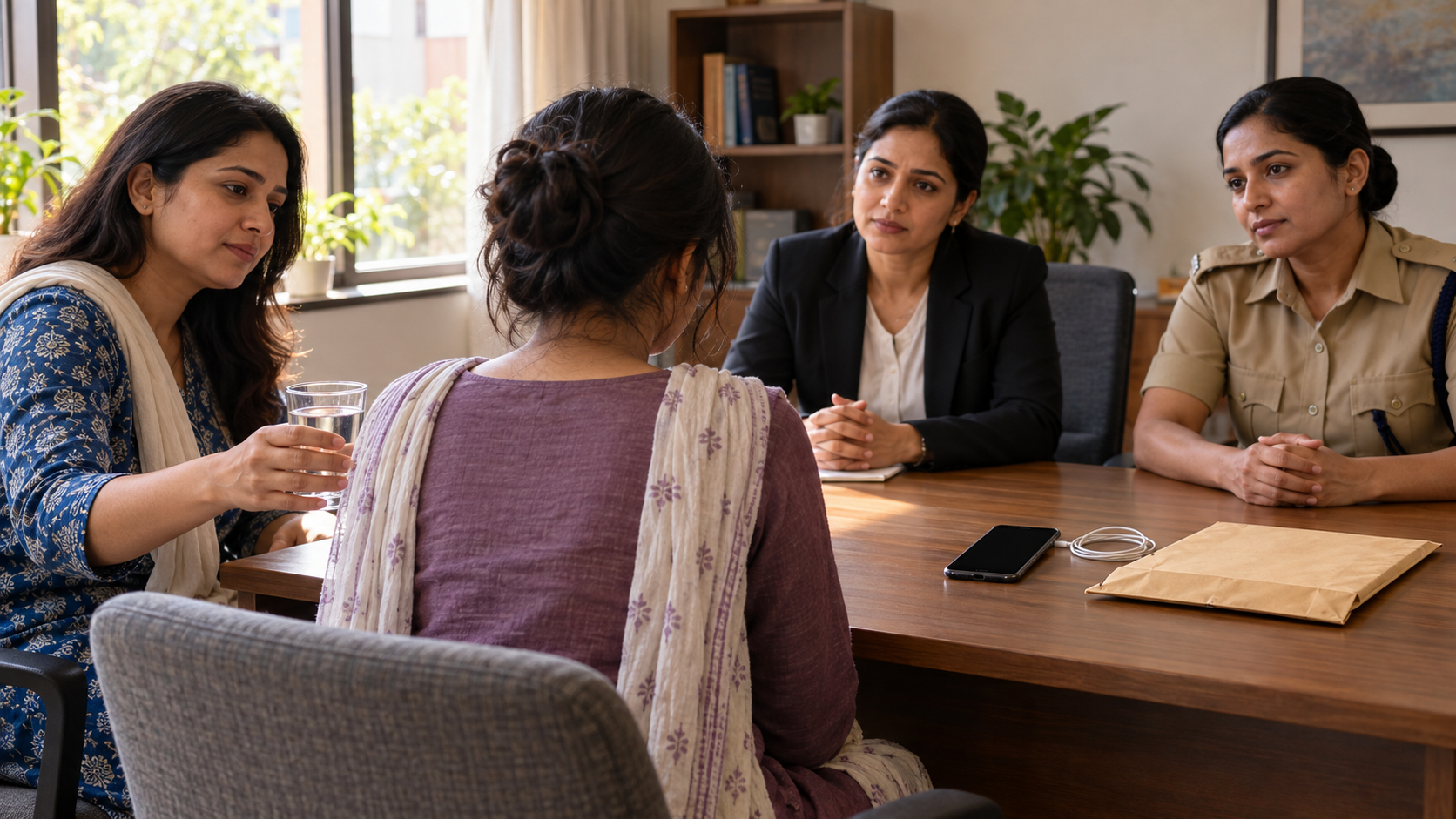
When intimate images, money demands, and threats converge, the order of action matters. The first goal is not to win an argument or recover every file. It is to reduce immediate danger while preserving enough evidence for an official investigation.
- Move to safety. If there is a threat of violence, go to a secure public place or a trusted person’s location and contact the police or emergency services. Do not attend a private meeting to negotiate, retrieve a device, or demand deletion. After a physical assault, obtain prompt medical attention and preserve records of the injuries.
- Preserve the digital trail. If it can be done safely, save threat messages, account handles, profile URLs, phone numbers, call logs, payment demands, dates, locations, and the names of witnesses before deleting an account or conversation. Keep original files and a backed-up copy; do not crop, annotate, or otherwise alter the only copy.
- Write a timeline. Record when contact began, the names used, when the true identity was discovered, when the relationship ended, each threat or demand, and any assault or theft. A contemporaneous timeline helps separate remembered facts from later assumptions.
- Secure the accounts from a safe device. Change the passwords for email, cloud storage, social media, and financial accounts. Review logged-in sessions, recovery addresses, shared albums, device access, and location sharing. If the alleged blackmailer knows the phone passcode, do not assume changing one social-media password is enough.
- Stop solo negotiation. Do not send additional images, meet privately, or make a payment on the assumption that it guarantees deletion. Coordinate further contact with police and a qualified local lawyer. If preserving evidence would expose you to immediate danger, leave first and document later.
- Make a specific report. Tell police about the false name or identity, intimate-image threat, demand for money, violence, theft, threat of retaliation, and any information suggesting other victims or minors. Keep a copy of the complaint and request a written acknowledgment or reference number where available.
- Control disclosure. Provide sensitive material only through a necessary police, legal, or other professional channel, and keep a record of who received it. Relatives, activists, and community groups should never circulate the images to prove that abuse occurred.
The complainant in Bhubaneswar went to a women’s police station despite an alleged death threat. That decision allowed investigators to make an arrest and examine the accused’s device. It does not mean every person in danger should confront an alleged blackmailer first. When violence is possible, create distance and bring in official support before the next interaction.
A community response must protect the woman, not consume her story

Cases involving religious identity can become viral material within hours. That attention may press institutions to act, but careless amplification can also expose the complainant’s workplace, address, family, face, or intimate history. Once copied across messaging groups, those details are difficult to recover.
- Do not publish the complainant’s name, image, address, workplace, personal accounts, or identifying screenshots.
- Do not contact the accused, possible associates, or potential victims to conduct a public “investigation.” It may increase danger, alert people who could destroy evidence, or contaminate later testimony.
- Pass precise leads to investigators: usernames, phone numbers, payment details, dates, possible recipients, hotel information, and the names of other potential victims. Do not embellish the lead before handing it over.
- Offer practical accompaniment to the police station, medical facility, or lawyer without demanding public testimony in return.
- Use accurate status words. Say “alleged” for an unproved act, “under investigation” for an open question, and “convicted” only after a court has reached that result.
- Challenge attempts to blame the woman for trusting someone, entering a relationship, cohabiting, or possessing intimate material. Responsibility for deception, blackmail, and assault belongs to the person proved to have committed those acts.
Communal generalization also weakens accountability. It can frighten other victims away from reporting, invite retaliatory spectacle, and give defenders of the accused a reason to dismiss concrete evidence as propaganda. Focus publicly on the alleged method and provable acts while allowing investigators to examine whether religion, repeated targeting, or coordination formed part of the motive.
A Hindu community concerned about targeted exploitation should build confidential paths to help: trusted women volunteers, verified local legal contacts, accompaniment for police reporting, and strict rules against sharing intimate material. A woman seeking protection should not have to surrender her privacy or become evidence for someone else’s political argument.
Key takeaways
- The Bhubaneswar complaint concerns more than a concealed religious identity: it alleges a false name, a marriage promise, intimate-image blackmail, a demand for money, assault, theft, and a death threat.
- The reported phone evidence may point to other women, minors, or associates, but those possibilities remain under investigation.
- An arrest permits investigation and court proceedings; it does not establish guilt.
- If a similar threat touches you, prioritize physical safety, preserve the digital trail, secure your accounts, and report through official channels.
- Never circulate a woman’s intimate material or identifying details in the name of raising awareness.
If you recognize this sequence around someone you know, act before the next private confrontation. Help her reach a safe place, preserve the messages and account details, and take that evidence to the police and qualified local counsel. Let authenticated files, victim testimony, and the court determine the wider pattern. Immediate protection and truthful accountability belong together.
References

Leave a Reply
You must be logged in to post a comment.