
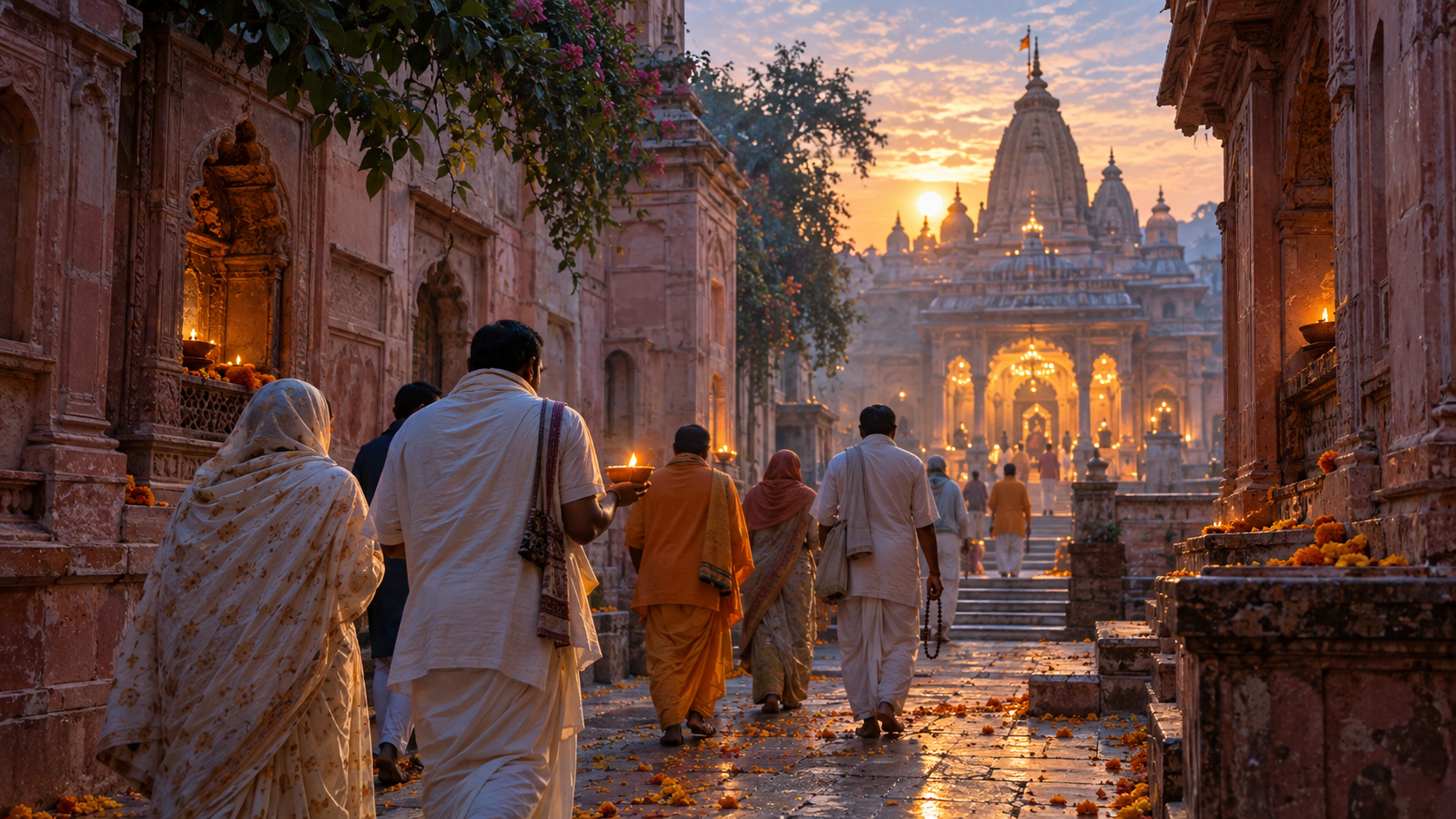
You may be wondering how to spend Kartik in Vrindavan without turning pilgrimage into a race between temples, photographs, queues, and unfinished vows. The answer is not to fit in everything. It is to give the pilgrimage a clear devotional centre and protect it each day.
Kartik brings devotees, temple life, and recurring opportunities to remember Krishna into a concentrated rhythm. That abundance can deepen your attention, but it can also scatter it. A simple vow, an unhurried daily structure, thoughtful parikrama, and respectful conduct will take you further than an overcrowded itinerary.
Choose a vow you can keep on a difficult day
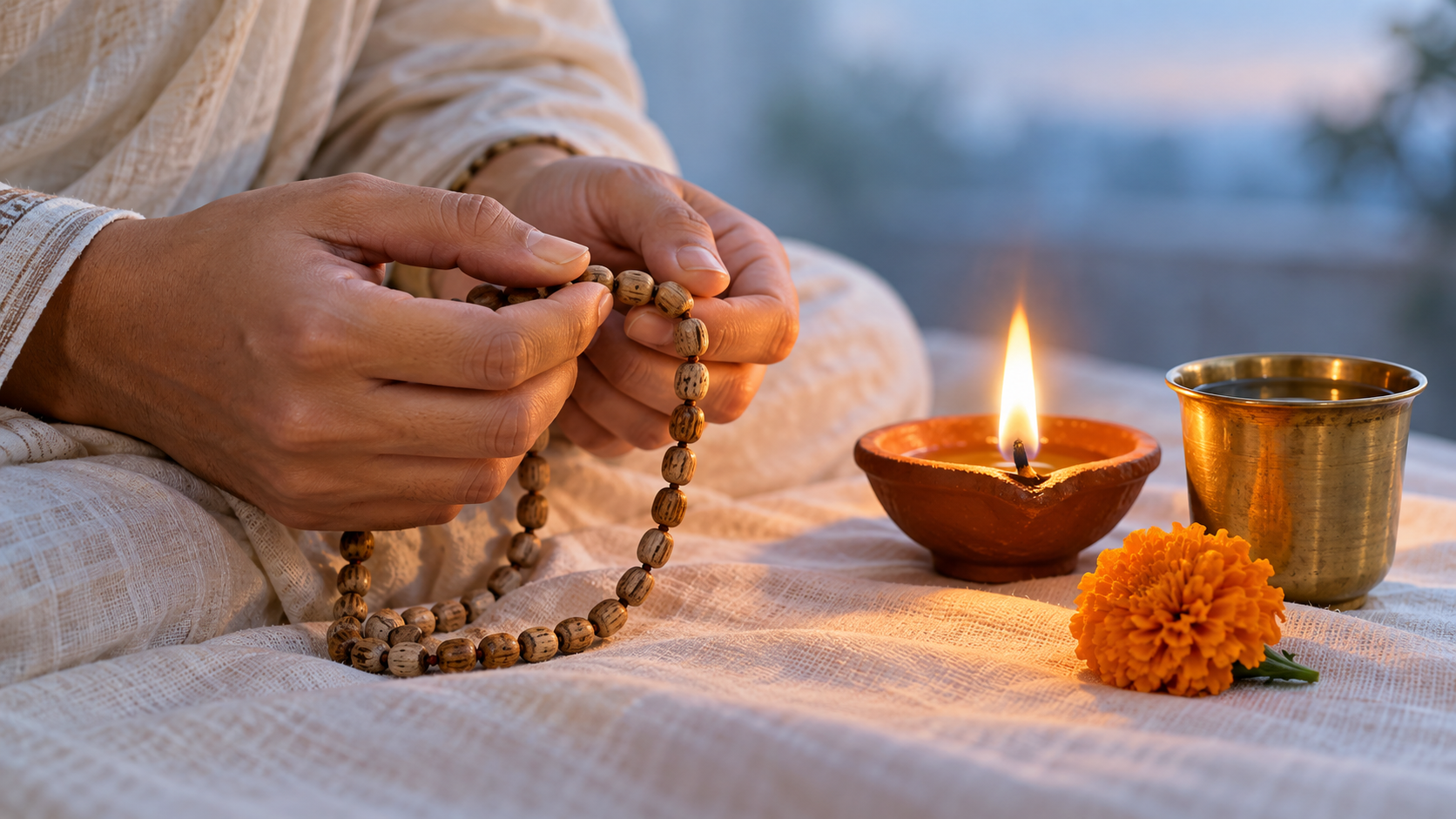
Your Kartik pilgrimage needs a sankalpa: a clear devotional intention that governs your choices. Without one, the loudest invitation, newest recommendation, or longest queue will decide your day for you.
If your guru, family tradition, or sampradaya has given you a Kartik vrata, begin there. Vrindavan is not the place to replace received discipline with a collection of attractive practices gathered from different traditions. Honour the path through which you have learned to approach Krishna.
If you have not been given a formal vrata, write a modest personal commitment with three parts:
- A primary practice: a fixed amount of japa, prayer, scripture reading, or attentive temple worship that you will complete every day.
- A supporting act: a form of seva such as helping another pilgrim, supporting temple service through an established channel, cleaning your space, or reducing the burden you place on hosts and residents.
- A restraint: less idle phone use, gossip, argument, recreational shopping, or compulsive photography.
State the vow in one sentence. Make it precise enough that, before sleeping, you can answer honestly whether you kept it. A vague promise to be more spiritual usually dissolves as soon as the day becomes crowded.
Choose a commitment you can maintain when you are tired, delayed, or disappointed. An impressive vow that collapses after a demanding day teaches less than a modest discipline kept with sincerity. You may do more when circumstances allow, but your foundational practice should not depend on ideal conditions.
If fasting is part of your observance, follow the guidance of your tradition and take your health needs seriously. A pilgrimage is not helped by concealing a medical condition, ignoring medication requirements, or treating physical distress as evidence of devotion. Seek individual medical guidance when your circumstances require it.
Build each day around attention, not temple count
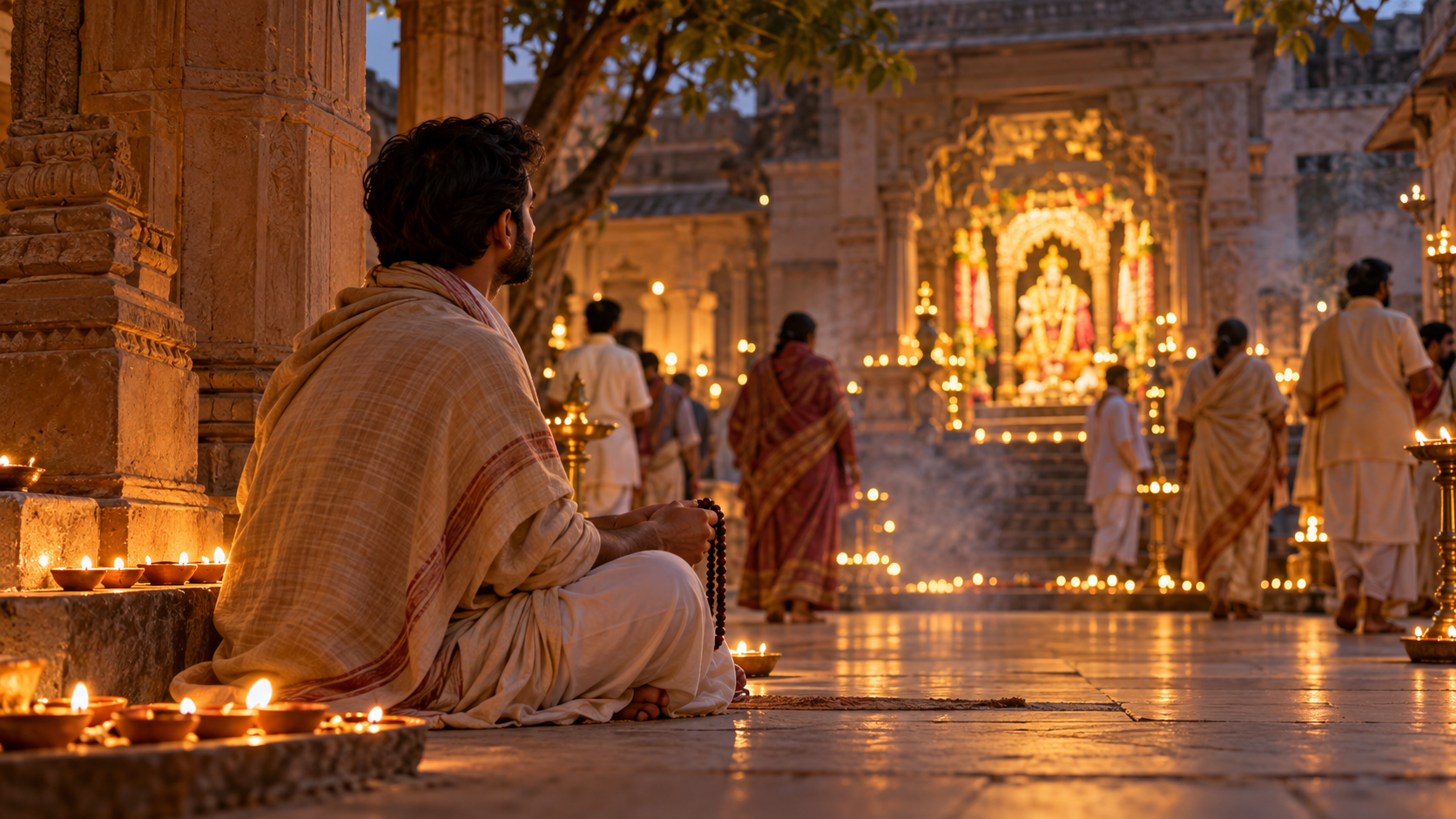
The common planning mistake is to begin with a list of places. Begin with the state of mind you want to protect. Darshan becomes hurried when every sacred encounter is treated as a stop to complete before the next one.
A workable Kartik day can follow this order:
- Remember your sankalpa before checking your phone. Begin with the practice that gives the day its direction.
- Complete your core devotion before avoidable travel. Do not leave the most important part of the day for the hour when you are most tired.
- Choose one principal darshan or programme. Other visits can be welcome additions, but they should not make the central encounter rushed.
- Leave a quiet interval between activities. Take prasad, rest, read, chant, or sit without trying to manufacture another experience.
- Close the day deliberately. Attend evening worship or aarti according to the temple’s practice, review your vow, and prepare what you need for the next morning.
This structure creates room for unexpected association and service without sacrificing your essential practice. It also helps when a queue moves slowly or a planned visit becomes impractical. You can release an optional activity without feeling that the pilgrimage itself has failed.
Inside a temple, let your conduct support everyone else’s darshan. Follow local instructions, dress respectfully, move with the queue, and do not block another devotee’s view for a photograph. Observe the temple’s rules before using a camera. A phone can record a beautiful moment while simultaneously removing you from it, so decide in advance when it will remain put away.
Resist the habit of comparing experiences. One person may receive long, quiet darshan; another may see the Deity only briefly in a moving crowd. The devotional question is not who obtained the better position. It is whether you approached with remembrance, humility, and care for the people around you.
Approach parikrama as a relationship, not a mileage test
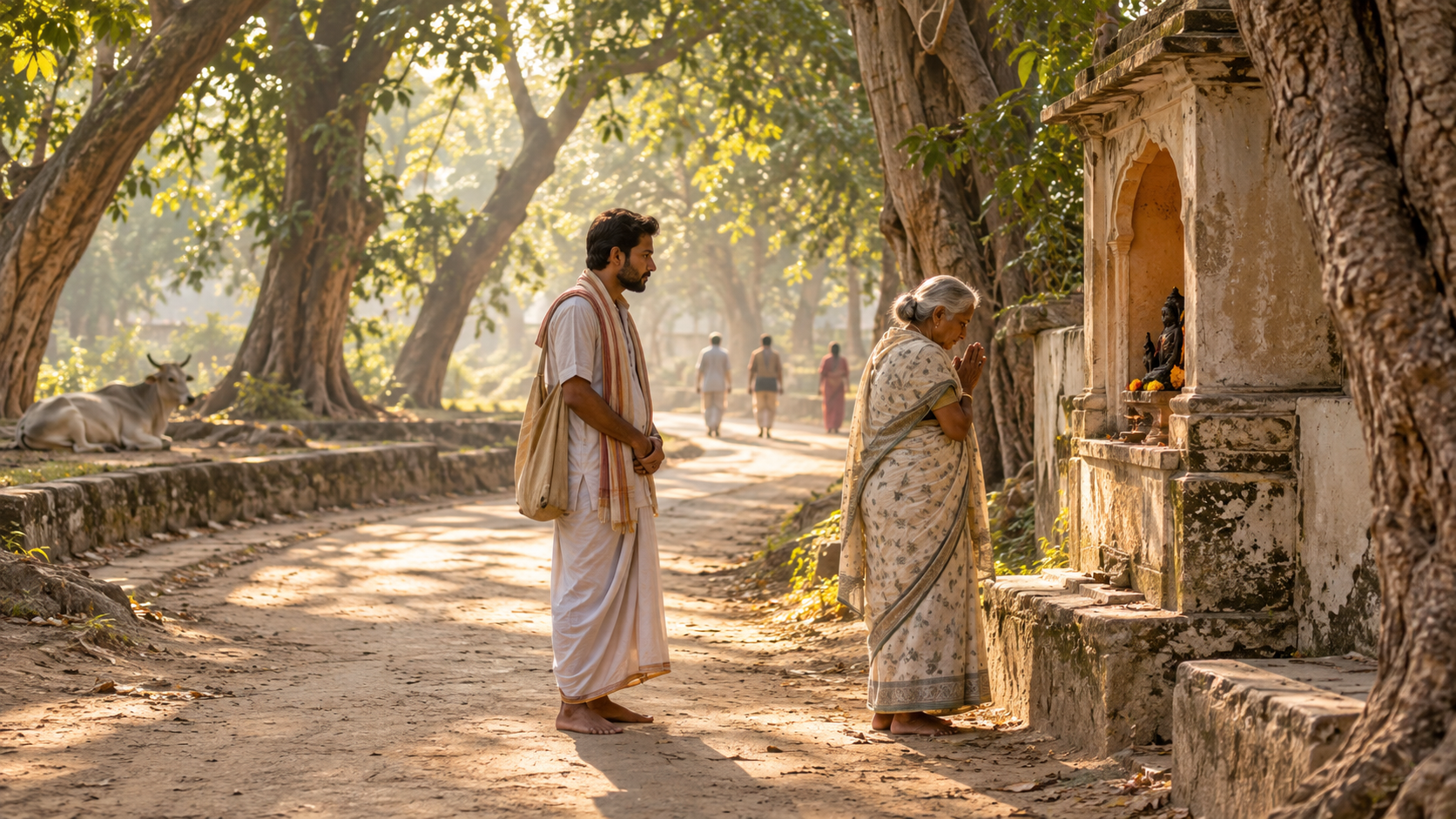
Parikrama joins movement, remembrance, sacred geography, and the company of devotees. An organised 84-kos Vraj Mandal parikrama is a substantial undertaking, not an item to add casually to an already full schedule. Choose the form of parikrama that matches your time, health, preparation, and devotional commitments.
Before setting out, ask the organiser or a trusted local contact for the actual route, expected duration, terrain, transport arrangements, water access, start point, finish point, and plan for anyone who cannot continue. Do not assume that enthusiasm will answer logistical questions once you are on the road.
Decide beforehand what will make the walk devotional. You might chant, listen attentively to katha given within your tradition, remember the places being visited, or walk quietly with other devotees. If conversation turns into gossip, complaint, or competitive storytelling, return gently to the purpose of the journey.
Keep the group in view, respect the pace expected by the organiser, and tell a companion if you need to stop. Carry what you genuinely need, but do not make others responsible for unnecessary baggage. Respect local rules concerning footwear and sacred premises while protecting your feet between sites when your health requires it. Do not leave bottles, food packaging, or devotional materials along the route.
Stopping because you are unwell or physically unable to continue is not a spiritual defeat. Concealing distress can turn your personal austerity into an emergency for the whole group. The measure of parikrama is not merely ground covered; it is the quality of remembrance and conduct you carry across that ground.
Let the holy dham correct your conduct
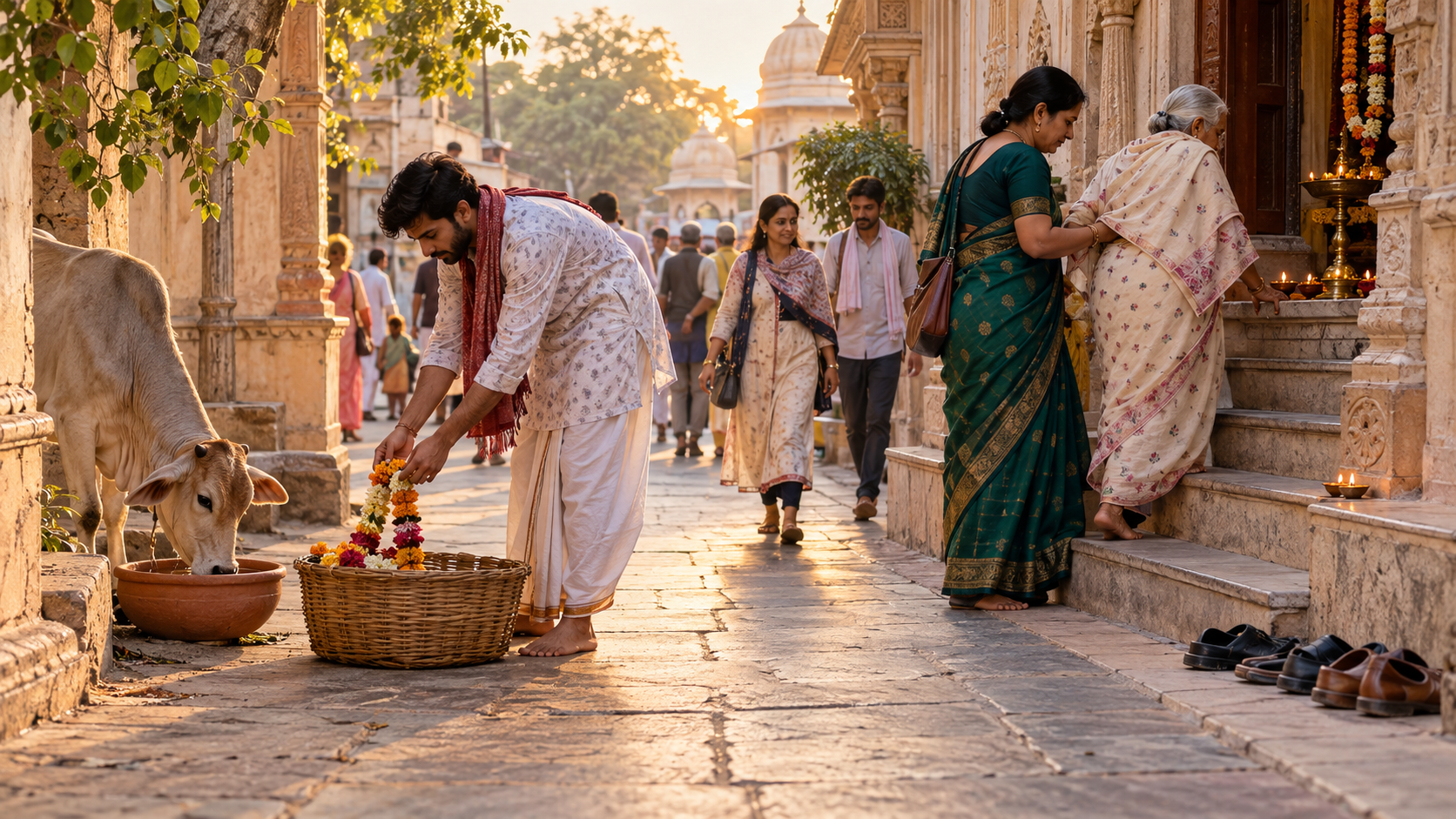
Vrindavan is not a devotional backdrop arranged for a visitor’s private experience. It is a living sacred place with residents, worshippers, workers, renunciants, families, animals, roads, temples, and practical pressures. Treating the dham with reverence therefore includes how you speak, wait, buy, give, travel, and dispose of what you use.
Begin with the people nearest to you. Speak courteously to drivers, vendors, temple workers, hosts, and residents. Do not photograph a person simply because their clothing or circumstances look spiritually evocative to you. Ask permission when an individual is identifiable, and accept refusal without argument.
Give thoughtfully rather than reactively. Use established channels when supporting a temple or organised service, and do not let social pressure push you into a donation you neither understand nor offer willingly. Dana should cultivate generosity and discernment, not suspicion or resentment.
Travel companions also become part of your practice. Agree on meeting points, communication, essential shared plans, and which activities are optional. Do not force everyone into the same pace or devotional expression. If you are responsible for a child, an older relative, or a person with limited mobility, build the day around their real capacity rather than expecting them to endure an itinerary designed for someone else.
At the end of each day, ask three direct questions: Where did I remember Krishna? Where did impatience govern me? What small correction will I make tomorrow? This examination prevents pilgrimage from becoming a series of outwardly sacred activities that leave your habits untouched.
The dham may expose distraction, possessiveness, irritation, comparison, or the desire to be seen as devout. Do not waste that recognition by becoming discouraged. Treat it as instruction. Apologise where needed, simplify the next day, and return to your sankalpa.
Key takeaways for your Kartik pilgrimage
- Write one clear sankalpa before expanding your itinerary.
- Follow the Kartik discipline of your guru, family tradition, or sampradaya rather than collecting disconnected practices.
- Complete your core devotion before optional travel and sightseeing consume the day.
- Choose one principal darshan or programme and leave enough space to receive it attentively.
- Confirm the route, support arrangements, and physical demands before joining a major parikrama.
- Make respect for residents, fellow pilgrims, temple rules, and the environment part of your seva.
- Review your conduct each evening and make one practical correction the next day.
- Carry a sustainable part of your Kartik practice home so that departure does not end the discipline.
Before adding another destination, write your sankalpa and shape tomorrow around it. When the pilgrimage ends, keep the smallest repeatable part of that discipline in your ordinary routine. The most useful gift of Kartik in Vrindavan is not a crowded gallery or a completed checklist, but a way of remembering Krishna that still governs you after you return home.
References
- Dandavats – VMP Day 1 | 84 Kos Vraj Mandal Parikrama 2026 | ISKCON Padayatra Ministry | Holy Walk of Devotion
- Dandavats – Kartik 2026 DAY 3 – Iskcon Vrindavan (Album of photos)

Leave a Reply
You must be logged in to post a comment.