
If you leave a Vijayadashami gathering inspired but unsure what to do the following morning, the missing link is usually not another speech. It is a simple way to turn what you heard into understanding, conduct and something you can pass to your family.
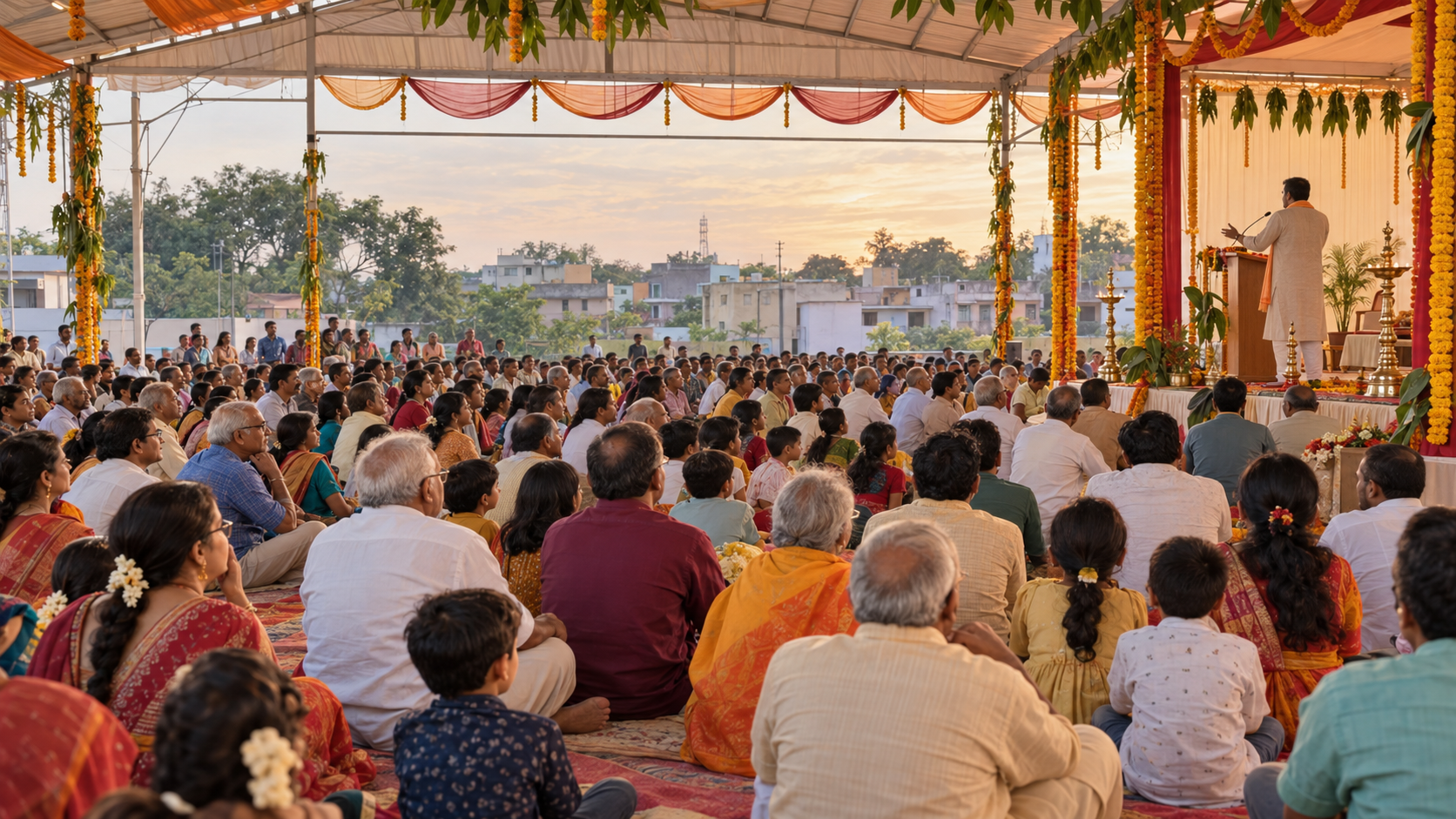
That was the practical challenge placed before the community at a Vijayadashami programme in Durga Nagar, Bhilai. HJS State Organiser Sunil Ghanwat guided more than 250 attendees on Dharmacharan, Dharmashikshan and Bharatiya culture. These three ideas belong together. Separating them explains why festival enthusiasm sometimes fades, and joining them gives you a workable plan for carrying Dharma into daily life.
Hearing a message is not yet Dharma education
A gathering can bring hundreds of people into the same room, but attendance measures presence, not formation. You may agree with every word and still be unable to explain one principle clearly, apply it to a difficult choice or teach it to a child. Dharma education begins when the message crosses that gap.
In this setting, a practical distinction among the three central terms helps:
- Dharmashikshan is learning what a principle, observance, symbol or tradition means and why it matters. It should give you more than a fact to repeat; it should help you distinguish Dharma from habit, fashion and personal preference.
- Dharmacharan is putting that understanding into conduct. It asks what changes in your speech, discipline, duties, worship, family relations or service once you know the principle.
- Bharatiya culture is the wider setting in which knowledge and conduct are transmitted: family memory, festivals, sacred narratives, language, arts, customs and community life.
The sequence is easy to remember: learn, practise and transmit. Learning without practice can become trivia. Practice without understanding can become mechanical. Cultural celebration without either may preserve the outer form of a festival while losing its formative purpose.
You can test whether a programme educated you by asking three questions before the day ends: What can I now explain in my own words? What will I do differently? Whom can I help understand it? If you cannot answer any of them, return to one idea from the programme rather than trying to remember the entire speech.
Use Vijayadashami as a starting point, not a one-day lesson
Different Hindu traditions remember Vijayadashami through distinct sacred histories and regional observances. You do not need to flatten those differences into one narration. The widely shared ethical frame – the victory of Dharma over adharma – already gives families a common educational starting point.
The weak version of that lesson stops at the statement that good defeats evil. The useful version asks you to identify what the conflict means in conduct. Which duty are you avoiding? Where is pride preventing correction? What kind of speech damages trust at home? Which good intention has never become a regular action?
Choose one answer and make it observable for the next week. A family might decide to complete an agreed duty before leisure, speak respectfully during disagreement, give time to community service or resume a neglected daily observance. These are examples, not a universal religious checklist. The right commitment is one that reflects the principle you actually learned and fits your responsibilities.
- Recall: Write one idea from the programme in a single sentence.
- Clarify: Explain what the idea means without relying on a slogan. If you cannot explain it, identify the question you still need to ask.
- Choose: Turn the idea into one specific action that can be repeated during the week.
- Review: After seven days, ask what you did, where you failed and what adjustment would make the practice sustainable.
Do not assign yourself five new practices at once. A small commitment completed and examined teaches more than an ambitious list abandoned after the festival. The review matters because Dharmacharan is not a performance of instant perfection. It requires noticing the distance between what you affirm and what you repeatedly do.
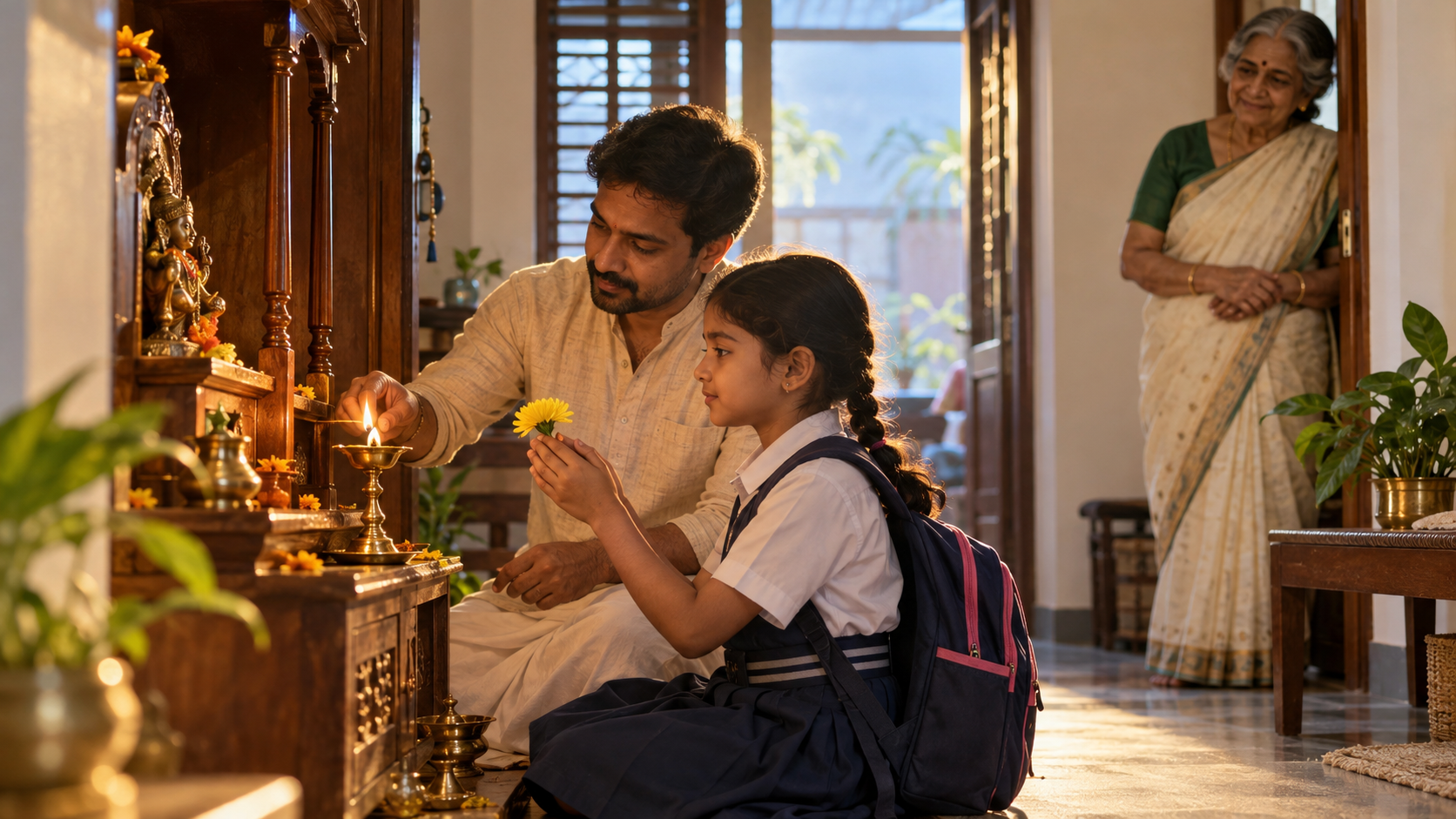
A family can teach Dharma without recreating a classroom
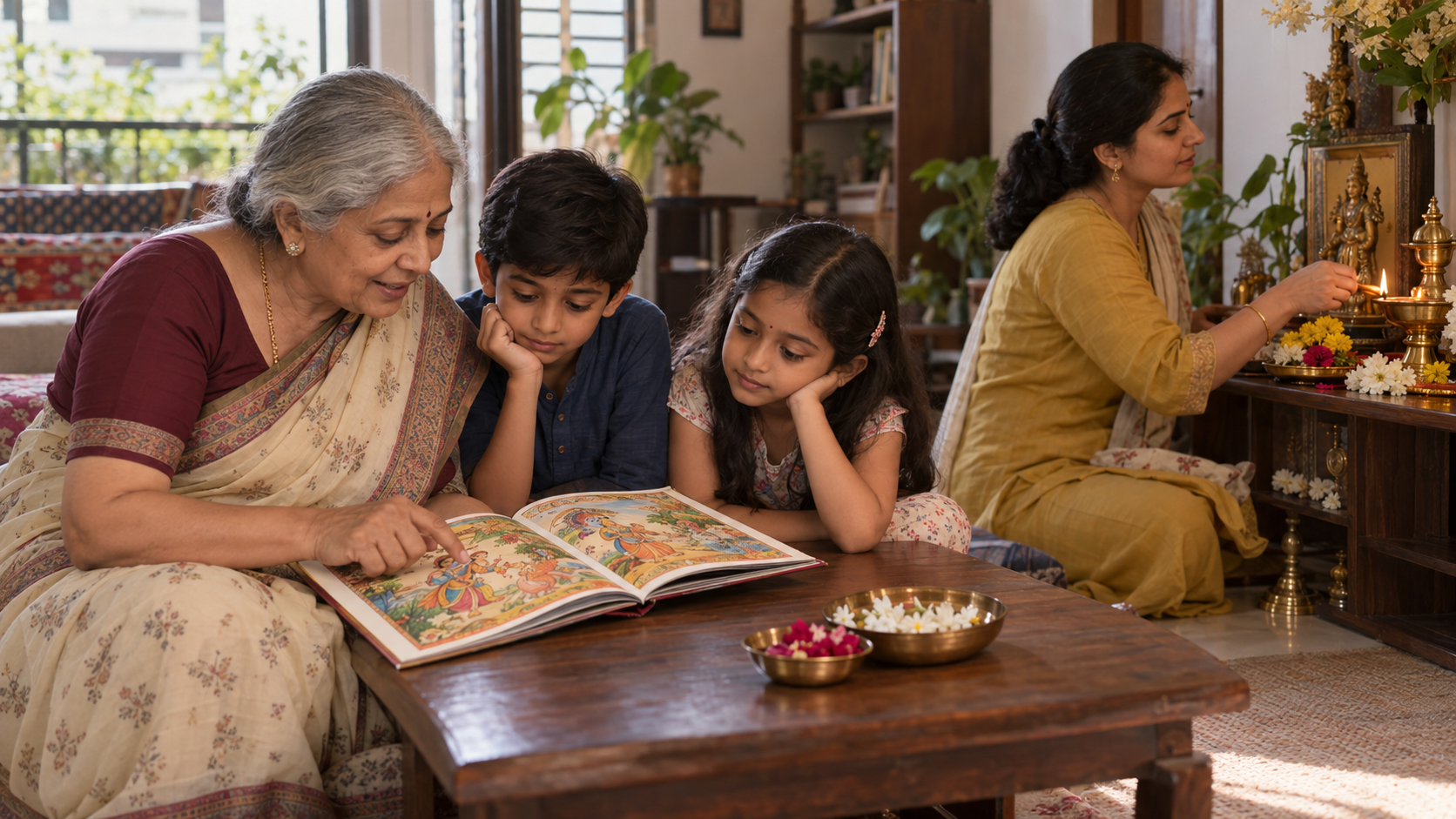
Many parents and grandparents hesitate because they do not consider themselves scholars. You do not need to lecture. You need a regular conversation in which the family moves from memory to meaning and from meaning to action. When a doctrinal or historical question exceeds your knowledge, say so plainly and take it to a knowledgeable teacher within the relevant tradition.
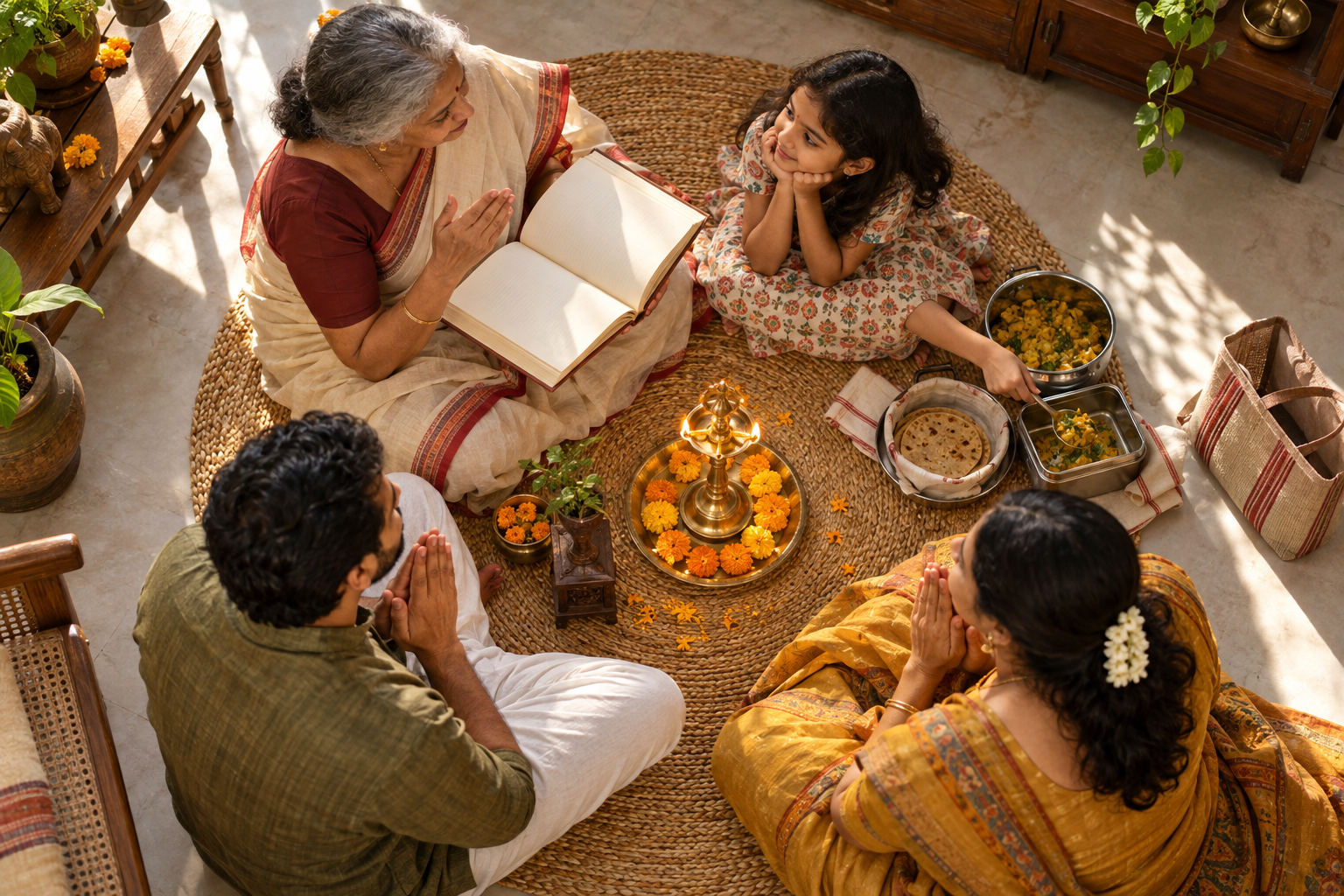
A twenty-minute weekly family session is enough to begin. The time limit keeps the practice focused and prevents it from becoming another obligation everyone avoids.
- Minutes 1-5 – remember: Let one person recount an idea, observance or sacred narrative connected with the recent festival.
- Minutes 6-10 – explain: Ask what it teaches and which words need clarification. Separate what the tradition teaches from what the family merely does by custom.
- Minutes 11-15 – apply: Name a real decision at home, school, work or in the community where the teaching matters.
- Minutes 16-20 – commit: Choose one action, record it and decide when the family will review it.
Adjust the question, not the principle, for different ages. A young child can name one truthful or helpful action. An older child can discuss why a right action becomes difficult under peer pressure. Adults can examine competing duties and whether their conduct matches what they expect from the next generation.
Keep a small family Dharma notebook with four entries for each session: date, teaching, action and review. Its purpose is not to grade anyone. It prevents the conversation from disappearing into good intentions and shows which practices have begun to endure.
Organisers should design the follow-through before the speech
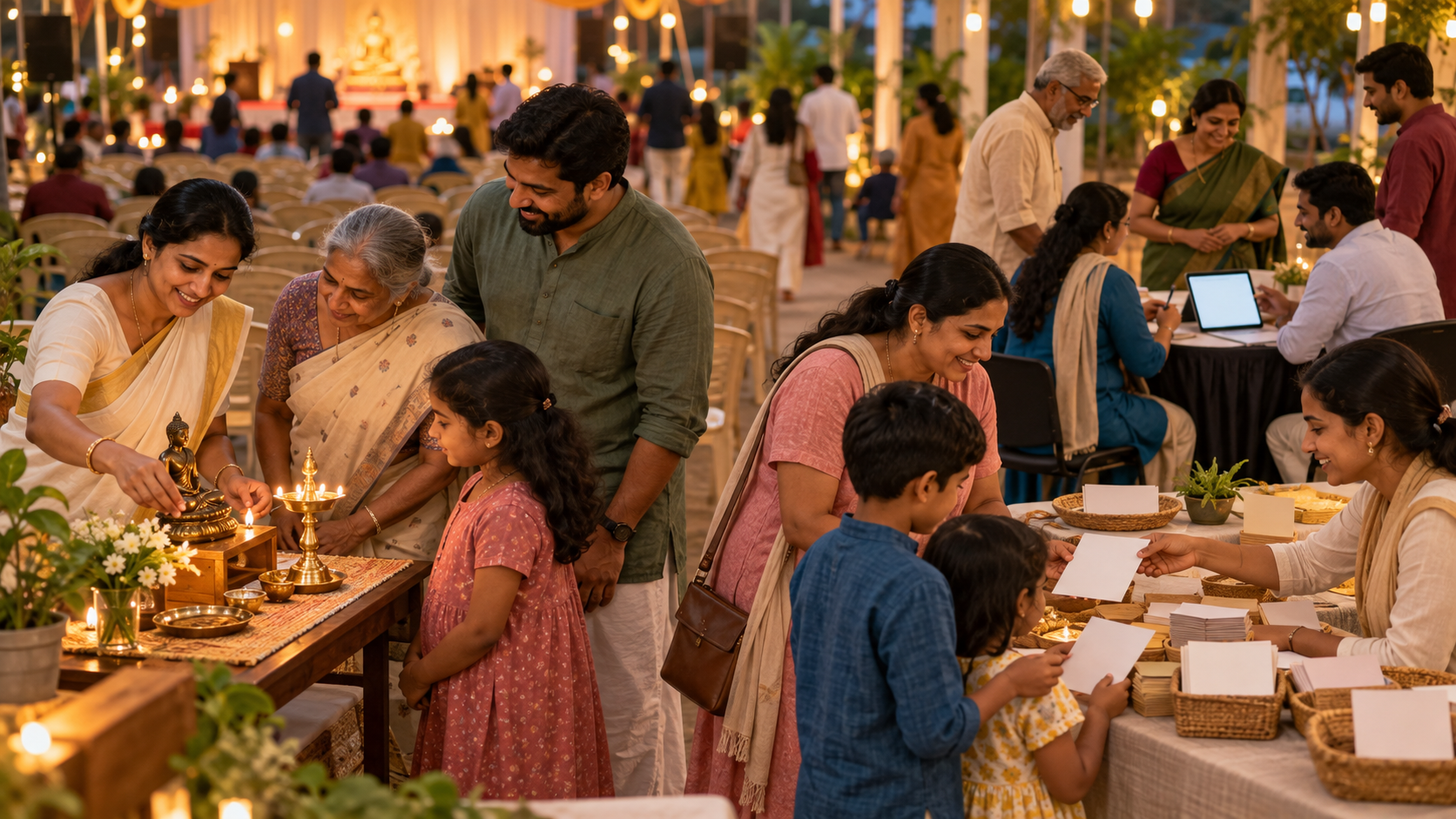
A large programme creates reach, but it also creates a follow-through problem. Many people can hear the same guidance while leaving with different impressions and no next step. If you organise a Vijayadashami event, decide what an attendee should be able to explain and practise before you finalise the stage programme.
- State one learning outcome: For example, every attendee should be able to explain the relationship among Dharmashikshan, Dharmacharan and cultural transmission.
- Provide one reflection prompt: Ask attendees to write the principle they most need to practise, rather than merely recording several memorable phrases.
- Give one family assignment: Supply a question that can be discussed at home that evening and one action that can be reviewed after a week.
- Create a question route: Tell attendees where unresolved questions can be taken to a competent teacher or a later study session. Do not reward confident guesswork on matters of tradition.
- Schedule a follow-up point: A short meeting or study circle can revisit practice after several weeks. Announce it at the original programme, while attention and context are still present.
The evaluation can remain modest. Ask whether participants can explain one teaching, whether they attempted one practice and whether they discussed it with another person. Those questions reveal educational movement more clearly than asking only whether the audience enjoyed the event.
Key takeaways
- Dharmashikshan gives you understanding; Dharmacharan turns that understanding into conduct; Bharatiya culture helps carry both across generations.
- A festival message becomes useful when you can explain one idea, connect it to a real choice and practise it repeatedly.
- Families can begin with one twenty-minute conversation each week and one recorded commitment.
- Event organisers should plan the learning outcome, home discussion and follow-up before the programme takes place.
- Success is not measured only by attendance. It is also visible in what participants can explain, practise and transmit.
If you attended a programme like the one in Bhilai, write down one teaching tonight and choose one action for the coming week. If you organise such programmes, build that same step into the event itself. Vijayadashami then becomes more than an annual moment of affirmation: it becomes the beginning of sustained Dharma education.
References

Leave a Reply
You must be logged in to post a comment.