
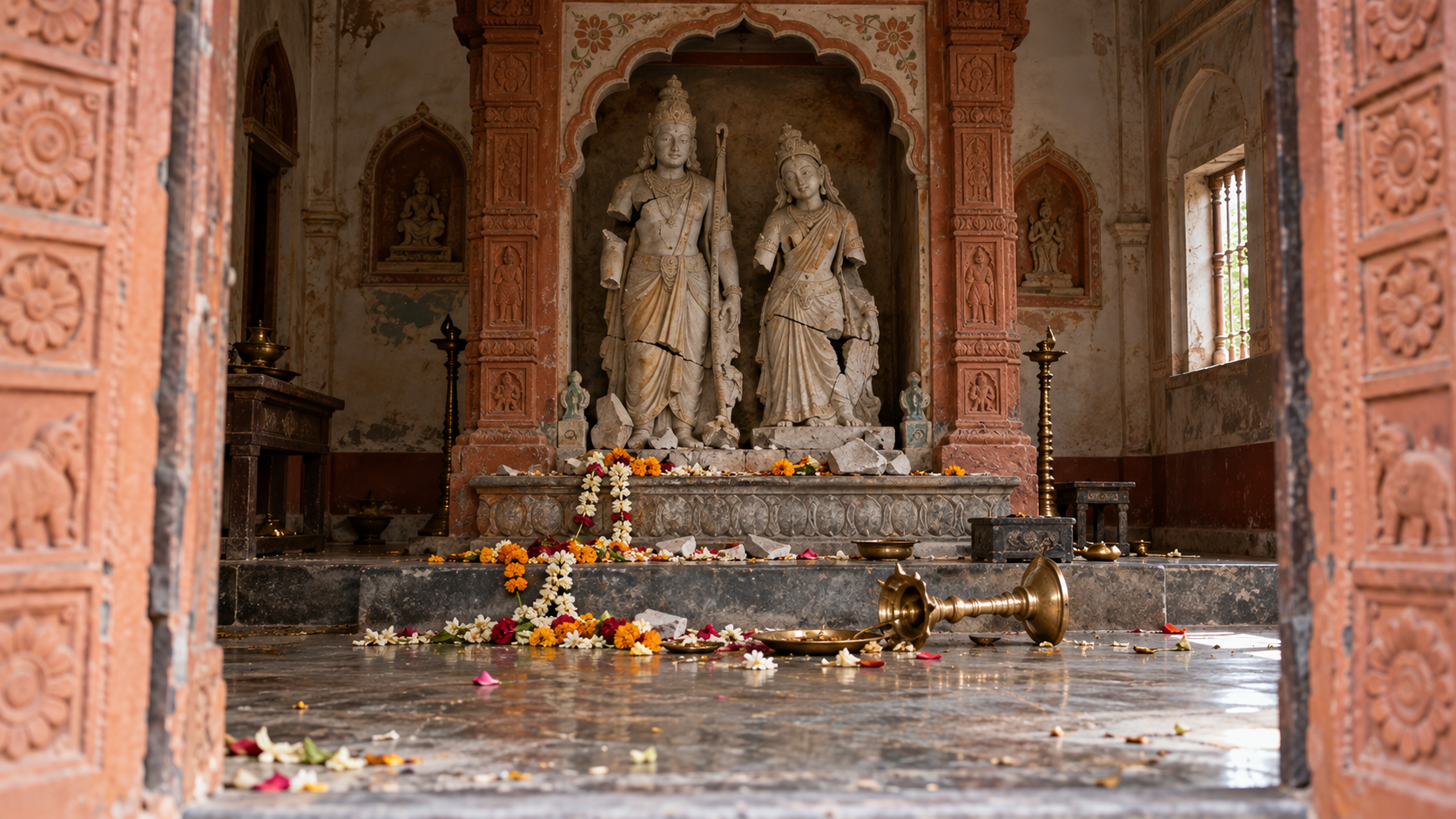
If you encountered messages about the vandalism at a Ram temple in Birbhum, your first question is probably the right one: what is actually known? The answer needs precision. The murtis of Bhagwan Ram and Mata Sita were found damaged inside the temple, and a blood-like substance was discovered on the premises. Who committed the act, what the substance is, and why it was there remain unresolved.
You do not have to choose between defending Hindu dignity and waiting for evidence. A responsible dharmic response does both. It names the desecration without euphemism, refuses to manufacture a culprit, protects the investigation, and insists on accountable action.
What is confirmed, and what remains unproven
The incident occurred at a Ram temple in the Chouhatta area of Labhpur in West Bengal’s Birbhum district. The murtis of Bhagwan Ram and Mata Sita were found in a damaged condition. Devotees gathered after the news spread, senior district police officials visited the site, and additional policing was used to prevent the tension from escalating.
Confirmed at this stage
- The damaged sacred images were found inside the temple.
- A substance resembling blood was present at the site.
- A Forensic Science Laboratory team was called so that samples could be scientifically examined.
- Police began inspecting the premises and examining possible motives, the number of people involved, and whether the act was planned.
- No arrest had been announced, and no suspect had been publicly identified at the documented stage of the investigation.
Not established at this stage
- Whether the substance is blood at all.
- If it is blood, whether it is human or animal.
- Whether the substance was placed during the vandalism, left earlier, or is unrelated.
- Who damaged the murtis or how many people were involved.
- Whether the vandalism was driven by anti-Hindu hostility, another motive, or a combination of motives.
- Whether the act was premeditated.
This distinction is essential. The injury to Hindu worship is real and does not become less serious merely because the offender’s identity is unknown. But impact and motive are not the same question. The temple was violated; the evidence must still determine by whom and for what purpose.
The blood-like substance is evidence, not yet an answer
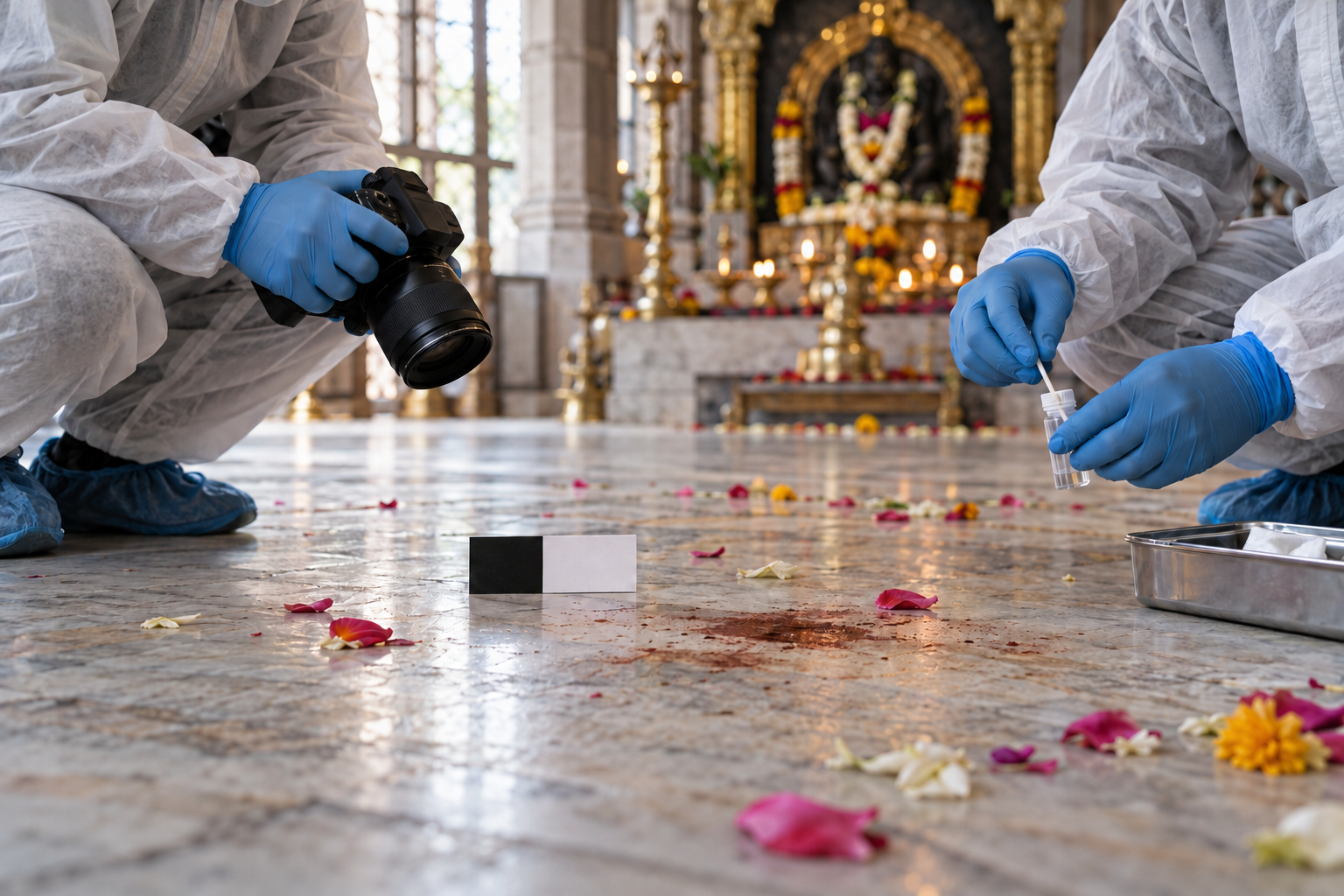
The phrase blood-like substance is not a technicality. It is the most accurate description available before laboratory testing. Appearance alone cannot establish whether a material is human blood, animal blood, or something else. It cannot establish who deposited it, when it appeared, or whether it is connected to the damaged murtis.
If you share the case, preserve that wording: a blood-like substance was found and sent for forensic examination. Do not silently shorten it to blood was found. Do not add a supposed ritual, community, perpetrator, or motive that investigators have not established. Each added claim turns an observed fact into an accusation.
The forensic result will answer only the question it was designed to answer. If the material is identified as blood, investigators must still determine its origin and relevance. If it proves to be another substance, that does not erase the vandalism. The damaged murtis remain the central confirmed offence against the temple and its devotees.
When an official result becomes available, look for two separate statements: what the laboratory identified, and whether investigators connected it to the act of vandalism. A finding on the first question does not automatically settle the second.
What a credible investigation must establish
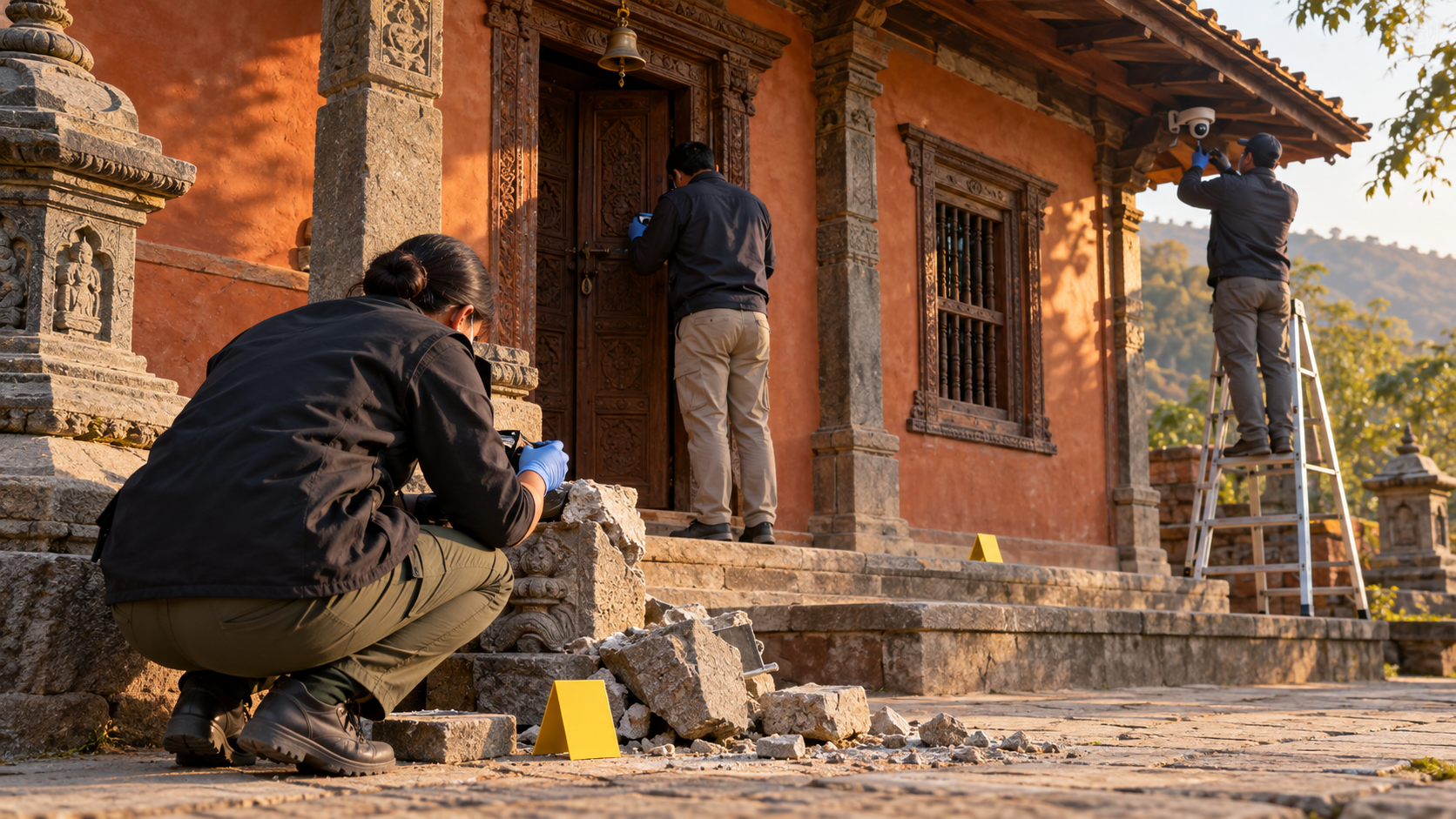
The presence of senior officers and forensic personnel is an appropriate beginning, but visible activity at the scene is not the same as a solved case. Devotees and citizens should judge the investigation by the questions it answers.
- What exactly was damaged? Investigators need a clear record of the condition and location of each murti and any other disturbed object.
- What is the unidentified substance? Laboratory analysis should determine whether it is human blood, animal blood, or another material.
- Is that substance connected to the vandalism? Physical presence at the same site creates a question, not proof of a relationship.
- How and when was the temple entered? Entry points, the pattern of damage, available recordings, witness observations, and other physical evidence may help reconstruct events.
- Was the act planned, and how many people participated? These are among the angles police were examining and should be resolved from evidence rather than public conjecture.
- Who was responsible, and what was the motive? A credible conclusion must connect an identified person or persons to the scene and distinguish evidence of motive from assumptions based on local tension.
Public accountability should follow the same sequence. First identify what happened. Then identify who did it. Then establish motive and apply the appropriate consequences. Reversing that order may produce a convenient narrative, but it weakens the demand for justice by attaching it to claims that may collapse under scrutiny.
Calls for calm should not become a substitute for answers. Equally, calls for swift action should not become permission to bypass evidence. The proper demand is both speed and rigor: secure the scene, complete the forensic work, identify those responsible, communicate verified findings, and act against the perpetrators.
How devotees can protect sanctity, evidence, and social peace
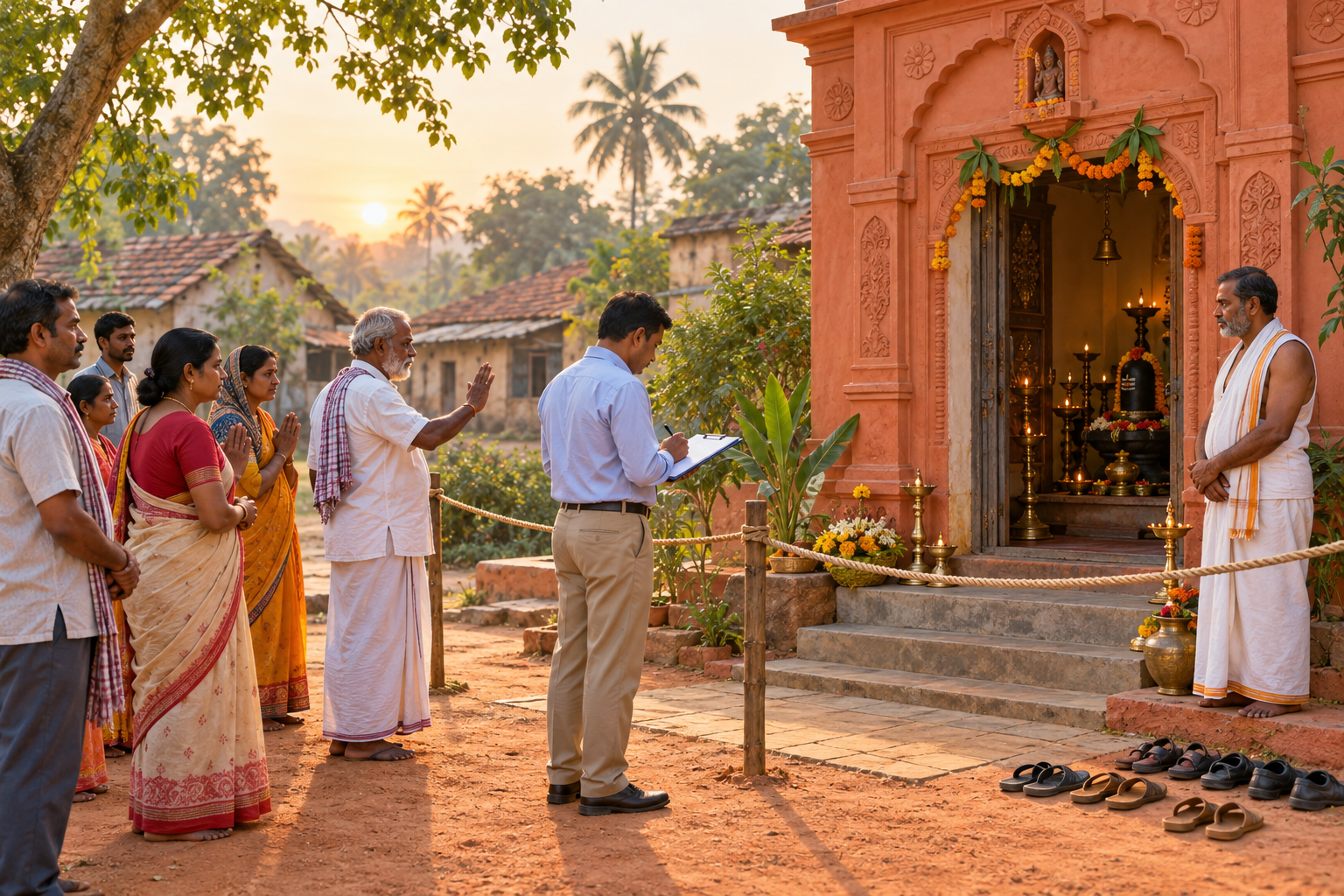
If you are part of the local temple community, the first responsibility is to avoid damaging the very evidence that could establish accountability. Sacred restoration matters, but cleaning, moving objects, or repairing damage before investigators release the scene can destroy information. The temple committee should coordinate the timing of any intervention with the investigating authorities.
- Leave the scene undisturbed while it remains under examination. Do not touch the substance, reposition a murti, clean a surface, or admit unnecessary visitors.
- Give original material directly to investigators. Anyone holding photographs, video, security footage, or a first-hand observation should preserve the original version. Cropping, adding captions, forwarding through multiple apps, or editing a file can remove context.
- Keep observation separate from interpretation. A useful witness account records what the person saw, heard, and when. It should not be rewritten to match another person’s theory.
- Use one verified community update. A temple committee can maintain a short fact sheet separating confirmed information, pending forensic questions, and false claims. This reduces the chance that different representatives circulate contradictory versions.
- Protect witnesses and worshippers. Do not publish names, phone numbers, home addresses, or unverified accusations. Anyone facing an immediate threat should contact local authorities rather than confront a suspected person.
- Plan restoration only after the scene is released. Once investigative requirements are complete, the trustees and qualified religious authorities can decide how the murtis and temple should be restored according to the temple’s own sampradaya and ritual practice.
If you are following the case from outside Birbhum, your most useful contribution is disciplined attention. Share the confirmed location and damage, retain the word blood-like, and mark the forensic result, perpetrator, and motive as pending. Ask whether testing has been completed and whether suspects have been identified; do not supply your own answers.
Restraint here is not passivity. Rumours can divert attention from the temple, expose innocent people to danger, and give authorities an excuse to discuss social-media disorder instead of investigative progress. Factual discipline keeps public attention fixed on the desecration and on the duty to solve it.
Key takeaways
- The vandalism of the Bhagwan Ram and Mata Sita murtis inside the Labhpur temple is established.
- The unidentified material only resembled blood when discovered; forensic testing is needed before describing it more definitively.
- No publicly identified suspect or proven motive was available at the documented stage of the case.
- The spiritual injury to devotees can be acknowledged without inventing the offender’s identity or intention.
- Local worshippers should protect evidence first and undertake ritual restoration after investigators release the scene.
- Everyone sharing the case should distinguish confirmed facts, pending questions, and unsupported claims.
Your next useful act is simple: preserve the exact facts, reject communal guesswork, and keep asking for the forensic finding and evidence-based identification of those responsible. That is how concern for a desecrated temple becomes a durable demand for truth, restoration, and justice.
References

Leave a Reply
You must be logged in to post a comment.