
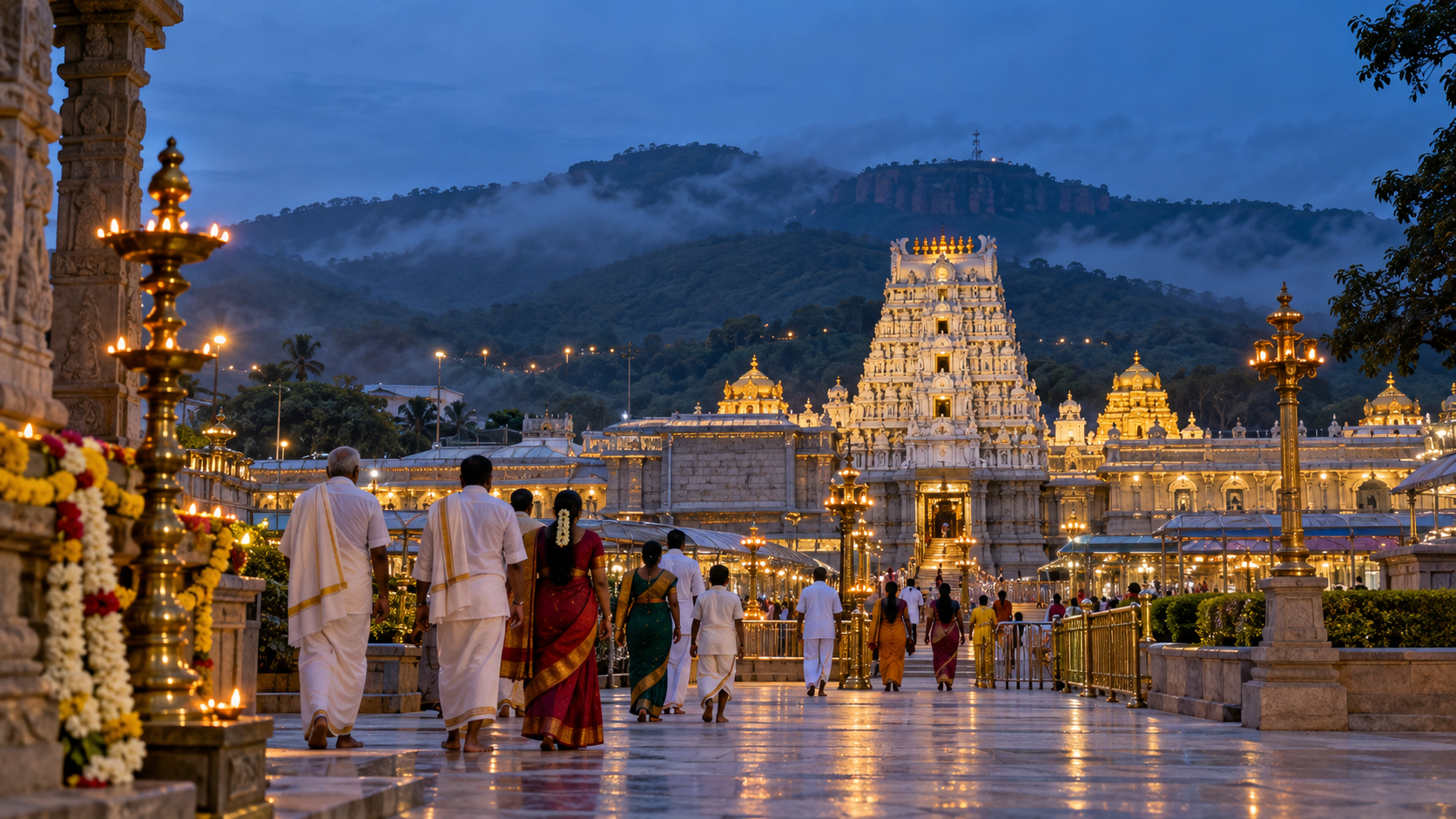
If you are choosing when to visit Tirumala in November 2026, do not begin by chasing the most impressive festival name. First decide whether your priority is Srivari darshan, a particular Tirunakshatram observance, or a pilgrimage shaped more broadly by the sacred month of Karthika. Those aims can lead to different travel decisions.
November carries a rich devotional theme, but a month-level festival listing is not the same thing as a confirmed daily programme. Treat dates, timings, venues and participation arrangements as details to verify before you make a non-refundable booking.
What Tirumala commemorates during November 2026
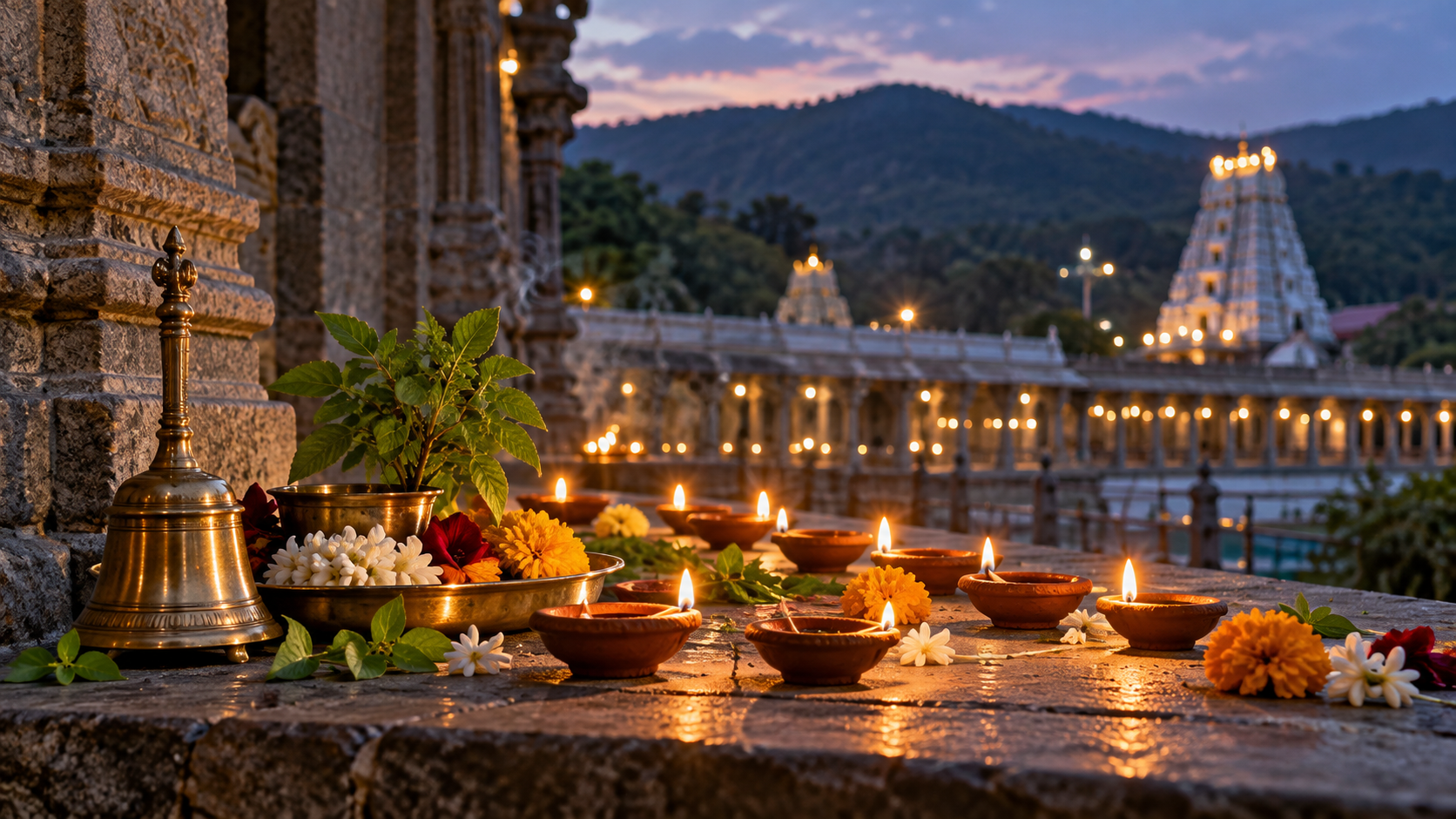
Karthika gives the month its larger sacred setting. Within it, Tirumala observes annual Tirunakshatram celebrations connected with revered Sri Vaishnava saints, some of the Alwars and Viswaksena. These figures are remembered through their relationship to service, devotion and the living tradition surrounding Lord Venkateswara.
A Tirunakshatram is a sacred birth-star anniversary. It follows the ritual calendar rather than functioning merely as a birthday fixed to the same Gregorian date every year. Varsha Tirunakshatrotsavam therefore means an annual observance of that sacred anniversary.
The Alwars are the poet-saints whose devotion stands at the heart of the Sri Vaishnava inheritance. The November cycle concerns some of them, not necessarily every Alwar. Viswaksena occupies a different place: he is honoured as the divine commander-in-chief. His inclusion shows that the month is not just a succession of saintly birthdays. It also remembers the sacred order of service itself.
This distinction matters when you plan. If your purpose is to honour a particular Alwar or acharya, you need that figure’s confirmed observance date. If you want to experience Karthika at Srivari Temple more generally, you can choose dates around your wider pilgrimage needs while remaining attentive to the programme announced for those days.
Read the festival calendar without turning it into a guessed timetable
The Hindu ritual calendar and the Gregorian travel calendar answer different questions. Karthika identifies the sacred period. Your ticket, room and journey require a numbered civil date. The bridge between them must come from a current daily programme, not from an assumption that a lunar observance always lands on a familiar date.
| What you can establish | What it tells you | What still needs confirmation |
|---|---|---|
| Karthika shapes November’s devotional setting | The month has significance beyond an ordinary travel window | The exact Gregorian date and time of each observance |
| Annual Tirunakshatrams honour Sri Vaishnava saints and some Alwars | Remembrance of the devotional lineage is a central theme | Which honoree is commemorated on the day you visit |
| Viswaksena is also included | The cycle extends beyond the Alwars alone | The venue, form and public visibility of the observance |
A name appearing in a monthly festival calendar does not, by itself, establish that there will be a public procession, a separate viewing area or a special form of admission. It also does not tell you how the observance will interact with your ordinary darshan arrangements. Those are operational questions, and they should remain open until TTD’s current information answers them.
Use this sequence before committing your travel budget:
- Write down your main purpose: general darshan, Karthika pilgrimage or a named Tirunakshatram.
- Check the current TTD daily programme for the Gregorian date, time, venue and any participation conditions.
- Confirm that the announcement refers to Tirumala’s Srivari Temple rather than another TTD-administered temple or a related observance elsewhere.
- Keep unverified dates in pencil. Book the least flexible part of the trip only after the detail important to your purpose is confirmed.
- Recheck shortly before departure because a correct festival date does not, on its own, guarantee that every associated activity is open to every visitor.
Build the trip around your real purpose

Many pilgrims quietly combine two different hopes: they want an orderly darshan of Lord Venkateswara, and they want to witness something distinctive to the festival calendar. There is nothing wrong with holding both hopes. Trouble begins only when the second is treated as guaranteed and the first is left unplanned.
If Srivari darshan is your non-negotiable aim, organise the pilgrimage around authorised darshan and travel arrangements. Let a Tirunakshatram observance deepen the visit if the confirmed programme makes that possible. Do not sacrifice the central purpose of the journey for an event whose time, visibility or access you have not verified.
If a particular Tirunakshatram is the reason for your journey, reverse the order. Confirm the honoree and date first. Then ask four practical questions: Where is the relevant observance held? At what time? Can ordinary pilgrims witness it? Does it require any arrangement beyond your normal darshan plan? A festival name alone answers none of these.
If you are travelling with children, older relatives or anyone who needs a simpler day, make one event the anchor rather than filling every hour. A pilgrimage ceases to be attentive when the group spends the day racing between uncertain possibilities. Confirm the one element that matters most, leave room around it and allow the rest of the sacred day to unfold without pressure.
Approach a Tirunakshatram as remembrance, not just spectacle
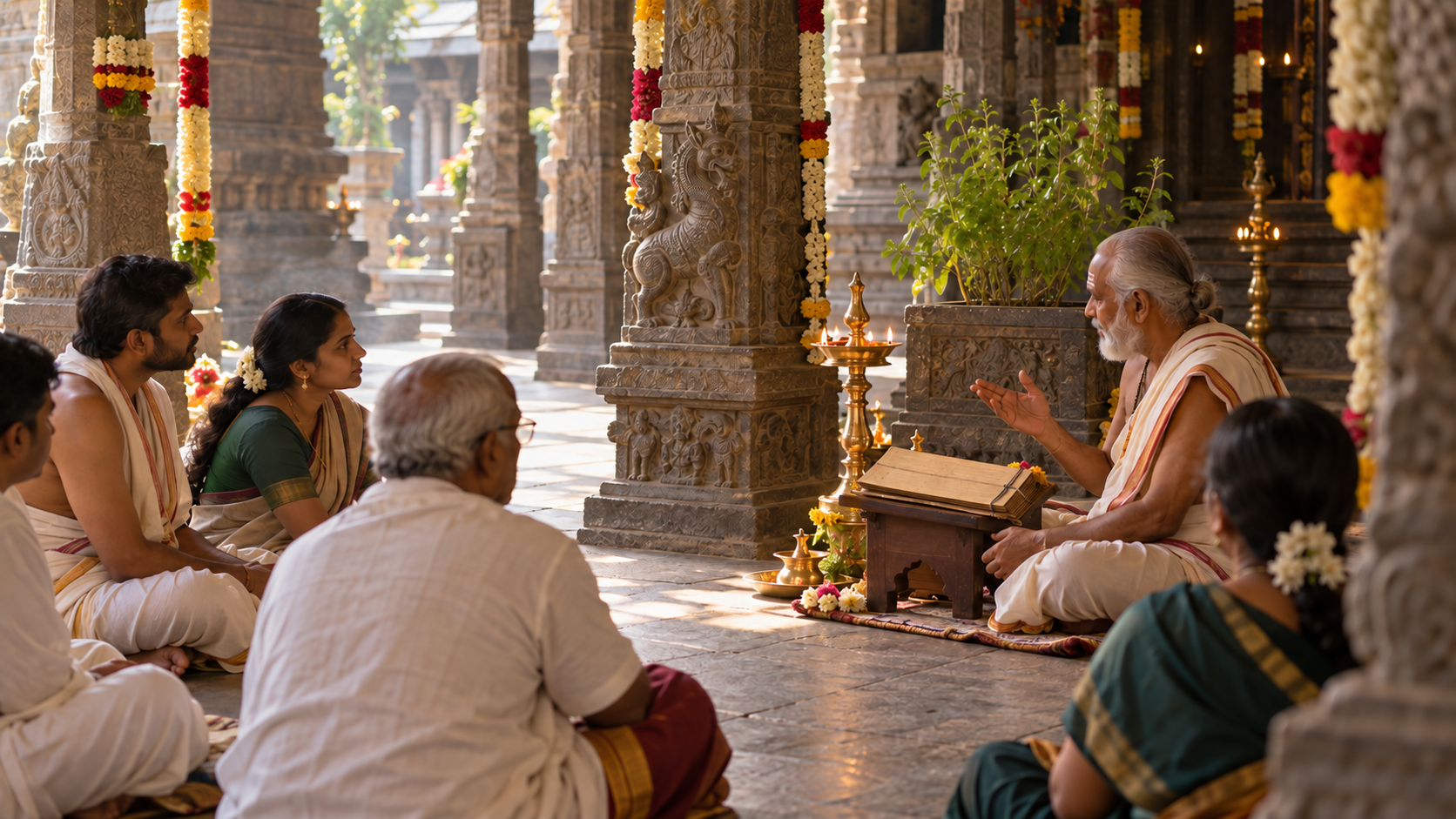
The easiest way to miss the meaning of a Tirunakshatram is to treat it as a performance added to an ordinary temple visit. Its centre is remembrance: a life of devotion is recalled so that devotion can be renewed in the present.
Before you travel, identify the person being honoured on your chosen day. Learn the broad shape of that person’s service to Lord Venkateswara or to the Sri Vaishnava tradition. You do not need to master a long biography. You need enough context to recognise why the remembrance belongs in the temple’s living calendar.
Three questions are sufficient preparation:
- Who is being commemorated, and what kind of service defines that figure?
- Is the honoree an Alwar, another Sri Vaishnava saint or Viswaksena?
- What quality can you carry into your own darshan: humility, disciplined service, remembrance or surrender?
That preparation also corrects a common expectation. Religious importance is not measured by the scale of a visible event. An observance can be meaningful even if your encounter with it is brief or if much of its ritual life is not presented as a public spectacle. The point is not to collect a festival sighting. It is to let the lineage sharpen the way you stand before Srivari.
Key takeaways for your November pilgrimage
- November 2026 at Tirumala is shaped by Karthika and annual Tirunakshatram observances.
- The commemorative cycle includes revered Sri Vaishnava saints, some Alwars and Viswaksena.
- A monthly festival entry establishes the devotional context, not every operational detail of attendance.
- Match the lunar observance to a confirmed Gregorian date before making an inflexible booking.
- Plan Srivari darshan and festival participation as two separate needs, even when you hope to combine them.
- Learn who is being honoured so that the observance becomes part of your sadhana rather than merely an item on your itinerary.
Choose your purpose now, keep unconfirmed dates flexible, and verify the daily programme before you leave. When the practical plan is settled, take one further step: arrive knowing whose sacred memory you are entering. That small act of preparation can turn a crowded calendar date into a coherent pilgrimage.
References

Leave a Reply
You must be logged in to post a comment.