
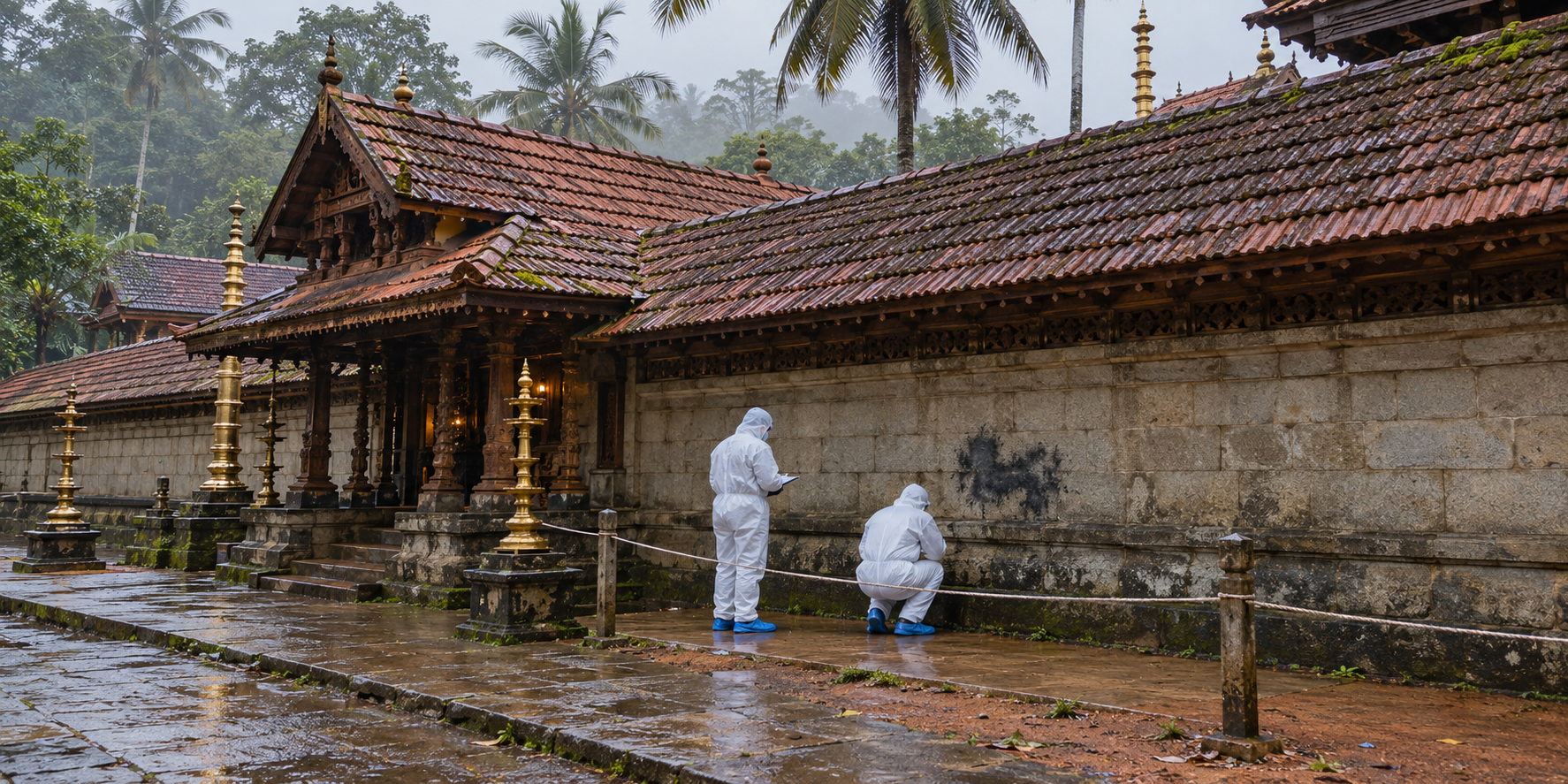
If you are wondering whether an ISIS cell attacked a Kerala temple, the evidence available as of October 26, 2026 does not justify that conclusion. It supports a serious but narrower finding: someone reportedly marked the name ISIS on a sacred structure at the Mohanapuram Mahadeva Venugopala Swami Temple, and a similar act was discovered after the first complaint.
That distinction matters. You can insist on justice for a possible act of temple desecration without turning an inflammatory inscription into an unproved theory. The useful response now is to preserve evidence, obtain a clear official chronology, correct the security failure that allowed a recurrence, and keep peaceful public pressure focused on questions the authorities can answer.
What the evidence supports so far
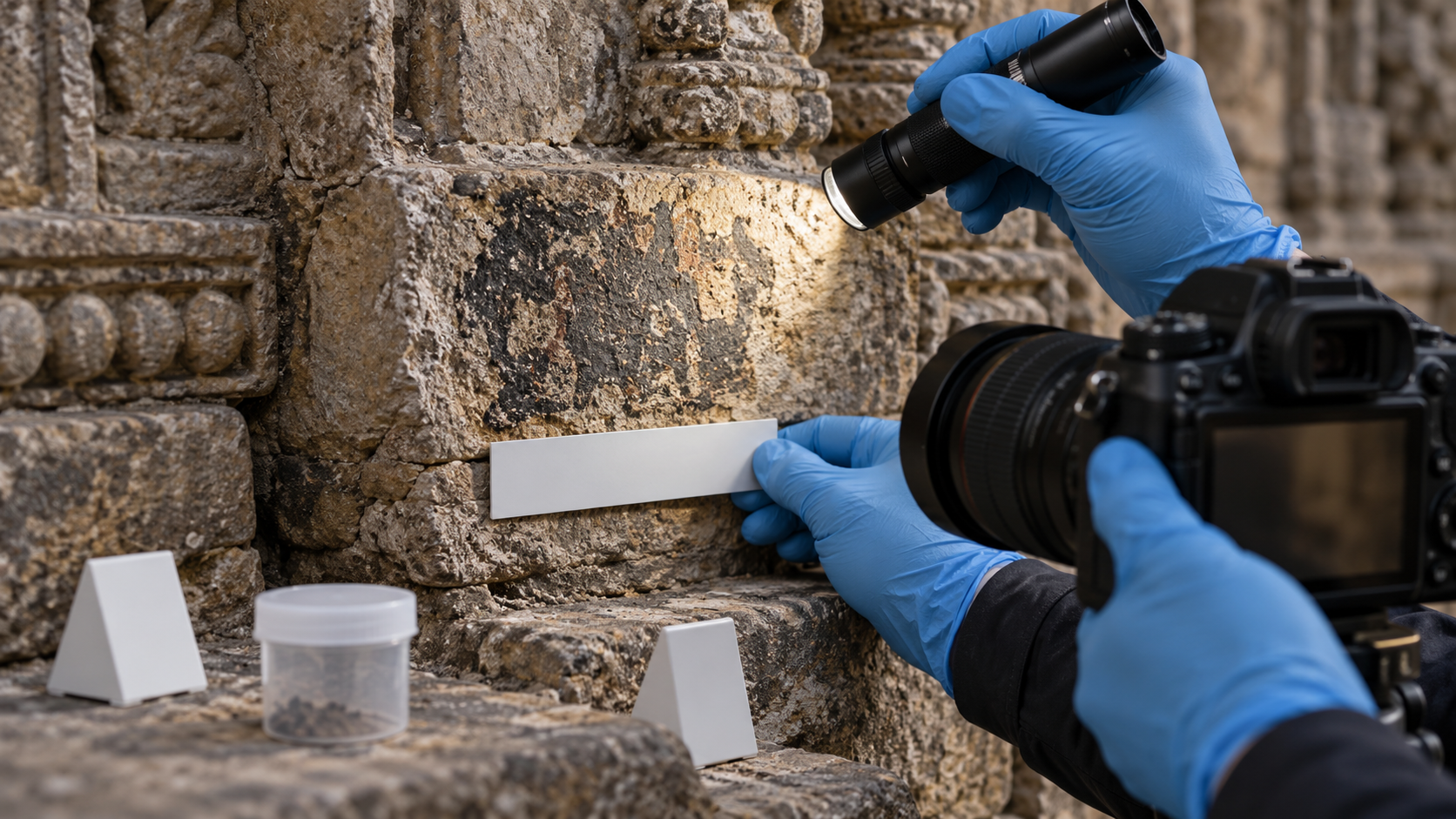
The alleged desecration occurred at the Mohanapuram Mahadeva Venugopala Swami Temple in Pothencode, Thiruvananthapuram district. The shrine is administered by the Travancore, or Tiruvitamcoor, Devaswom Board. The affected object was not an ordinary exterior wall: the name ISIS was reportedly found on the pedestal supporting a Brahmarakshas murti within the temple premises.
The first discovery was reportedly made by the archaka while preparing for daily pooja on the morning of October 23. Temple authorities complained to Pothencode Police, who visited and conducted a preliminary examination. No formal case was reportedly registered after that initial complaint. A similar marking was subsequently discovered on the morning of October 25, after which police returned with forensic personnel.
One elementary point needs official clarification: the publicly reported dates do not align cleanly. The incidents are described as occurring on the nights of October 23 and 24, while the first discovery is placed on the morning of October 23 and the second on the morning of October 25. That may be a reporting or wording problem rather than a substantive contradiction, but investigators should publish the exact discovery times, the periods during which the site was unattended, and when each complaint was received. A reliable timeline is the foundation of any credible inquiry.
Forensic work was reportedly complicated by continuing rainfall, which may have degraded physical traces. No arrest had been reported by October 26, and the identity and motive of the offender or offenders remained unknown. An unresolved theft of jewellery and other materials from the same temple roughly two years earlier adds to local distrust, but it does not by itself establish a connection with the present incident.
Key takeaways
- A sacred structure was reportedly marked with the name ISIS, and a similar act was discovered after the first police visit.
- The inscription does not, by itself, prove that ISIS or anyone acting for it was involved.
- The recurrence makes access control, scene protection and the adequacy of the initial response central questions.
- Rain reportedly impaired forensic collection, so photographs, video, witness accounts and preserved digital records may be especially important.
- Devotees can demand a firm investigation while refusing rumours, premature accusations and confrontation.
Why the second marking changes the security question
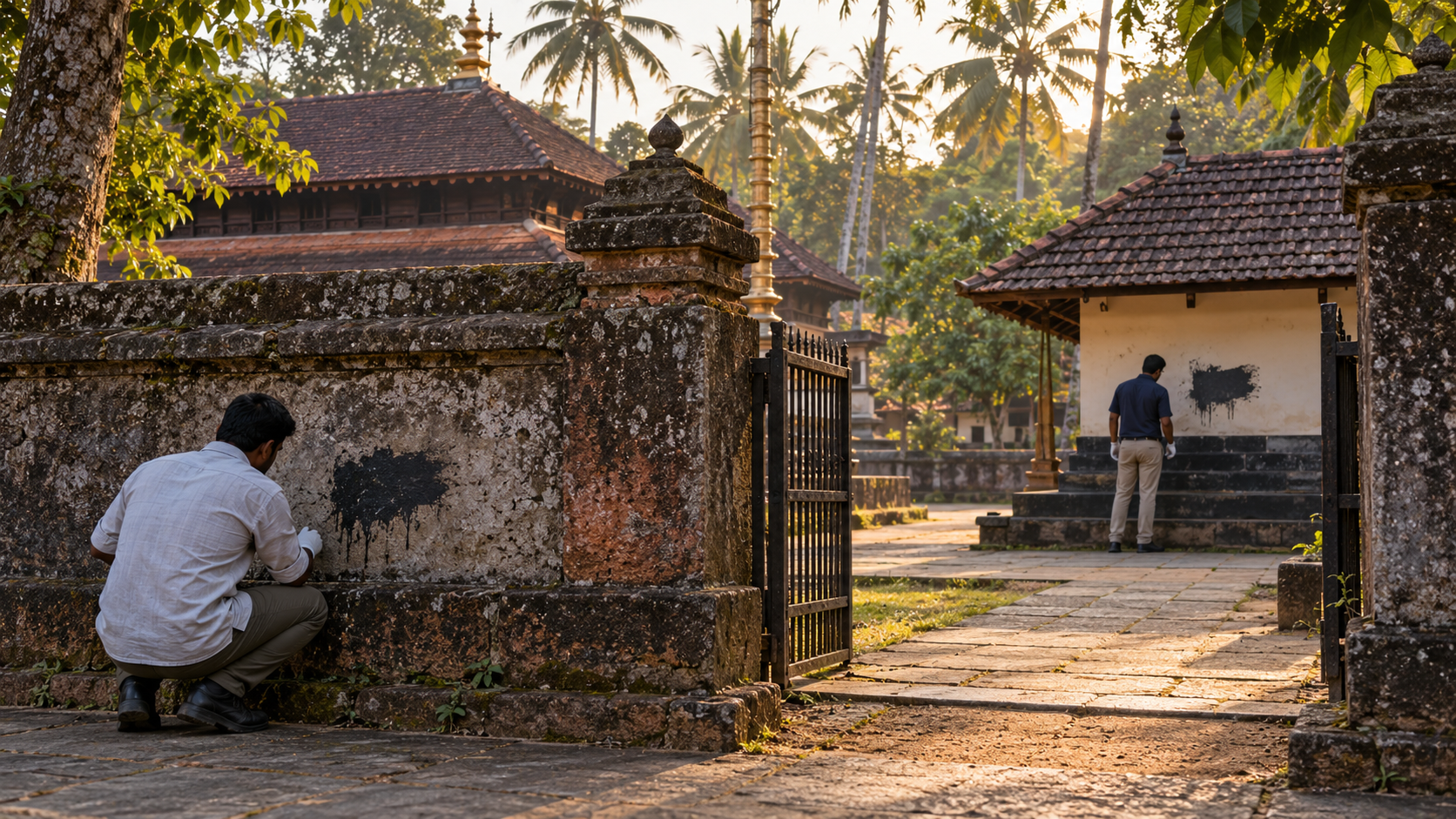
A single inscription could have several possible explanations, from individual vandalism to deliberate communal provocation. Repetition after temple authorities had alerted police changes the practical problem. At minimum, it indicates that the person responsible retained access, found another opportunity, or believed the risk of detection was still low. It does not identify that person or prove an ideological affiliation.
The first response therefore deserves scrutiny on its own terms. Was the affected area photographed before it was touched or cleaned? Were entrances secured? Were people with routine access identified? Were nearby cameras checked before recordings could be overwritten? Was the temple advised to increase overnight observation? If no formal case was registered, what assessment led to that decision?
These are not procedural distractions from the hurt caused to devotees. They are how that hurt is converted into evidence and accountability. Outrage without a preserved scene can leave investigators with less to use. Immediate ritual restoration may feel urgent, but cleaning or handling an affected surface before police documentation can destroy the very traces needed to establish who violated it.
The appearance of the name ISIS also creates a second danger: the offender may be trying to control the public reaction. Repeating the name without qualification, circulating dramatic claims, or assigning guilt to a community gives a provocateur more reach than the physical act alone could achieve. The accurate formulation is simple: ISIS graffiti was reportedly found; ISIS involvement has not been established.
Seven answers devotees should demand
A peaceful memorandum from devotees will be more effective if it asks for verifiable actions rather than a general promise of a serious inquiry. Temple representatives, the Devaswom Board and police should be asked to address these seven points in writing:
- The official timeline: State when each marking was last absent, when it was found, when temple authorities were notified, when police arrived, and when forensic personnel examined the site.
- The status of both complaints: Provide the written acknowledgement or reference number for each approach to police. If the first complaint did not produce a formal case, explain the decision and what changed after the recurrence.
- The state of the physical evidence: Identify what was photographed, sampled or preserved before rain or cleaning affected it. Authorities need not publish sensitive forensic details, but they can confirm whether usable material exists.
- The access review: Establish which gates, paths and internal areas could be reached during the relevant periods; who held keys; whether locks or barriers showed interference; and whether anyone noticed unfamiliar movement.
- The video and witness canvass: Confirm whether available recordings from the temple, nearby buildings and approach roads were preserved, and whether priests, staff, neighbours and regular visitors were asked for observations.
- The security response: Explain what temporary measures were introduced after the first discovery and what additional measures followed the second. The recurrence makes this more than a routine maintenance matter.
- The public update schedule: Name the office responsible for updates and set a regular channel for confirmed information. Updates should distinguish facts, investigative possibilities and unanswered questions.
Devotees should also ask how the earlier unresolved theft at the temple changed security policy. The old theft must not be casually joined to the present desecration as though one offender has been proved. Its relevance is institutional: a prior breach should have produced lessons, assigned responsibilities and preventive changes.
How devotees can act firmly without feeding a provocation
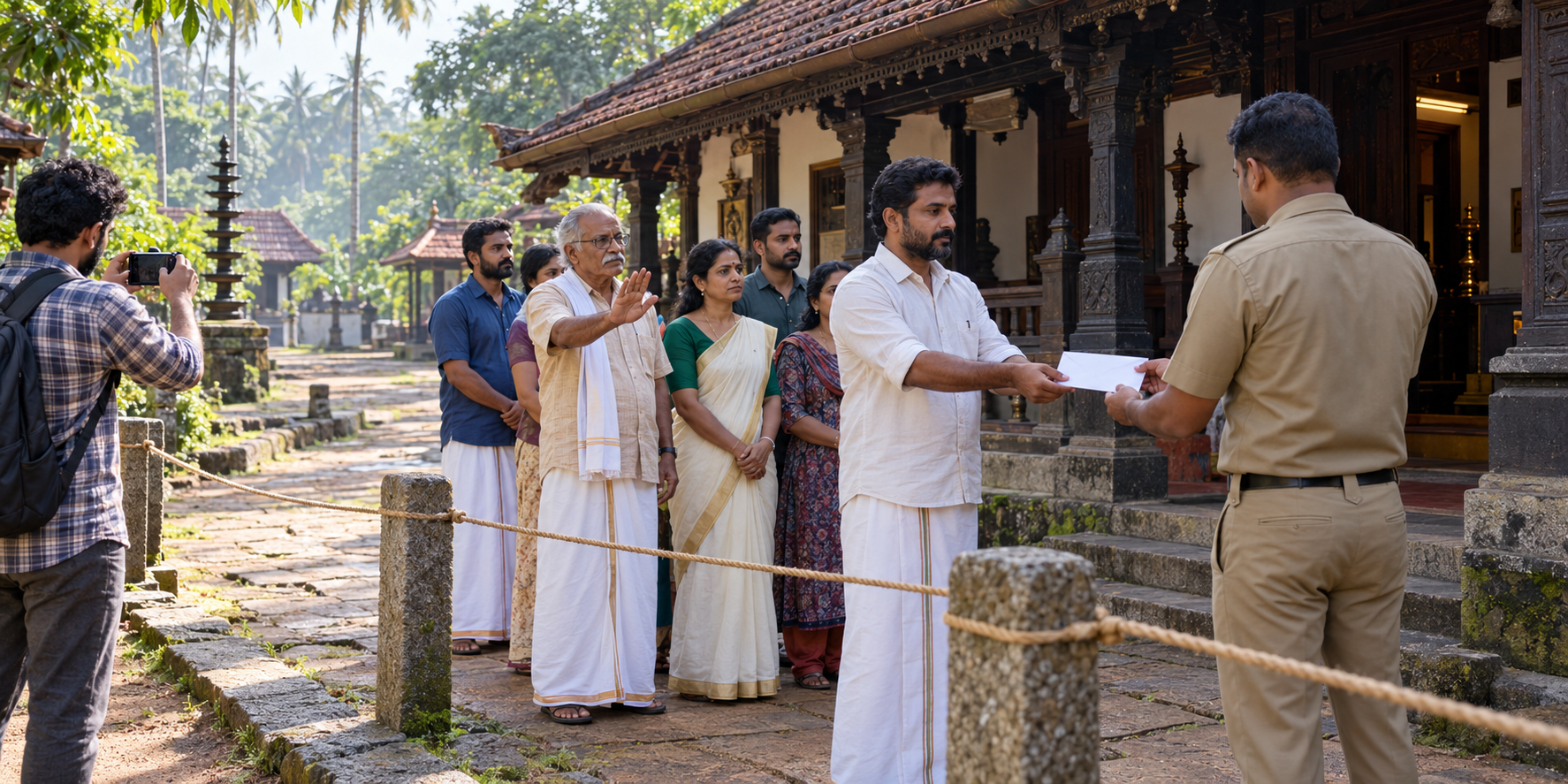
Hindu organizations and local residents have reportedly discussed prayer gatherings and Japa Yathras. Such mobilization can keep attention on the case while preserving the dignity of the temple, provided organizers define the purpose clearly: protection of the shrine, a credible investigation and accountability for verified failures.
If you are helping organize a response, use a disciplined process:
- Preserve before purifying. If another marking or disturbance appears, restrict access and call the designated temple authority and police. Do not touch, wash, repaint or move the affected object until it has been photographed and investigators have released the area.
- Record without broadcasting everything. Note the time, place, weather, discoverer’s name and people present. Preserve original files. Avoid posting close-up evidence or camera positions while the inquiry is active, because that can alert an offender to what investigators possess.
- Separate three information buckets. Label claims as verified, reported but awaiting official confirmation, or unknown. The offender’s identity, motive and organizational connection belong in the unknown category until evidence moves them out of it.
- Do not publish suspected names. A forwarded message, blurry image or local rumour is not identification. Public naming can harm an innocent person, contaminate witness recollections and turn a temple-security demand into a communal confrontation.
- Use one written set of demands. Give the police and Devaswom Board the same concise questions, request acknowledgement, and keep dated copies. This creates a record against which later responses can be assessed.
- Design peaceful gatherings around the shrine’s dignity. Appoint volunteers, keep entrances open for worship, avoid threatening slogans, and stop speakers from presenting speculation as fact. Prayerful restraint does not weaken the demand for arrest and accountability.
A Dharmic response joins satya with firmness. Satya requires us not to claim more than we know. Firmness requires us not to accept silence, an undocumented complaint or another preventable breach. Those principles reinforce each other.
What lasting temple security should change

The immediate investigation concerns one temple, but the prevention lesson is broader. A security plan should be simple enough for priests, staff and volunteers to follow every day. Expensive equipment is of little value if nobody checks it, preserves its recordings or knows whom to call.
The Devaswom Board and temple committee should build the plan around identifiable responsibilities:
- Map access: list every gate, low boundary, service path, roof approach and internal door. Record who may use each route and who holds every key.
- Cover approaches, not rituals: place lighting and cameras at entrances, corridors and vulnerable exterior areas while respecting restrictions around sacred and private spaces. Check coverage after dark and during heavy rain, not only in daylight.
- Assign recording ownership: name the person who verifies that cameras are working, knows the retention limits, and can immediately preserve footage after an incident.
- Use an opening and closing log: record the condition of gates, locks, sacred areas and vulnerable objects. A short, consistently completed checklist can narrow the period in which an intrusion occurred.
- Create an incident sequence: protect the area, photograph from a safe distance, notify named officials, preserve recordings, identify witnesses and delay cleaning until police release the scene.
- Review every breach: record thefts, vandalism and attempted entry in one register. Each entry should show the remedial action, the person responsible and whether the change was later verified.
Security should protect the sanctity of worship rather than make devotees feel that they are entering a checkpoint. Visible volunteers, working lights, controlled keys and a rehearsed response often matter as much as hardware. The objective is not suspicion of every visitor; it is to remove the easy, unobserved opportunity on which repeated desecration depends.
A credible outcome will include more than an eventual arrest. Devotees deserve a corrected chronology, a clear account of the official response, a conclusion about motive only when evidence supports it, and documented safeguards against another breach. Until those answers arrive, ask the seven questions, preserve what can still be preserved, support peaceful temple-centred action, and refuse to let an unknown offender dictate whom you blame.
References

Leave a Reply
You must be logged in to post a comment.