
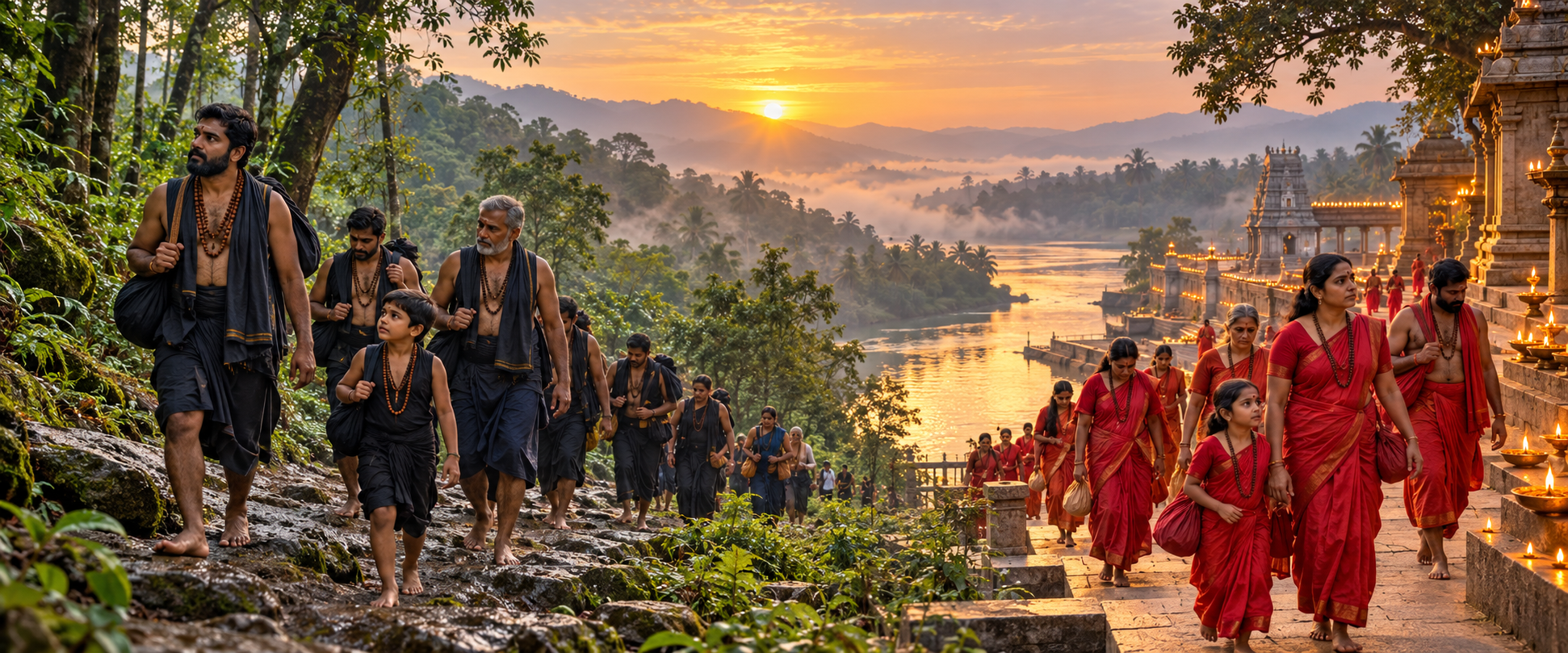
If you are deciding when to take mala, request leave, or book a pilgrimage for the 2026–27 season, the calendar can look like one continuous observance. It is not. The Ayyappa Mandala period, Makaravilakku, and Bhavani Deeksha overlap, but each gives you a different planning anchor.
Your first task is to identify which vrata you are undertaking and which observance will mark its completion. Use the dates below as a working calendar, then confirm temple arrangements and the instructions of the person guiding your deeksha before making a non-refundable booking.
Read the 2026–27 calendar in layers
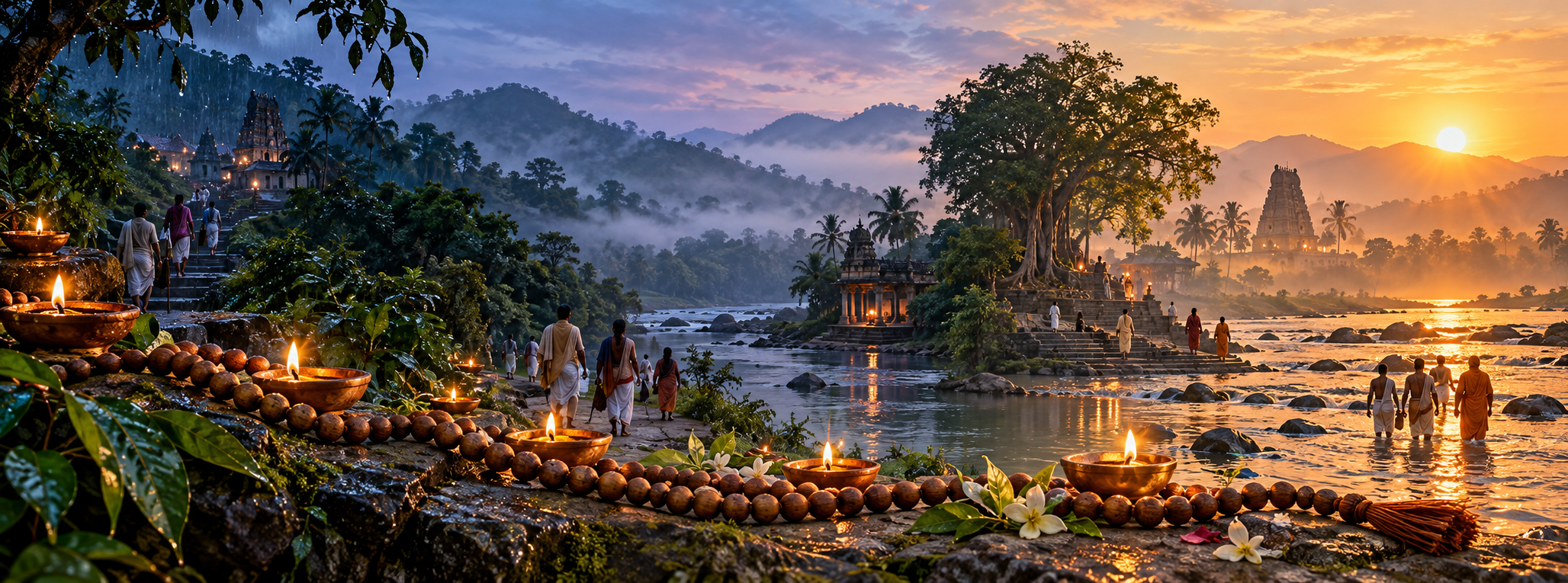
Ayyappa Deeksha is widely observed during the winter season in Andhra Pradesh, Tamil Nadu, Karnataka, and Kerala. For 2026–27, its broad published window runs from 16 November 2026 to 14 January 2027. Within that larger window sits the Mandala observance, followed by the Makaravilakku milestone.
| Observance | 2026–27 date | What the date means for your plan |
|---|---|---|
| Ayyappa Deeksha or Mala | 16 November 2026 to 14 January 2027 | This is the wider seasonal window. Use it when planning an observance that continues through Makaravilakku rather than concluding with Mandala Pooja. |
| Ayyappa Mandala observance | 16 November to 27 December 2026 | The 41-day Mandala Deeksha and Pooja period provides an earlier completion point within the larger Ayyappa season. |
| Makaravilakku | 14 January 2027 | This is the central 2027 festival date and the stated end of the wider Ayyappa Deeksha window. The festival is associated with a week-long observance, so confirm the surrounding programme rather than planning from one date alone. |
| Bhavani Deeksha | Begins 20 November 2026; ends in January 2027 | The starting date is identified with Karthika Ekadashi, but an exact January viramana date is not supplied. Keep completion travel flexible until that date is confirmed. |
The two Ayyappa end dates do not contradict each other. 27 December marks the end of the Mandala period, while 14 January is Makaravilakku in 2027. Confusing those layers can leave you with leave from work on the wrong week, unsuitable travel tickets, or an observance whose intended conclusion was never clearly decided.
Choose the vrata before choosing the journey
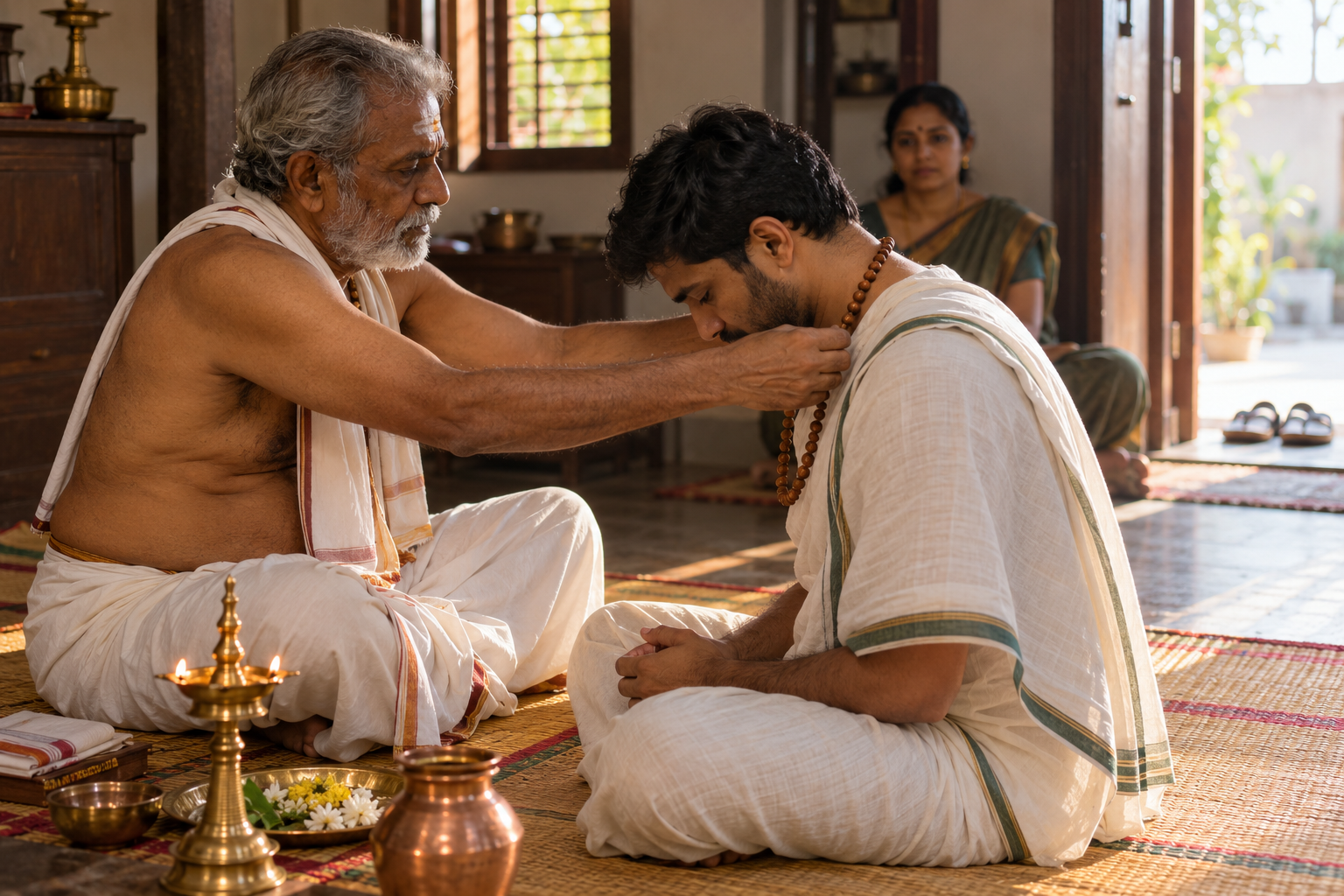
A deeksha and a pilgrimage are related, but they are not the same planning decision. The deeksha establishes your religious commitment; the pilgrimage determines where and when you travel during or at the end of it. Put them on separate lines in your calendar and ask how they should relate in the tradition you follow.
Before taking mala, settle these five questions:
- Which observance are you undertaking? Distinguish the Mandala discipline, an Ayyappa observance extending through Makaravilakku, and Bhavani Deeksha. Do not combine their dates simply because they occupy the same winter season.
- What is your intended completion point? Write down 27 December or 14 January for the relevant Ayyappa observance. For Bhavani Deeksha, record January provisionally and obtain the exact viramana date before finalising the return journey.
- Whose instructions will you follow? Identify the local temple, established community practice, or experienced religious guide responsible for resolving questions about mala, dress, daily discipline, travel, and completion.
- Which event is central to your pilgrimage? A journey planned around Mandala Pooja is not the same as one anchored to Makaravilakku. The answer determines which dates must remain free and which can remain flexible.
- What will happen if work, family duty, illness, or disrupted travel interferes? Ask about this before the deeksha begins. Improvising a religious remedy under pressure is harder than agreeing on a sound course in advance.
Once those questions are answered, create one page with four columns: religious commitment, home or work conflict, travel requirement, and confirmed resolution. A conflict written down in November can often be managed. The same conflict discovered after tickets are bought may force you to choose between the vrata and an avoidable financial loss.
If the instructions you receive affect eating, prescribed medicine, sleep, or physical exertion, discuss the practical effects with an appropriate clinician before beginning. Do not stop or alter prescribed treatment to imitate another devotee’s discipline. If health limits arise during the season, obtain medical help and ask your religious guide how the vrata should be adapted.
Wear the deeksha colour as discipline, not costume
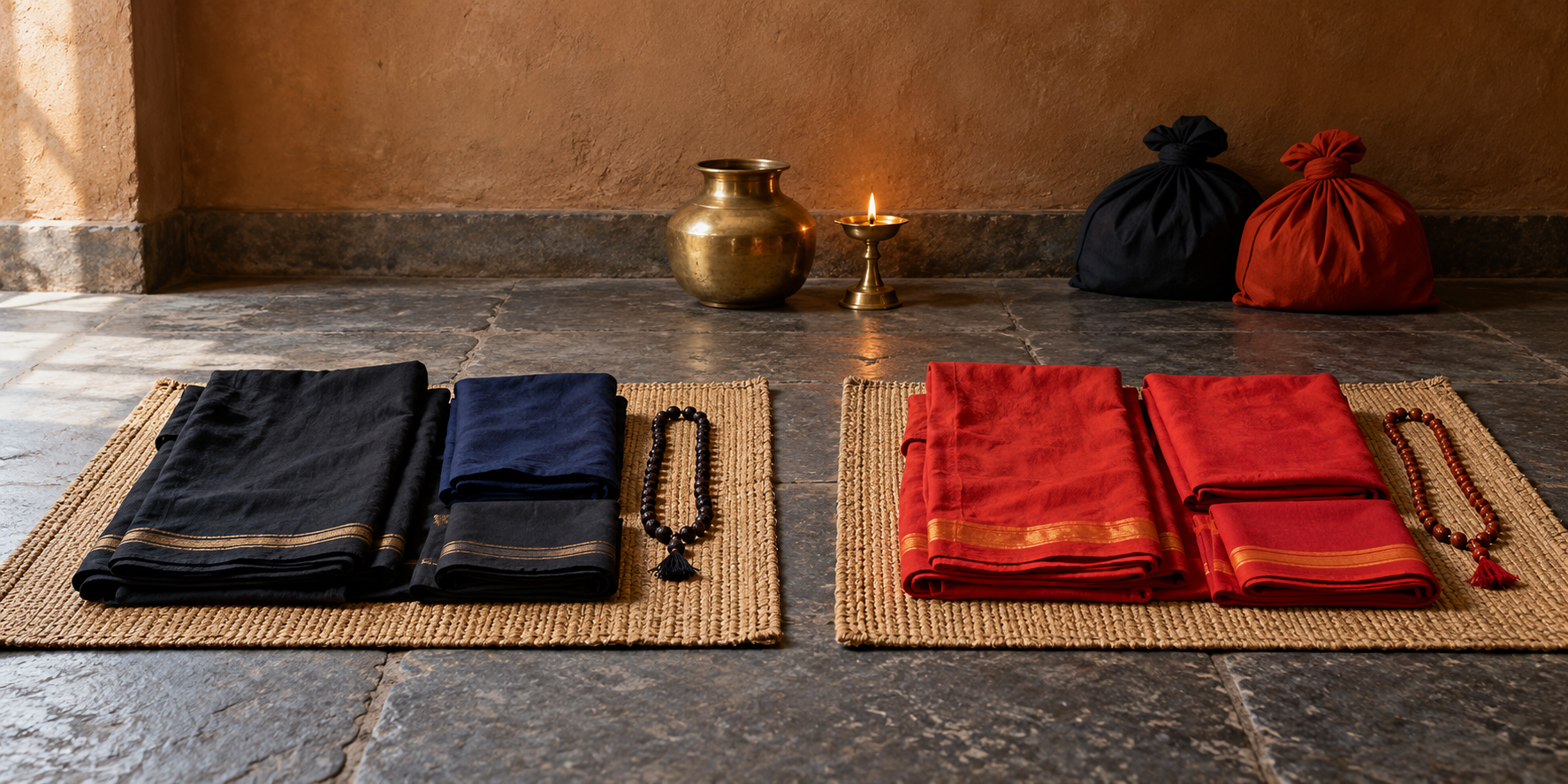
Black clothing is an important and highly visible part of Ayyappa Deeksha for many devotees in their early years. Devotees who have maintained the deeksha continuously for many years may instead wear saffron. The distinction is useful when preparing your own clothing, but it should not become a way to rank or interrogate other pilgrims.
If this is your first season, do not select a colour merely because a group photograph or online shop makes it look customary. Confirm the practice followed by the community guiding your deeksha. Then prepare clothing that can be maintained through your ordinary routine, including work, household duties, washing, and travel.
- Confirm the expected colour before buying an entire set of clothes.
- Resolve workplace, school, uniform, or safety-clothing requirements before the first day of deeksha.
- Prepare enough serviceable clothing to keep the discipline consistent without turning it into display.
- Do not assume that everyone wearing black is a beginner or that everyone wearing saffron holds greater spiritual standing. Colour communicates a custom; it does not reveal the full quality of another person’s vrata.
- Keep the visible sign connected to its purpose. Clothing can remind you and your household that the season is governed by discipline, but it cannot substitute for that discipline.
This matters especially during pilgrimage, where thousands of similarly dressed devotees can create an impression of uniformity. The shared appearance is powerful, yet the exact instructions, experience, and intended completion point of each pilgrim may differ.
Plan travel around the right milestone and the likely crowd
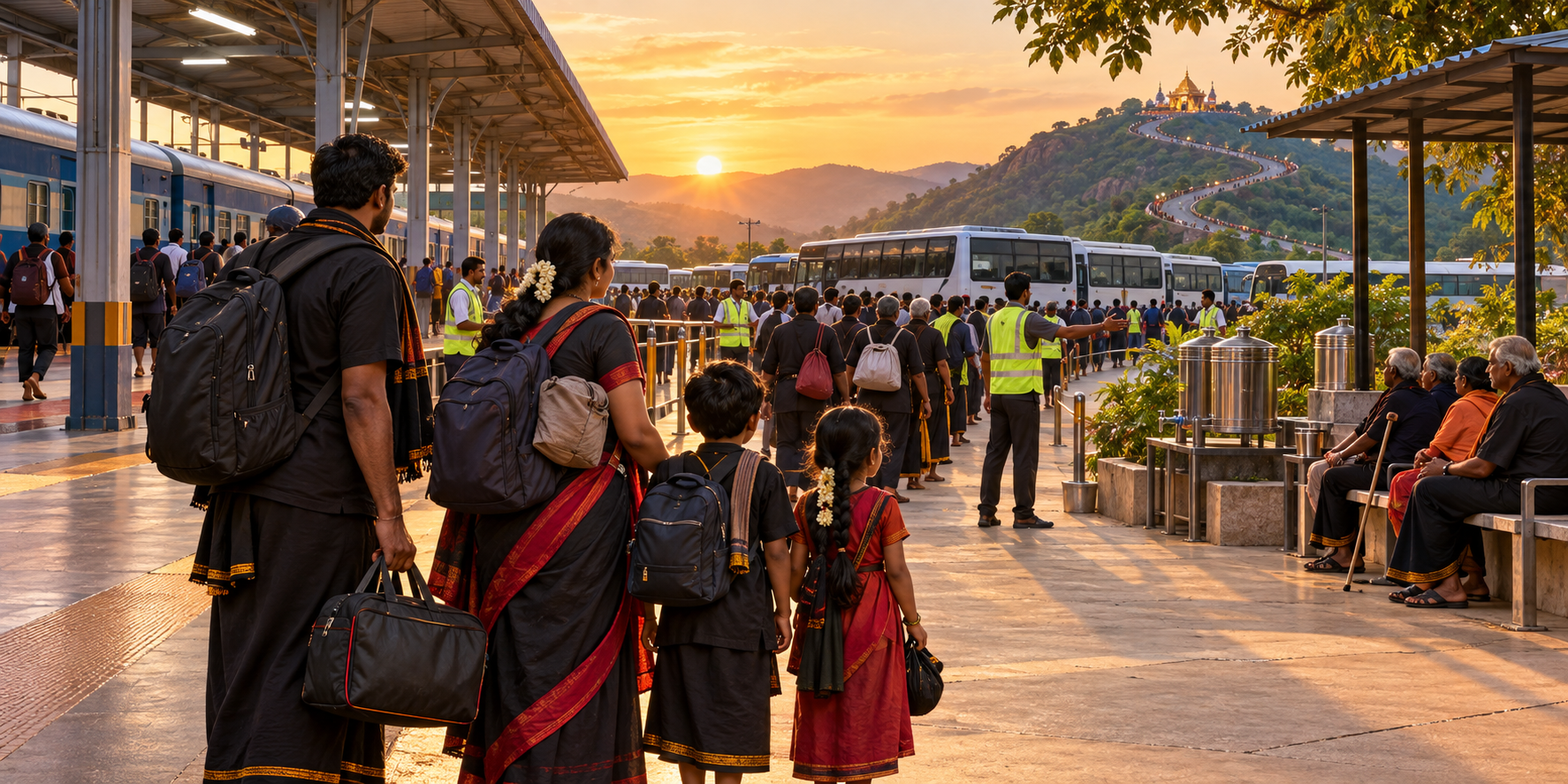
Choose your travel anchor before comparing fares. If Mandala completion is central to your sankalpa, plan around 27 December. If Makaravilakku is central, use 14 January as the anchor and verify the wider festival programme, because Makaravilakku is observed as a week-long festival. Do not assume that all movement and temple activity will fit neatly into the central day.
Bhavani devotees have a different uncertainty to manage. The 2026 Deeksha begins on 20 November at Vijayawada’s Kanakadurga Temple and continues into January 2027, but the exact ending date is not available in the supplied calendar. A 2026 planning estimate anticipates 20–25 lakh devotees visiting the temple. That figure is an expectation rather than a final count, but it is sufficient reason to avoid a fragile itinerary with no room for changes.
Use this sequence before paying for the journey:
- Write the exact purpose of the trip. Name Mandala Pooja, Makaravilakku, Bhavani viramana, or the other specific observance approved within your deeksha. A vague plan to travel during the season is not enough.
- Confirm the operative date. For Bhavani viramana in particular, wait for a precise date from the temple or the person guiding you rather than inferring one from the phrase January 2027.
- Check change and cancellation conditions. A cheap non-refundable booking can be expensive if a temple programme, group plan, or completion instruction requires different travel.
- Separate fixed days from flexible days. Protect the date that carries religious significance, while keeping surrounding travel adjustable where possible.
- Plan for separation in a crowd. Agree on a meeting point, keep essential travel information accessible, and make sure companions know how to contact one another if the group becomes divided.
- Carry necessary treatment and do not push through a medical problem for the sake of the itinerary. If illness or exhaustion makes travel unsafe, seek help first and resolve the religious implications with your guide afterward.
The practical rule is simple: a confirmed sankalpa should govern the booking, not the other way around. When the exact religious date is still unknown, flexibility is part of responsible preparation rather than a failure to commit.
Key takeaways for the 2026–27 season
- The wider Ayyappa Deeksha window runs from 16 November 2026 through Makaravilakku on 14 January 2027.
- The Mandala observance is the earlier layer, running from 16 November to 27 December 2026. Decide whether 27 December or 14 January is your intended Ayyappa completion anchor.
- Bhavani Deeksha begins on Karthika Ekadashi, 20 November 2026, and ends in January 2027. Confirm the exact viramana date before making an inflexible booking.
- Black is customary for many Ayyappa devotees in their early years, while saffron may be worn after many continuous years of deeksha. Follow the practice given to you rather than choosing by appearance.
- Keep your vrata calendar, pilgrimage itinerary, work obligations, and health requirements on one planning page so that a hidden conflict does not emerge midway through the season.
Your next step is to fill in four facts: the deeksha you will undertake, the person or temple guiding it, the intended completion date, and the earliest date on which travel can responsibly be booked. If one remains blank, especially the Bhavani viramana date, keep the corresponding journey flexible. A clear plan protects the sankalpa from confusion once the season begins.
References
- Hindu Pad — Black dress for Ayyappa Devotees | Why black dress is worn by Sabarimala Pilgrims?
- Hindu Pad — Ayyappa Deeksha 2026 Dates | Ayyappa Mala in 2026-2027
- Hindu Pad — Makaravilakku 2027 | Sabarimala Makara Vilakku Festival in 2027
- Hindu Pad — Mandala Pooja 2026-2027 | Sabarimala Mandala Pooja dates
- Hindu Pad — Bhavani Deeksha 2026 dates | Vijayawada Kanakadurga Temple Mala

Leave a Reply
You must be logged in to post a comment.