
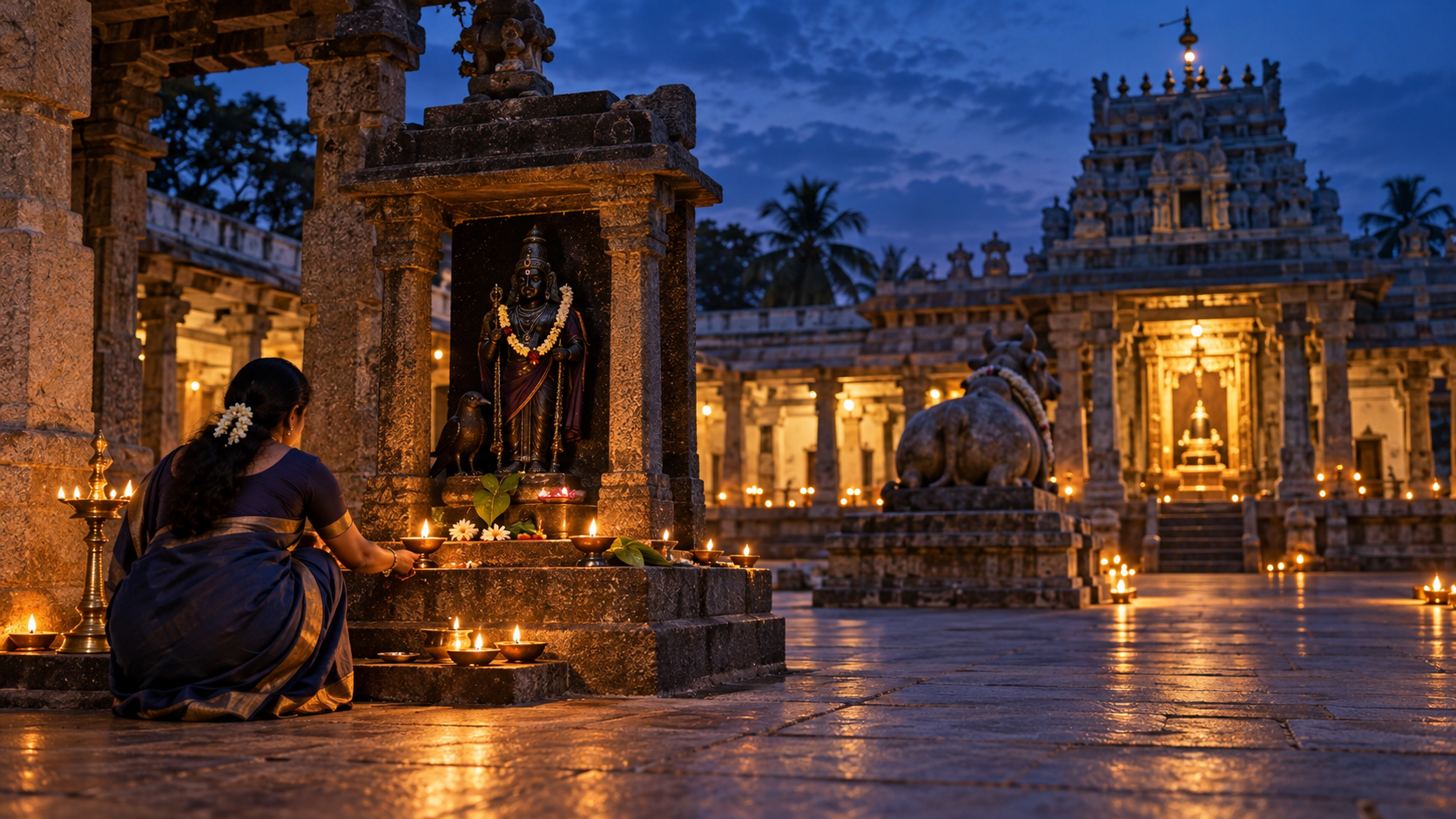
If you have marked 24 October 2026 for Shani Trayodashi but are unsure whether Shani Pradosham is a different vrata, you do not need to prepare two separate observances. The two names describe the same conjunction here: Trayodashi falls on Shanivar, bringing the Pradosha observance and devotion to Shani into one focused day.
Your first task is not to collect remedies or perform the most elaborate puja you can find. It is to confirm the local observance time, decide whether you will worship at home or at a temple, and keep a disciplined vrata that fits your sampradaya, responsibilities, and health.
What the date means in the Hindu calendar
Trayodashi is the thirteenth lunar tithi. Pradosha is the sacred observance associated with the evening period of Trayodashi and is traditionally centered on Shiva. When this tithi falls on Saturday, the observance is known as Shani Trayodashi or Shani Pradosham, with special attention also given to Shani.
In 2026, this conjunction falls on Saturday, 24 October, and the day is regarded as auspicious for Shani Puja. It falls in Ashwin according to North Indian Hindi calendars, Ashwayujam in Marathi, Kannada, Telugu, and Gujarati calendars, and Kartik in the Bengali calendar.
Those different month names do not indicate competing festivals. They reflect regional calendar systems. Do not change your observance merely because a calendar from another region gives the lunar month a different name.
The civil date is only the first part of your planning. Tithi and Pradosha timings are location-dependent, so consult a panchanga calculated for your city. If you are attending a temple, follow that temple’s published schedule. Do not copy the precise puja time from a calendar prepared for another city or time zone.
Key takeaways for 24 October 2026
- Shani Trayodashi and Shani Pradosham refer to the same Saturday-Trayodashi observance in this context; you do not need duplicate pujas.
- Mark Saturday, 24 October 2026, but obtain the exact Trayodashi and Pradosha window from a reliable local panchanga or temple.
- Keep Shiva worship at the center of Pradosha while including Shani Puja according to your family, guru, or temple tradition.
- Choose one coherent method: participate in the temple’s observance or conduct a simple home puja using practices you already understand.
- Treat the vrata as an exercise in restraint, responsibility, and sincere prayer rather than as a fear-driven transaction.
- If you intend to fast, follow an established tradition and adapt the vrata when fasting would be unsafe for your health.
Choose your temple or home plan before the day
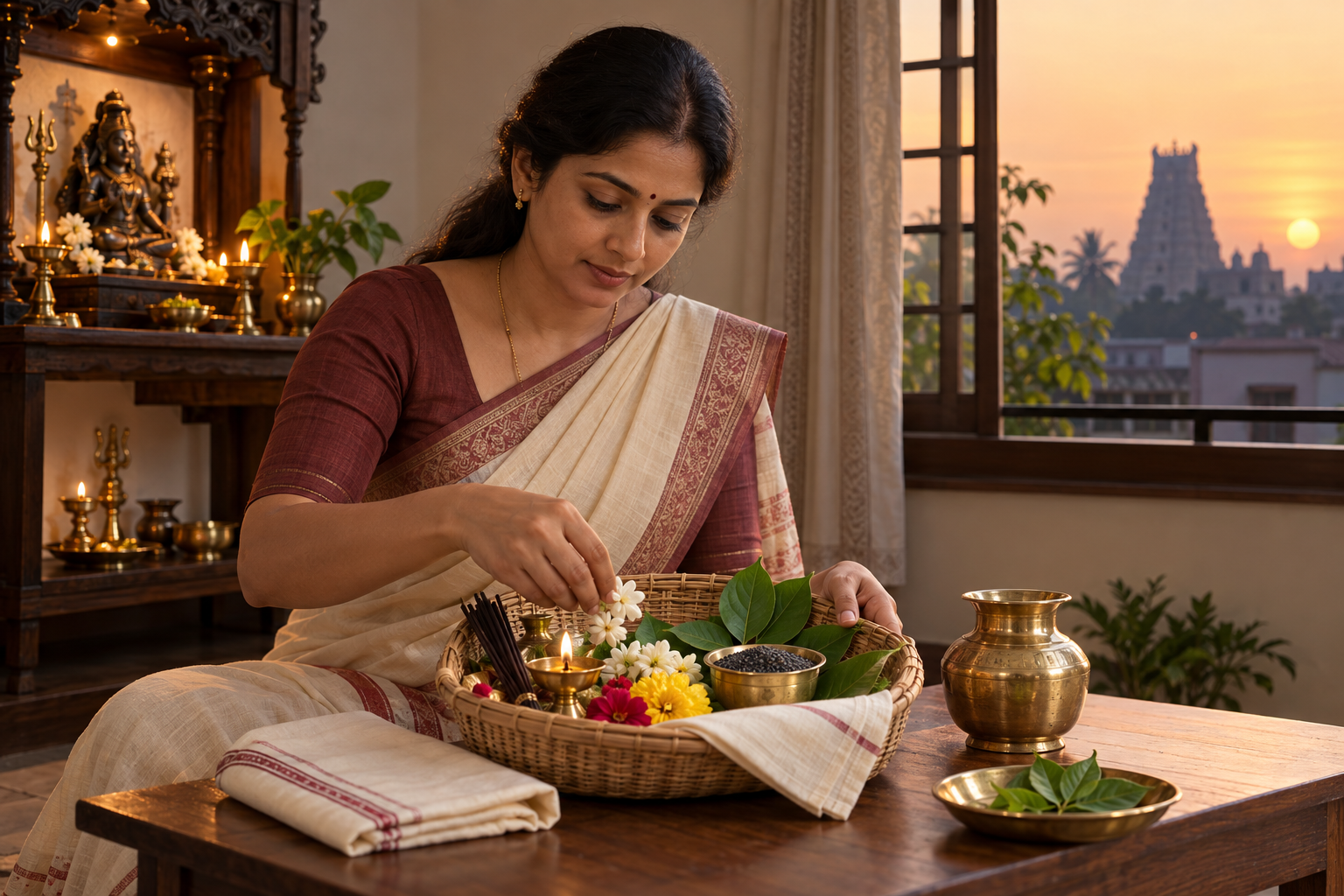
A rushed decision at sunset usually produces a scattered observance. Decide beforehand whether you will go to a temple or remain at home. Your choice should depend on access, family tradition, and your ability to participate attentively, not on which option appears more elaborate.
If you are going to a temple
Check the temple’s calendar or contact the temple directly. Ask whether the schedule includes Pradosha puja, Shiva abhishekam, Shani archana, or aarti, and ask when devotees should arrive. These are practical questions, not interchangeable promises about what every temple will perform.
- Confirm the start time and the expected duration.
- Ask whether advance registration or a sankalpa name is required.
- Bring only offerings the temple accepts; do not assume that every temple permits the same oil, flowers, food, or ritual materials.
- Arrive early enough to settle before worship begins.
- Follow the temple’s sequence instead of trying to conduct a separate personal ritual in the middle of the communal puja.
If you cannot reach a temple, that does not make the observance empty. A modest home puja performed with attention is more coherent than copying a complex temple rite without training or the necessary conditions.
If you are observing at home
Use the forms already familiar in your household. Prepare your usual lamp, water, flowers, incense, or other customary offerings before the local Pradosha period begins. There is no need to purchase unusual ritual objects merely because an online checklist presents them as compulsory.
If your family follows a particular order of worship, preserve it. If it does not, the simple sequence below gives you a clear framework without pretending to replace guidance from a guru, priest, or inherited tradition.
A simple and coherent home observance
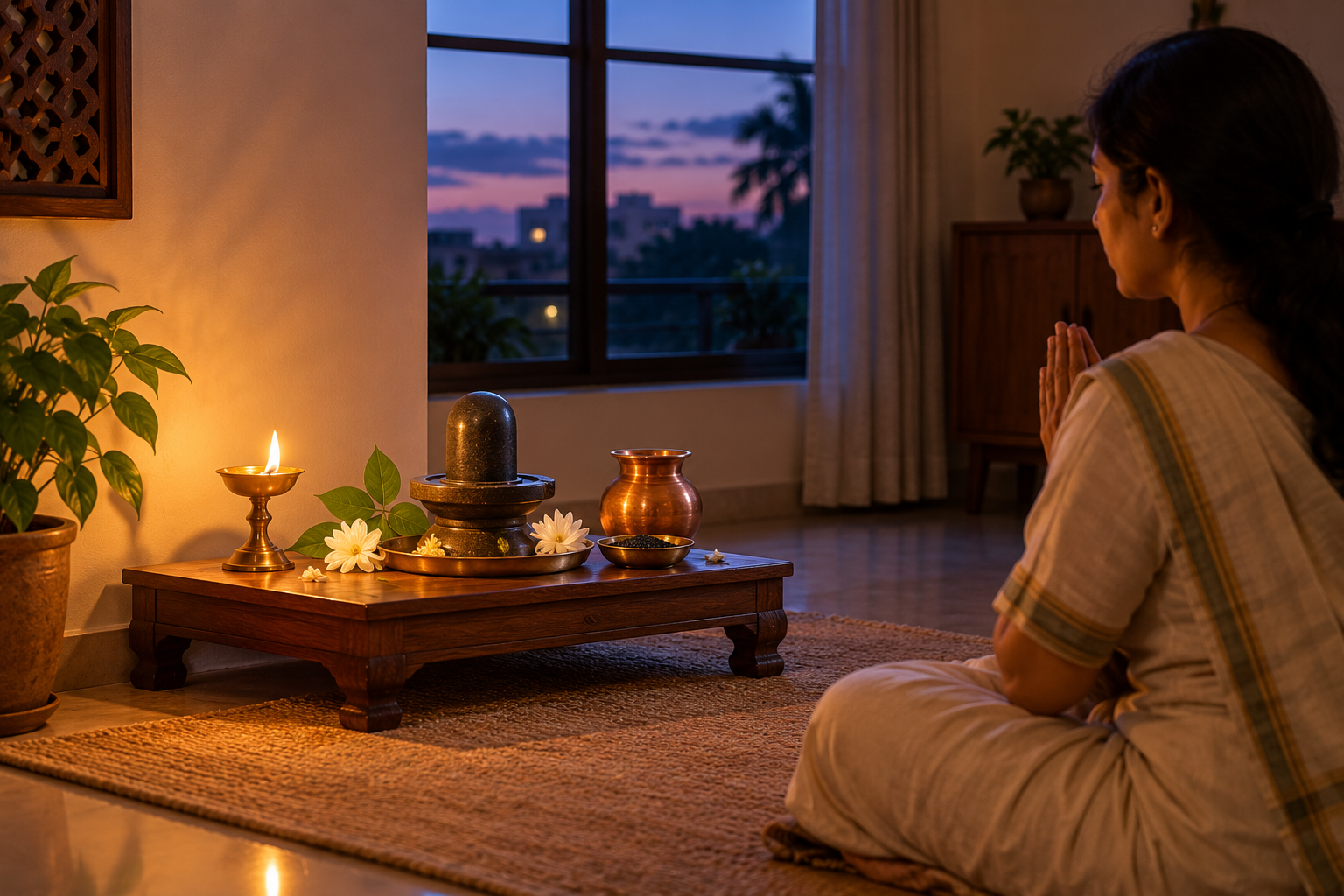
- Confirm the local window. Write down the Pradosha time from your city’s panchanga. Arrange meals, travel, and household work so the worship period is not consumed by preventable interruptions.
- Prepare yourself and the puja space. Bathe or wash as your circumstances permit, wear clean clothing, clean the worship area, and place only the items you know how to offer properly.
- Begin with a clear sankalpa. State that you are observing Shani Trayodashi or Shani Pradosham on 24 October 2026. Keep the intention Dharmic: steadiness, right conduct, fulfillment of duty, and devotion.
- Offer worship to Shiva. Pradosha is a Shiva-centered observance. Perform the form of Shiva Puja practiced in your home, even if it consists only of a lamp, simple offerings, namaskara, and sincere prayer.
- Offer prayer to Shani. Use the form of Shani Puja, mantra, stotra, or namaskara that you have received from a trustworthy tradition. If you do not know a formal procedure, a respectful prayer is preferable to reciting unfamiliar words carelessly.
- Keep a period of quiet recitation or reflection. Recite a familiar name, mantra, or devotional text. Reduce conversation and devices so the observance has an actual center rather than becoming one more task in the evening.
- Name one neglected responsibility. Identify a debt, promise, household duty, apology, work obligation, or act of self-discipline you have postponed. Write down one concrete step you will complete after the vrata.
- Close without bargaining. Offer namaskara, pray for the strength to live rightly through difficulty, and conclude according to your household practice. If charity or service forms part of your tradition, choose a genuine act that you can fulfill rather than making a dramatic promise.
This sequence deliberately avoids prescribing a universal mantra count, mandatory oil, fixed food, or single fasting rule. Hindu observance lives through sampradaya, kula practice, temple custom, and local panchanga. Precision means following one sound tradition consistently; it does not mean combining every instruction you encounter.
Decide about fasting before the vrata begins
If you intend to fast, establish the form of the fast and the method of concluding it from your family tradition, temple, or local religious guide. Do not invent an exact ending time from a calendar for another place, because tithi timings differ by location.
A vrata should cultivate discipline, not create avoidable harm. If fasting would be unsafe because of illness, medication, pregnancy, age, or another health circumstance, do not force a severe fast. Keep the day through prayer, moderation, restraint, charity, or service, and obtain medical advice where necessary. Spiritual seriousness is not measured by ignoring the body’s legitimate limits.
Avoid the mistakes that turn vrata into anxiety
The most common confusion begins when Shani is approached only through fear. Shani is widely associated in Hindu thought with discipline, consequence, patience, justice, and the maturation that comes through sustained effort. That makes honest self-examination appropriate on Shani Trayodashi. It does not make panic, superstition, or extravagant spending necessary.
- Do not treat the regional month label as the deciding factor. Ashwin, Ashwayujam, and Kartik can all describe this date within their respective calendar systems.
- Do not separate Pradosha from its Shiva-centered setting. Special attention to Shani on Saturday does not require you to discard the established devotional character of Pradosha.
- Do not borrow another city’s clock time. Keep the date in view, but verify the actual worship window locally.
- Do not assemble a ritual from unrelated fragments. A single, intelligible sequence from your own tradition is better than mixing mantras and procedures whose meaning you do not know.
- Do not turn fasting into a competition. The purpose is disciplined observance, not public proof of endurance.
- Do not expect puja to excuse avoidable misconduct. If the day reveals an unpaid obligation, broken promise, or habit of delay, correct it. Prayer and responsible action should point in the same direction.
- Do not make a vow you are unlikely to keep. Choose one modest commitment that can survive beyond a single evening.
A useful commitment might be to complete one delayed duty, keep speech restrained during a recurring conflict, begin repaying an obligation, or maintain a regular period of prayer. The commitment should be specific enough that you can tell whether you honored it.
Before 24 October arrives, save the correct local timing, settle your temple or home plan, and identify the one responsibility you will carry out after the lamp is extinguished. That final step is what allows Shani Trayodashi to shape conduct rather than remain only a date on the calendar.
References

Leave a Reply
You must be logged in to post a comment.