

If you came to the Silchar case wondering whether a child was nearly abducted or whether communal anger outran the confirmed facts, the honest answer is that the central allegation is serious and crucial details remain unverified. You do not have to choose between dismissing a Hindu family’s fear and treating an accusation as a conviction.
The responsible course is practical: secure the minor, preserve evidence, demand a prompt investigation, protect her identity and refuse mob punishment. That approach is neither passive nor evasive. It gives the truth its best chance to emerge and any genuine offender the least chance to escape accountability.
What can responsibly be said about the Silchar incident
On Vijaya Dashami at Link Road in Silchar, local residents alleged that two Muslim youths arrived in a car and tried to take away a minor Hindu girl. Her family reportedly noticed what was happening and intervened before the vehicle could leave. One youth allegedly fled during the commotion.
A crowd then reportedly stopped the car, damaged it and assaulted the youth who remained. Police arrived, brought the situation under control, rescued him from the crowd and took him into custody. An investigation was said to be underway, with further official details still awaited.
Those facts support a narrow account, not a final verdict. The information presently available does not establish the girl’s own account, the prior relationship between the people involved, the precise words or actions inside or around the car, whether force or deception was used, the respective roles of the two youths, or what offences police may ultimately allege.
The religious identities help explain why the incident acquired a communal meaning. They do not, by themselves, establish motive, coordination or guilt. Some residents characterised the allegation as love jihad, meaning that they suspected manipulation through a romantic relationship. That is a community interpretation requiring evidence, not an investigative finding that can be assumed in advance.
Keep three levels separate whenever you discuss the case: what witnesses say happened, what criminal conduct is alleged and what broader pattern people believe the incident represents. Evidence may eventually connect those levels. Until it does, collapsing them into one claim weakens rather than strengthens the demand for justice.
If you are close to a family facing a similar danger
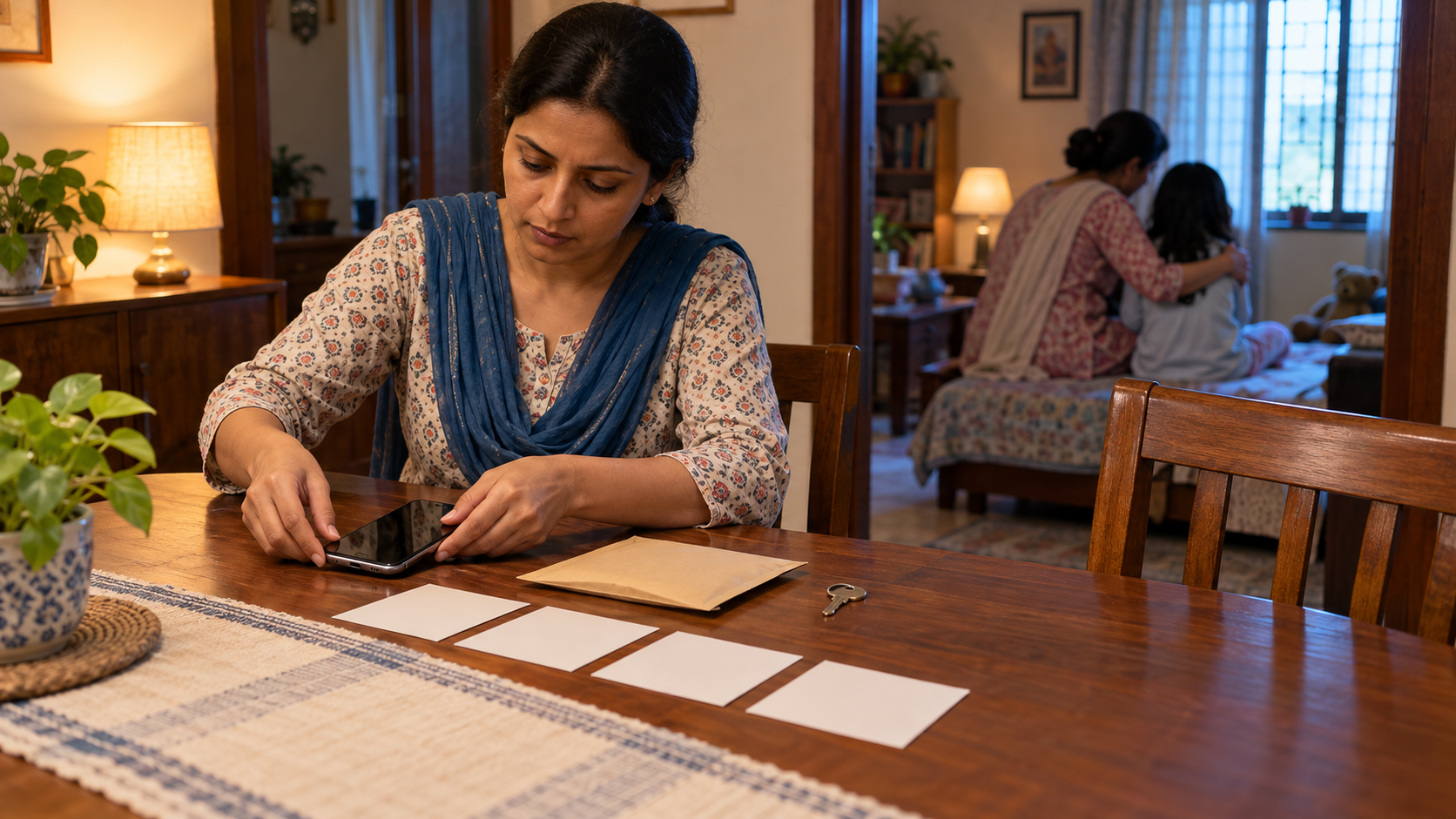
When a minor may still be at risk, safety comes before argument, filming or public mobilisation. A parent, relative or witness can take the following steps without trying to conduct a private criminal investigation:
- Remove the child from immediate danger. Place her with a trusted guardian in a secure location. If the threat is active, contact the police. Do not send an angry crowd to pursue a person or vehicle.
- Build a factual timeline. Record the location, approximate time, vehicle description or registration number if actually seen, direction of travel, names of direct witnesses and the actions each person personally observed. Label second-hand information as second-hand.
- Preserve original digital evidence. Keep messages, call logs, account names, photographs, videos and relevant timestamps. Note nearby CCTV cameras before footage is lost. Do not crop, annotate or repeatedly forward the only copy; make a secure backup.
- Let the child speak without coaching. Note the exact words she volunteers, but do not pressure her to repeat the account before relatives, activists or cameras. Repeated public retelling burdens the minor and can make later fact-finding harder.
- Share evidence privately. Give relevant material to investigators and, where needed, a qualified local lawyer or child-protection professional. Do not publish private chats merely to win an online argument.
- Address injury or acute distress. Obtain appropriate medical help when needed and retain the resulting records. Medical care should never be delayed while people debate the communal meaning of the incident.
Do not turn the child’s phone into a public newsroom. Her name, face, school, address, daily route and intimate communications should remain private. Even sympathetic circulation can expose her to humiliation, retaliation and permanent digital identification.
If police action appears to stall, the family should seek case-specific guidance from a qualified local lawyer rather than improvising through social media. A lawyer can advise on the proper formal step without requiring the family to publicise the minor’s identity or untested evidence.
Community vigilance must remain disciplined and lawful

An allegation involving a minor warrants urgency. It does not warrant collective guilt. In Silchar, the vehicle was reportedly vandalised and the youth who remained was assaulted before police intervened. Such violence can create additional victims, complicate fact-finding and shift attention from the original allegation to the crowd’s conduct.
Dharma does not demand passivity in the face of danger. It does demand that protection remain joined to truth, proportion and self-restraint. A community that wants accountability should make the investigation stronger, not replace it with punishment delivered before the facts are established.
- Choose one family liaison. A trusted person can communicate with police, counsel and community representatives, reducing contradictory statements and pressure on the minor.
- Ask conduct-focused questions. Was the child threatened, deceived, induced, restrained or pressured to leave? What evidence supports each allegation? These questions are more useful than treating religious identity as proof.
- Press for the person who fled to be located. The demand should be for identification, questioning and lawful action based on evidence, not retaliatory action against unrelated people.
- Do not name unverified suspects online. A mistaken name or photograph can endanger an innocent person and undermine confidence in legitimate claims.
- Support the family without shaming the girl. A minor who trusted someone, concealed a relationship or made a risky decision still deserves protection. Shame can turn the person whose account matters most into the person least willing to speak.
- Correct rumours with the same visibility used to spread them. If a claim about an arrest, confession, identity or motive proves wrong, update it prominently rather than quietly deleting it.
- Reject religious retaliation. No neighbourhood, family or faith community should be treated as a proxy for the two people named in an allegation.
If residents organise festival escorts, check-in groups or help desks, keep participation voluntary and the rules transparent. The purpose should be safe transport and rapid contact with guardians, not religious profiling, intimidation or freelance surveillance.
Teach children to recognise conduct, not communal slogans

Parents cannot protect a teenager merely by naming a feared category of outsider. A useful safety conversation identifies behaviours the child can notice before a situation becomes dangerous. It also makes clear that asking for help will not trigger humiliation.
- Treat pressure to enter a vehicle, visit an isolated place or leave an event without telling a guardian as a reason to stop and call home.
- Regard demands to delete chats, conceal a person’s real identity, lie about a destination or cut off trusted friends and relatives as warning signs. A warning sign calls for questions and support; it is not proof of a crime by itself.
- Agree in advance who may provide transport, where the child will wait if plans change and which trusted adults can be contacted when a parent is unavailable.
- Use a family code word for an unexpected pickup. If the driver cannot provide it, the child should not enter the vehicle.
- Tell the child plainly: “If you become frightened or think you made a mistake, call us. We will get you home first and discuss it later.”
- Apply the same safety rules regardless of the other person’s religion. Conduct-based rules can detect danger from strangers, acquaintances and familiar people alike.
This conversation should not become a ban on every friendship or a demand for constant access to every private thought. The goal is to make secrecy, coercion and unsafe transport easier to disclose. If the first response to disclosure is public shame, the next problem may remain hidden until it is much harder to stop.
Key takeaways
- The Silchar episode remains an allegation under investigation, not a proven account of abduction or a proven communal conspiracy.
- The reported intervention by the family deserves careful investigation; the reported assault and vandalism do not become justified because the original allegation is serious.
- Protect the minor’s identity, preserve original evidence and keep direct observations separate from rumours and broader interpretations.
- Communities can demand the location of the person who fled and a thorough inquiry while refusing collective blame, doxxing and mob punishment.
- Parents should teach concrete warning signs and a no-shame route home rather than relying only on religious labels.
As official findings emerge, update the language you use. Report what authorities confirm, retain words such as alleged for claims that remain unproved and correct earlier mistakes openly. For now, the most protective response is also the most disciplined one: keep the girl safe, keep the evidence intact and insist that the investigation follow the alleged conduct wherever it leads.
References

Leave a Reply
You must be logged in to post a comment.