
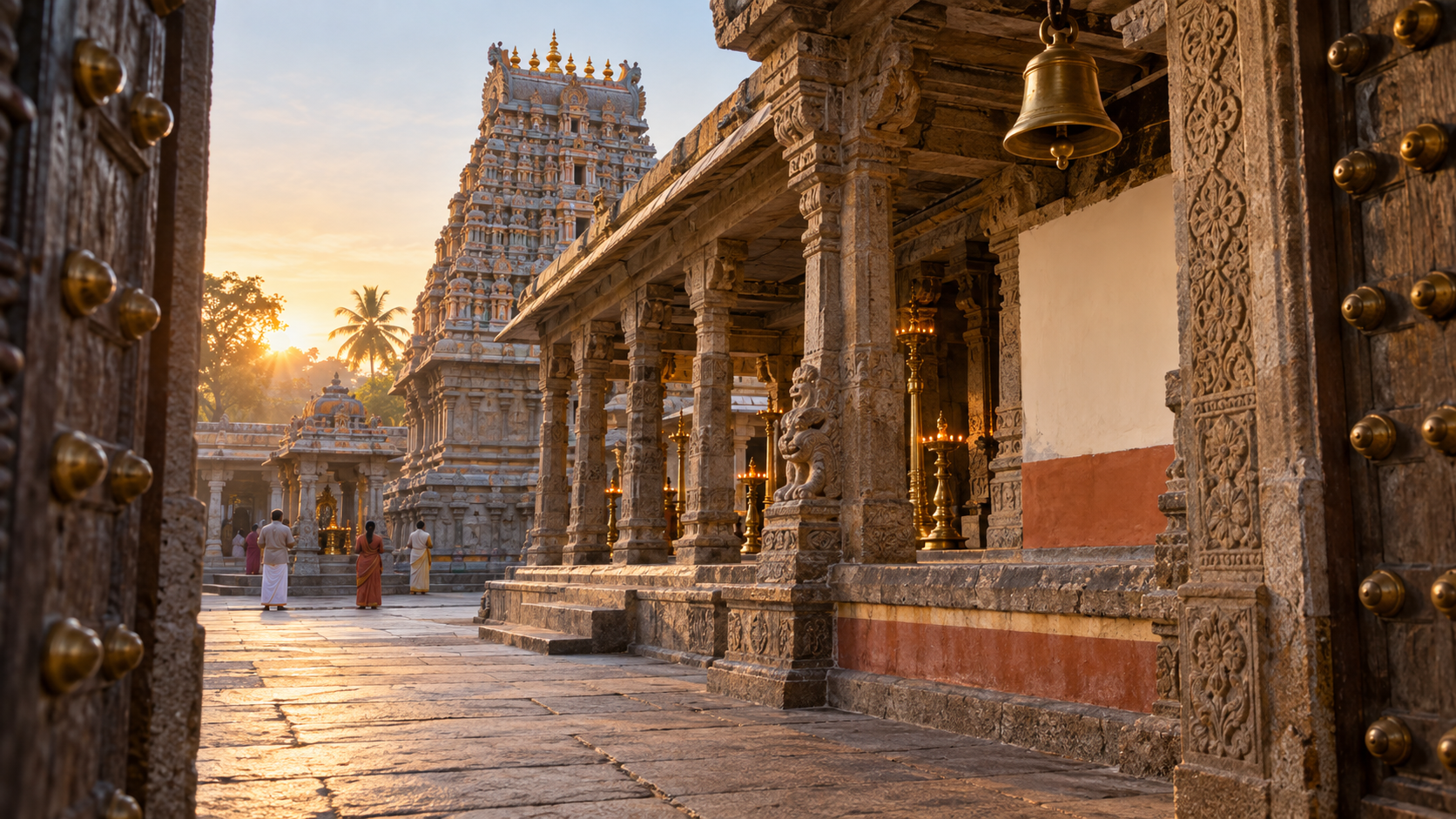
If you encountered photographs from Arkeshwara Swamy Temple and wondered whether a temple wall was altered without proper approval, focus on the question that can actually be answered: who authorised the work, through which process, and for what stated purpose?
The immediate images have been removed. The accountability question has not. The strongest response now is to protect the temple’s sacred identity, insist on documentary answers, and refuse to let either political theatre or communal hostility replace evidence.
Separate the known sequence from the unresolved allegations
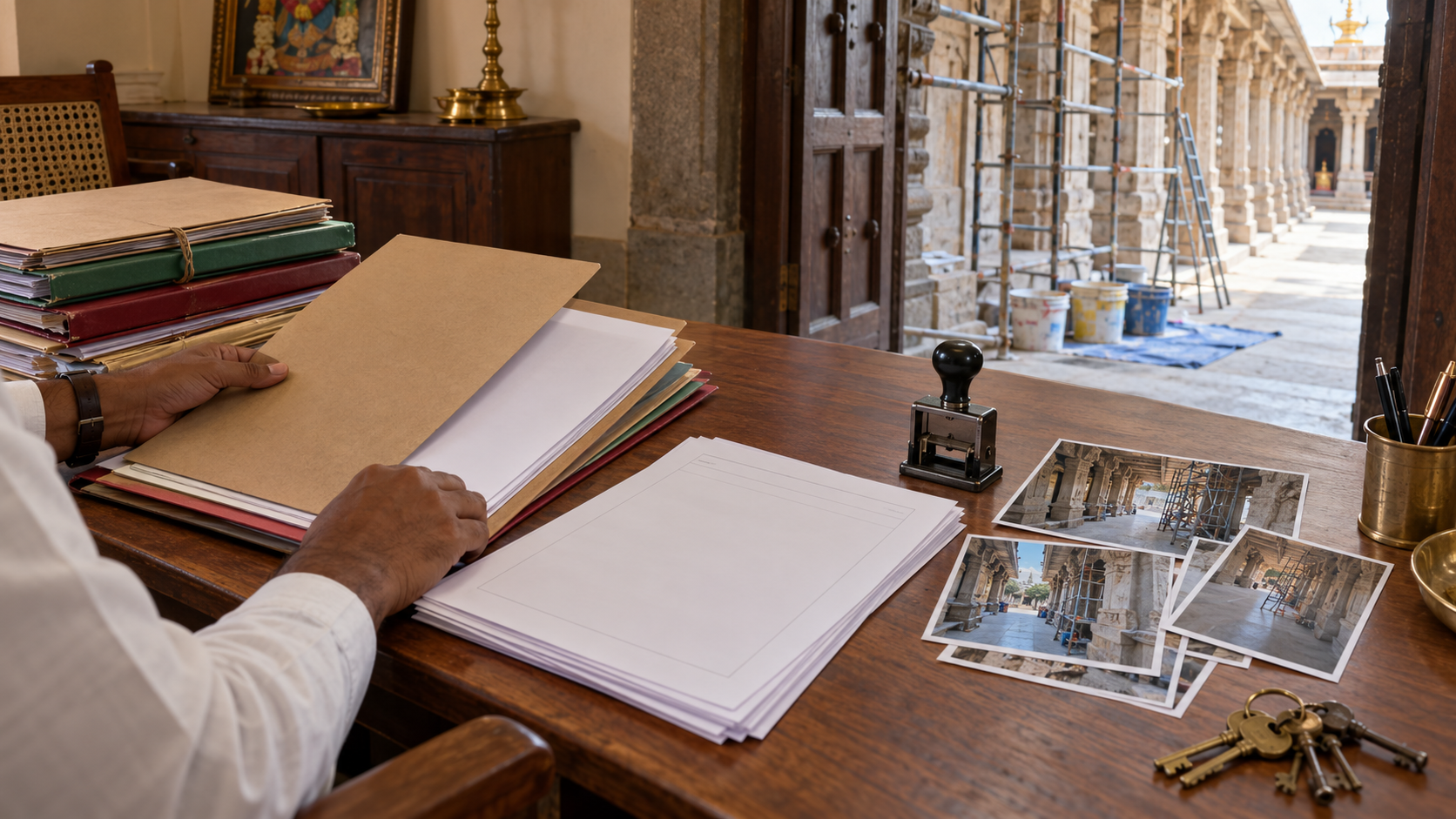
The controversy concerns the historic Arkeshwara Swamy Temple at Hale Edathore village in K.R. Nagar taluk of Mysuru district. During renovation work around the Dasara festivities, images of a cross and a mosque reportedly appeared in red and green on the temple’s compound wall. Hindu organisations objected and demanded to know who had approved them.
Precision matters here. The disputed surface was the compound wall of the temple premises. It should not casually be described as the sanctum or as a wall inside the garbhagriha. That distinction does not make the concern trivial; it keeps the public case credible and prevents a documented objection from being weakened by exaggeration.
A complaint was reportedly filed against temple in-charge Aarati and artist Vinay, and an FIR was registered at K.R. Nagar police station. An FIR records an allegation for investigation. It is not a judicial finding of guilt, so neither person should be publicly treated as convicted merely because the case was registered.
The administrative response dealt with the visible problem. In a statement dated October 17, Mysuru district police said K.R. Nagar Tahsildar Surendra Murthy visited the site after learning of the incident and took steps to have the images painted over.
What remains unverified
The central decision trail is still missing. Aarati reportedly maintained that a senior official had instructed that the symbols remain in the name of communal harmony. The police statement did not identify such an official or disclose who originally requested the paintings. Until an order, note, message, work instruction, or credible testimony establishes that chain, the claim remains an allegation rather than a settled fact.
The intention behind the work is also unproven. You can object firmly to an unauthorised alteration without claiming a conspiracy that the available facts do not establish. Motive should follow evidence, not be supplied by anger.
Communal harmony cannot be imposed on a sacred space
A temple compound is not a generic municipal canvas. Its walls form part of a religious setting maintained for worship, ritual life, memory, and a particular sacred identity. That remains true even when a wall stands outside the sanctum.
Respect among traditions does not require their symbols to be placed interchangeably in one another’s houses of worship. A cross has meaning to Christians, a mosque image has meaning in an Islamic context, and Hindu symbols carry their own sacred associations. Treating those identities seriously means respecting the boundaries of each religious institution, not dissolving those boundaries through an unexplained administrative decision.
An interfaith display can be appropriate in a mutually chosen civic programme, educational exhibition, or shared public venue. The same display acquires a different meaning when it is painted onto temple property during renovation without a disclosed proposal, recorded approval, or explanation to devotees.
Four questions help distinguish genuine outreach from administrative overreach:
- Authority: Did the person approving the work have lawful and institutional authority over the temple premises?
- Consent: Were the responsible temple bodies consulted before the images were painted?
- Context: Was there an announced programme explaining why the symbols belonged at that location?
- Reciprocity: Would the same rule respect the distinct sacred character of a church, mosque, gurdwara, Jain derasar, or Buddhist vihara?
If those questions have no clear answers, invoking communal harmony does not cure the procedural failure. Harmony depends on voluntary respect. It loses credibility when used as a label for an unexplained alteration.
This is also why contempt for Muslims or Christians is the wrong response. The issue is not that their symbols are inherently offensive. The issue is whether decision-makers introduced them into a Hindu sacred setting without transparent authority. Keeping the objection that narrow protects both dharmic dignity and the credibility of those defending it.
Painting over the images did not erase the decision trail
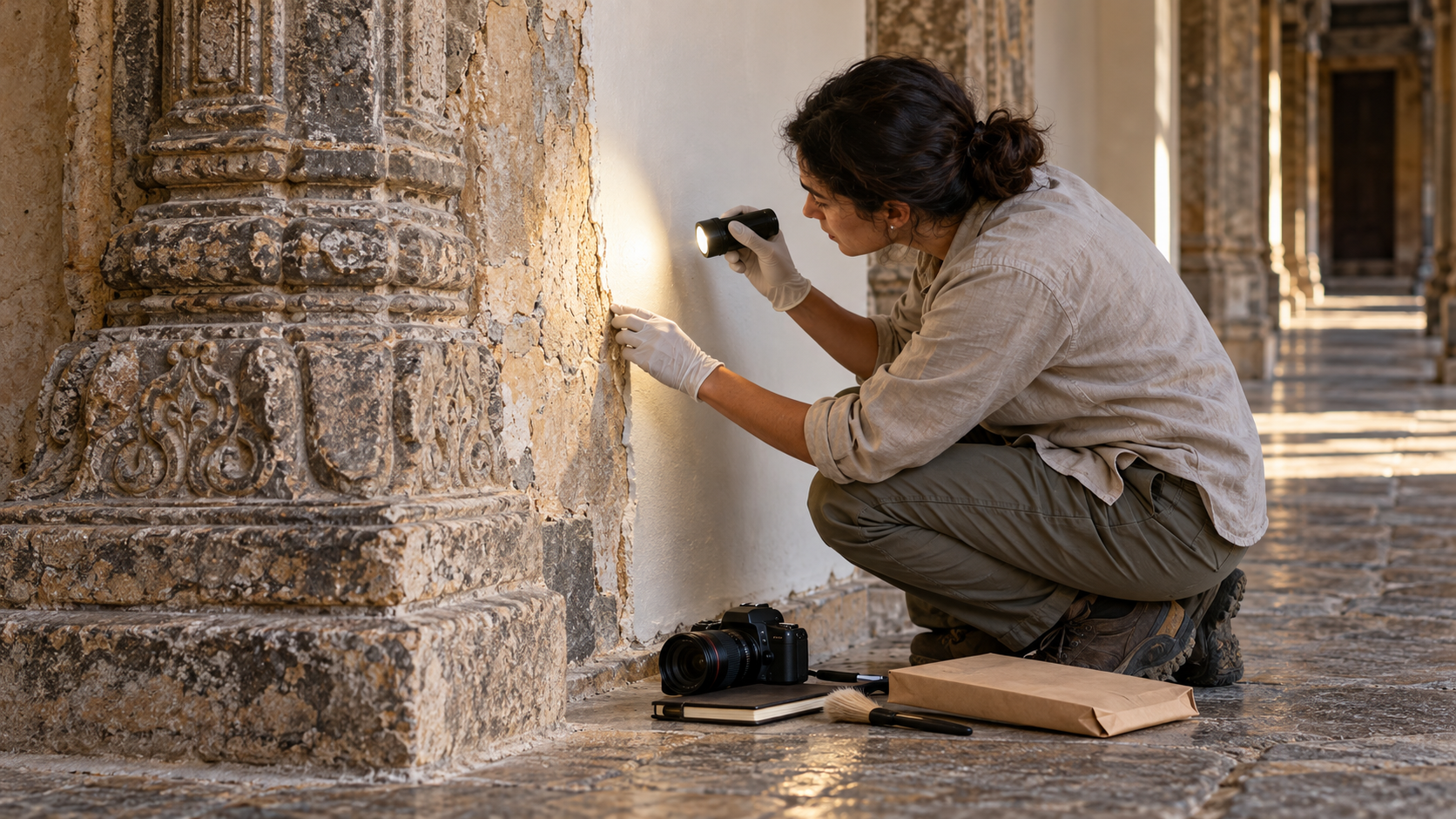
Removal was a necessary immediate remedy once the administration decided the paintings should not remain. It restored the appearance of the wall, but it did not reveal how the decision was made. Without that second step, the same governance failure can recur during another renovation.
Authorities should answer a finite set of questions with records rather than slogans:
- Who first proposed the cross and mosque images?
- Who commissioned the artist, and what written or oral instructions were given?
- Did the renovation work order include decorative painting, religious imagery, or any approved design?
- Who inspected or accepted the work before the controversy began?
- Was any direction to retain the images issued by a senior official? If so, by whom, on what date, and under what authority?
- Which temple committee, department, or local administrative body was consulted?
- Was the temple merely described as historic, or is it subject to any formal conservation control? If conservation rules apply, were they followed?
- What corrective protocol will govern future changes to temple walls, signs, murals, and other visible features?
The distinction between a historic temple and a formally protected monument is important. Age or local importance alone does not establish a particular legal designation. The administration should state the temple’s actual status and identify any rules that applied to the renovation rather than leaving the public to guess.
If no written approval exists, that too is a meaningful answer. It would indicate a breakdown in supervision or an informal decision that bypassed normal controls. If written approval does exist, releasing it would allow the public to assess the authority, reasoning, and scope of the decision.
How devotees can pursue accountability without feeding disorder
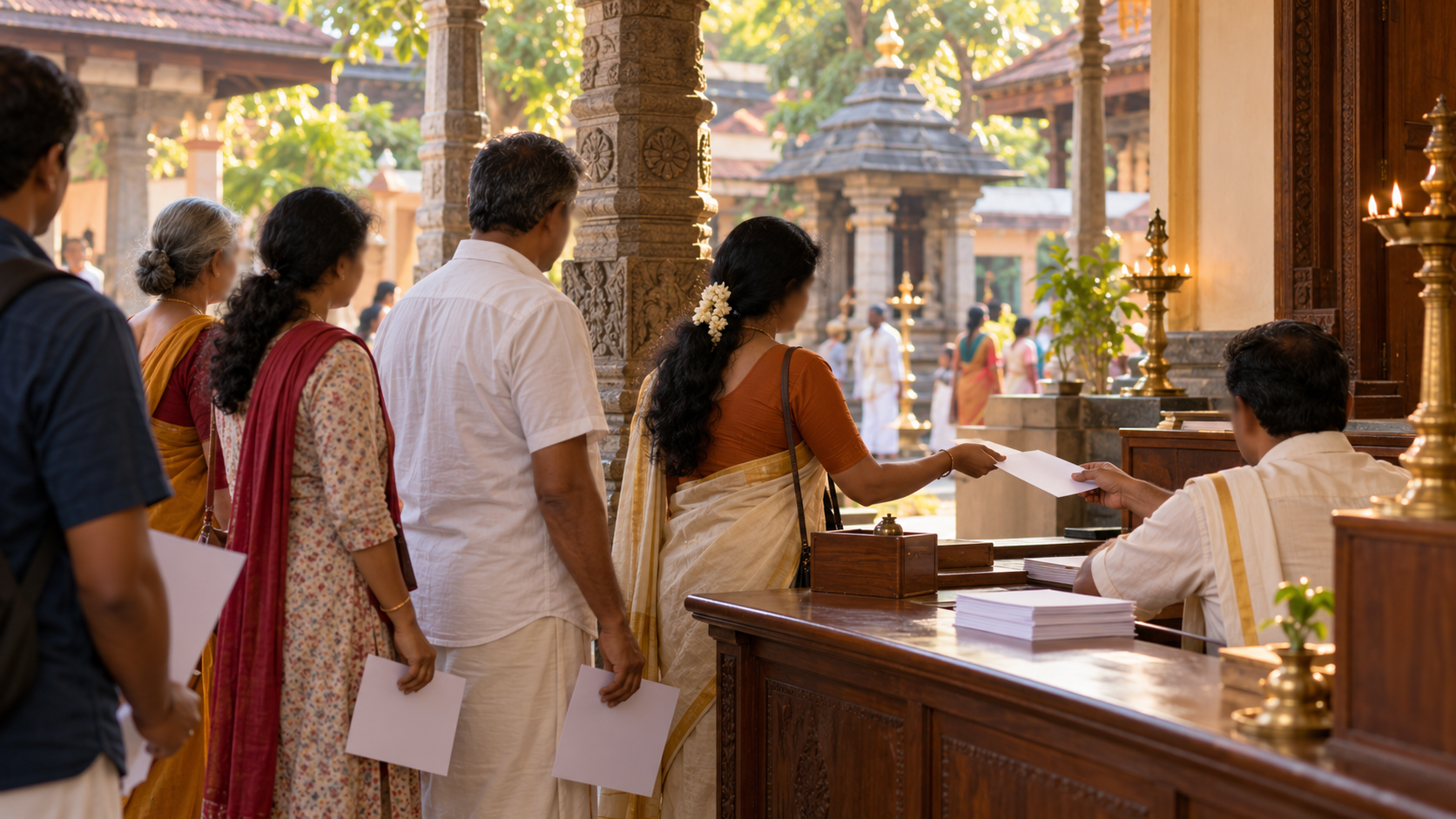
If you want to act, build a record that an official cannot dismiss as rumour. A precise request for documents is more difficult to evade than a sweeping accusation about hostility to Hindus.
- Preserve the public record. Save the relevant official statement, dated photographs, complaint details, and public responses. Keep the original URLs and dates with every screenshot so that an edited image does not become the foundation of your case.
- Describe the location accurately. Refer to the compound wall of Arkeshwara Swamy Temple unless stronger evidence establishes another location. Do not enlarge the claim for rhetorical effect.
- Request identifiable records. Ask the temple administration, tahsildar’s office, or other competent authority for the renovation work order, approved design, payment or commissioning record, inspection note, instruction to retain the images, and record of their removal. If you use an applicable public-information procedure, request copies of records rather than asking officials to speculate about motives.
- Seek a proportionate remedy. The surface has already been corrected. The remaining remedies are disclosure of the approval chain, a fair investigation, responsibility based on evidence, and a written safeguard for future renovation work.
- Do not confront individuals or alter temple property yourself. Threats, harassment, doxxing, or unauthorised entry can create harm and legal exposure while distracting from the original administrative question. Let competent authorities preserve evidence and carry out physical changes.
- Do not treat the FIR as a verdict. Ask for the case number, procedural status, and eventual findings through lawful channels. Hold named officials or workers responsible only to the extent supported by evidence.
- Keep the demand institution-focused. The useful question is who exercised authority over a Hindu temple and whether that authority was properly used. Abuse directed at entire religious communities neither answers that question nor protects the temple.
A one-page representation is enough if it names the temple, identifies the disputed work, lists the exact records requested, and provides contact details for a written reply. Attach evidence separately. This makes the request easier to register, forward, and answer.
Political leaders may amplify a controversy, but amplification is not accountability. Devotees should judge the outcome by whether the administration discloses the decision chain, establishes responsibility fairly, and adopts a rule that prevents unsupervised changes to sacred premises.
Key takeaways
- The disputed cross and mosque images were reported on the compound wall of Arkeshwara Swamy Temple during renovation work, not in the sanctum.
- The paintings were removed after the tahsildar’s intervention, addressing the visible alteration but not explaining its authorisation.
- The claim that a senior official wanted the images retained for communal harmony remains unverified until the responsible authority and instruction are identified.
- An FIR begins an investigative process; it does not establish the guilt of the temple in-charge, artist, or any official.
- The most effective public demand is for the work order, design approval, instruction chain, inspection record, and a future renovation protocol.
- Defending a Hindu sacred space does not require hostility towards other faiths. It requires clear boundaries, consistent standards, and evidence-based accountability.
If you write to the authorities, ask for documents before offering conclusions. A disciplined record will do more to protect Arkeshwara Swamy Temple—and other temples facing similar administrative decisions—than an accusation that outruns the available evidence.
References

Leave a Reply
You must be logged in to post a comment.