
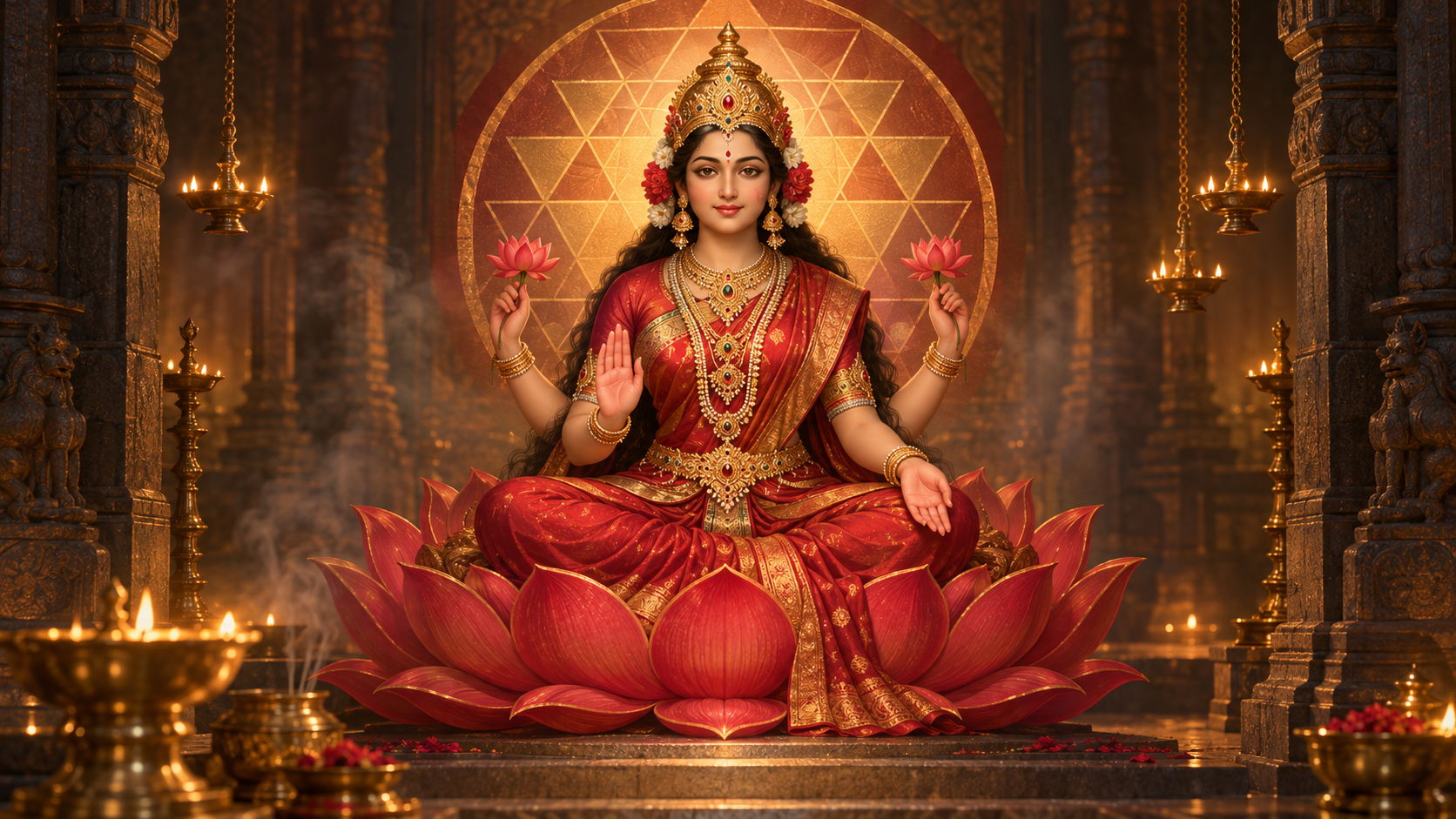
You may have encountered Vashyamukhi Devi in an image caption, a list of Shakta forms, or a promise about gaining influence. Now you want to know what the name means and whether this is a form you can worship on your own. The reliable answer begins with a boundary: you may study her symbolism, but an isolated name, image, or mantra is not a complete Srividya sadhana.
Vashyamukhi belongs to the less public, more initiatory side of Devi worship. Her name concerns attraction, mastery, and bringing under influence. Those ideas can lead toward self-command and dharmic presence, or they can be misused to rationalize coercion. Before asking how to practise, you therefore need to ask what you hope to control.
Vashya names a power, not permission to control someone
Vashyamukhi is an esoteric form of Devi whose name invokes attraction and control. She is encountered more in initiated practice and specialized traditions than in ordinary popular worship. That context matters because a functional name does not, by itself, disclose a mantra, ritual procedure, proper object, or ethical justification.
The English word control can also flatten the range of vashya. Attraction, influence, mastery, and the capacity to bring something into alignment are related ideas, but they are not morally identical. Influencing your own scattered attention is not the same act as trying to override another person’s refusal. A sacred vocabulary does not erase that difference.
Before looking for a mantra or procedure, answer these questions plainly:
- Am I seeking command over my own attention, impulses, speech, or conduct?
- Do I want to communicate truthfully and persuasively, or do I want another person to surrender independent judgment?
- Would the desired result require ignoring consent, manipulating fear, or exploiting dependence?
- Would I consider the same method dharmic if someone used it against me?
If your desired result depends on another person losing freedom, stop there. Do not use the language of Devi to decorate adharma. A sound contemplative reading begins elsewhere: attraction draws the mind away from fragmentation, mastery places desire under discernment, and influence arises from clarity of character rather than compulsion.
Read the power inward before directing it outward

This inward reading is an ethical way to approach the name, not a claim that every Srividya lineage gives Vashyamukhi exactly the same explanation. Lineage-specific meanings should come from the lineage. Until then, you can use the name as a mirror in three concrete areas of life.
- Attention: Notice what repeatedly captures your mind without your consent. The first field of vashya is the attention you have allowed habit, anger, envy, or distraction to govern.
- Speech: Replace exaggeration and emotional pressure with accurate, measured words. Speech becomes more influential when people can trust it.
- Desire: Separate the result you seek from the person you want to control. You can govern your preparation, honesty, courage, and response; you cannot turn another person’s will into your possession.
A simple written exercise will expose the difference. Divide a page into three headings: desired result, what I can govern, and what requires another person’s free assent. Under the second heading, write only actions that belong to you. Under the third, place every decision that rightfully belongs to someone else.
For example, replace ‘make this person accept me’ with ‘speak honestly, act with dignity, and become capable of receiving either yes or no.’ Replace ‘make everyone obey me’ with ‘state the case accurately, listen to objections, and accept an accountable decision process.’ The revised intention does not make you passive. It locates your first work where genuine agency exists.
How to examine an unfamiliar Vashyamukhi image
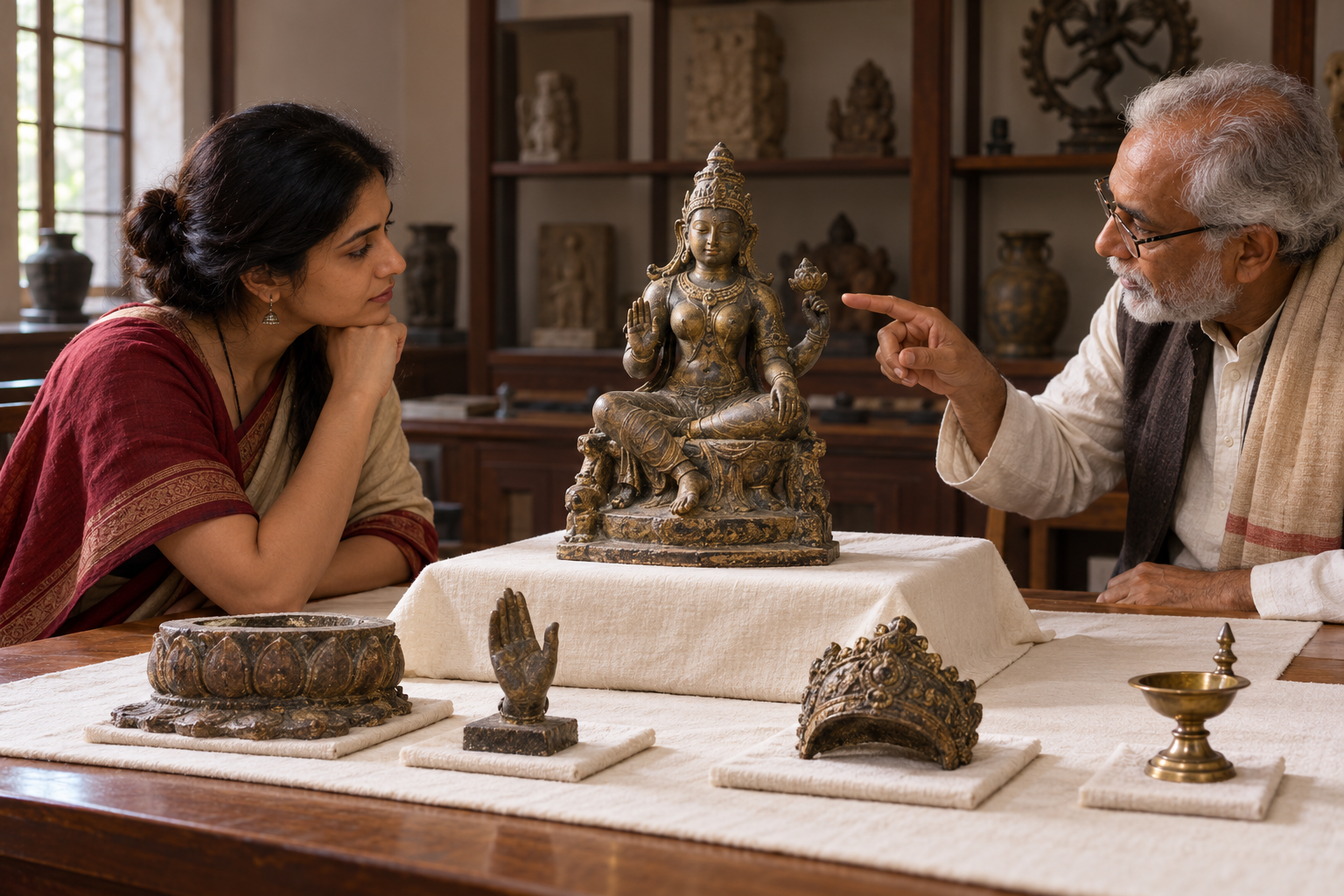
Iconography is a teaching language, but a detached screenshot can strip that language of grammar. This is especially important for a form that is not widely established in popular temple worship. Familiarity alone is not enough to authenticate a caption, and visual beauty is not evidence of ritual authority.
Use the following method when you encounter an image identified as Vashyamukhi:
- Keep the provenance. Record where the image came from. A named temple, manuscript, lineage publication, or identifiable teacher provides context. An unattributed social-media repost does not.
- Describe before interpreting. Note the visible posture, faces, hands, implements, gestures, seat, colours, and accompanying figures. Do not assign symbolic meanings before you have identified the elements accurately.
- Look for a coherent explanation. Identification should account for the whole form, not one convenient colour or object. If the explanation cannot tell you why the features belong together, treat the label as unverified.
- Do not assemble a practice from fragments. An image from one setting, a mantra from another, and a ritual procedure from a third do not become an authentic sadhana merely because the same name appears beside them.
- Separate representation from authorization. A picture may represent a deity. A competent explanation may identify its symbolism. Neither automatically authorizes you to perform an initiatory practice.
Modern devotional art, including digitally produced images, can still carry sincere reverence. What it cannot do on its own is prove a canonical iconographic form or transmit initiation. If no textual or lineage context accompanies the picture, appreciate it as art while leaving its ritual status undecided.
Approach Vashyamukhi without turning secrecy into a shortcut
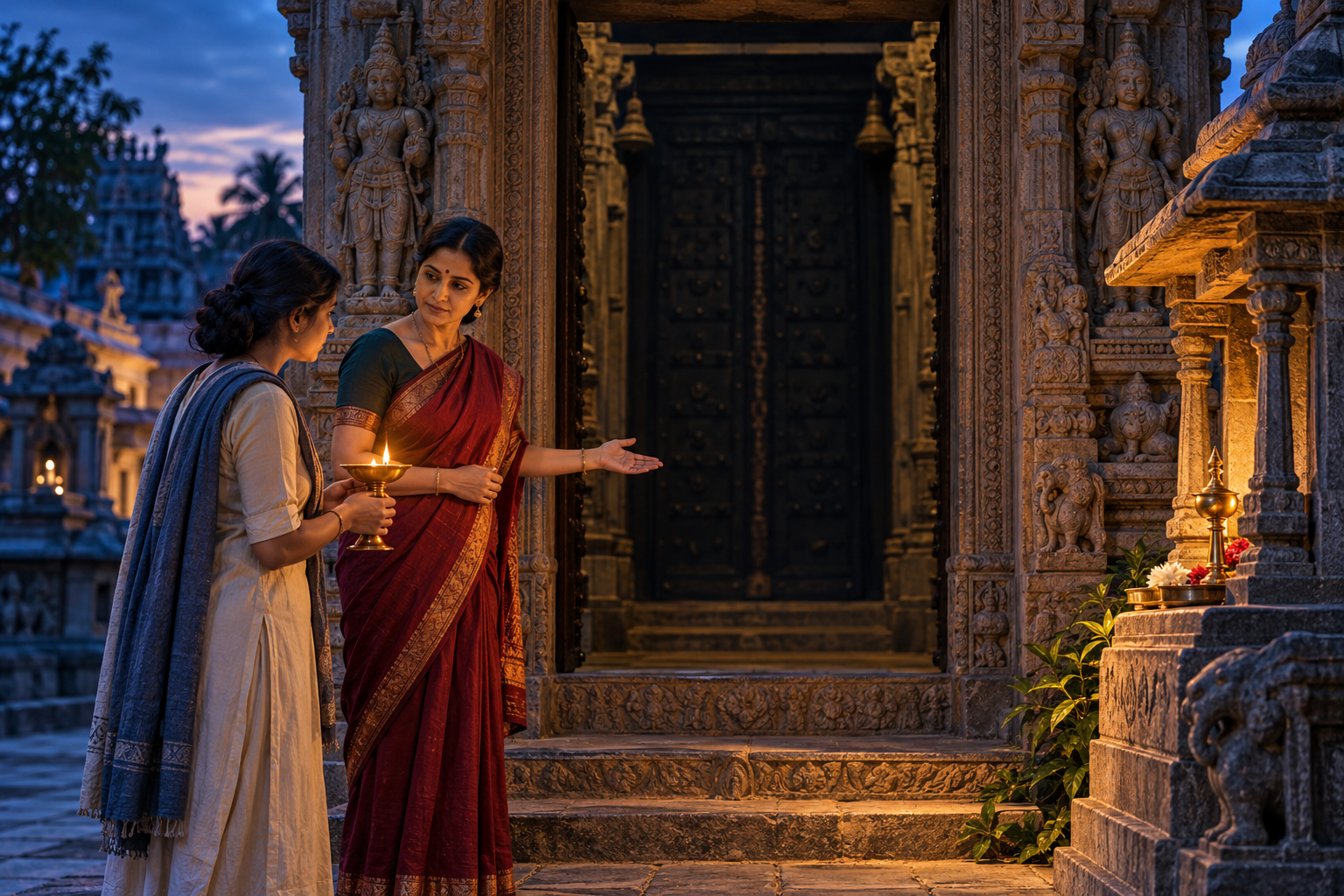
You do not need to choose between careless experimentation and complete indifference. There is a disciplined middle path: honour what is public, acknowledge what you do not know, and seek qualified guidance before entering initiatory practice.
- Define what you are seeking. Decide whether your interest is iconographic study, general devotion to Devi, or formal Srividya sadhana. These are different levels of engagement and do not require the same instruction.
- Stay within established devotion while you learn. If you have no relevant initiation, offer your respect to Devi through the form of worship already established in your household or sampradaya. You do not need to improvise a specialized invocation to acknowledge Vashyamukhi.
- Do not copy isolated ritual material. Avoid adopting circulating mantra sequences, nyasa instructions, yantra procedures, or claims of guaranteed influence without a teacher who can establish their context and your eligibility.
- Ask a prospective teacher concrete questions. Ask where the form belongs within the teacher’s lineage, what preparation is required, which teachings are public, and what ethical limits govern the practice. A teacher may properly withhold initiatory details while still being clear about boundaries.
- Examine the teacher’s conduct. Lineage language should never be used to demand sexual access, reckless payments, illegal acts, estrangement from everyone you trust, or obedience enforced by threats of supernatural punishment. Secrecy is not an answer to an ethical concern.
- Judge the direction of the practice. Greater steadiness, truthfulness, responsibility, and respect for others are meaningful signs of integration. Growing obsession with a named person, fantasies of domination, constant fear, or dependence on escalating promises are reasons to step back.
A qualified guide does more than hand over syllables. The guide establishes the relation among the deity, the practitioner’s preparation, the ritual setting, and the discipline expected afterward. Removing that framework and retaining only a promise of power reverses the purpose of initiation.
Key takeaways for a sincere seeker
- Vashyamukhi is a specialized Devi form associated with attraction, influence, mastery, and control within an initiatory Srividya setting.
- The name identifies a field of power; it does not provide a complete ritual or grant moral permission to manipulate another person.
- Your safest first contemplation is inward: bring attention, speech, desire, and conduct under dharmic order.
- An online image or mantra fragment cannot establish provenance, correct interpretation, or authorization to practise.
- If you are not initiated, remain with established public devotion to Devi while seeking a qualified Srividya teacher.
- Any promise that requires violating consent or surrendering basic ethical judgment should be rejected, however sacred its vocabulary sounds.
Your next step can be small and exact. Write the result you want from Vashyamukhi in one sentence. Remove every verb that requires another person to lose freedom. What remains is your real sadhana question. Carry that question into your ordinary prayer to Devi and, if it endures, to a qualified teacher who can place it within Srividya rather than outside it.
References

Leave a Reply
You must be logged in to post a comment.