
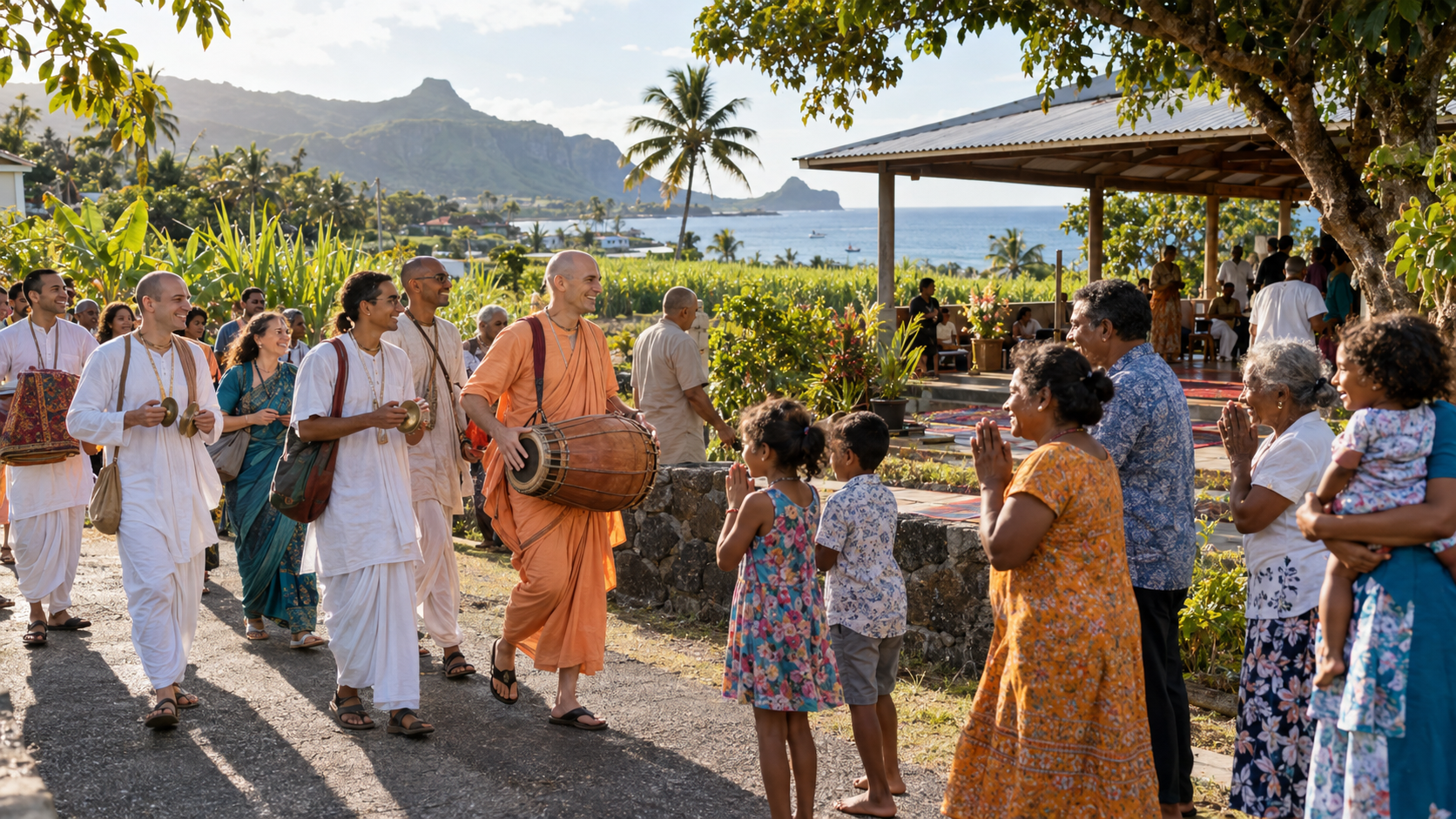
If you heard that Bhaktivedanta Manor sent a “travelling temple” to Mauritius, you might picture a vehicle fitted with an altar. That is not what happened. The temple was carried in a more demanding way: through people who could bring kirtan, teaching, service and association from one community to the next.
For two weeks, at least twenty brahmacharis and devotees travelled through Mauritius. Their experience gives you more than an itinerary. It shows what makes travelling outreach spiritually substantial, what must be arranged before the first kirtan begins, and why local devotees are participants rather than an audience waiting for visitors to arrive.
A temple formed by people, not walls
The phrase “travelling temple” works as a practical description, not as a claim that temple buildings are unimportant. At each stop, the visiting devotees carried recognisable elements of temple life with them: congregational chanting, devotional teaching through drama, prasadam arrangements and sustained association. The setting changed, but the devotional centre held.
The tour opened with a large Harinama in Port Louis, joined by local devotees. It concluded with a Sunday programme at the Krishna-Balaram Temple, where a drama was followed by kirtan. Between those points, the group moved through streets and temple communities without reducing the programme to a single travelling performance.
You were like a mobile travelling temple.
Message from a local devotee in Mauritius
That response tells you what to look for when judging the success of devotional outreach. Do not ask only how many venues were visited. Ask whether local devotees entered the kirtan, whether the programme gave people something meaningful to hear, and whether the visitors strengthened relationships that could continue after their departure. A mobile temple is recognised by the devotional life it activates, not by the mileage it covers.
The visible programme rested on invisible seva
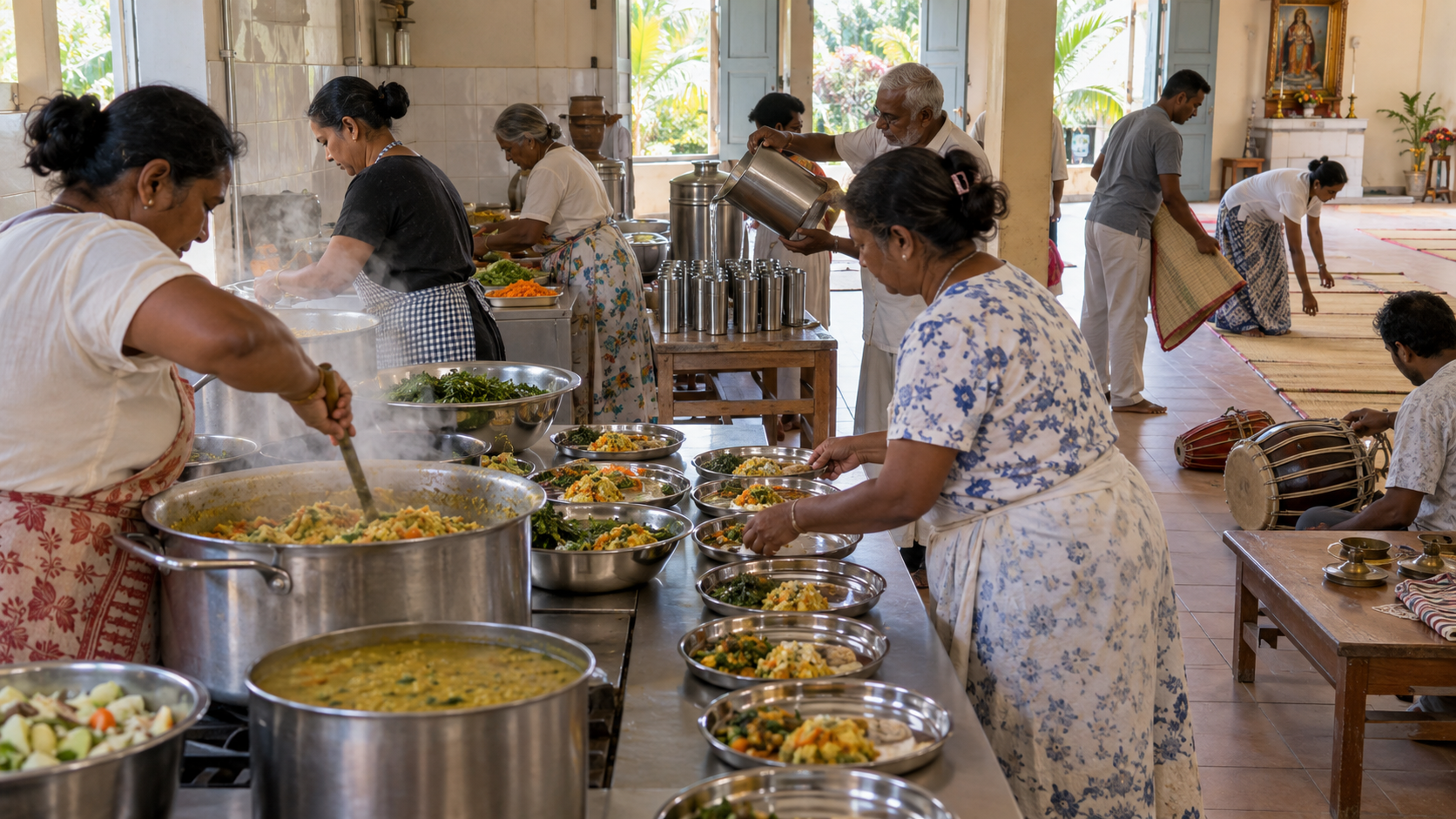
The public saw Harinama, dramas and energetic kirtan. Beneath them was a small but decisive support system. Nitya Gopal Prabhu provided an empty house and helped organise transport. Mukund from Pure Veg took responsibility for the visiting devotees’ prasadam. Those services released the group from repeatedly solving accommodation, travel and food problems while trying to maintain a demanding programme.
If you are planning a similar visit, put names beside the essential duties before adding more events to the schedule:
- Local host: one person who can resolve questions about the base, venues and community contacts.
- Transport lead: one person who knows who is travelling, where the group must be and how equipment moves with it.
- Prasadam coordinator: one person responsible for reliable meals that fit the programme rather than compete with it.
- Venue liaison: one named contact at each stop who can align arrival, setup and local participation.
- Programme lead: one person who can adjust the running order when travel or setup takes longer than expected.
Some people may hold more than one role, as happened in Mauritius, but the responsibility should still be explicit. “Everyone will help” sounds generous and often leaves basic tasks unowned.
The visitors also faced long days, demanding travel and the fatigue of sustained preaching. That is a planning fact, not a lack of enthusiasm. Build recovery space around travel and setup before filling every open period with another engagement. If the group arrives too depleted to be attentive to the local devotees, the extra event has weakened the purpose of the tour.
The route joined public outreach, temples and sacred memory
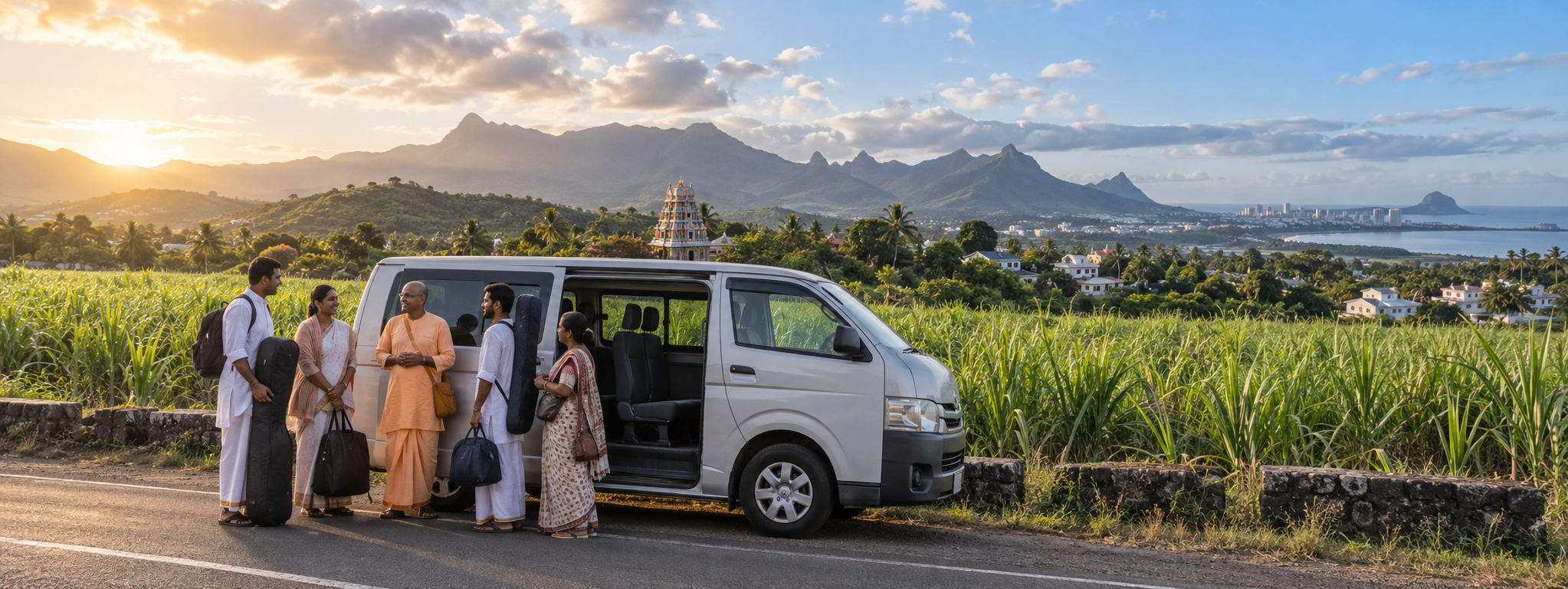
The Mauritius route did not repeat the same programme in interchangeable halls. Each setting contributed something different:
- Port Louis: A large Harinama brought the chanting into public space, with local devotees joining the visiting group.
- Pancha Tattva Temple: The visitors presented the Boatman and Scholar drama, followed by the kind of energetic kirtan that became a defining feature of the tour.
- Radha-Golokananda Temple: A drama about Srila Prabhupada gave the gathering a direct narrative connection to the founder-acharya.
- Rose Belle: Harinama continued in a place made significant by Srila Prabhupada’s own visit to the area.
- Krishna-Balaram Temple: The final Sunday programme included Narada and the Cobbler and a concluding kirtan.
This sequence offers a useful way to design a travelling programme. Mark every proposed stop with one primary purpose: public visibility, devotional teaching, historical continuity or community consolidation. One event can serve more than one purpose, but naming its main purpose prevents every stop from becoming the same stage programme under a different roof.
Historical memory also needs interpretation. Rose Belle mattered because Srila Prabhupada had been there; that connection turned another destination into a place of remembrance. If your route includes such a place, tell participants why it matters before the programme begins. A location on a map becomes sacred memory when the community understands the relationship it carries.
The final venue carried another lesson. The Krishna-Balaram Temple was built by Sriniketan das, a disciple whom Srila Prabhupada sent to Mauritius because he could speak French. Language is therefore not an administrative detail in outreach. Before travelling, identify who can communicate naturally with the local community, introduce the programme clearly and maintain relationships after the visitors leave. Translation added at the last moment cannot replace a trusted local voice.
Kirtan, drama and association did different work
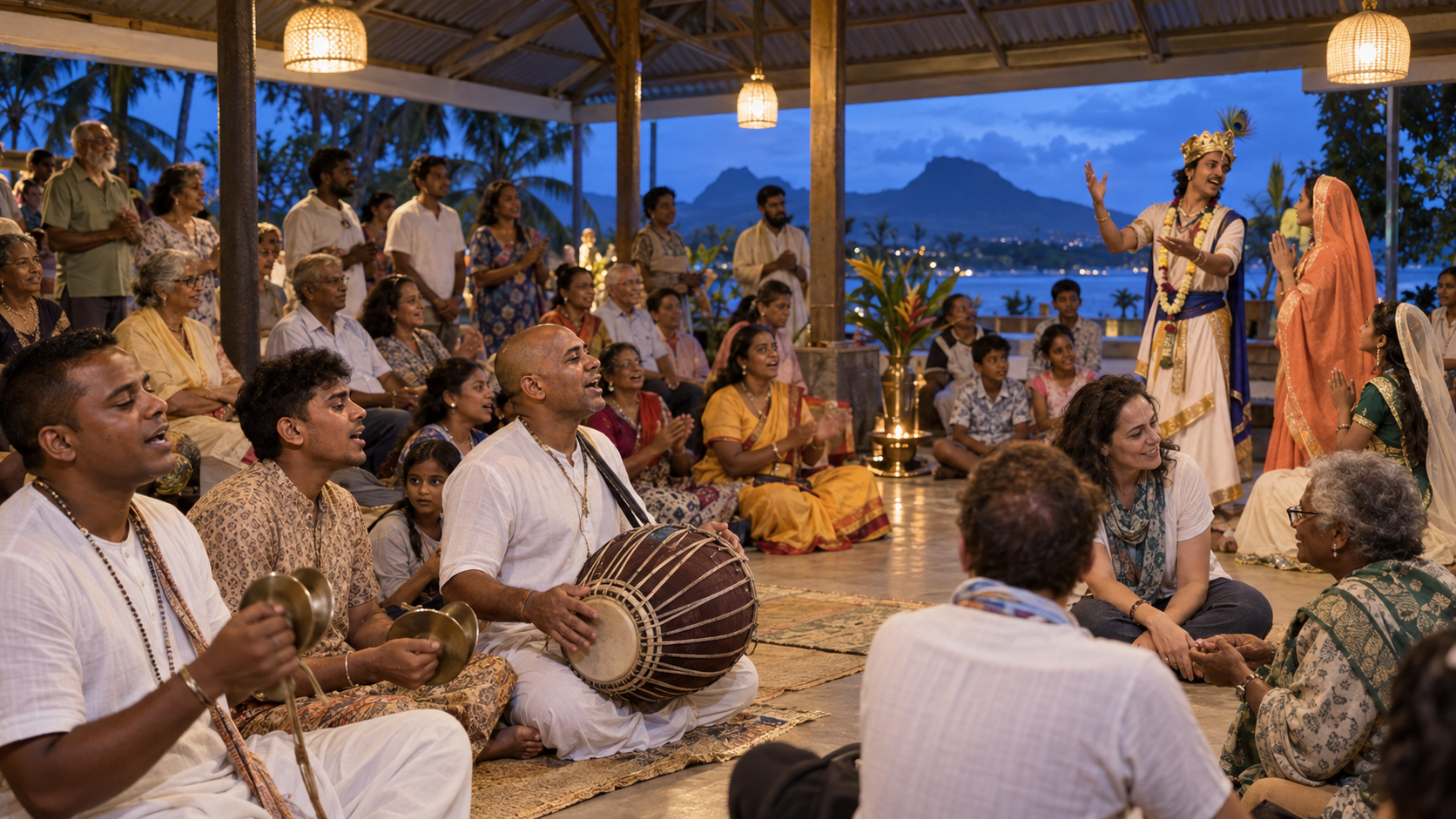
A strong travelling programme does not ask one format to accomplish everything. Mauritius shows how three forms of engagement can support one another:
- Harinama opens the encounter. It places the holy name in a shared public setting and lets local devotees participate immediately rather than remain seated as spectators.
- Drama gives teaching a memorable human form. Boatman and Scholar, the presentation about Srila Prabhupada, and Narada and the Cobbler gave the tour distinct narratives instead of repeating one talk at every venue.
- Association turns an event into a relationship. The heartfelt messages received as the visitors departed reflected the value placed on shared kirtan, drama and time with devotees.
Choose the form according to the work it must do. Use public chanting where the aim is open participation. Use drama when a teaching or devotional personality needs narrative shape. Preserve unhurried time around formal programmes when the aim is association. If every minute is assigned to the stage, visitors and hosts may complete the schedule without actually meeting one another.
Local participation is the test running through all three. The visiting brahmacharis brought energy, but the Mauritian devotees answered it by joining the kirtan, receiving the dramas and supporting the tour. When you organise a visit, ask the local community what it will lead, not merely what it will attend. A travelling temple should increase local agency rather than make the host community dependent on imported momentum.
Key takeaways for your own travelling programme
- Secure the support structure first. Confirm the local host, accommodation, transport, prasadam and venue contacts before increasing the number of programmes.
- Carry a repeatable devotional core. Kirtan, teaching and association should remain recognisable even when the venue changes.
- Give every stop a purpose. Distinguish public outreach, temple gathering, historical remembrance and community consolidation instead of repeating one generic event.
- Prepare more than one medium. Match Harinama, drama and direct association to the people and setting in front of you.
- Build with local devotees. Invite them to chant, organise, introduce and sustain the relationships created by the visit.
- Plan for human limits. Travel and long programmes consume energy; a schedule that protects attentiveness serves the community better than one that merely maximises appearances.
If you are preparing a travelling temple of your own, begin with a one-page run sheet. Give it six columns: place, local lead, transport, prasadam, programme purpose and recovery window. Fill in the responsible name for every row. Any blank is a real planning gap, not something to leave for arrival day.
Then ask one final question: after the visiting party leaves, what will remain in the hands of the local devotees? Plan toward that answer. The most valuable journey will not be the one with the fullest itinerary, but the one that leaves people more connected, more capable of serving together and ready to carry the kirtan forward themselves.
References

Leave a Reply
You must be logged in to post a comment.