

If you are trying to decide whether an ingredient is fit for Sabarimala prasadam, the label on a sack cannot answer the whole question. Procurement must establish two different things: that the material satisfies the applicable quality standards, and that its ingredients, processing and handling are consistent with the temple’s religious traditions.
That distinction gives devotees a useful way to assess the controversy over halal-certified jaggery. It also gives the Travancore Devaswom Board a practical standard for preventing the same uncertainty from recurring.
The court direction creates two gates, not one
The immediate dispute arose from the procurement of halal-certified jaggery for Sabarimala prasadam. In addressing that challenge, the Kerala High Court directed the Travancore Devaswom Board to exercise heightened caution and vigilance and to ensure that every raw material used for naivedyam complies with both established quality standards and temple religious traditions.
The important word is both. A purchasing officer cannot treat ordinary food-quality clearance as the end of the inquiry. Nor can a religious objection replace the need to verify purity, conformity and proper handling. Each gate answers a different question.
- Quality compliance: Is the supplied material what the vendor claims it is, and does it meet the applicable standards and the purchase specification?
- Religious compliance: Are the material, relevant processing practices and handling arrangements compatible with Sabarimala’s established traditions for naivedyam?
An ingredient must pass both gates before acceptance. Passing a commercial quality test does not automatically establish ritual suitability. In the same way, religious suitability does not excuse weak quality control.
A blanket conclusion that every halal-certified product is either prohibited or acceptable would go beyond the narrow facts available here. Anyone contesting or defending a particular tender should work from the authenticated court order, the tender conditions and the actual procurement record. Those documents determine the precise legal position in a specific dispute.
A certification is evidence, not the final religious decision

A product certificate establishes compliance with the system that issued it. It should not be made to answer a question outside its defined purpose. Whether an ingredient is suitable for a particular temple offering must be decided through that temple’s own religious requirements and competent custodians.
This prevents two opposite mistakes. The first is to assume that a general certificate, licence or laboratory result automatically proves ritual conformity. The second is to treat an unfamiliar certification mark as sufficient proof of ritual incompatibility without examining what it actually required of the product or its production.
For halal-certified jaggery, the responsible inquiry is therefore factual and specific:
- What exactly does the certification attest?
- Did obtaining it require any ingredient, processing aid, treatment or handling practice relevant to Sabarimala’s traditions?
- If so, which written or authoritatively established temple requirement does that fact satisfy or conflict with?
- Does the consignment match the product and process that temple authorities actually approved?
The religious conclusion should follow from the answers. It should not be inferred merely from the name of a certification, the identity of a vendor or a claim circulating on social media. A dharmic institution protects sanctity best when it can state the relevant tradition, apply it consistently and show how the procurement decision followed from it.
Put religious compliance into the tender, not the controversy
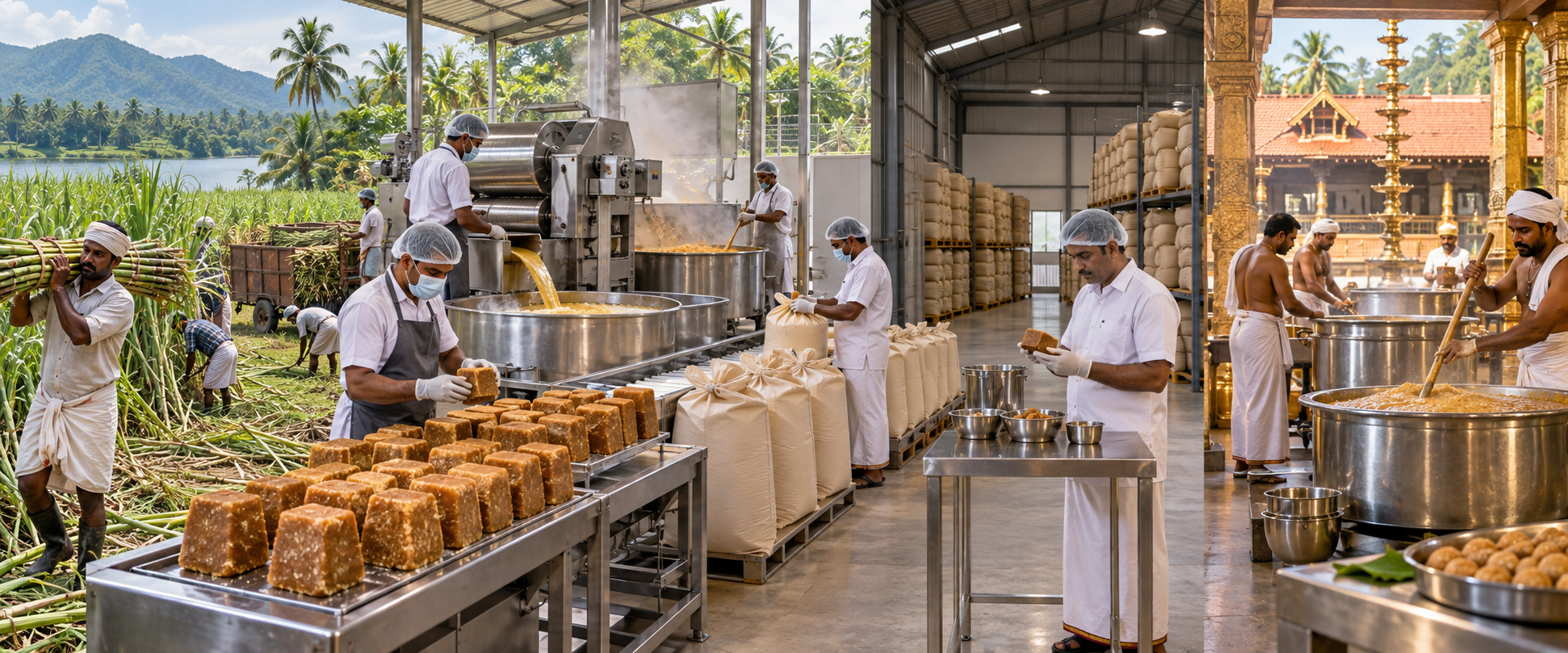
The most important control belongs at the beginning of procurement. If religious requirements appear only after a consignment has arrived, the Board is left choosing among delay, waste, improvised approval and public dispute. A clear pre-purchase specification makes the decision before those pressures arise.
A workable procurement process would follow these steps:
- Define the religious requirements. The competent temple authority or recognised custodians of the tradition should identify the requirements relevant to each naivedyam ingredient. Procurement staff should not invent ritual rules.
- Translate them into verifiable conditions. The tender should state what vendors must disclose about composition, processing, handling, storage or certification wherever those matters affect ritual suitability.
- Request evidence tied to each condition. Vendors should answer the actual specification. A stack of unrelated certificates is not a substitute for evidence about the supplied material.
- Review the two gates separately. A qualified quality reviewer should examine the commercial and technical requirements. The designated religious authority should decide conformity with temple tradition. The final approval should record both conclusions.
- Control later changes. A change in ingredients, processing method, production site, subcontractor or relevant handling arrangement should trigger a fresh review rather than silently inheriting an earlier approval.
- Match each accepted batch to the approval. Purchase orders, receipts and acceptance records should make it possible to establish which approved specification and vendor declaration covered a consignment.
- Record the reason for rejection or acceptance. A short written reason makes later review possible and discourages arbitrary or inconsistent decisions.
This system does not require every ritual detail to be broadcast. It requires the institution to know who has authority, what the governing requirements are, what evidence was checked and who approved the purchase. Sensitive ritual knowledge can remain appropriately protected while the administrative process remains accountable.
Several warning signs should prompt questions: a tender that asks only for good quality without addressing religious suitability; a religious condition so vague that vendors cannot demonstrate compliance; approval based solely on a certificate’s presence or absence; undocumented verbal clearance; or a dispute that begins only after the stock has been delivered.
What devotees can reasonably ask the Board to show
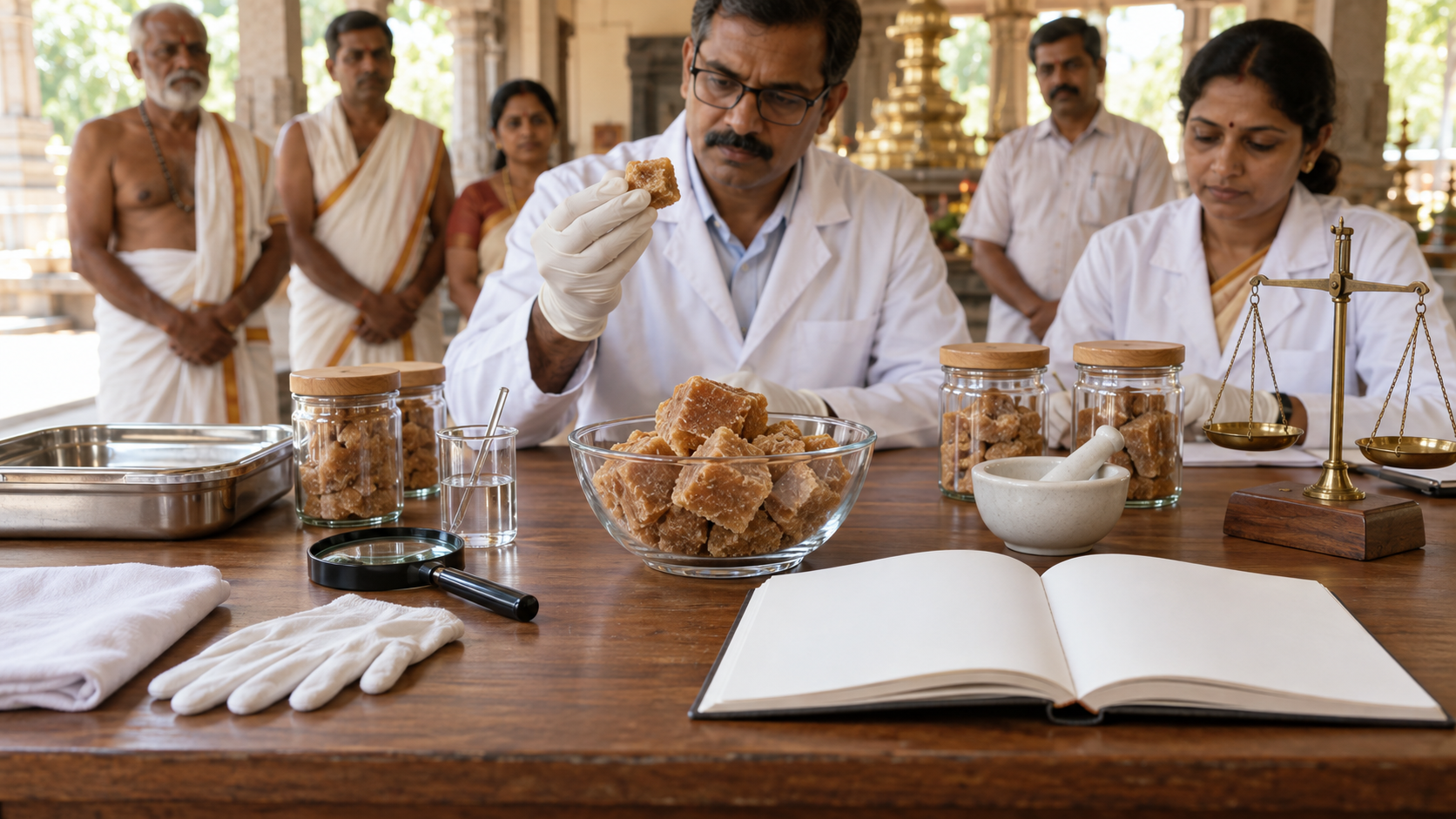
You do not need access to confidential commercial terms or every internal ritual detail to ask whether the system is sound. Focus on the controls that protect the offering.
- Was a religious-compliance specification approved before bids were evaluated?
- Which authority is responsible for interpreting Sabarimala’s traditions for procurement?
- Who separately verifies quality compliance?
- What disclosures must a supplier make about relevant ingredients, processing and handling?
- What happens when a supplier, production method or material specification changes?
- Can each accepted consignment be traced to a documented quality and religious approval?
- Is there a defined process for examining a devotee’s evidence-based objection?
These questions are more useful than demanding a conclusion based on a label alone. They also apply beyond the jaggery dispute. Every material intended for naivedyam should face the same disciplined scrutiny, regardless of which vendor supplies it or which certification marks appear on it.
Devotees should also distinguish a request for verification from an allegation. Ask what the Board checked and which standard it applied. If you have documentary evidence of a mismatch, identify the exact product, requirement and procurement decision. Do not fill missing facts with claims about a community or a vendor’s motives. The proper object of scrutiny is institutional compliance with the deity’s established tradition.
Key takeaways
- Sabarimala prasadam ingredients must satisfy two independent tests: applicable quality standards and the temple’s religious traditions.
- No commercial or religious certification should substitute for the Board’s own documented assessment of the actual material and process.
- Religious requirements should be defined before tendering and converted into conditions a supplier can verify.
- Each accepted consignment should be traceable to separate quality and religious approvals.
- Devotees can protect temple integrity most effectively by asking for specifications, responsibility and records rather than drawing conclusions from labels alone.
The next useful step is concrete: the Travancore Devaswom Board should make its procurement framework clear before the next purchase, including who defines religious conformity, what vendors must disclose and how each batch is approved. When the criteria come first, the sanctity of prasadam does not depend on improvised decisions after a controversy has begun.
References

Leave a Reply
You must be logged in to post a comment.