
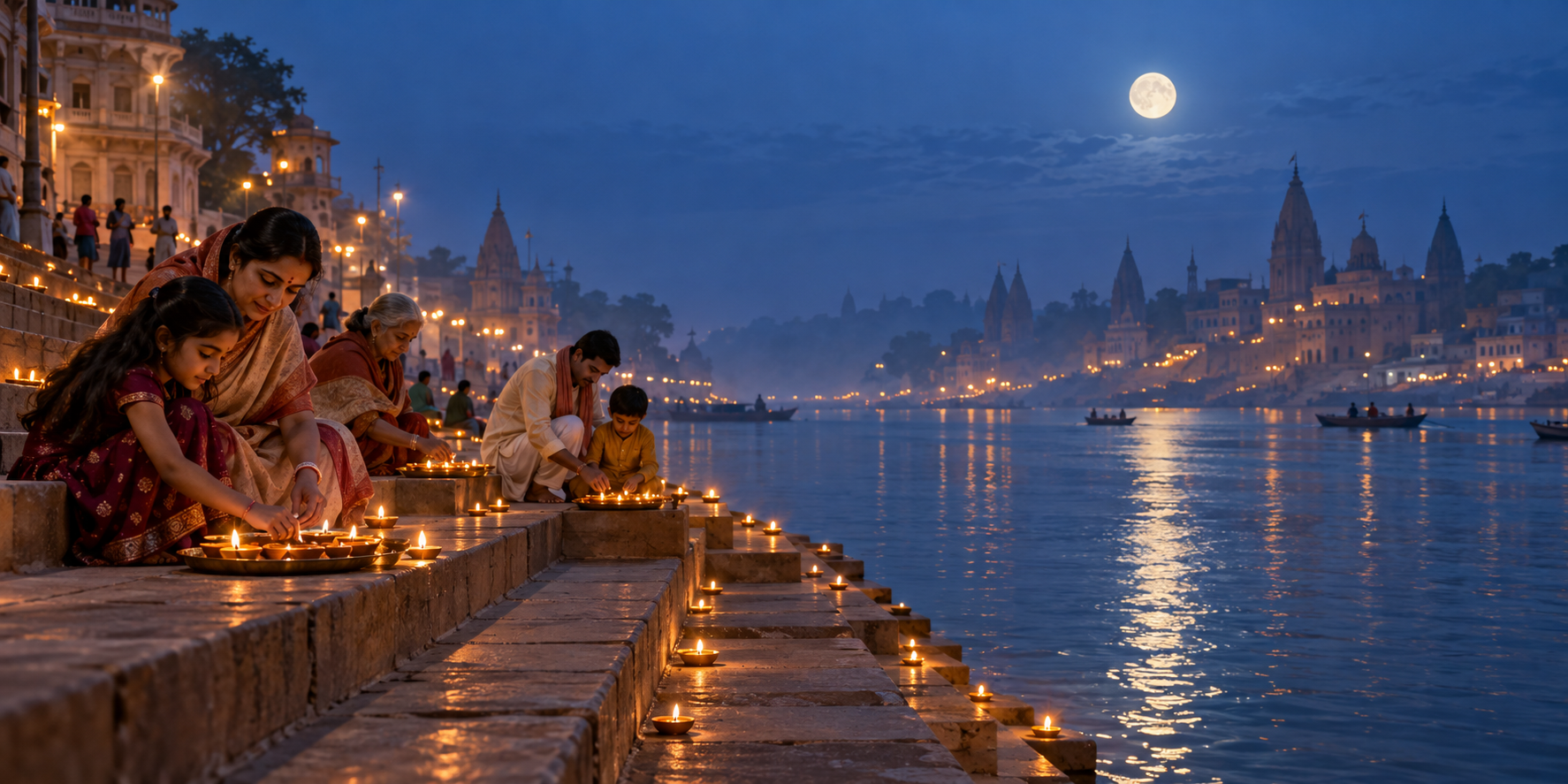
If you are arranging leave, travel, a temple visit, or a family puja for Kartik Purnima in 2026, put November 24, 2026, on your calendar. Treat that as the civil date for planning, then confirm the relevant tithi hours with a panchang calculated for your location.
You do not need to combine every regional custom into one crowded programme. A coherent observance can be simple: complete any Kartik discipline you have actually undertaken, bathe and worship according to your tradition, make time for japa or sacred reading, and light lamps safely in the evening.
Kartik Purnima 2026 at a glance
- Civil date: November 24, 2026.
- Lunar occasion: the full moon of Kartik.
- Other names: Tripurari Purnima and Tripuri Purnima.
- Calendar significance: it closes Kartik month in North Indian Hindi calendars.
- Vrata significance: it is the concluding day of Kartik Snana for those who have followed that observance.
- Related celebrations: Dev Diwali, Deepotsavam, and Ganga Mahotsav are associated with the occasion.
- Timing rule: use a local panchang or your temple’s announced schedule for exact tithi-dependent worship.
Why the date and the ritual timing are not the same question

The Gregorian date tells you which day to reserve. The purnima tithi tells you when the lunar observance is active. A tithi does not necessarily begin at midnight or occupy the same clock hours everywhere, so an India-based timetable should not automatically be reused in Toronto, London, Singapore, or another location.
This distinction matters most if you need a precise sankalpa, vrata-completion time, temple service, or other muhurta-sensitive act. Check a reputable local panchang and your family’s sampradaya before fixing the hour. If your temple publishes a programme, follow that programme for congregational worship even when a calendar application displays the tithi in a different format.
Do not fill a missing timetable with a guessed sunrise, moonrise, or fasting deadline. No universal clock time follows merely from the date November 24. The practical rule is straightforward: use November 24 to organise the day, and use local guidance to organise its ritual hours.
A workable observance from morning to evening
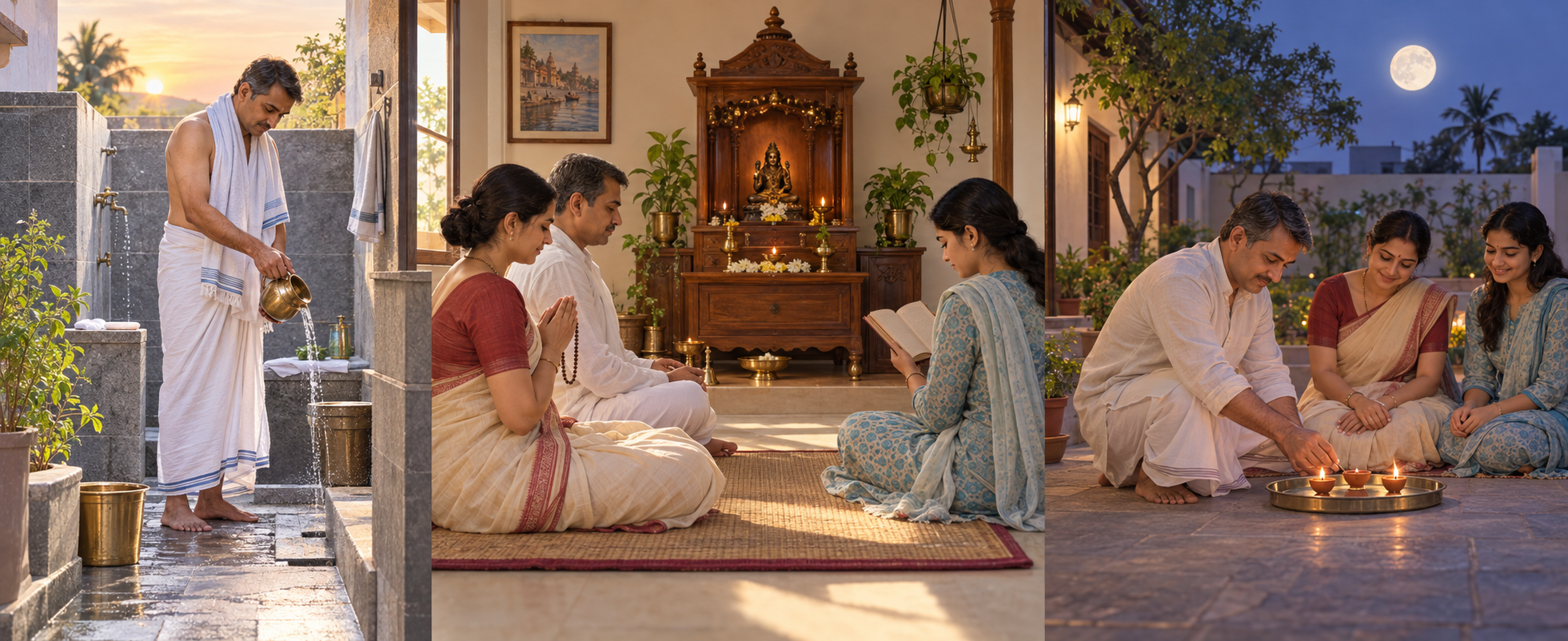
The following plan is deliberately adaptable. Keep the parts recognised by your household or lineage, and omit practices that would require instructions you have not received.
- Confirm the local tithi window. Check it before the festival rather than on the morning itself. If you will attend a temple, verify its actual service times separately.
- Set one clear sankalpa. Decide whether the day will centre on completing Kartik Snana, performing your regular puja with greater attention, visiting a temple, undertaking japa, reading a sacred text, offering seva, or joining an evening lamp celebration. One sincere commitment is more useful than a long list you cannot sustain.
- Begin with snana and cleanliness. If Kartik Snana has been part of your month-long discipline, observe its concluding day according to the method you have followed. If you did not undertake the monthly observance, you may still begin the festival with your normal bath and prayer; there is no need to represent a single morning as completion of a vrata you did not take.
- Perform the worship you actually know. Use your customary form of puja, japa, path, stotra, or aarti. A household that knows the occasion as Tripurari Purnima may follow its established Shiva-centred practice, while another family may worship its ishta-devata or attend its regular mandir. Regional difference is not a defect that must be corrected.
- Give the daytime a dharmic purpose. Reserve an undistracted period for prayer, sacred reading, dana, or practical seva. Choose the recipient and form of giving carefully rather than making a hurried donation merely to check a box.
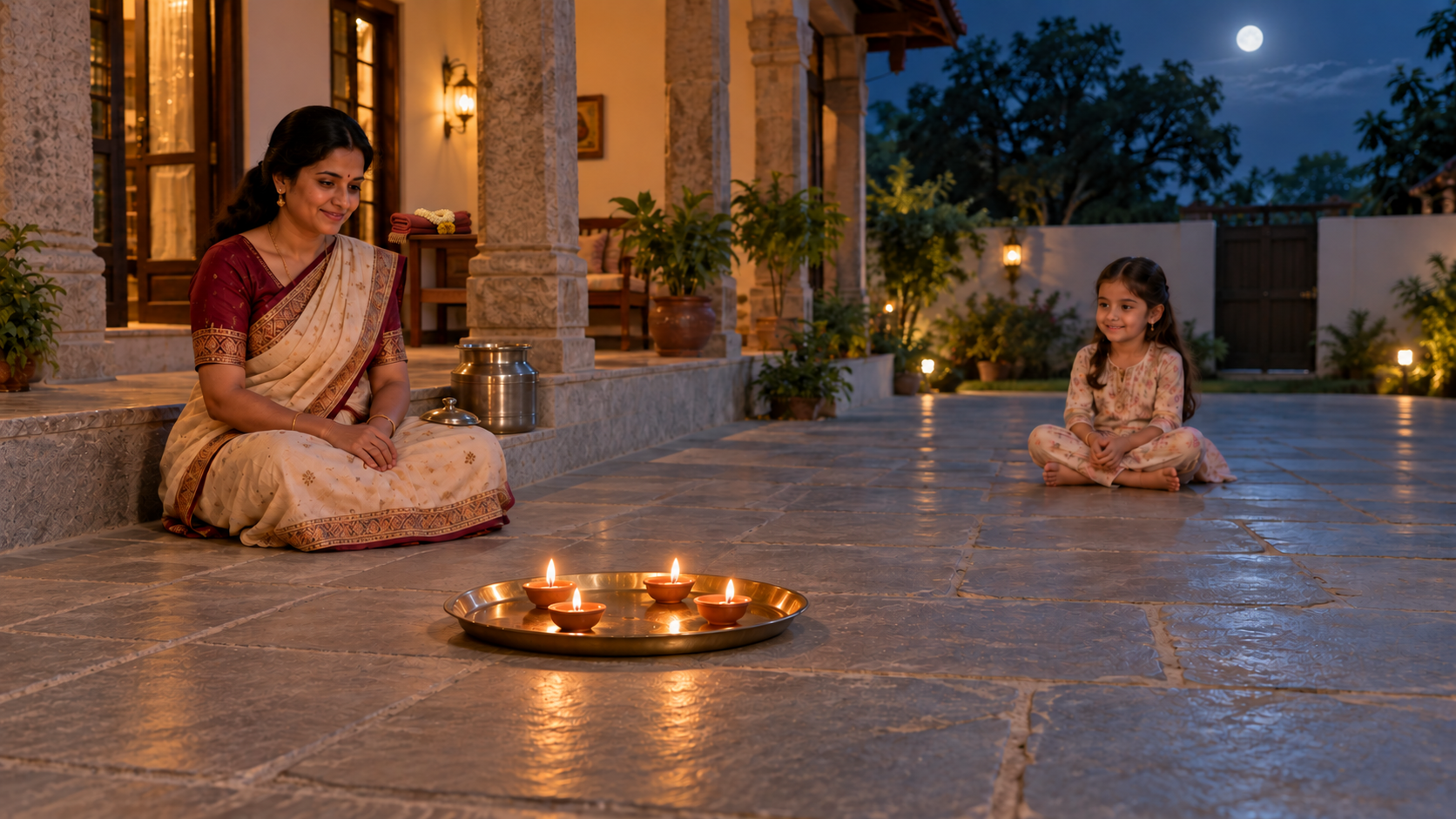
- Light lamps safely in the evening. Dev Diwali and Deepotsavam give the evening a visible festive character. Place diyas on a stable, non-flammable surface, keep them away from curtains and children’s reach, and do not leave a flame unattended. Where open flames are prohibited, follow the building or venue rules.
- Close what you began. If you undertook a Kartik vrata, complete it using your family’s or guru’s procedure. If you made a modest one-day sankalpa, end with gratitude, prayer, and a realistic resolution you can carry beyond the festival.
How to handle the festival’s different names and customs
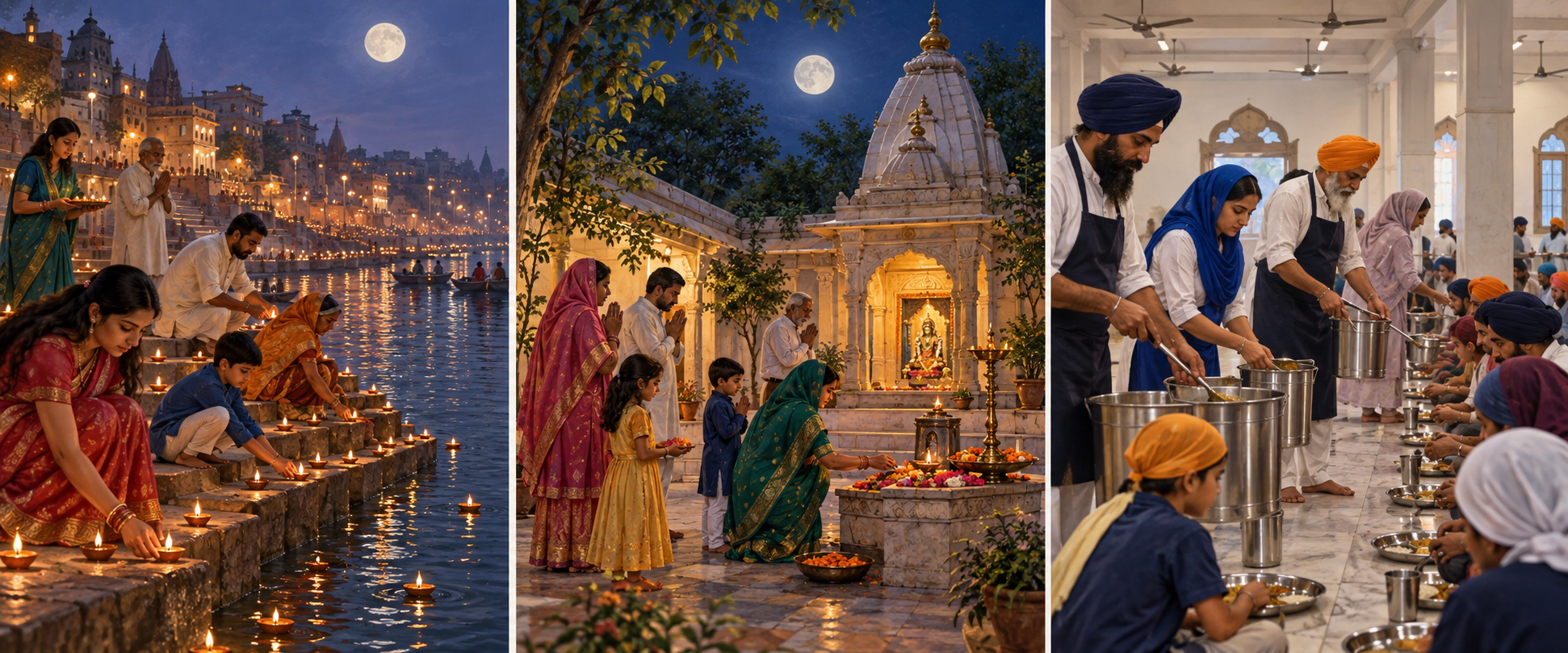
Kartik Purnima is not expressed identically across Bharat or across Dharmic communities. The names Kartik Purnima, Tripurari Purnima, Tripuri Purnima, Dev Diwali, and Deepotsavam can signal different ritual emphases, local histories, temple traditions, and community programmes. They should not be flattened into a claim that every devotee must perform every associated custom.
The calendar context also deserves attention. The day marks the end of Kartik in North Indian Hindi calendars and the completion of Kartik Snana. Other regional calendars may organise or name their months differently. If relatives in another region describe the day differently, first ask which calendar and sampradaya they follow. Apparent disagreement often comes from different calendrical conventions rather than from one side neglecting dharma.
This is especially important for diaspora families. You may inherit one custom from your parents, encounter another at the nearest mandir, and see a third presented online as though it were universal. Use a simple order of authority: your established lineage or family practice for the vrata, your local panchang for the tithi, and your temple’s announcement for its public programme.
Avoid these common planning mistakes
- Do not confuse the listed date with a universal muhurta. November 24 is the planning date; exact ritual hours require local calculation.
- Do not copy another city’s clock times without checking. Tithi boundaries are location-dependent, while websites and forwarded messages may be prepared for a different place.
- Do not treat every regional custom as compulsory. Select the observance recognised by your tradition instead of assembling an improvised ritual from unrelated instructions.
- Do not undertake an unfamiliar fast casually. If fasting is not already part of your practice, seek guidance appropriate to your tradition and personal circumstances. Devotion is not measured by ignoring health needs.
- Do not let logistics consume the day. Finish shopping, travel planning, and lamp preparation beforehand so that worship is not reduced to the minutes left over.
- Do not make the public celebration the whole observance. Lamps and community events are meaningful, but leave protected time for inward discipline, prayer, study, or seva.
Mark November 24 now, but settle the details closer to the festival when your local panchang and temple programme are available. Then choose a manageable sankalpa and prepare before the day begins. Kartik Purnima is better honoured by one complete, attentive observance than by ten hurried gestures.
References

Leave a Reply
You must be logged in to post a comment.