

If you are waiting for Pushya Nakshatra to buy gold or silver, begin new account books, or complete an important trade around Diwali 2026, mark November 1 now. The window extends past midnight, but most people will find November 1 far easier to use than the brief early-morning portion of November 2.
The date is only the first decision. You should also verify the timing for your location, decide what act will count as the beginning or completion of your undertaking, and settle the practical details before the muhurta arrives.
The Pushya Nakshatra window for Diwali 2026

During Diwali 2026, Pushya Nakshatra is listed for November 1, beginning at 5:39 AM and ending at 4:30 AM on November 2.
- Beginning: November 1, 2026, at 5:39 AM
- Ending: November 2, 2026, at 4:30 AM
- Most practical planning date: November 1, 2026
Read the ending time literally: November 2 provides an early-morning continuation, not another full day. If a jeweller, bank, accountant, business partner, or family priest must participate, plan for November 1 unless your local tradition directs otherwise.
Do not copy the clock times unchanged into another time zone. Panchanga timings are location-sensitive, so confirm the interval for the city where you will perform the observance or transaction. This is essential if you live outside Bharat or intend to act close to either boundary. A local panchanga, temple, or trusted priest can resolve the city-specific timing.
Choose one clear undertaking for the muhurta
Pushya Nakshatra during Diwali is traditionally regarded as an auspicious period for buying gold or silver, obtaining account books for the coming year, and undertaking trades. You do not need to crowd every possible activity into the same day. Choose the act that has genuine meaning for your household or enterprise.
- Gold or silver: Decide beforehand whether you are making a symbolic purchase, buying jewellery for use, or acquiring metal as an investment. Those are different financial decisions even when they share the same muhurta.
- New account books: Have the physical ledgers ready before the window. If your accounts are digital, decide whether creating the new accounting period, making its first entry, or another act will represent the beginning.
- Trade or business: Identify the exact undertaking you want to initiate. Make sure the other party, documents, payment method, and any required approvals will actually be available.
The central practical question is simple: what action will you regard as complete within the muhurta? For an online order, it might be payment or order confirmation. For a business arrangement, it might be signing, exchanging documents, or making an initial entry. Customs differ, so settle this with your family or priest before the day rather than improvising while the clock is running.
Prepare before November 1 so the observance stays unhurried
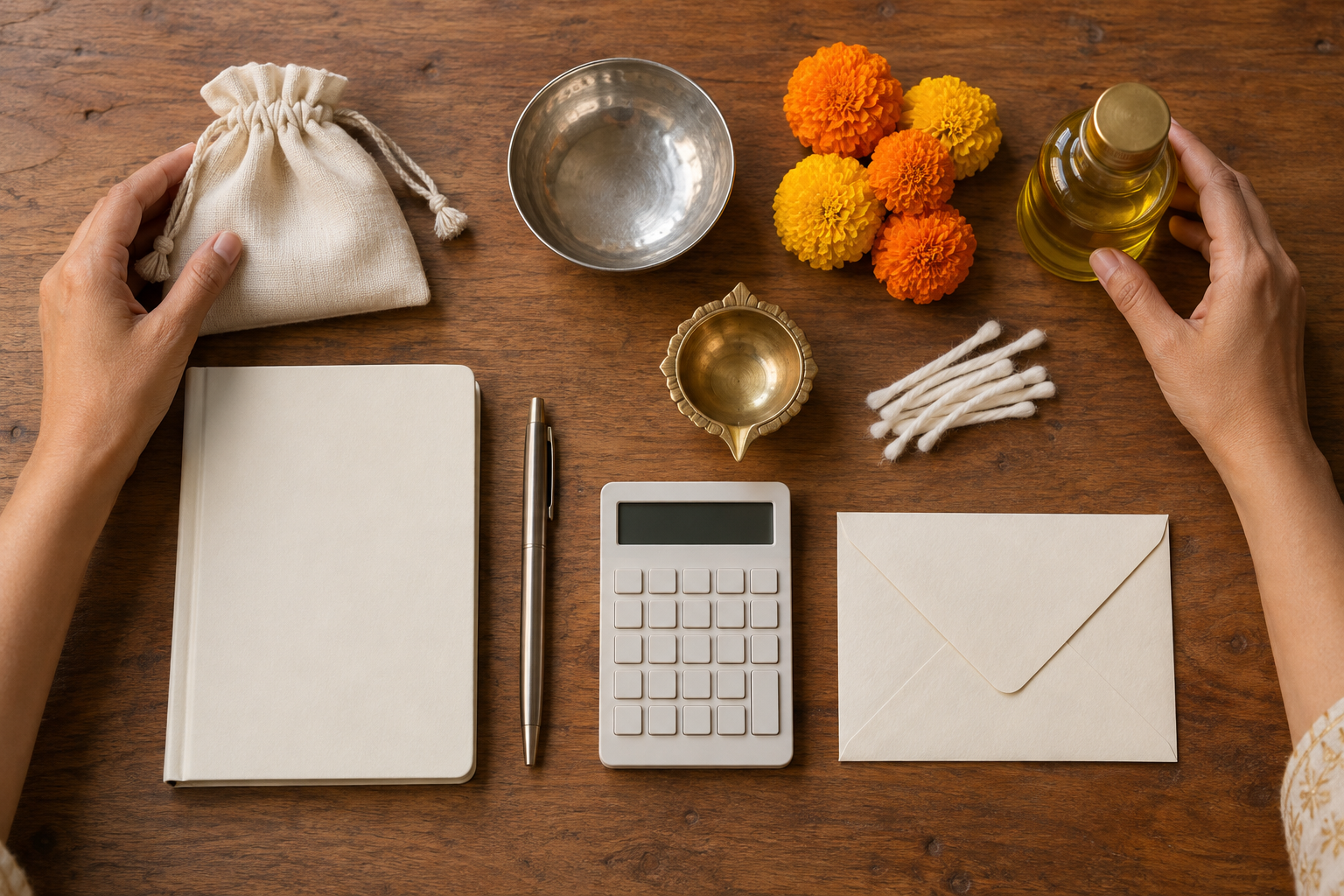
A long window can still be lost to ordinary delays: unavailable stock, incomplete paperwork, payment limits, closed offices, or disagreement over what must occur. Complete the following preparation before November 1.
- Verify your local timing. Record the correct beginning and ending for the city where you will act. If your local result differs from the published interval, follow the panchanga and religious guidance relevant to your location.
- Name the undertaking. Write down the one purchase, account-opening act, or trade you intend to perform. This prevents last-minute additions driven by urgency.
- Define the decisive moment. Decide whether placement, payment, signing, delivery, or the first ledger entry is the act you want inside the window.
- Set the spending limit. If buying precious metal, establish your maximum cost before visiting a seller. An auspicious date should not become a reason to borrow unnecessarily or exceed your means.
- Check the transaction. Confirm weight, purity, price, taxes or charges, invoice details, return conditions, and any buyback terms that matter to you. For a commercial agreement, complete the usual legal and financial review before signing.
- Leave a time buffer. Whenever possible, use the daytime portion of November 1 instead of waiting for the final minutes before 4:30 AM on November 2. A failed payment, delayed confirmation, or incorrect document is easier to correct when businesses are open.
If the purchase is primarily symbolic, you can choose an amount that fits comfortably within your budget. The significance of the observance does not require you to turn it into a large financial commitment.
Let the muhurta guide the timing, not replace judgement
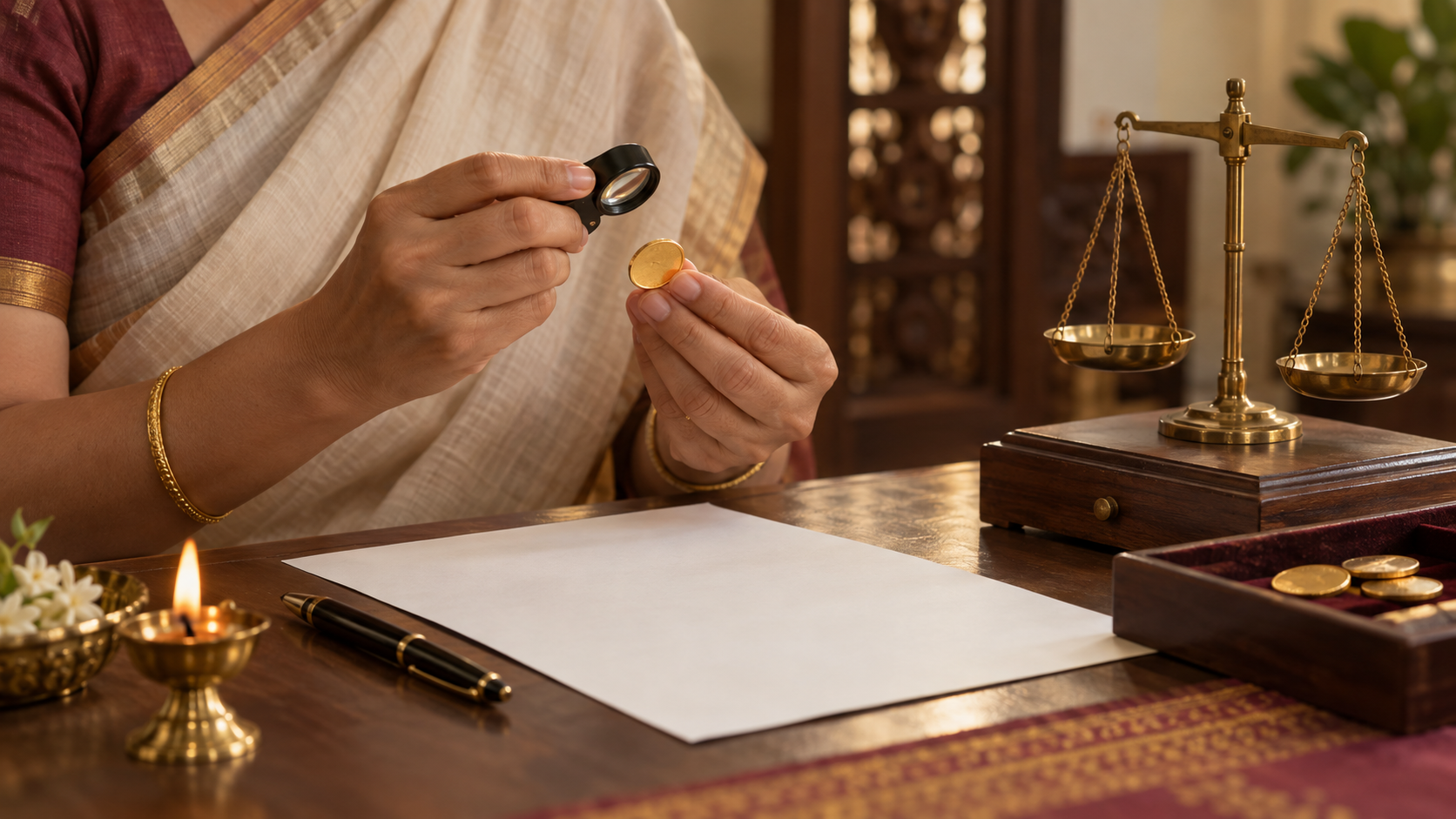
Pushya Nakshatra can give a Dharmic undertaking a deliberate and auspicious beginning. It cannot determine whether a price is fair, an investment suits you, a product is genuine, or a contract protects your interests. Muhurta answers a question about timing; due diligence answers questions about value and risk.
This distinction matters most when money is involved. A countdown can create artificial pressure to accept whatever is available. Do not waive an invoice, purity verification, contract review, or other safeguard merely to finish before the window closes. If the terms are unsound, make a modest symbolic observance during Pushya and postpone the larger financial commitment until it can be handled properly.
The same discipline applies to account books. Beginning a ledger at an auspicious time is meaningful, but the records still need accurate opening balances, consistent entries, and the required accounting or tax treatment. If the books belong to a business, have the responsible accountant review the operational details independently of the ritual timing.
Family and regional customs may also shape the observance. If your sampradaya, household tradition, or local priest prescribes a particular sankalpa or sequence, follow that living tradition rather than assembling an improvised ritual from unrelated practices.
Key takeaways
- Mark November 1, 2026, as the main practical date for Pushya Nakshatra during Diwali.
- The listed interval begins at 5:39 AM on November 1 and ends at 4:30 AM on November 2.
- Verify the timing for your city and time zone, especially if you plan to act near the beginning or ending boundary.
- Suitable undertakings include buying gold or silver, preparing account books for the coming year, and initiating trades.
- Decide in advance which moment counts for your observance: payment, confirmation, signing, delivery, or the first account entry.
- Keep financial and legal safeguards intact. Auspicious timing does not make an unsuitable purchase or weak agreement sound.
Put the local panchanga check, spending decision, and transaction logistics on your calendar before November 1. Then you can enter the Pushya window with the practical work finished and give your chosen beginning the attention it deserves.
References

Leave a Reply
You must be logged in to post a comment.