
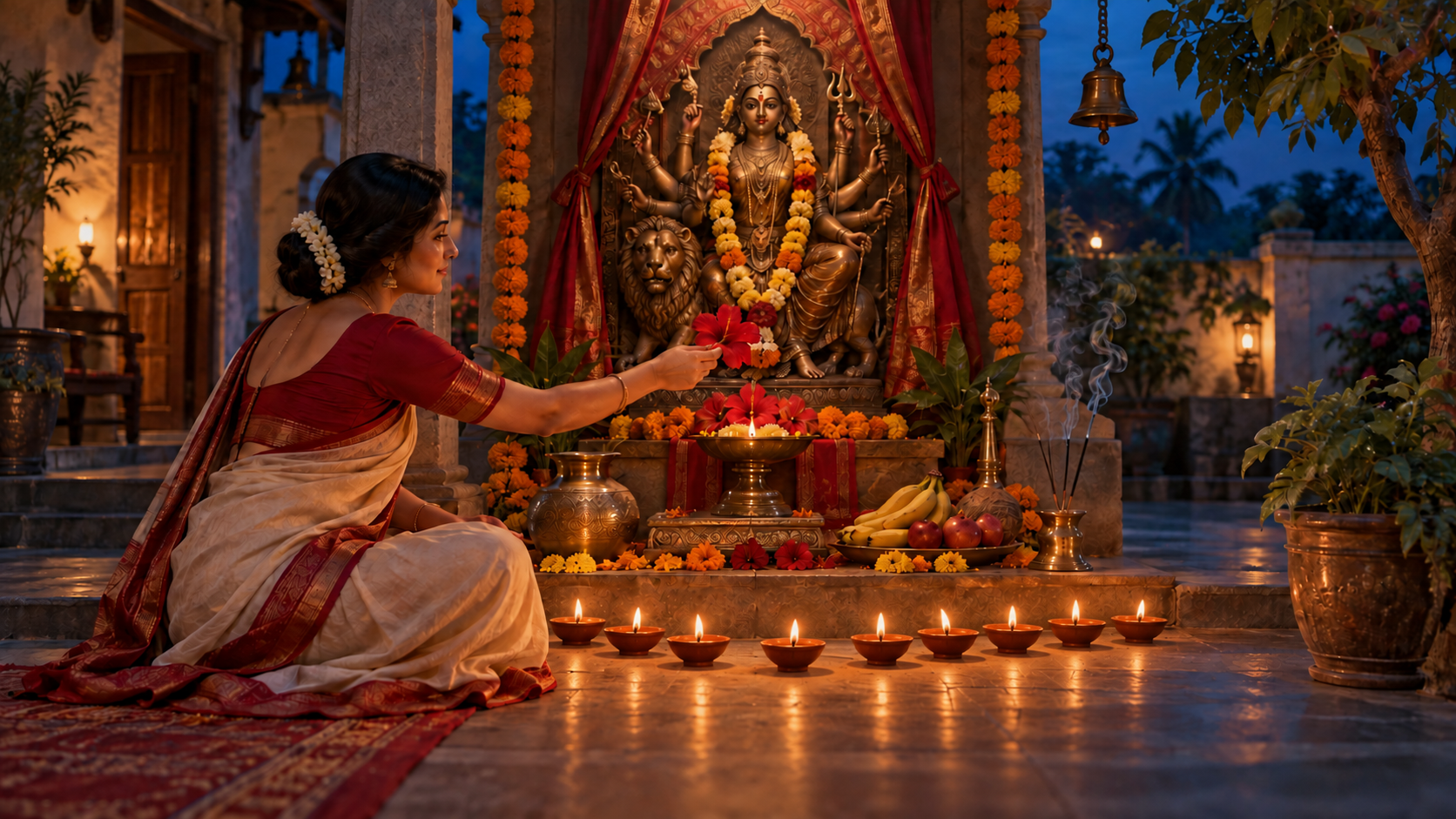
You may fast, join community worship, recite Devi’s names, and perform aarti during Navratri, then hear that the festival also has a Tantric dimension. Does that mean ordinary devotion is incomplete? Should you add esoteric practices to make your observance more authentic? Neither conclusion follows.
The meeting of Bhakti and Tantra is not a demand to make a household puja more complicated. It is an invitation to unite loving devotion with disciplined attention. Once you understand that distinction, you can deepen your own observance while respecting practices that belong within initiation and lineage.
Bhakti tells you whom you love; Tantra shapes how you attend
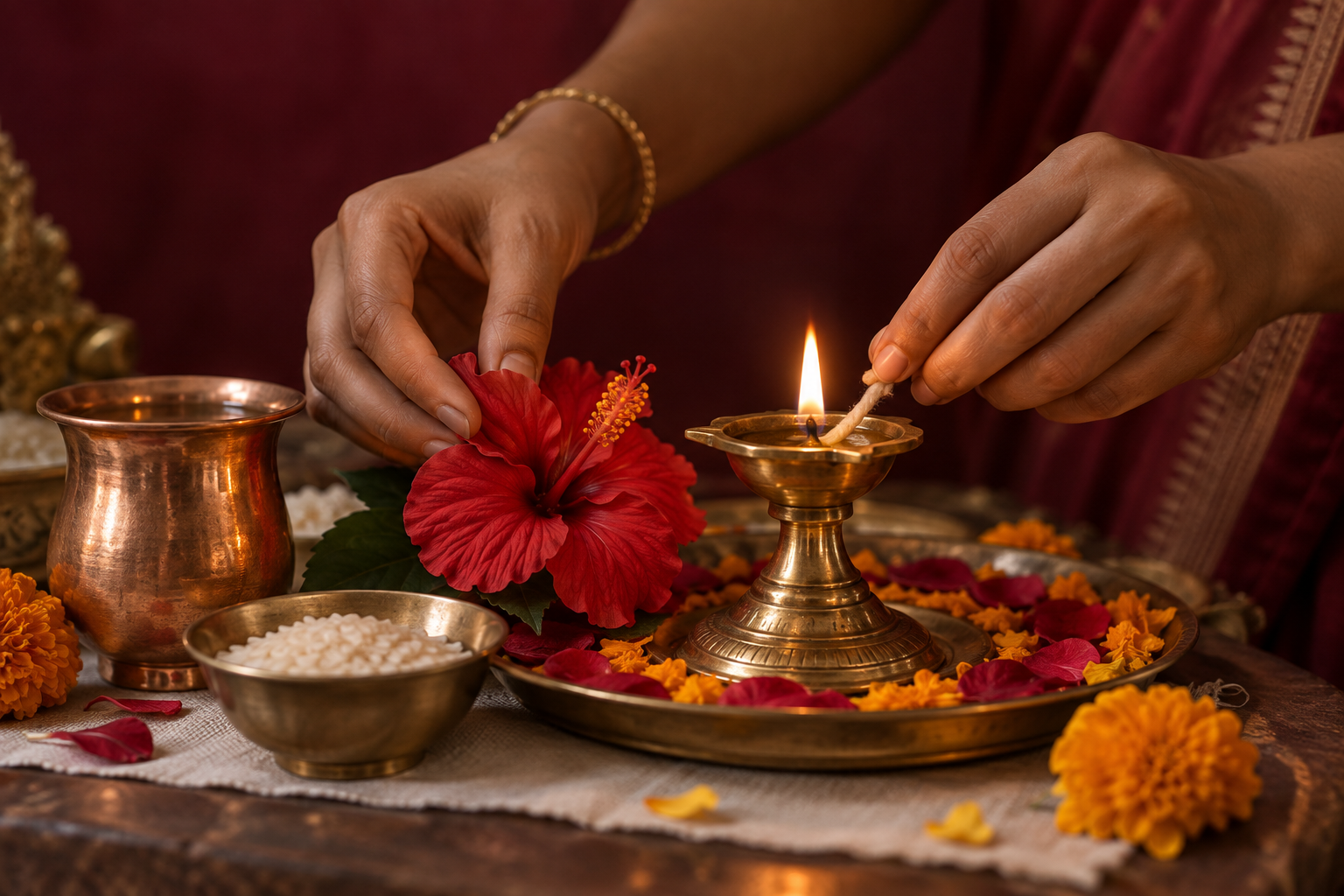
Bhakti places your relationship with Devi in the foreground. You remember her, praise her, offer what you can, ask for guidance, and gradually loosen the insistence that spiritual life must revolve around your preferences. Its heart is not emotional display but orientation: you turn toward the Divine with trust, reverence, gratitude, and surrender.
Tantra is a broad and internally diverse family of traditions, not a synonym for occultism, transgression, sexuality, or magical shortcuts. In a useful working sense, Tantric practice brings the instruments of human experience into a disciplined sacred order. Body, speech, breath, sound, imagination, gesture, offering, and ritual space can all become part of sadhana. The exact methods and their meanings vary by lineage.
This working distinction is not a complete definition of either path. Bhakti can be highly structured, and Tantra can be intensely devotional. They are overlapping currents, not sealed denominations. A carefully ordered puja may be an act of love; a mantra practice may address Devi with the intimacy of prayer; an offering may simultaneously express surrender and train attention.
Two questions will help you notice the intersection without forcing a label onto every ritual:
- What relationship with Devi does this practice cultivate? This is the Bhakti question. Look for remembrance, praise, trust, surrender, gratitude, or service.
- How does this practice organize and transform attention? This is the Tantric question. Look at the roles of sound, repetition, posture, sequence, sacred space, visualization, and embodied action.
The questions are more useful than asking whether an act is purely Bhakti or purely Tantra. If devotion becomes a passing emotion, disciplined form gives it continuity. If technique becomes an achievement to collect, devotion restores its purpose. At their meeting point, method serves relationship and relationship gives method its direction.
The nine nights make the meeting visible
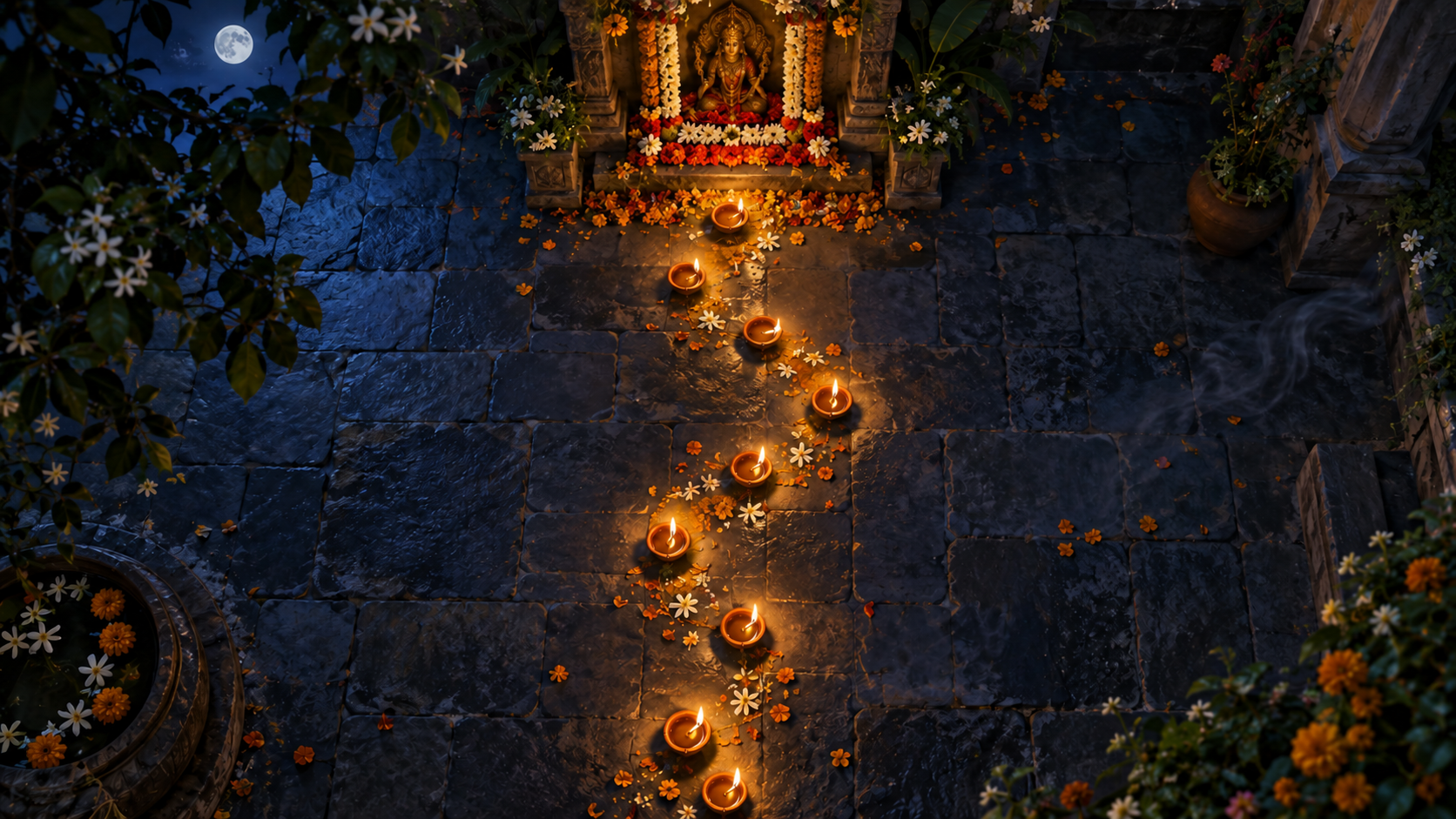
Across its nine nights, Navratri honors Devi in her many forms through observances that include fasting, dance, and communal worship. That repeated return is the practical bridge between Bhakti and Tantra. Love brings you back to worship; disciplined form shapes how you return.
- Fasting can be offering and discipline. As an expression of Bhakti, restraint can be dedicated to Devi rather than displayed as personal toughness. As a discipline, it makes habits and impulses more visible. Hunger by itself is not spiritual attainment, however, and fasting is not a test of who is the better devotee. Do not override medical needs or prescribed treatment to keep a fast. If food restriction is unsafe for you, choose another form of restraint, such as curbing harsh speech or unnecessary consumption.
- Puja and aarti can join affection to order. Light, water, flowers, fragrance, food, and praise can express welcome and gratitude. Their placement within an intentional sequence also gathers a scattered mind. This does not make every household aarti a specialized Tantric rite. It shows that devotional warmth and ritual discipline need not be opponents.
- Recitation can be address and concentration. A familiar name, hymn, or prayer speaks to Devi while repetition steadies attention. Not every mantra is initiatory, but neither is every mantra an interchangeable phrase that can be detached from its tradition. Use what you have genuinely received or what your community openly teaches.
- Dance and communal worship keep the festival embodied and shared. The body does not have to be rejected before devotion becomes spiritual. Community participation also corrects the idea that Navratri’s depth lies only in private or secret practice. Embodiment alone is not Tantra, but Hindu sacred life has never required a simple opposition between spirit and body.
Before each observance, name both dimensions in plain language. Ask: What am I offering to Devi? Then ask: What habit of attention or conduct is this training? Your answers do not need technical vocabulary. You might be offering praise while training steadiness, offering food while training gratitude, or offering restraint while training care in speech.
This small examination prevents two common errors. Offering without any change in attention can remain momentary. Discipline without offering can become another self-improvement project centred on the ego. Navratri allows each to correct the other.
A Bhakti-led, Tantra-aware practice you can keep at home
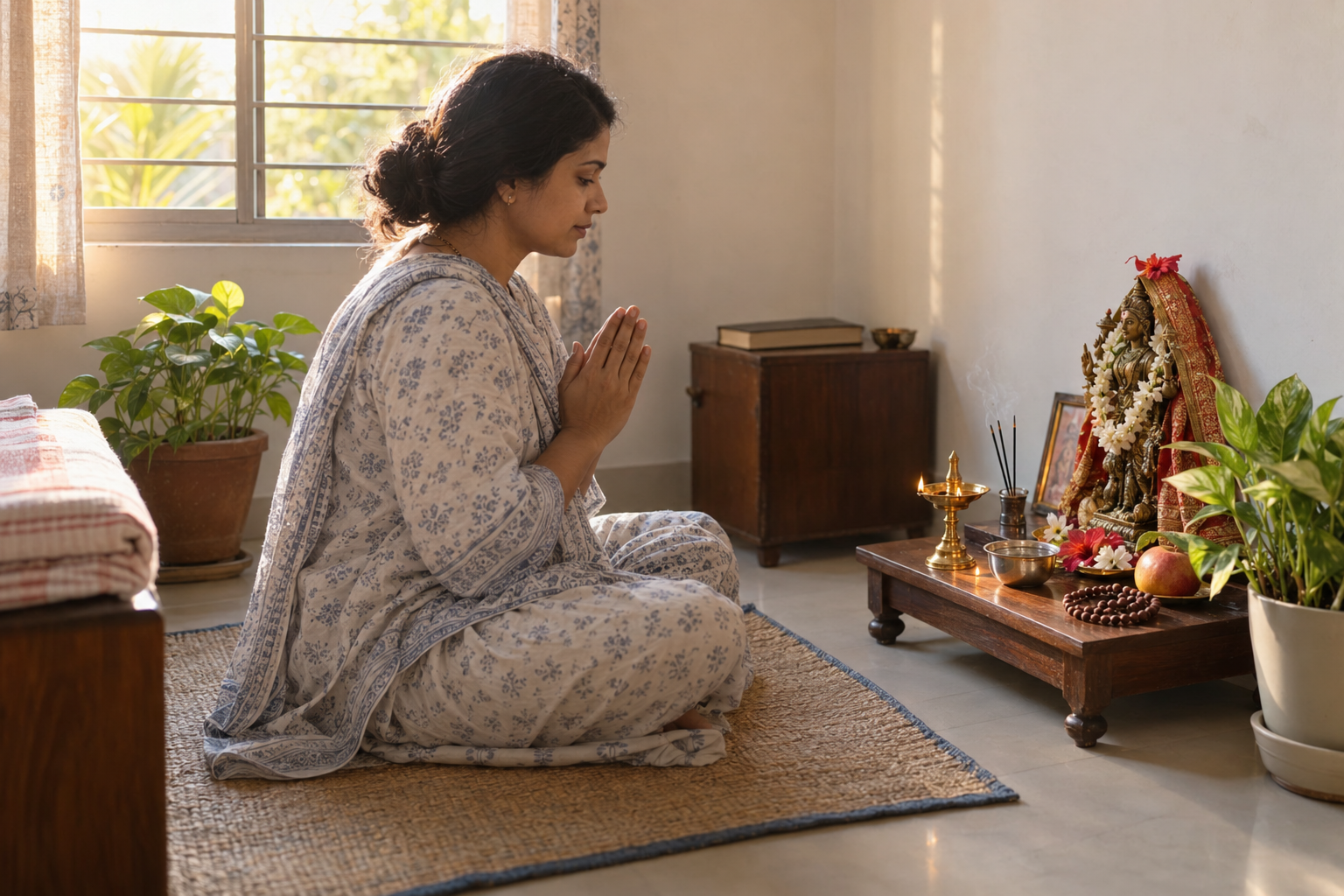
You do not need to imitate an initiatory ritual to honor the Tantric depth of Navratri. A stable, reverent home practice can embody the meeting of love and discipline without crossing boundaries you do not understand.
- Begin with a form of Devi already rooted in your life. Follow the name or form honored in your family, temple, sampradaya, or established practice. Navratri need not become a tour through unfamiliar deities and methods. Depth usually requires returning, not collecting.
- Set a clear sankalpa. State what you will offer throughout the nine nights and what quality you intend to cultivate. Keep it concrete: regular worship, greater care in speech, completion of a neglected duty, or service performed without seeking recognition. A narrow commitment can actually guide conduct; a grand aspiration often cannot.
- Keep a stable container. If your circumstances permit, worship in the same clean place and within a consistent part of the day. Arrange only what you can tend respectfully. A safely placed lamp, a simple offering, and an uncluttered seat are more coherent than an elaborate altar that becomes a source of distraction.
- Use recitation you know and are entitled to practise. Choose a familiar prayer, hymn, divine name, or mantra openly taught within your tradition. Recite attentively rather than multiplying texts. If a mantra or procedure is said to require initiation, do not replace transmission with instructions copied from a video or webpage.
- Move from outer worship to inner attention. After the visible offering and recitation, sit quietly. Notice whether the ritual has changed the quality of your attention. Bring Devi to mind without trying to manufacture an unusual experience. The purpose is not to produce a dramatic sensation but to let worship become inwardly present.
- Carry one discipline into the day. Select an observable area of conduct: truthful speech, restraint from needless anger, responsible consumption, service, or the honest completion of an obligation. At the end of the day, review one real choice rather than judging your spiritual worth in the abstract.
- Close with gratitude instead of acquisition. Return to the same core sequence on the next night. Do not keep adding practices because familiarity feels less exciting. Let repetition reveal what novelty conceals: impatience, distraction, self-display, and the quieter growth of steadiness.
This pattern is devotional because Devi remains the centre rather than a technique or desired power. It is Tantra-aware because place, sequence, sound, body, attention, and conduct are treated as connected parts of one sadhana. It also stays honest about its limits: it is a disciplined home observance, not a do-it-yourself claim to specialized initiation.
Where to draw the line with esoteric practice

Respect for Tantra includes respect for boundaries. A practice can look simple from the outside while depending on a specific mantra, sequence, ritual context, or teacher-student transmission. Removing one visible action from that setting may change its meaning or leave you without the knowledge needed to complete it properly.
Before adding an unfamiliar practice to Navratri, ask:
- Is this openly taught for ordinary household worship, or is initiation expected?
- Can you identify the living tradition, temple, teacher, or sampradaya within which it belongs?
- Do you understand its purpose, its sequence, and how it is concluded?
- Does it fit the form of Devi and the practice you are already following?
- Is it making you more reverent, steady, and responsible, or merely more fascinated with secrecy and power?
If the answers are unclear, remain with open devotional practice and seek guidance from a qualified teacher rooted in the relevant tradition. Do not improvise an initiatory mantra, combine procedures from unrelated lineages, or assume that secrecy proves authenticity. Restriction can protect a practice’s integrity, but mystery by itself is not evidence of spiritual depth.
Different Tantric lineages may set different boundaries. That variation should not be flattened into a universal recipe. An instruction meaningful within one sampradaya does not automatically become a general Navratri practice for everyone. Locate the instruction before you adopt the technique.
The reverse error is to dismiss everything Tantric as dark, irrational, or outside respectable Hindu practice. Tantra’s disciplined engagement with embodiment, sound, ritual, and sacred presence has a genuine place within the Hindu spiritual world. Respect requires neither fear nor casual appropriation. It requires context.
Key takeaways
- Bhakti foregrounds your relationship with Devi; Tantra foregrounds disciplined means of transforming attention and embodied life.
- The two paths overlap. A single act of worship can express love, follow an ordered sacred form, and train conduct at the same time.
- Fasting, recitation, aarti, dance, and communal worship should not be forced into exclusive Bhakti or Tantra categories.
- A coherent home observance uses a stable form of Devi, a clear sankalpa, familiar recitation, inward attention, and one concrete discipline in daily conduct.
- Practices requiring initiation should remain within qualified transmission. Internet availability does not make a ritual universally open.
- Complexity is not depth. Repetition with reverence is more valuable than collecting unfamiliar methods.
For your next night of Navratri, choose one act of worship and make both dimensions conscious. Offer it to Devi, then name the change in attention or conduct it asks of you. Keep that practice steady through the festival. If a method belongs to initiation, honoring the boundary is itself an act of reverence.
References

Leave a Reply
You must be logged in to post a comment.