
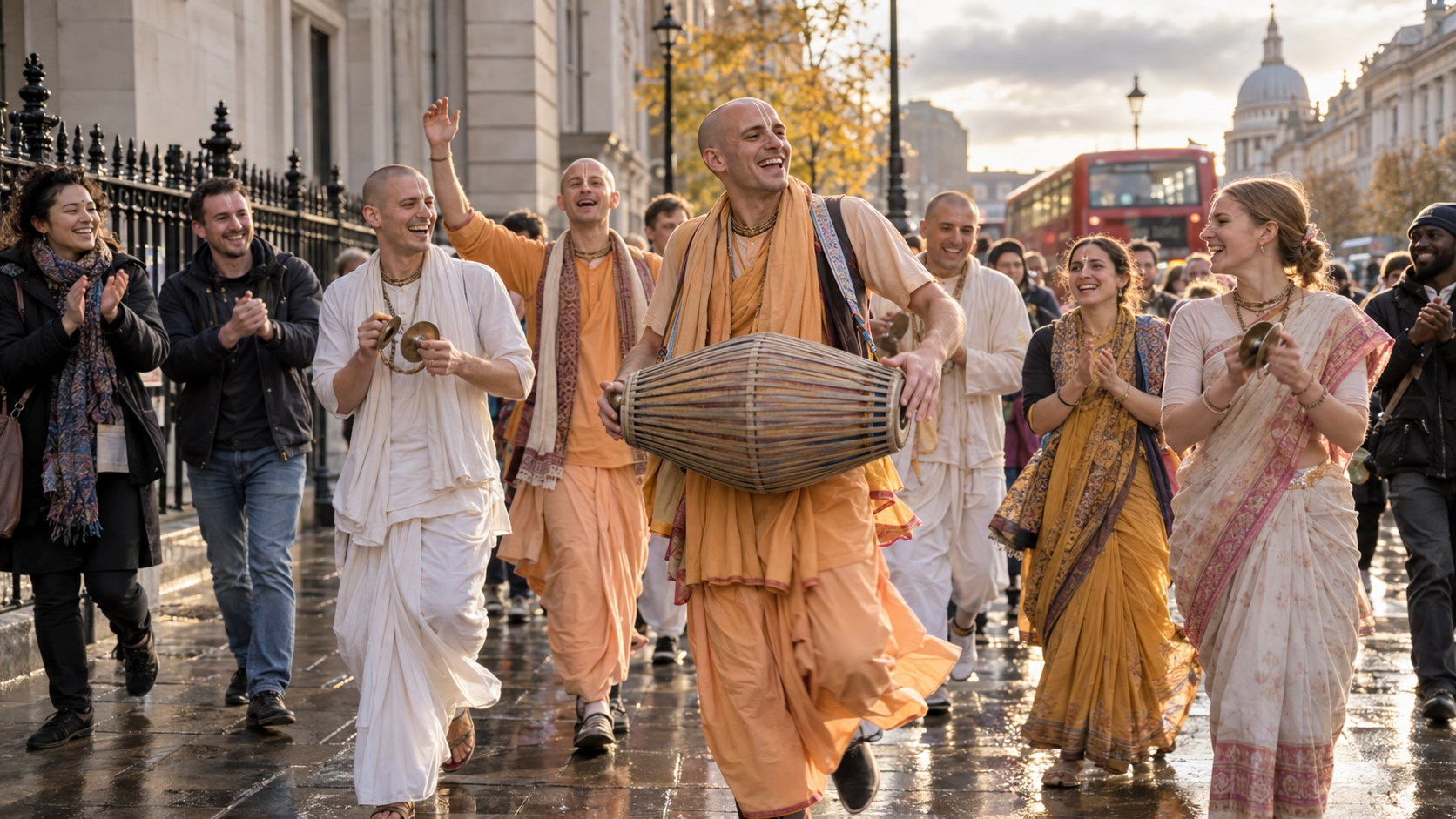
If you encounter Hare Krishna devotees dancing through London, you do not have to choose between staring from a distance and pretending you already understand the practice. You can pause, listen, and decide whether to participate.
The sight of London dancing with the Hare Krishnas on 26 September 2026 captures something important about public Dharma: a devotional practice can be unmistakably rooted in its tradition while remaining open enough for a passerby to enter.
What the dancing means inside the practice
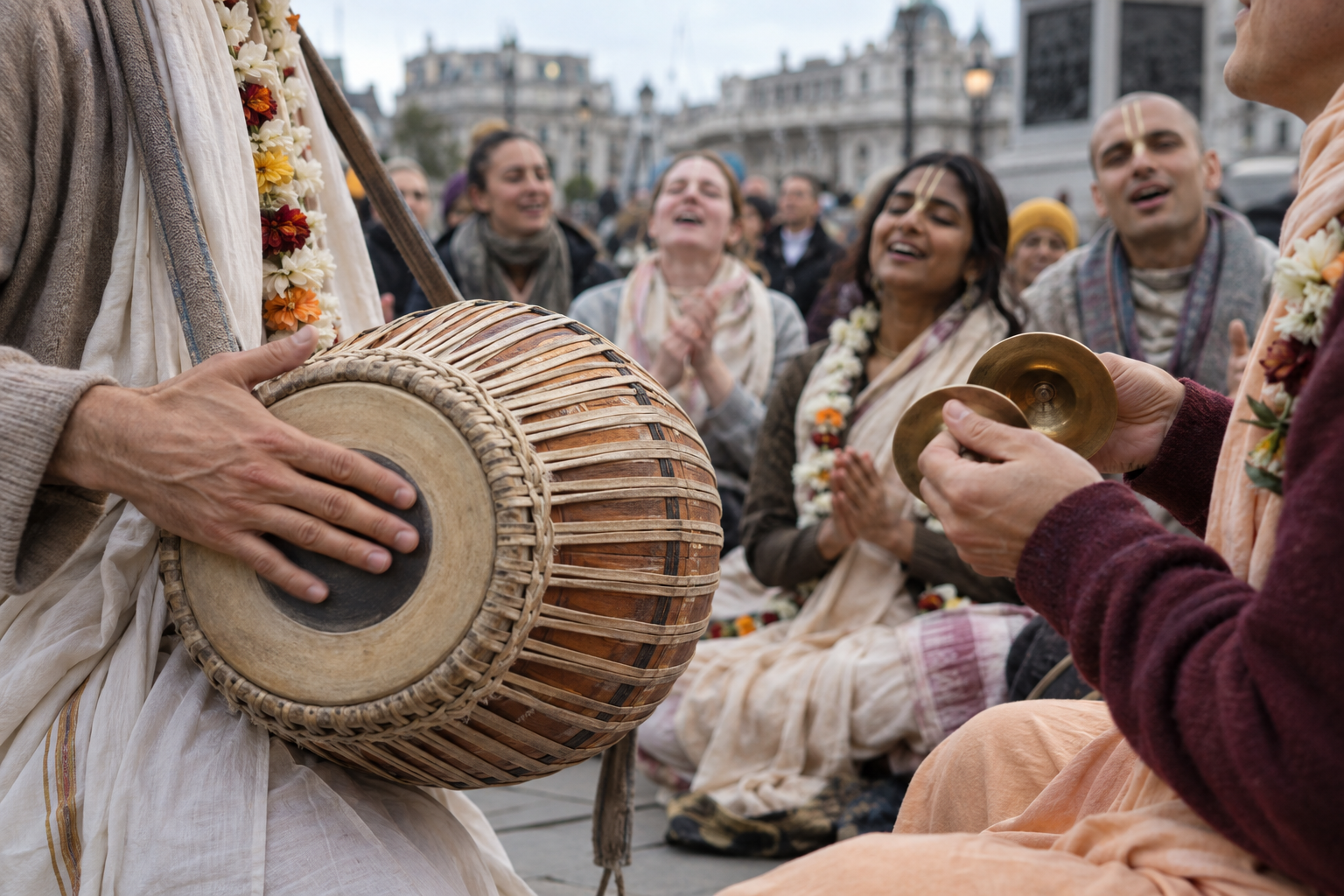
Hare Krishna public chanting is commonly understood as kirtan, or congregational devotional singing. When chanting moves into a public space, it is also called sankirtana. One person or group leads, others respond, and rhythm holds the gathering together. The repetition is deliberate. It allows people to participate without memorising a long hymn, following a lecture, or mastering a complicated ritual.
The dancing is not a decorative performance added to the prayer. It lets the body join what the voice is doing. Clapping, stepping, turning, and raising the arms can all become forms of devotional attention. Some participants may move energetically; others may sing while standing almost still. Outward intensity is not a reliable measure of inward devotion.
This distinction matters when you watch from the pavement. If you treat the gathering only as street entertainment, you miss its sacred centre. If you assume that sacred practice must be quiet, private, and solemn, you miss the role joy can play in bhakti. Public kirtan joins reverence and celebration without requiring either to cancel the other.
How to join without feeling awkward or intrusive
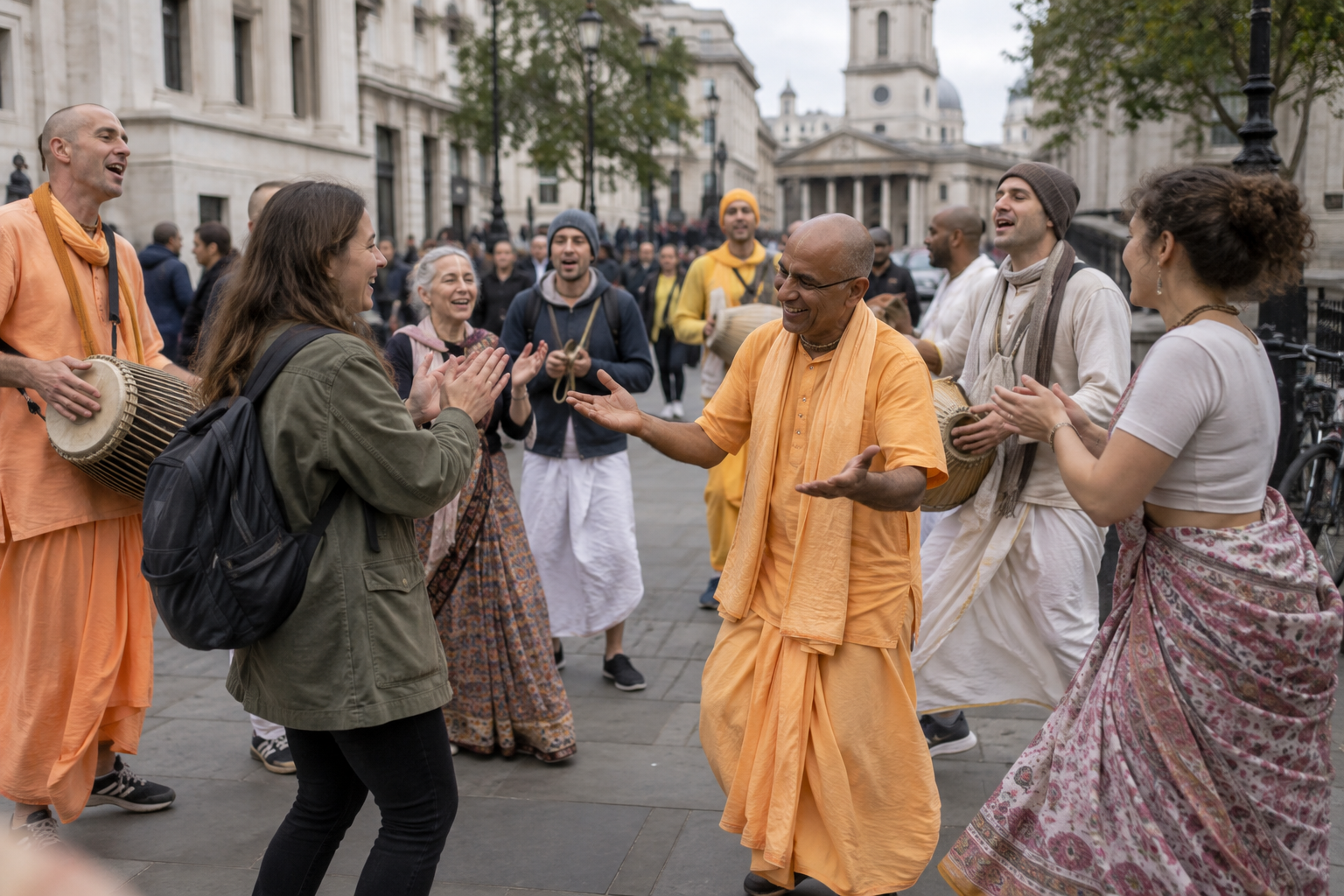
A public kirtan is built around participation. You do not need initiation, specialist clothing, or prior knowledge to respond to an open chant. You also do not owe anyone participation merely because you stopped to watch. The respectful approach is simple:
- Listen for one complete exchange. Notice which line is led and which line the group repeats. This is easier than trying to enter midway through a phrase.
- Join the response, not the lead. Repeat only what you can hear clearly. Devotional attention matters more than producing a polished pronunciation on your first attempt.
- Let movement follow the rhythm. A small step, gentle sway, or clap is enough. You do not need to imitate the most animated dancer in the gathering.
- Protect the flow of the procession. Stay aware of devotees, passersby, traffic, instruments, and personal space. If you are filming, do not walk backward into other people or block the route.
- Photograph with courtesy. A public setting does not remove the human value of consent. Ask before taking a close portrait, and be especially restrained around children.
- Leave when you need to. You can join for a few responses and step away quietly. Participation is not a declaration that you have adopted every belief associated with the tradition.
If you want to understand more, wait until the singing pauses and ask a participant what is being chanted and why. A precise question will usually take you further than a broad debate about religion. Begin with the practice actually in front of you.
Do not confuse openness with lack of depth
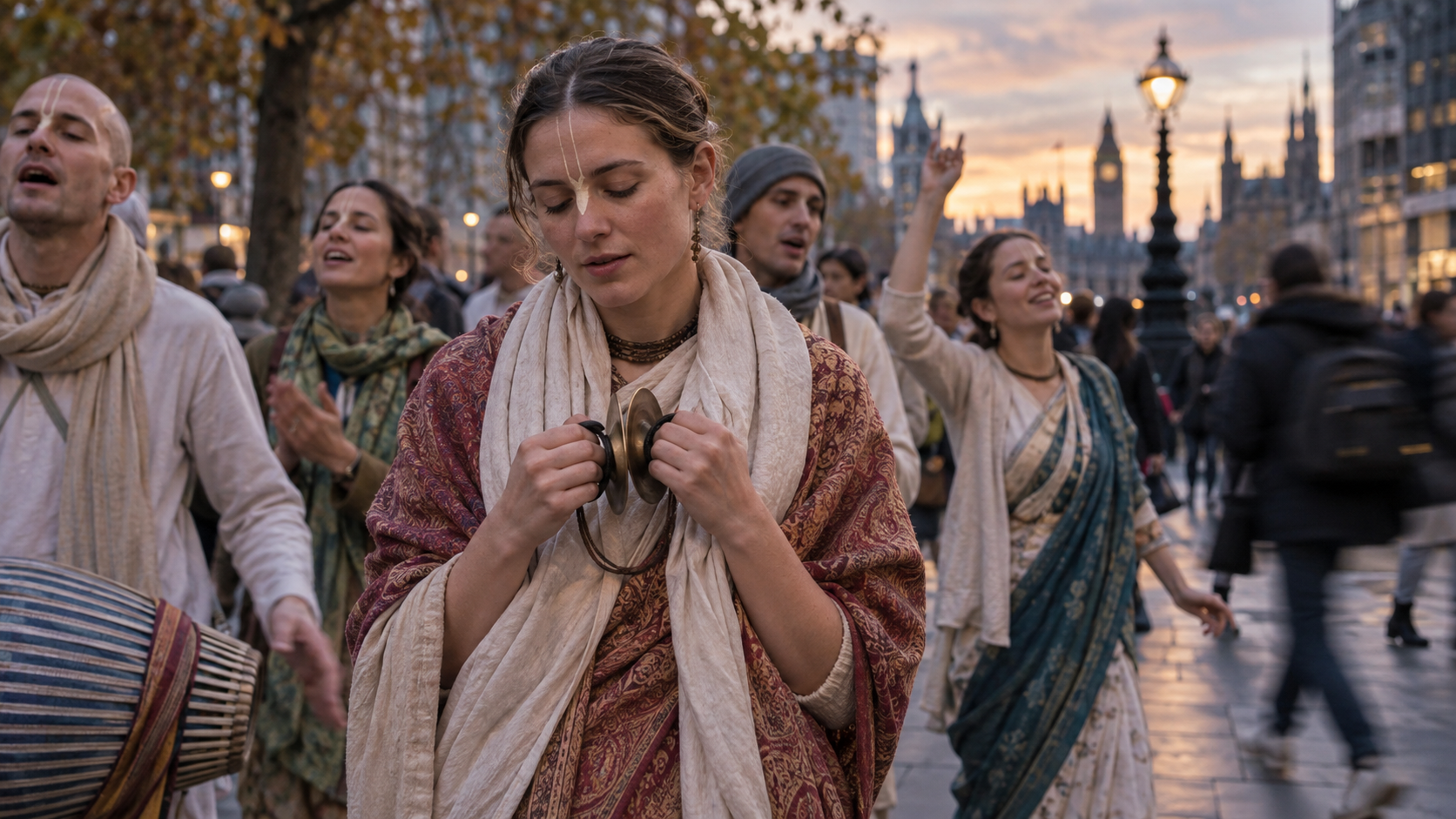
Public dancing can look spontaneous, but accessibility does not make a practice shallow. Repetition, shared rhythm, and a simple response create a low threshold for entry. That threshold is one of kirtan’s strengths: a newcomer can take part before possessing a complete intellectual account of the theology.
That does not mean everyone in the crowd has the same relationship to the chant. One person may be a committed devotee. Another may be visiting a temple community. A third may simply have been drawn by the music. Shared participation creates a real moment of community, but it does not erase those differences. Do not infer a person’s beliefs merely because they danced for several minutes.
The reverse mistake is to assume that a joyful public form cannot carry serious spiritual intent. Dharmic practice has never been confined to silent contemplation. Devotion may be expressed through sound, movement, festival, food, pilgrimage, image, study, service, or meditation. The appropriate question is not whether the form looks solemn enough. Ask whether it keeps a devotional centre and treats participants and bystanders with dignity.
What this public Dharma asks of London
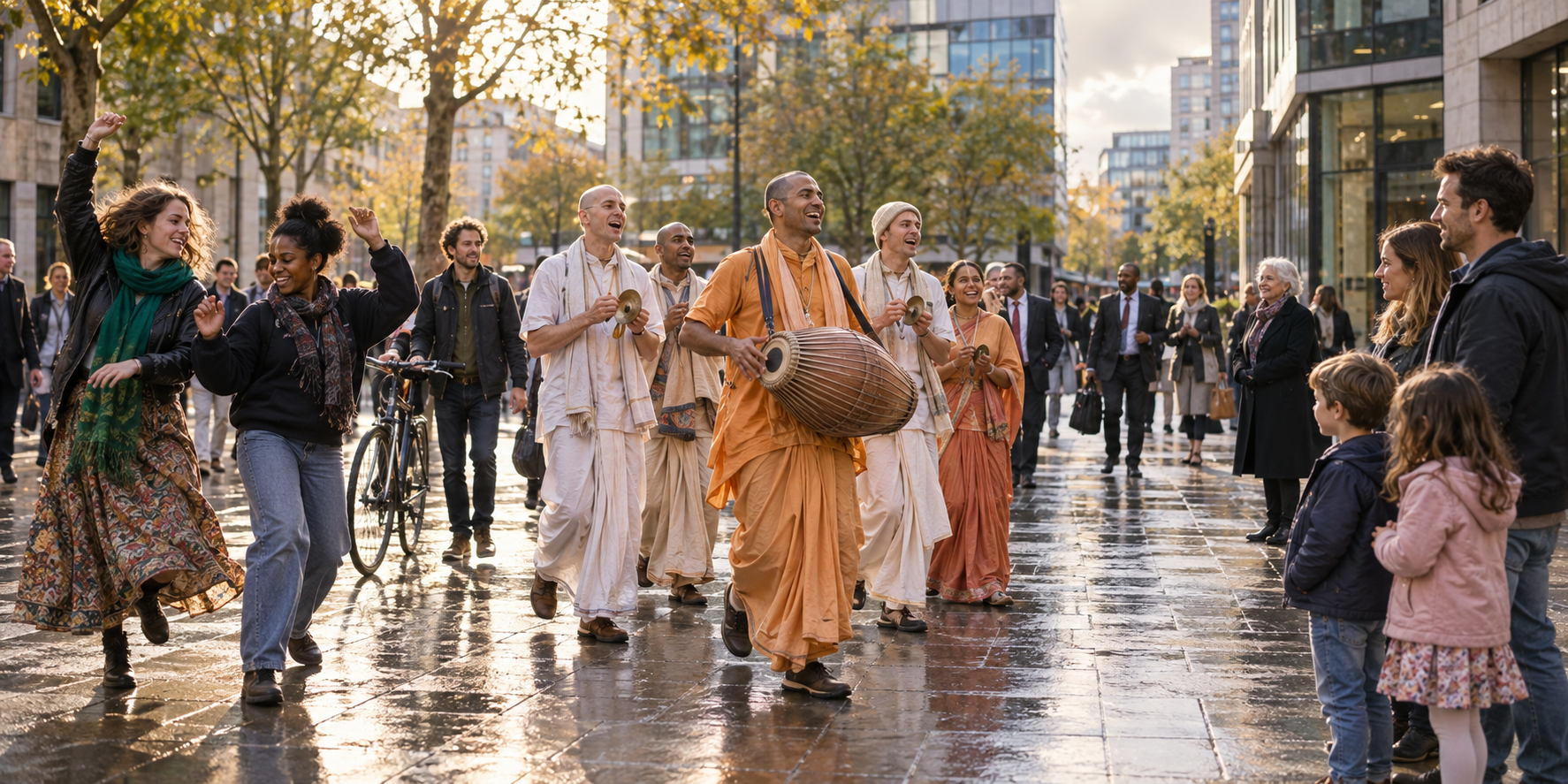
A plural city does not become genuinely plural merely by allowing traditions to exist behind closed doors. People also meet one another through visible practices. Public kirtan places a Dharmic vocabulary of sacred sound, collective devotion, and embodied joy into the shared life of the city.
That visibility should be judged by conduct rather than caricature. A healthy public expression of Dharma remains confident without becoming coercive. It welcomes participation without demanding it, preserves the integrity of its devotional purpose, and leaves room for people who want only to pass by. Those are useful standards whether you are observing a gathering or helping to organise one.
For Hindus and other Dharmic communities, the lesson is practical. Cultural presence is strongest when it is lived rather than merely asserted. A chant offered openly, with discipline and hospitality, communicates more than an abstract demand for recognition. For a non-Hindu observer, the same encounter offers a chance to meet a tradition through practice rather than stereotype.
Keep the interpretation proportionate. A photograph or short recording can show that people danced together; it cannot tell you what every participant believed, how the gathering was organised, or what happened outside the frame. Notice what is genuinely present before turning one public moment into a claim about all of London or all Hare Krishna devotees.
Key takeaways
- Hare Krishna public dancing belongs to a participatory devotional practice, not merely a street performance.
- You can join an open response without initiation or prior expertise, and you can leave without making a religious commitment.
- Listen for the call-and-response pattern before singing, and let your movement remain natural.
- Respect people, instruments, personal space, and the movement of the gathering, especially when filming.
- Do not assume that every dancer has the same beliefs or that joyful worship lacks spiritual seriousness.
- Judge public Dharma by its devotional integrity, hospitality, discipline, and treatment of non-participants.
The next time you meet a Hare Krishna kirtan in London, give it one full cycle of attention before deciding what it is. Listen to the lead, hear the response, and notice how the crowd relates to the chant. Then join, ask, or continue on your way. Even that deliberate pause is better than reducing a living Dharmic practice to background noise.
References

Leave a Reply
You must be logged in to post a comment.