
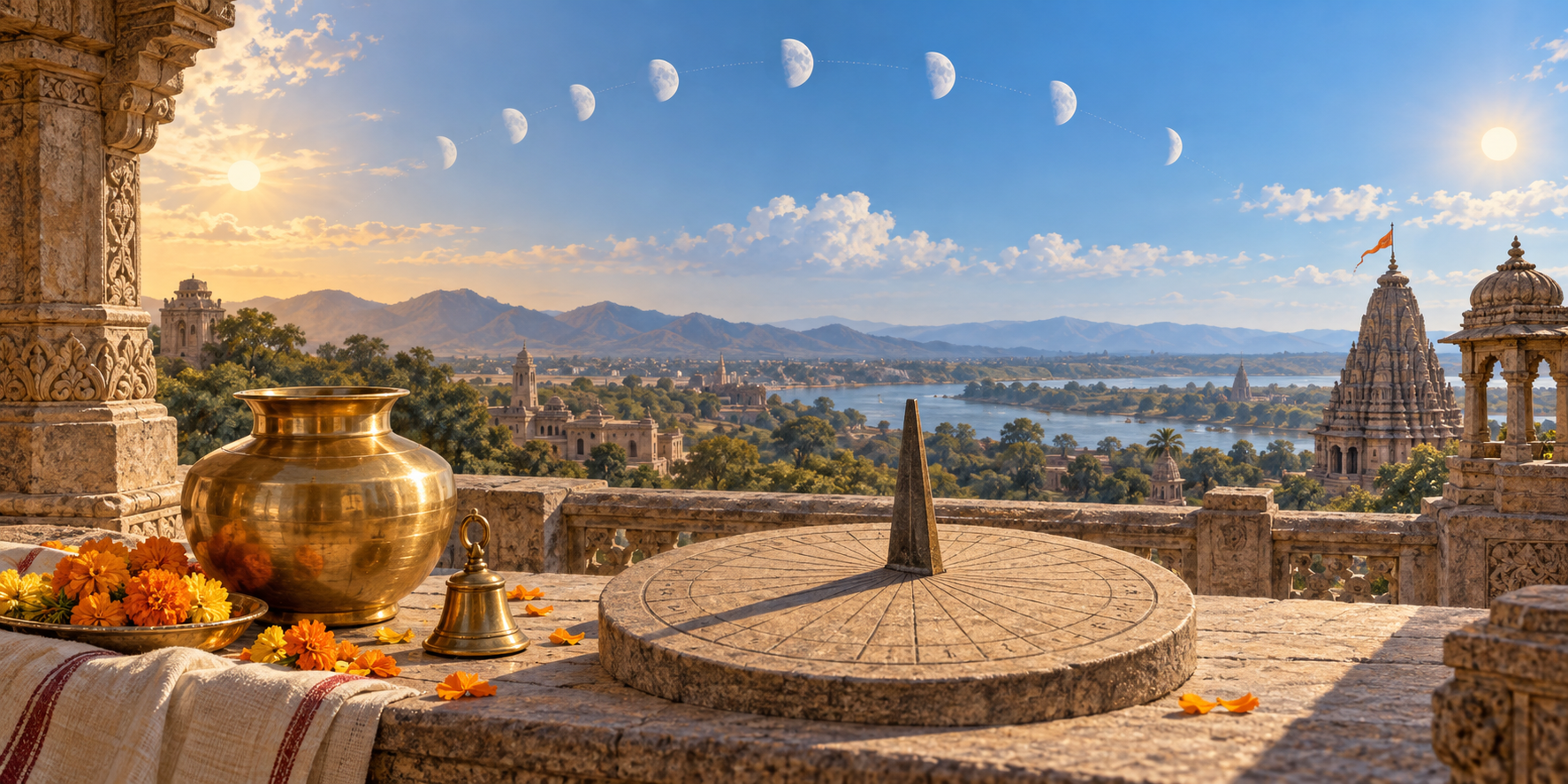
If you are deciding whether a tithi-specific practice belongs before or after midday on October 2, the important detail is the change from Krishna Sashti to Krishna Saptami. Treat the transition as a scheduling boundary, not as a declaration that one part of the day is universally auspicious and the other is not.
Friday, October 2, 2026 is Krishna Paksha Sashti until 12:19 PM, followed by Krishna Paksha Saptami, in the calendar timing given for most regions. Because panchang times can vary by place, verify the transition in a panchang calculated for your location before using it for a vrata, sankalpa, puja, or ceremony.
The day’s tithi at a glance
| Part of the day | Panchang detail | What it means for planning |
|---|---|---|
| Before 12:19 PM | Krishna Paksha Sashti | Use this portion only when your practice calls for the sixth tithi of the waning fortnight. |
| From 12:19 PM onward | Krishna Paksha Saptami | Use this portion only when your practice calls for the seventh tithi of the waning fortnight. |
| Entire civil date | Friday, October 2, 2026 | The weekday remains Friday even though the tithi changes during the day. |
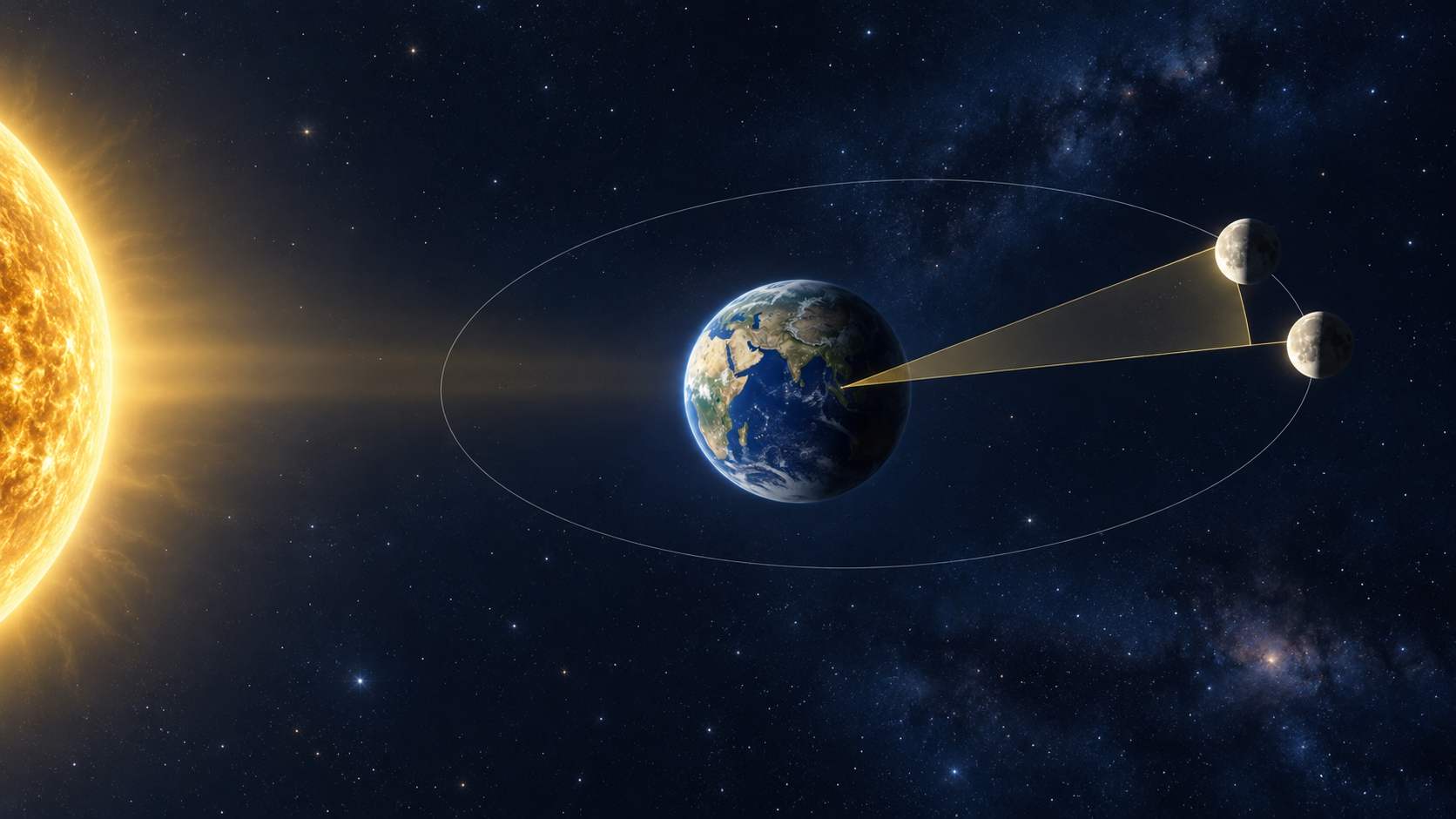
Krishna Paksha is the waning, or dark, half of the lunar month. Sashti is its sixth tithi and Saptami its seventh. A tithi is a lunar division, so it does not have to begin or end at midnight. That is why assigning a single tithi to the whole civil date would conceal the day’s most useful planning detail.
What the 12:19 PM transition does – and does not – decide
The transition tells you which tithi is operating on each side of the stated time. If your household practice simply asks you to worship during Sashti, the earlier period is the relevant window. If it asks for Saptami, the later period is relevant. Leave some margin rather than beginning a tithi-dependent act at the boundary itself.
The transition does not, by itself, settle the observance date of every vrata or festival. Some traditions consider the tithi present at sunrise; others require it to prevail during a particular portion of the day. Temple custom, sampradaya, and regional practice can therefore affect the final decision. When a formal observance is involved, check the applicable rule instead of reasoning only from “before” or “after” 12:19 PM.
The same caution applies to location. A panchang time belongs to the place for which it was calculated. If you are outside the region represented by the published timing, do not merely convert 12:19 PM as though it were a meeting scheduled in another time zone. Obtain the tithi ending time calculated for your own city.
Do not mistake the tithi for a complete muhurta
Tithi answers one question: which lunar day is in force? It does not answer every question about an auspicious starting time. A complete panchang judgment may also consider the nakshatra, yoga, karana, weekday, local sunrise, and the nature of the intended activity. None of those should be guessed from the Sashti-to-Saptami sequence.
- For ordinary daily worship: follow your regular practice unless it has a specific tithi requirement.
- For a Sashti or Saptami vrata: confirm whether your tradition follows the tithi at sunrise, its duration during the day, or another observance rule.
- For a wedding, griha pravesh, business opening, or other major beginning: do not label the period before or after 12:19 PM a muhurta from the tithi alone.
- For a temple visit: check the temple’s own calendar and service schedule; institutional observances may follow an established local convention.
- For a family calendar: record both tithis and the transition rather than marking the entire date only as Sashti or only as Saptami.
Key takeaways
- October 2, 2026 falls on a Friday.
- Krishna Paksha Sashti continues until 12:19 PM in the cited calendar timing.
- Krishna Paksha Saptami begins after 12:19 PM.
- The stated time should be verified against a panchang calculated for your location.
- A tithi transition alone is not enough to declare an auspicious muhurta or determine every vrata date.
A practical way to prepare your October 2 schedule
- Name the practice. Determine whether you are planning ordinary worship, a tithi-specific vrata, a temple visit, or a major ceremony. Each requires a different level of calendar precision.
- Write down your city. Use it to obtain local panchang timings rather than assuming one published clock time applies everywhere.
- Verify the governing tithi rule. If the observance belongs to Sashti or Saptami, find out whether your family or sampradaya follows sunrise prevalence or another rule.
- Keep away from the boundary. When your practice must occur within one tithi, allow enough time to complete it before that tithi ends.
- Check additional panchang factors when the decision is consequential. For a formal samskara or major undertaking, ask a qualified purohit to evaluate the intended act, location, and full panchang rather than relying on the tithi alone.
For a personal reminder, write: “Friday, October 2 – Krishna Sashti until 12:19 PM; Krishna Saptami afterward; verify locally.” That preserves the useful distinction without turning a general daily timing into a universal ritual ruling.

References

Leave a Reply
You must be logged in to post a comment.