
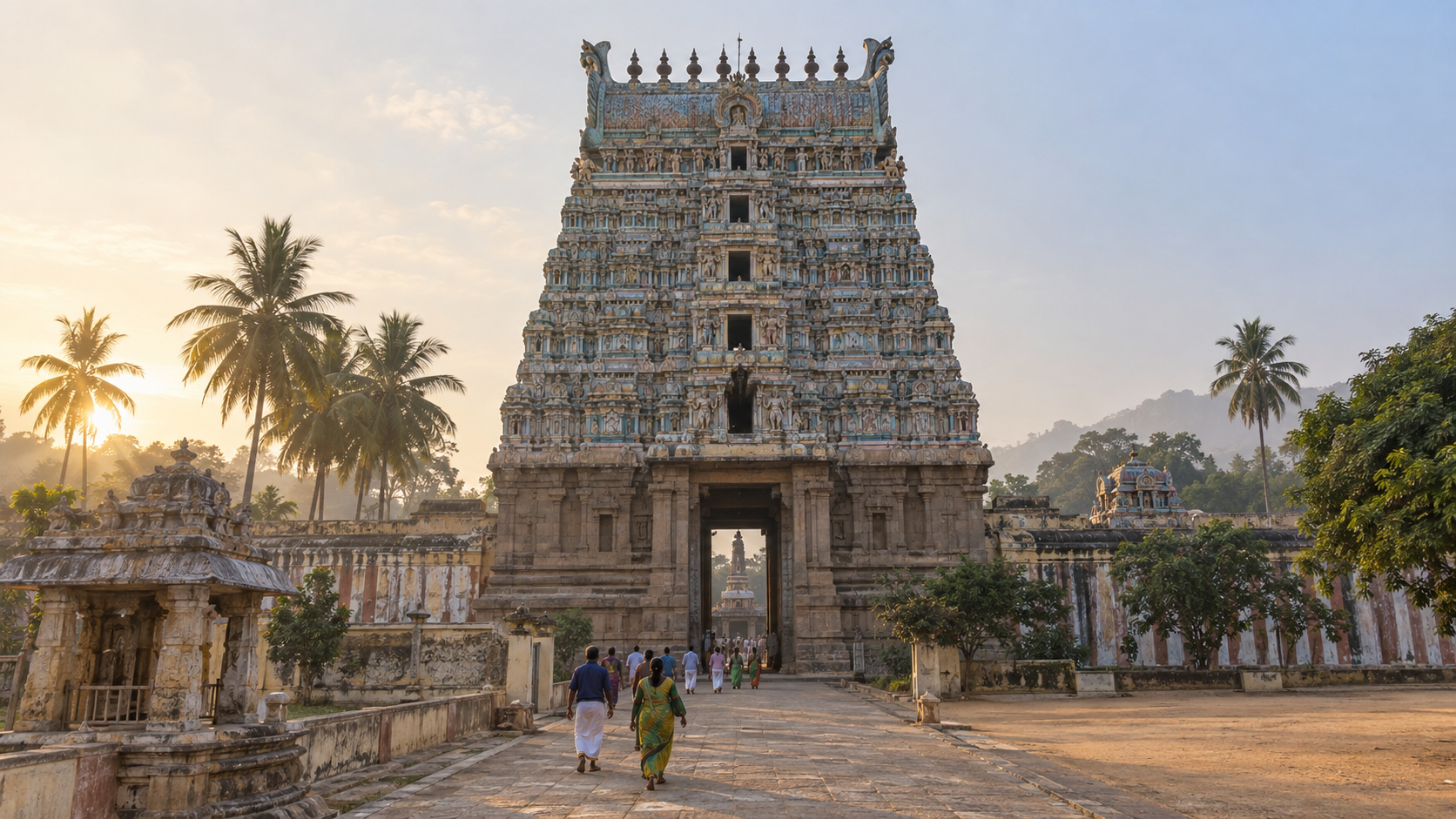
If Vanamamalai is one stop on your Divya Desam journey, your first question may be practical: which temple is it, where is it, and what should you understand before darshan? The name alone does not give you the whole answer.
The clearest way to approach this shrine is through three connected identities: it is the Vishnu temple at Nanguneri, it belongs to the 108 Divya Desams, and its tradition remembers the Lord as self-manifested. Keeping those identities together will help you plan the right visit and recognize what makes the temple sacred.
Start with the temple’s complete identity
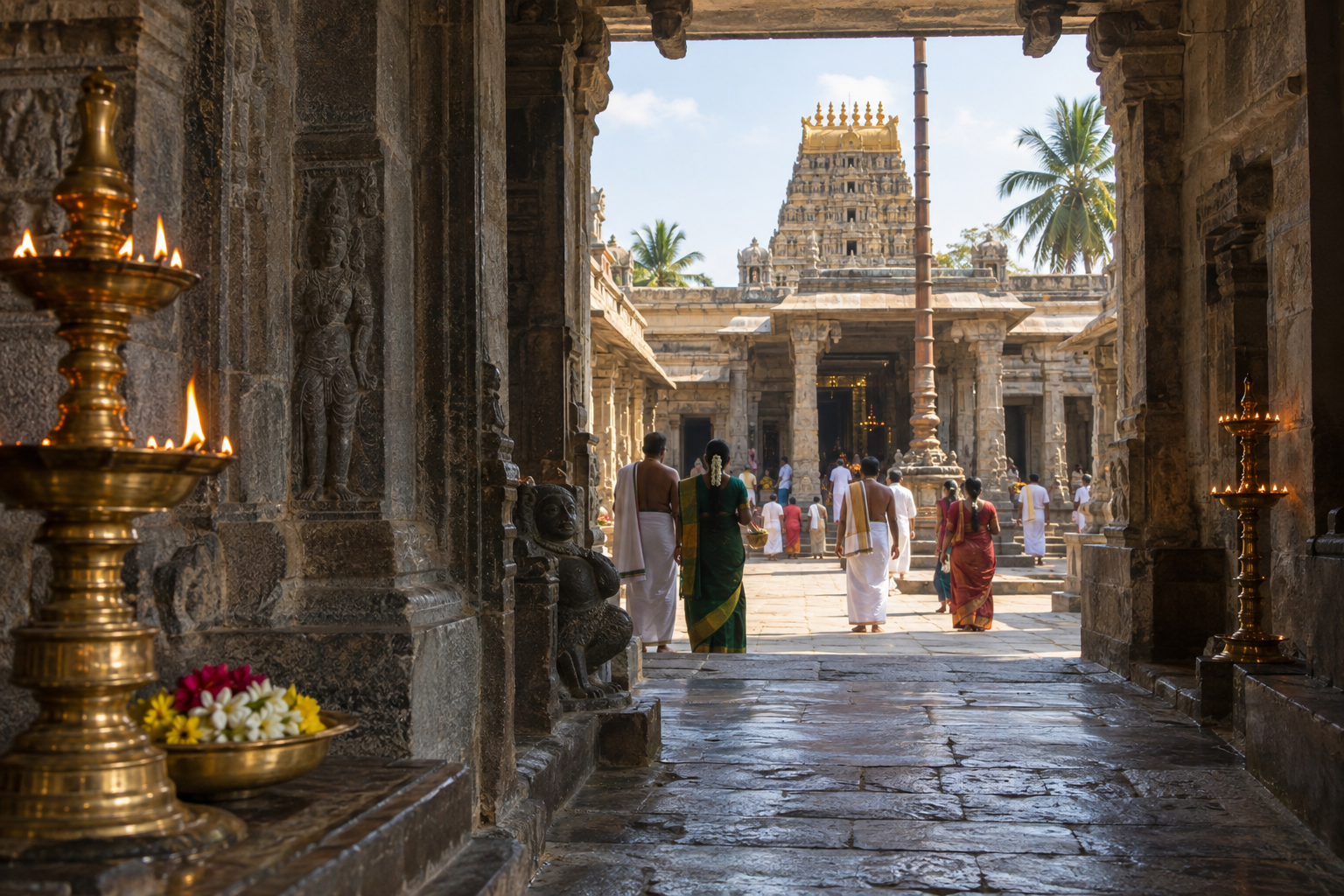
Sri Vanamamalai Perumal Temple is at Nanguneri in Tirunelveli district, Tamil Nadu, on the banks of the Thamiraparani. Nanguneri is the locality; Vanamamalai identifies the temple. Treating the place-name and temple-name as two separate destinations can create needless confusion when you search maps, discuss your route, or speak to a local driver.
Save the full identification in your itinerary: Vanamamalai Perumal Temple, Nanguneri, Tirunelveli district, Tamil Nadu. If a map result, travel listing, or verbal direction uses only one part of that identity, confirm the others before setting out. The Thamiraparani is another geographic anchor, but a reference to the riverbank should not be taken as a promise of direct bathing access from the temple. Ask locally before approaching the water or planning any river ritual.
The shrine is dedicated to Bhagavan Vishnu and Sri Varamangai Thayar. Write down both names. That small step protects you from reducing the temple to a generic Vishnu stop and prepares you to ask the right questions once you arrive.
Read its Divya Desam status correctly
Vanamamalai is counted among the 108 Divya Desams, the sacred Vishnu shrines celebrated in the Tamil Vaishnava hymn tradition. This designation is not a tourism ranking, an architectural style, or simply another way to say that a temple is old. It places the shrine within a devotional geography shaped by sung remembrance of Bhagavan.
That distinction changes how you visit. A rushed circuit can turn 108 living places of worship into 108 boxes to tick. At Nanguneri, pause before darshan and remember why the number matters: each Divya Desam is encountered as a particular sacred presence, not as an interchangeable entry in a list.
If you are keeping a pilgrimage record, note more than the date and location. Record the temple’s proper name, Perumal, Thayar, and the one thing you learned about its tradition. Even a short entry of that kind will preserve more than a collection of photographs. Where photography is restricted, the written record also lets you remember the visit without disregarding temple rules.
Understand the self-manifestation tradition on its own terms
The sacred account of Vanamamalai holds that Vishnu manifested here by himself. Within a temple tradition, self-manifestation expresses divine initiative: the Lord makes his presence known rather than the shrine’s meaning being exhausted by a human act of installation.
You do not have to force this claim into an archaeological category to engage with it seriously. Sacred meaning and material chronology answer different questions. The useful question for a pilgrim is what the tradition asks you to notice about Bhagavan’s presence at this place.
Listen for the temple’s own sthala-purana when it is explained locally. Keep a clean distinction between what the established tradition says and what an unverified retelling adds. If a guide, video, or social-media caption supplies extra names, dates, miracles, or ritual promises, confirm them with the temple before repeating them as fact.
Do not let Sri Varamangai Thayar become a footnote
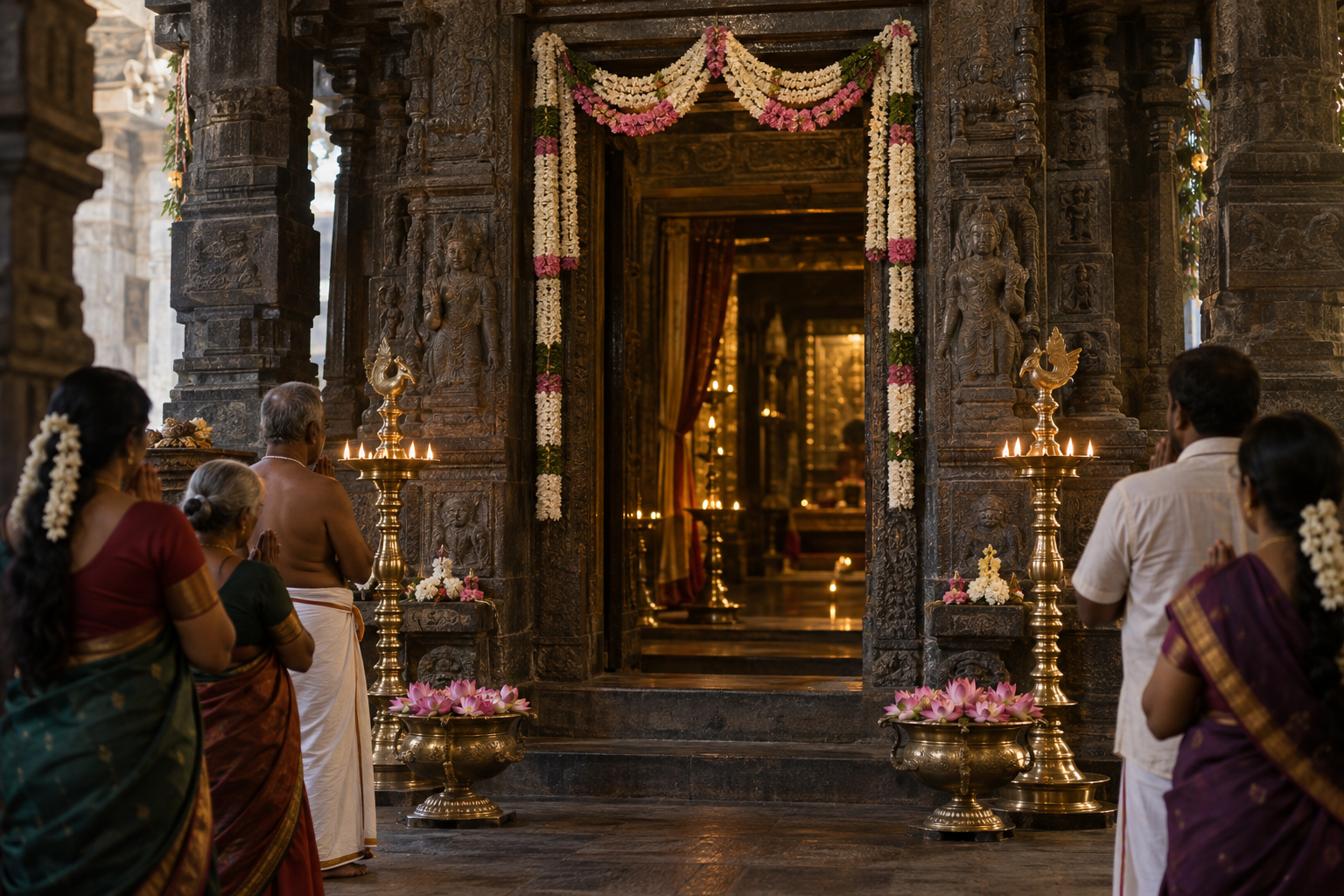
The temple’s identity explicitly includes Sri Varamangai Thayar. That matters because a pilgrim concentrating only on the familiar word “Perumal” can unintentionally overlook the divine consort named in the shrine’s own dedication.
Make her name part of your preparation, prayer, and memory of the visit. On arrival, ask respectfully how darshan associated with both Perumal and Thayar is arranged. Do not assume the order, location, or procedure from another temple: living temples have their own patterns, and instructions from the temple should govern your conduct there.
This attention is not about adding another item to your circuit. It is about seeing the shrine as it presents itself. If you leave remembering only a place-name and a number, you have retained the itinerary. If you remember Bhagavan Vishnu together with Sri Varamangai Thayar, you have begun to retain the temple’s devotional identity.
Plan your visit without relying on invented certainty
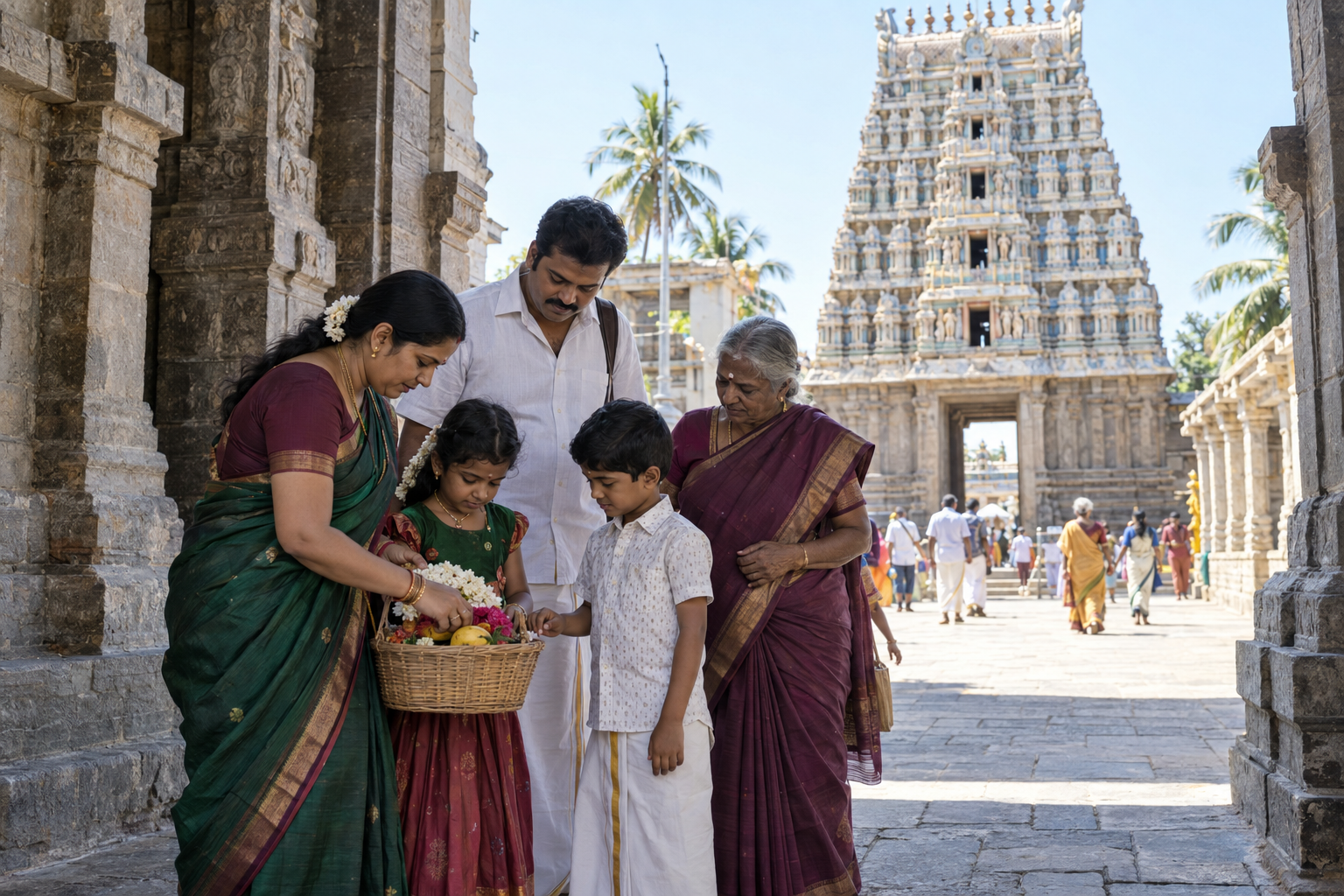
Temple opening windows, puja schedules, festival access, photography rules, and local transport conditions can change. A precise-looking schedule copied from an undated page may therefore be less useful than a direct confirmation shortly before your visit. Build your plan around what is established, then verify the living details locally.
- Save the full destination as Vanamamalai Perumal Temple, Nanguneri, Tirunelveli district, Tamil Nadu.
- Confirm the opening window and any festival-related access changes with the temple or a reliable local contact close to the day of travel.
- Ask on arrival about the appropriate darshan arrangements connected with Perumal and Sri Varamangai Thayar.
- Follow posted instructions and temple guidance on dress, queues, offerings, and photography rather than importing assumptions from another shrine.
- Treat the Thamiraparani setting as part of the temple’s geography, not as automatic authorization for bathing or performing a river ritual at any particular spot.
- If this is part of a Divya Desam circuit, allow enough time to encounter the shrine as a place of worship rather than merely recording your arrival.
Key takeaways
- Vanamamalai Perumal Temple is the Vishnu shrine at Nanguneri in Tamil Nadu’s Tirunelveli district.
- Its place among the 108 Divya Desams is a devotional distinction rooted in Tamil Vaishnava sacred remembrance, not a tourism ranking.
- The temple is dedicated to Bhagavan Vishnu and Sri Varamangai Thayar, so prepare to remember and honour both.
- Its self-manifestation tradition should be understood as a sacred claim about divine presence, not casually converted into an unsupported historical assertion.
- Verify current hours, access rules, and ritual arrangements near the date of your visit.
Before you leave for Nanguneri, put the two divine names beside the destination in your itinerary and confirm the day’s practical arrangements. Then arrive with enough time to listen, follow the temple’s guidance, and let this Divya Desam be more than a numbered stop.
References

Leave a Reply
You must be logged in to post a comment.