
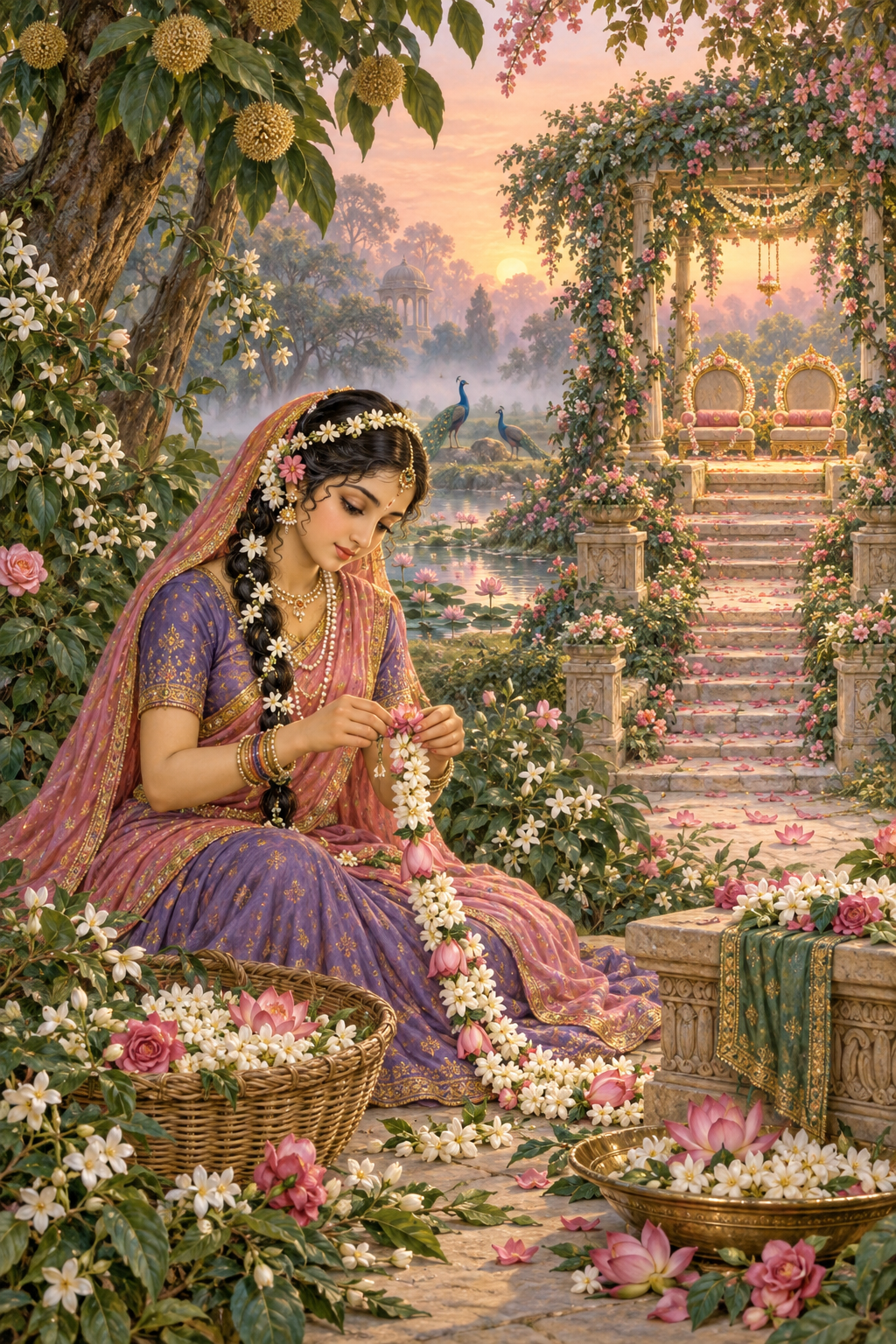
You have seen Lalita Sakhi’s appearance day on a Vaishnava calendar, but the notice may give you little more than a name and date. The practical question is not how elaborate you can make the observance. It is how to honor the day faithfully without inventing a ritual or repeating uncertain details.
Let your sampradaya provide the particulars. Center the day on trustworthy hearing, attentive nama, a customary offering, and concrete seva. If your knowledge is limited, restraint is not a deficiency. It is part of reverence.
Begin with seva, not biographical trivia
Lalita Sakhi is remembered especially in Gaudiya Vaishnava devotion as an intimate companion of Sri Radha and Krishna. Her appearance day therefore directs attention toward loving service. It is not merely an anniversary on which to collect names, places, relationships, and other biographical particulars.
That distinction changes how you approach the day. Instead of asking only what happened in a sacred narrative, ask what the remembrance requires of you. Can you chant with less distraction? Can you complete an unnoticed service without seeking recognition? Can you receive correction without immediately defending yourself? An observance becomes spiritually useful when remembrance affects conduct.
While hearing about Lalita Sakhi, keep three questions in view: What is being served? Which quality of service is being praised? What habit in your own devotional life needs correction? Record only answers that are supported by the teaching you hear. Do not fill a gap in your knowledge with an attractive story from an unattributed image, forwarded message, or short video.
The same restraint applies to confidential devotional subjects. If your guru or lineage has not given you a particular method of meditation, do not devise one for the occasion. Stay with the public practices you have actually received: hearing, chanting, prayer, offering, and service.
A simple home observance that respects your lineage
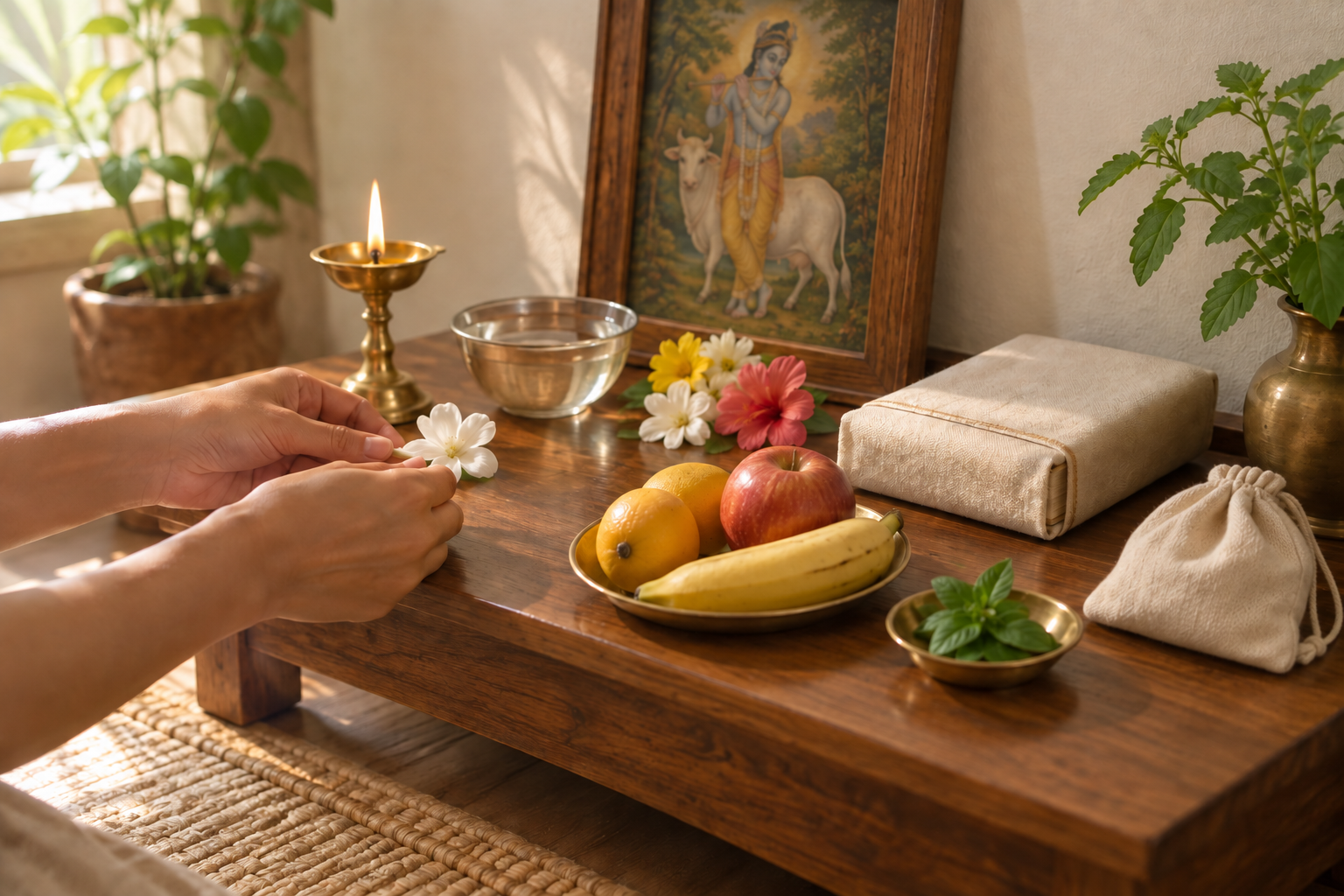
For 2026, Lalita Sakhi’s appearance day falls on 17 September 2026. Confirm the local program with the temple or community you follow, since its published schedule should govern your participation.
If you are observing at home, use this sequence as a framework rather than as a new ritual prescription:
- Choose your authority before the day. Decide which guru, temple, or lineage publication will guide your hearing. This prevents an internet search from becoming your theology.
- Prepare the place you already use for worship. Clean it and arrange only the lamp, water, flowers, or other articles that belong to your normal household practice. Simplicity is better than adding objects whose use you do not understand.
- Keep your established sadhana intact. Do not replace your regular chanting or prayers with something newly encountered online. Give the day additional attention by performing the practice you have received more carefully.
- Hear about Lalita Sakhi from a trusted teacher or text in your lineage. Listen for her relationship to Sri Radha and Krishna and for the service disposition being taught. Pause when a claim is unclear and verify it later instead of passing it on.
- Make an offering in the manner customary in your home. If you have not been taught a formal procedure, do not improvise one. A sincere prayer and an ordinary offering made according to established household practice are enough.
- Complete a practical act of seva. Help with a temple need, clean the worship space, prepare prasada, support kirtana, assist another devotee, or read with your family. Choose something that benefits someone beyond yourself.
Your prayer can also remain direct: ask for steadiness in service, freedom from possessiveness, and the ability to place the pleasure of Sri Radha and Krishna before personal recognition. You do not need ornate language to make that intention clear.
Let the temple define the local observance
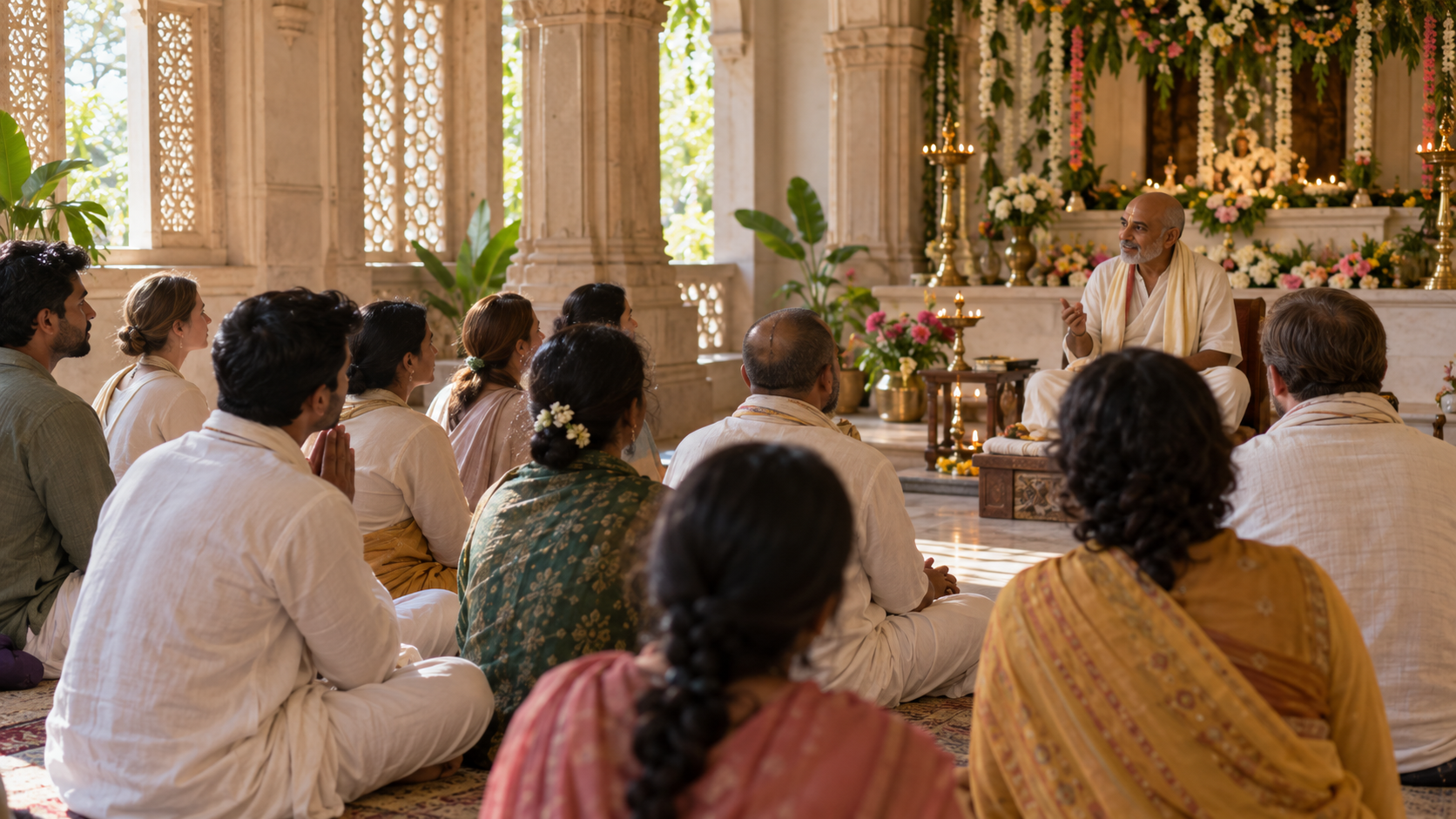
A civil date tells you when to look for the celebration, but it does not tell you the temple’s full program. Before you plan travel, food, or time away from work, ask the temple directly:
- Will the local observance take place on the same civil date?
- What time do kirtana, katha, darshana, or other public portions begin?
- Is there a fasting or dietary rule, and does it apply to everyone?
- When does any vrata end, and how does the community break it?
- Which offerings are welcome, and which should not be brought?
- Are any portions intended only for initiated practitioners?
Do not assume a fast merely because another festival includes one. A devotional fast belongs to the discipline in which it is prescribed; it is not a way to make your observance appear more serious. Follow the guidance you have received, and account for your health rather than undertaking an unfamiliar restriction on the strength of a social-media graphic.
If you come from another Hindu sampradaya, attend as a respectful guest. Join the portions open to everyone, listen carefully, and let the hosts explain lineage-specific practices. Respect does not require you to recite a mantra you have not received or imitate the devotional role of an initiated practitioner.
If you cannot attend a temple, do not turn the absence into a spiritual failure. Protect a period at home from routine interruptions, hear from a trusted lineage voice, perform your usual worship attentively, and finish with service. The substance of the day does not depend on creating a large event.
Avoid the mistakes that turn reverence into display

Devotional enthusiasm can outrun knowledge. That is especially likely when a sacred personality is known through brief captions rather than sustained teaching. Watch for these common errors:
- Do not repeat precise claims about family, birthplace, age, appearance, dress, or sacred relationships unless you can trace them to a trusted text or teacher in the tradition.
- Do not select a devotional image merely because a search result labels it Lalita. Confirm the image through your temple or a reliable lineage publisher before placing it on an altar or public notice.
- Do not make decoration the center while omitting hearing and seva. Flowers and festival arrangements can support remembrance, but they cannot replace it.
- Do not imitate intimate or advanced worship described for practitioners under specific guidance. Honor what you have not been authorized to practise by leaving it undisturbed.
- Do not measure devotion by visible emotion, the length of a program, or the expense of an offering. Quiet, accurate service is not inferior to a public celebration.
- Do not use the occasion to rank sampradayas or criticize devotees whose observance looks different. Fidelity to your own lineage does not require contempt for another.
A useful test is simple: if removing the photographs and public recognition would make the activity feel pointless, reconsider the activity. Appearance-day seva should train attention toward the one being honored, not toward the person performing it.
Key takeaways
- Observe Lalita Sakhi’s appearance day through hearing, nama, customary offering, prayer, and practical seva.
- Use your guru, temple, or sampradaya as the authority for ritual details and confidential devotional practices.
- Confirm the local date, program, offering rules, and any vrata before making plans.
- Do not turn uncertain internet details, unlabeled images, or forwarded messages into devotional authority.
- Let remembrance produce a visible correction in your conduct, especially in how you serve when no recognition is available.
Your next step is to choose the trusted voice from whom you will hear and contact your temple about its schedule. Then decide on one useful service you can complete that day. Make that commitment before the celebration arrives; otherwise the observance can pass as another calendar entry instead of becoming an occasion for deeper seva.
References

Leave a Reply
You must be logged in to post a comment.