
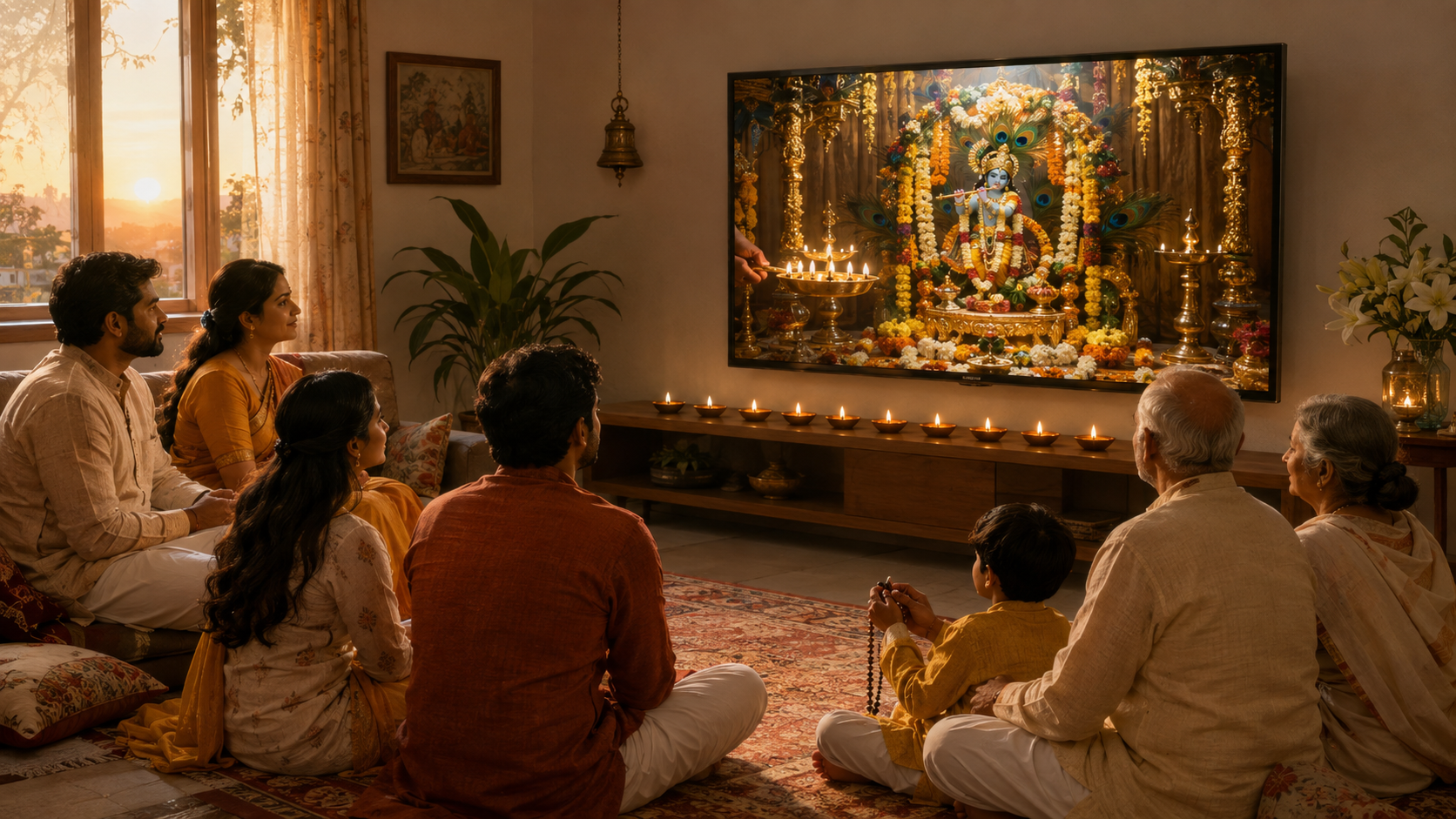
If you are deciding whether Hare Krsna TV deserves a place in your daily or weekly practice, its tenth anniversary offers a useful test. Do not ask only how long the channel has transmitted. Ask whether it helps you hear, chant, study, remember Krishna and involve your household more consistently.
That is where its first decade matters. Hare Krsna TV has made live aratis, festival broadcasts, scriptural discourses, kirtans, children’s programmes and devotional-lifestyle content available through one continuous service. The achievement is not simply that more religious video exists. It is that a seeker can now bring several forms of Vaishnava engagement into the home through an ordinary television or mobile device.
A decade measured by access, not novelty
Hare Krsna TV began on Janmashtami in 2016. It has since developed into a 24-hour, free-to-air, non-commercial spiritual satellite television channel, with distribution extending beyond satellite television into digital streaming.
Those features solve different problems. Round-the-clock broadcasting means devotional content is available beyond the hours when you can visit a temple. Free-to-air distribution lowers the barrier to the channel itself, although your access still depends on the television or internet service available to you. Its non-commercial identity states that spiritual instruction and devotion, rather than ordinary entertainment, are the centre of the undertaking.
The distribution model also gives practical form to the aspiration of carrying Krishna Consciousness to every town and village. A television signal or digital stream cannot create devotion by itself, but it can remove distance as the first obstacle. A person who cannot attend a particular arati, class or festival can still see and hear Vaishnava practice as it happens in ISKCON communities around the world.
This distinction is important. Access is not the same as spiritual attainment. The channel supplies an opening; you still have to convert viewing into hearing, remembrance, inquiry and practice.
Match the programme to the devotional need
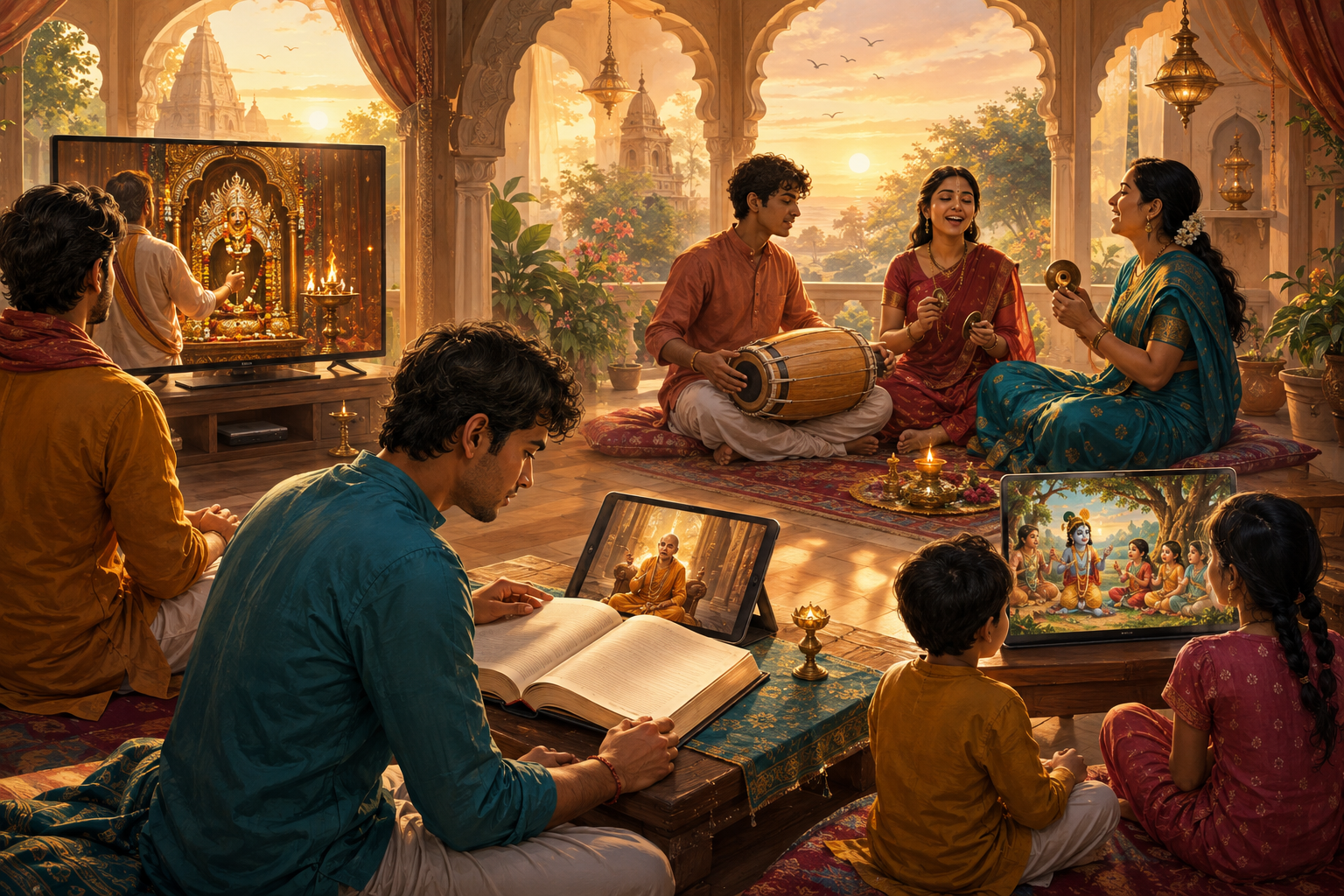
A continuous channel can be either a gift or another stream of background noise. The deciding factor is whether you know what you need before you switch it on. Hare Krsna TV’s programme range covers worship, scripture, music, culture, family life and devotional food preparation, so different formats should not be consumed in the same way.
| Your immediate need | Start with | Turn viewing into practice |
|---|---|---|
| You cannot attend a temple ceremony | Live arati or a festival broadcast | Prepare beforehand, sit attentively and participate through prayer or chanting instead of treating the ceremony as visual ambience. |
| You want systematic scriptural understanding | Bhagavad-gita or Srimad-Bhagavatam discourse | Follow a coherent series or speaker, keep notes and take unresolved questions to a qualified teacher or trusted devotee. |
| Your mind needs a devotional focus | Kirtan or bhajan | Chant or listen deliberately. Avoid combining it with unrelated scrolling that divides your attention. |
| You want to involve younger family members | Children’s, youth or family programming | Watch together and discuss one idea afterward in language suited to the child’s age. |
| You want bhakti expressed in household life | Prasadam cooking, devotional-lifestyle or cultural programming | Choose one appropriate practice to carry into your home instead of merely collecting ideas. |
| You want to understand a community or tradition better | Documentary or cultural programme | Use it as an entry point, then connect what you saw with scripture, temple life or further guidance. |
The table reflects a simple principle: the best programme is not necessarily the most dramatic one. It is the one that answers your present devotional need and leads to an appropriate action. If you need scriptural clarity, a festival broadcast may inspire you but leave the question unresolved. If you feel disconnected from communal worship, another lecture may be less useful than joining a live arati attentively.
Build a rhythm instead of grazing through content
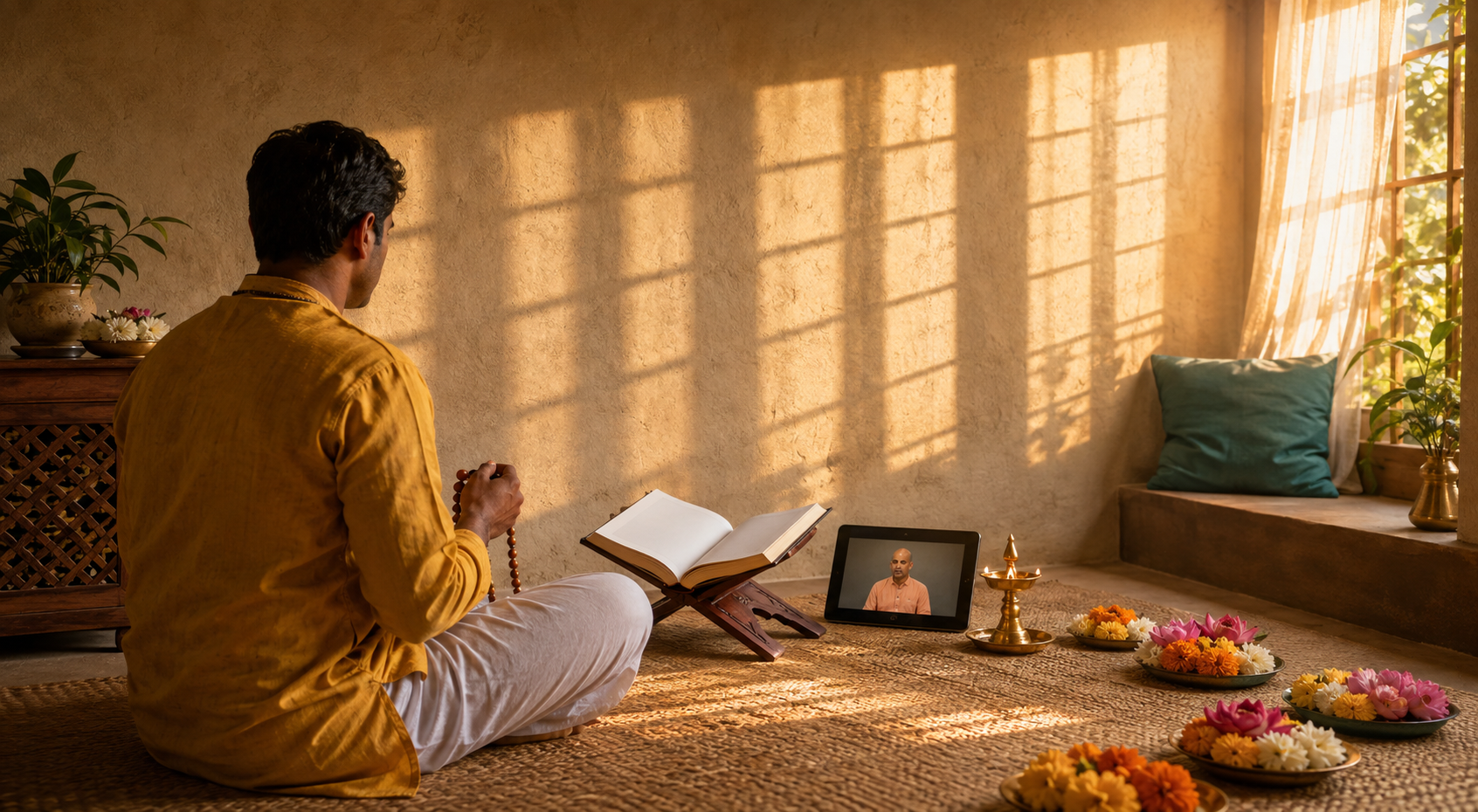
The abundance of spiritual media creates a subtle problem. You can move through many speakers, temples and subjects while developing little continuity with any of them. Variety feels productive, but sustained hearing usually requires returning to the same subject long enough to understand its argument and apply it.
- Name your purpose before opening the stream. Decide whether this session is for worship, study, chanting, family participation or festival access. That choice protects your attention from random switching.
- Select a repeatable anchor. Choose one programme category that fits an existing point in your routine. Consistency matters more than trying to sample everything the channel carries.
- Pair the screen with a devotional act. Chant during kirtan, take notes during a discourse, participate during arati or prepare an applicable prasadam recipe. The action is what distinguishes practice from passive consumption.
- Keep a place for questions. A broadcast can teach, but it cannot notice your misunderstanding or respond to your personal circumstances. Record important questions and bring them to a qualified Vaishnava teacher or a dependable local community.
- Do not let home viewing erase living association. Use the channel when distance, timing or circumstances prevent participation, and use it to deepen your connection with a temple or community when such a connection is available.
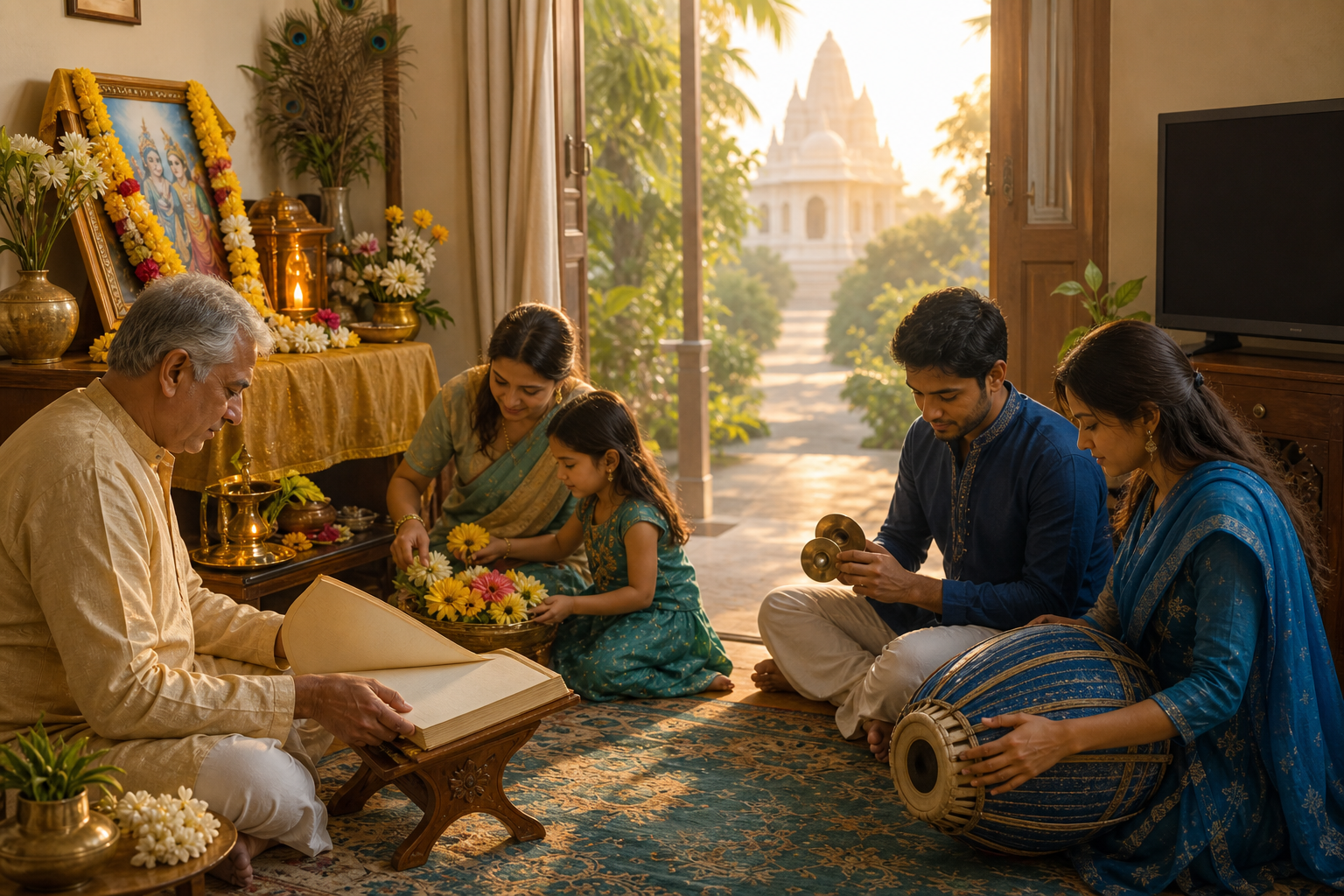
This approach is especially useful for a household. Leaving devotional television on all day may create a welcome atmosphere, but it does not guarantee that anyone is listening. A clearly chosen family programme, followed by a brief conversation or shared practice, gives the content a destination.
Choose the screen that serves the situation
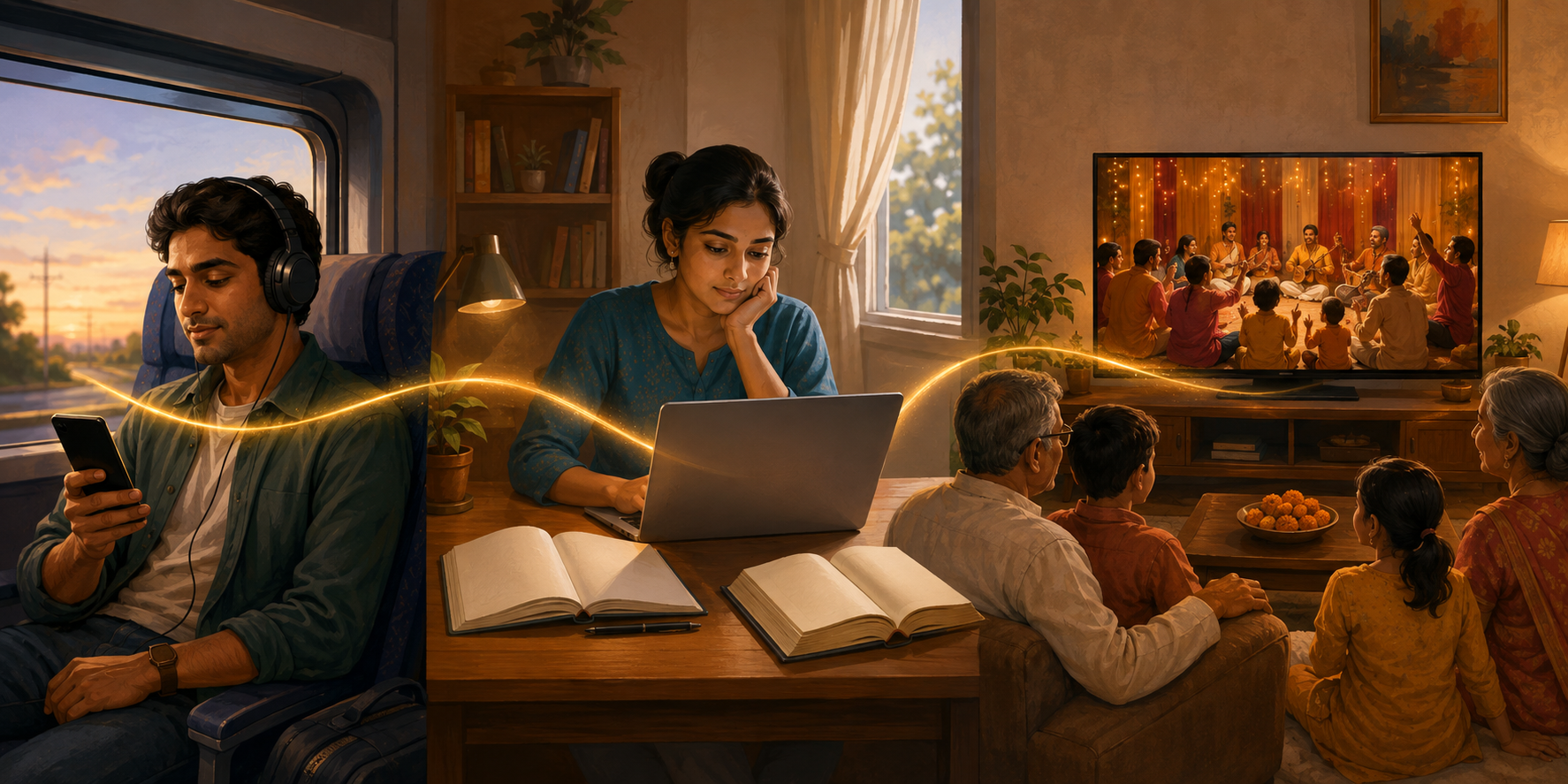
Hare Krsna TV’s first decade is also a story of moving between old and new forms of distribution. In India, the channel is available through cable and DTH routes that include Tata Play and Dish TV. Television is often the better choice when several members of a household want to watch together or when an elder is more comfortable with a remote control than a mobile application.
For viewers outside those television networks, or for anyone who needs access while travelling, the channel maintains continuous streaming on YouTube and distribution through digital and OTT platforms. A mobile stream makes access portable, but portability should not become distraction. When the programme deserves attention, put the device down, silence unrelated notifications and listen as deliberately as you would in a physical class.
Festival broadcasts deserve advance planning. Check the relevant schedule before the observance, decide who in the household will join and prepare the space rather than discovering the stream after the ceremony has started. Current channel numbers, network availability and streaming information can be checked at hktv.in or through the listed contact number, +91 7666 839 839.
The two distribution modes need not compete. Use television for shared household viewing and a digital stream for continuity when the main screen or local provider is unavailable. The right platform is the one that reduces friction without reducing attention.
Key takeaways for Hare Krsna TV’s second decade
- The first decade runs from Hare Krsna TV’s Janmashtami launch in 2016 to its tenth-anniversary milestone.
- Its central accomplishment is an access system: continuous devotional television combined with digital and mobile availability.
- The programme range joins temple worship, scriptural study, sacred music, culture, family content and devotional household practice.
- You will gain more from the channel by choosing programmes according to a real devotional need and pairing each session with an action.
- Broadcast media can support sadhana and association, but it should not replace attentive personal practice, responsive guidance or local community when those are available.
Hare Krsna TV enters its next decade with plans to extend its reach through emerging digital platforms and improved broadcast capabilities. Viewers should judge that growth by more than the number of places carrying the signal. The more meaningful questions are whether access becomes easier, scriptural teaching retains depth, live worship remains available and programming continues to serve children, adults and families without losing its devotional centre.
Your next step is concrete: verify the access route that works in your location, choose one programme category tied to an actual practice and return to it consistently before adding more. A decade of broadcasting becomes spiritually relevant to you only when available content becomes deliberate hearing and deliberate hearing changes how you live.
References
