
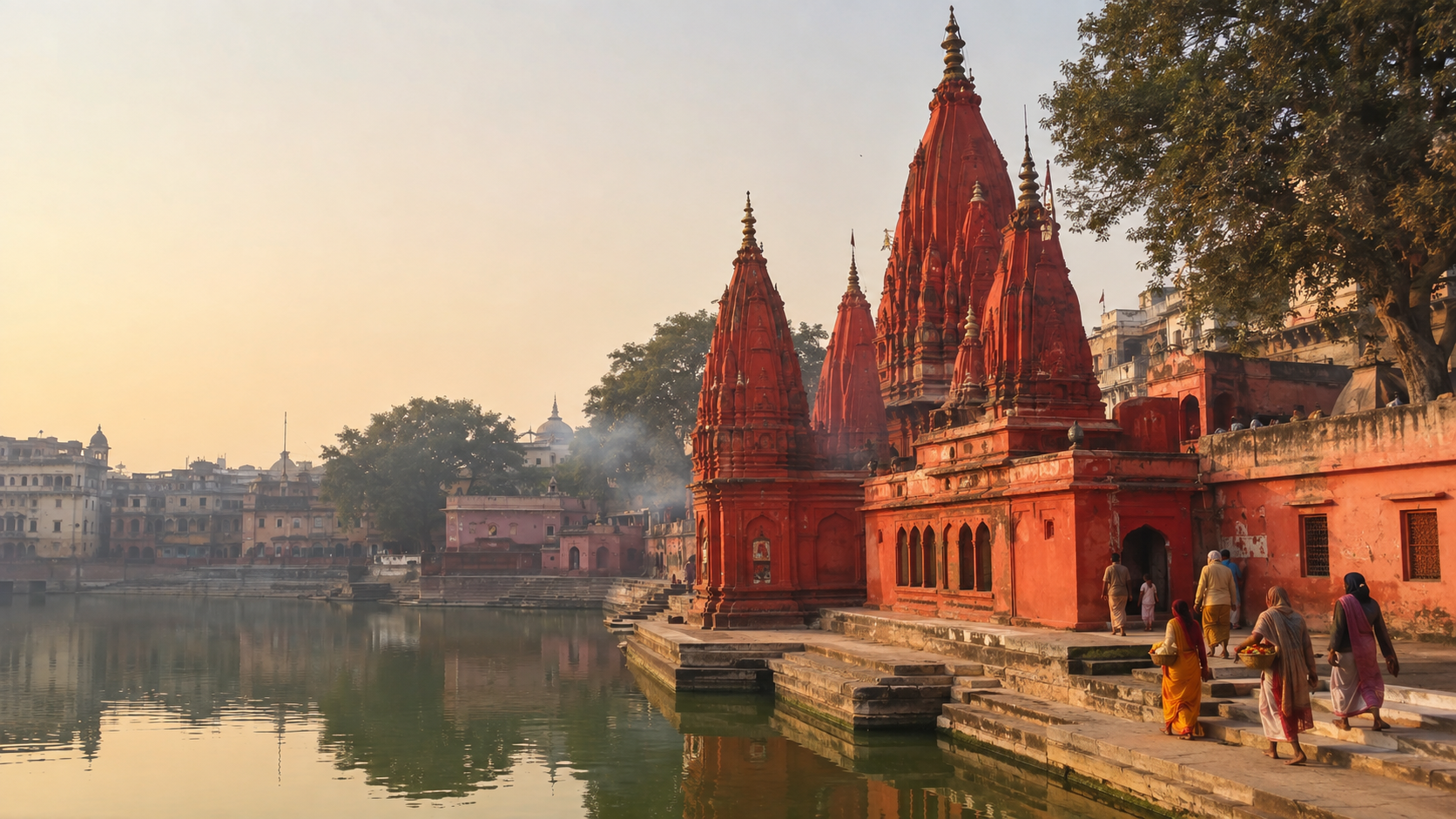
You may be deciding whether to include Maa Kushmanda Devi Temple in your Kashi pilgrimage, or trying to understand what makes the shrine sacred before you go. Begin with one distinction: the age of a temple building and the sacred identity of the Devi are not the same question.
That distinction gives you a clearer account of the temple’s origin, prevents exaggerated historical claims, and helps you approach darshan as worship rather than sightseeing.
The temple’s origin has more than one timeline
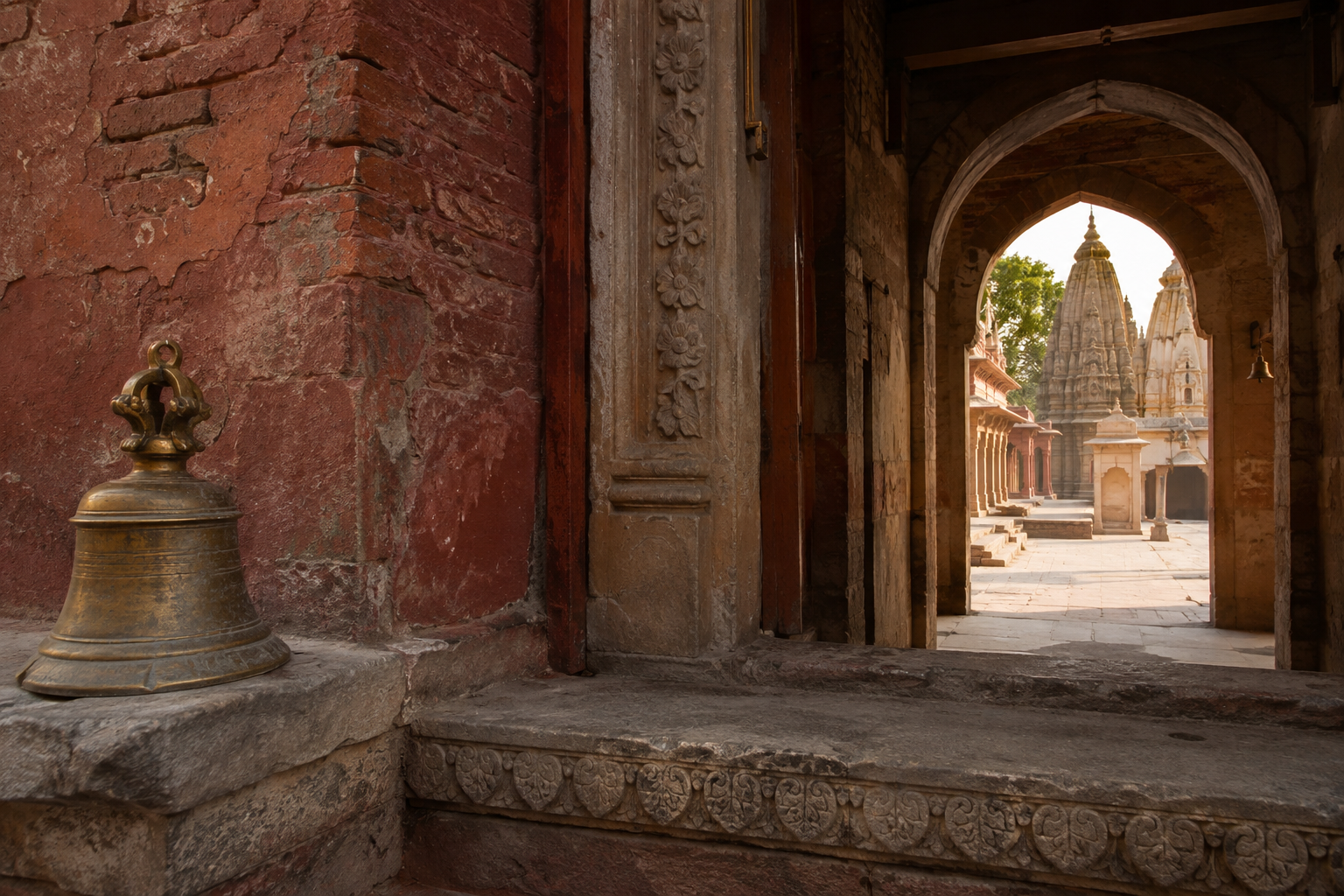
The firm historical point is concise: the Maa Kushmanda sanctuary in Varanasi is described as an eighteenth-century temple within Kashi’s far older sacred geography. Its devotional identity is associated with the protective presence of the Devi.
This does not mean that the eighteenth century marks the beginning of Maa Kushmanda, Shakti worship, or Kashi’s sanctity. It identifies the period associated with the sanctuary, not the beginning of the divine reality worshipped there. Confusing these timelines produces two opposite errors: describing the present structure as timeless, or assuming that the Devi’s significance began when that structure was established.
A careful account of the origin keeps three layers distinct:
- The theological layer: Maa Kushmanda belongs to the sacred world of Shakti and is approached as Devi, not merely as a historical personality.
- The devotional layer: a temple becomes a living tirtha through worship, prayer, ritual continuity, and the relationship devotees cultivate with the deity.
- The architectural layer: the sanctuary itself is associated with the eighteenth century, giving the temple a historical setting inside the older spiritual landscape of Kashi.
If you describe the temple to someone else, the accurate formulation is simple: it is an eighteenth-century shrine to Maa Kushmanda in the ancient sacred city of Kashi. That sentence respects both history and faith without forcing one to replace the other.
It is also better to leave a gap than fill it with an unsupported legend. Unless you have a reliable inscription, named patron, dated record, or documented reconstruction history, do not attach a precise founder or dramatic incident to the temple. Reverence does not require false certainty.
Divine protection is the temple’s devotional centre
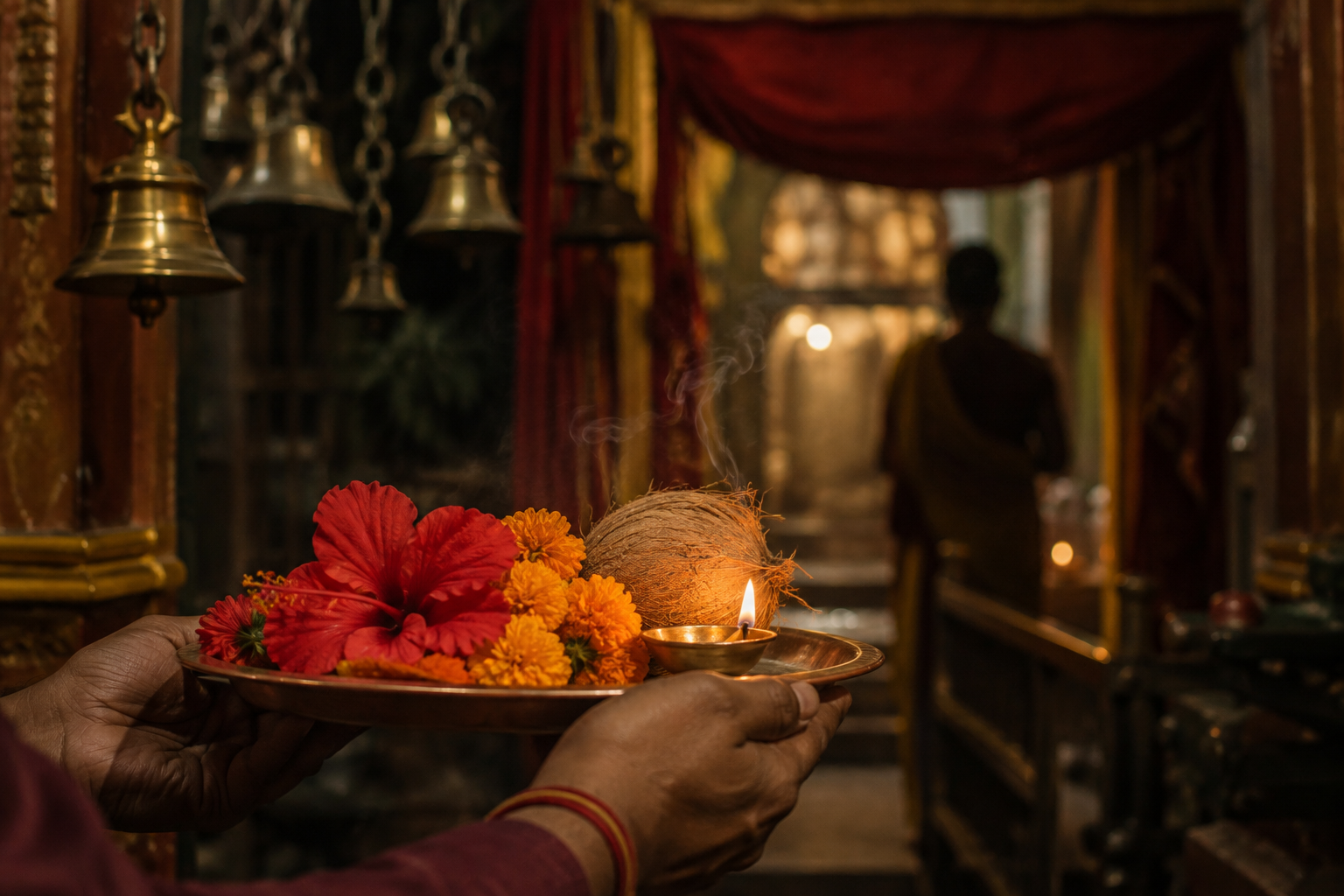
Maa Kushmanda is worshipped within the broader Hindu understanding of Devi and Shakti. At this temple, the most useful devotional key is protection. That does not have to be interpreted as a mechanical promise that every difficulty will disappear. A deeper prayer asks for the strength, discernment, and steadiness with which difficulty can be faced.
This matters when you form your sankalpa. A long list of demands often scatters attention. Choose one truthful intention before entering the shrine. You might pray for steadiness during uncertainty, clarity when fear is distorting a decision, protection from harmful conduct, or gratitude for help already received.
The temple’s place in Kashi adds another dimension. Kashi is not merely a collection of old buildings. Its temples form a sacred geography in which different manifestations of divine power are encountered through particular shrines. Visiting Maa Kushmanda Temple with that awareness changes what you notice: the value of the visit lies not only in the age of the structure but in the relationship between deity, place, worship, and devotee.
You therefore do not need to manufacture an extraordinary experience. Darshan can be brief and still be sincere. Hold the form of the Devi in your attention, offer the prayer you actually came to make, and allow a moment of silence before returning to the movement of Kashi.
A careful plan for darshan in Kashi
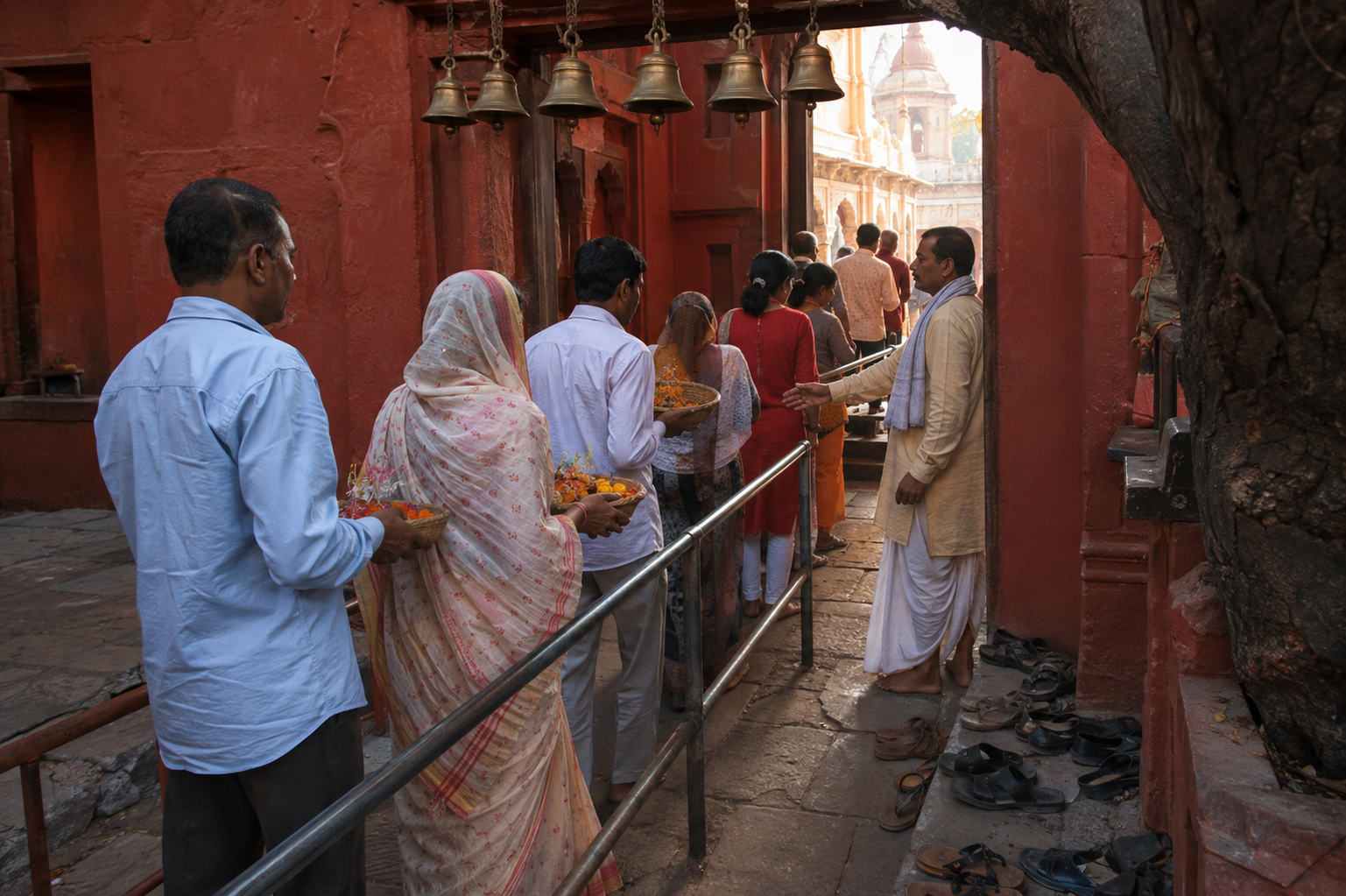
Exact opening hours, access arrangements, accepted offerings, photography rules, and festival procedures can change. Verify them locally on the day of your visit. Do not build a tightly timed itinerary around an unconfirmed online listing, especially when several temple visits depend on one another.
Use this practical sequence:
- Confirm access first. Ask a dependable local contact or the temple itself about current hours, the best approach route, and any restrictions in force that day.
- Check before bringing offerings. Flowers, food, lamps, and other items are not handled identically at every shrine. Bring only what is locally accepted, or obtain an appropriate offering nearby after asking.
- Choose one sankalpa. State it inwardly in a single sentence. A focused prayer is easier to carry through the noise and movement of a busy pilgrimage day.
- Follow the temple’s living order. Observe the queue, watch how devotees approach, and follow instructions from temple personnel. Local practice takes precedence over a ritual sequence copied from elsewhere.
- Keep the threshold clear. Offer pranam and prayer without blocking the movement of other devotees. If you want a longer period of reflection, step into an appropriate space after darshan.
- Receive without entitlement. Accept prasad or other blessings when they are offered. Do not assume that a particular ritual, access privilege, or outcome is owed to you.
If you want words for the moment of darshan, simplicity is enough: address Maa Kushmanda, name the fear or uncertainty you are carrying, and ask for protective wisdom and right action. This is a suggested devotional posture, not a claim about a mandatory temple formula.
Dress and conduct should reflect that you are entering an active place of worship. Keep conversations low, avoid treating worshippers as photographic scenery, and ask before photographing the shrine or ritual activity. A temple can be historically significant and still belong first to its deity and worshipping community.
Questions pilgrims often bring to the temple
How old is Maa Kushmanda Devi Temple in Varanasi?
The sanctuary is associated with the eighteenth century. It is best described as an eighteenth-century temple situated within Kashi’s much older sacred landscape. That phrasing distinguishes the age of the shrine from the timeless theological status devotees attribute to the Devi.
What is the temple especially associated with?
Its central devotional character is that of a sanctuary of divine protection. You can approach that protection as a prayer for courage, discernment, moral strength, and freedom from fear rather than as a bargain guaranteeing that no hardship will arise.
Does the eighteenth-century date tell us when worship began?
No. A date attached to a sanctuary identifies a historical period for the temple; it does not by itself establish when devotion to the deity began. A responsible history should not claim more than the available chronology can support.
What should a first-time visitor remember?
Verify practical details locally, carry one clear sankalpa, follow the temple’s actual customs, and leave room for quiet after darshan. The aim is not to collect another stop on a crowded itinerary. It is to meet Maa Kushmanda’s protective presence with disciplined attention.
Before you set out, write your sankalpa in one sentence and confirm the day’s access arrangements. Those two small acts prepare both sides of the pilgrimage: the outward journey through Kashi and the inward movement toward Devi.
References
