
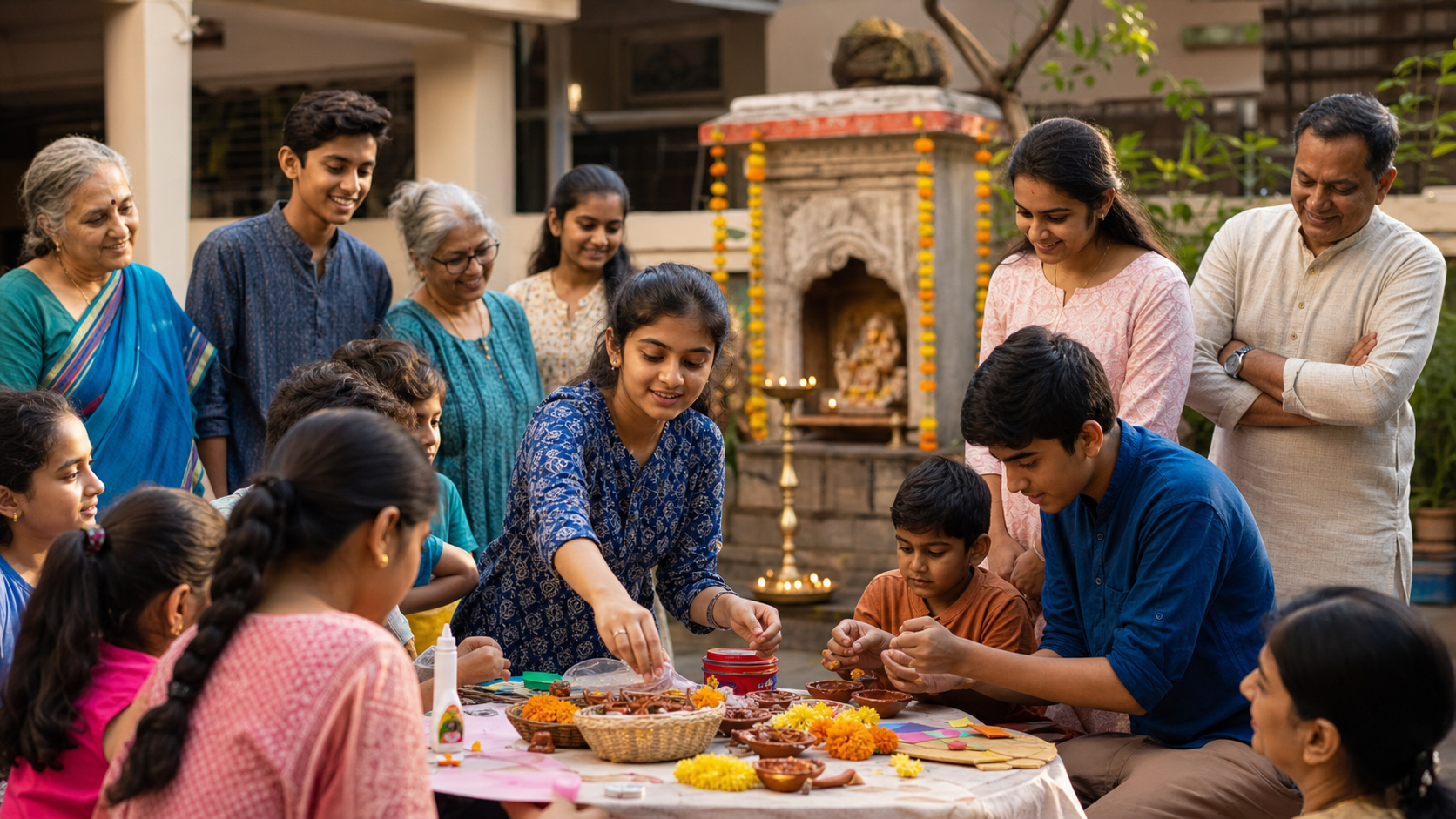
If you’re deciding whether to start, support or send your child to a local VHP initiative, don’t judge it by the size of its gathering or the warmth of its slogans. Ask whether it gives a person a clear path from learning Dharma to practising seva and, eventually, accepting responsibility.
That path is the practical promise behind the current emphasis. At a VHP meeting in Bhopal on 1 September 2026, leaders placed satsang, seva, Bal Sanskar Kendras, dharma charcha and youth empowerment on the same community agenda. This establishes a useful direction, but it doesn’t prove that every local unit follows the same curriculum, safeguards or operating method. You still need to examine how the ideas are being implemented where you live.
Build one pathway from sanskar to responsibility
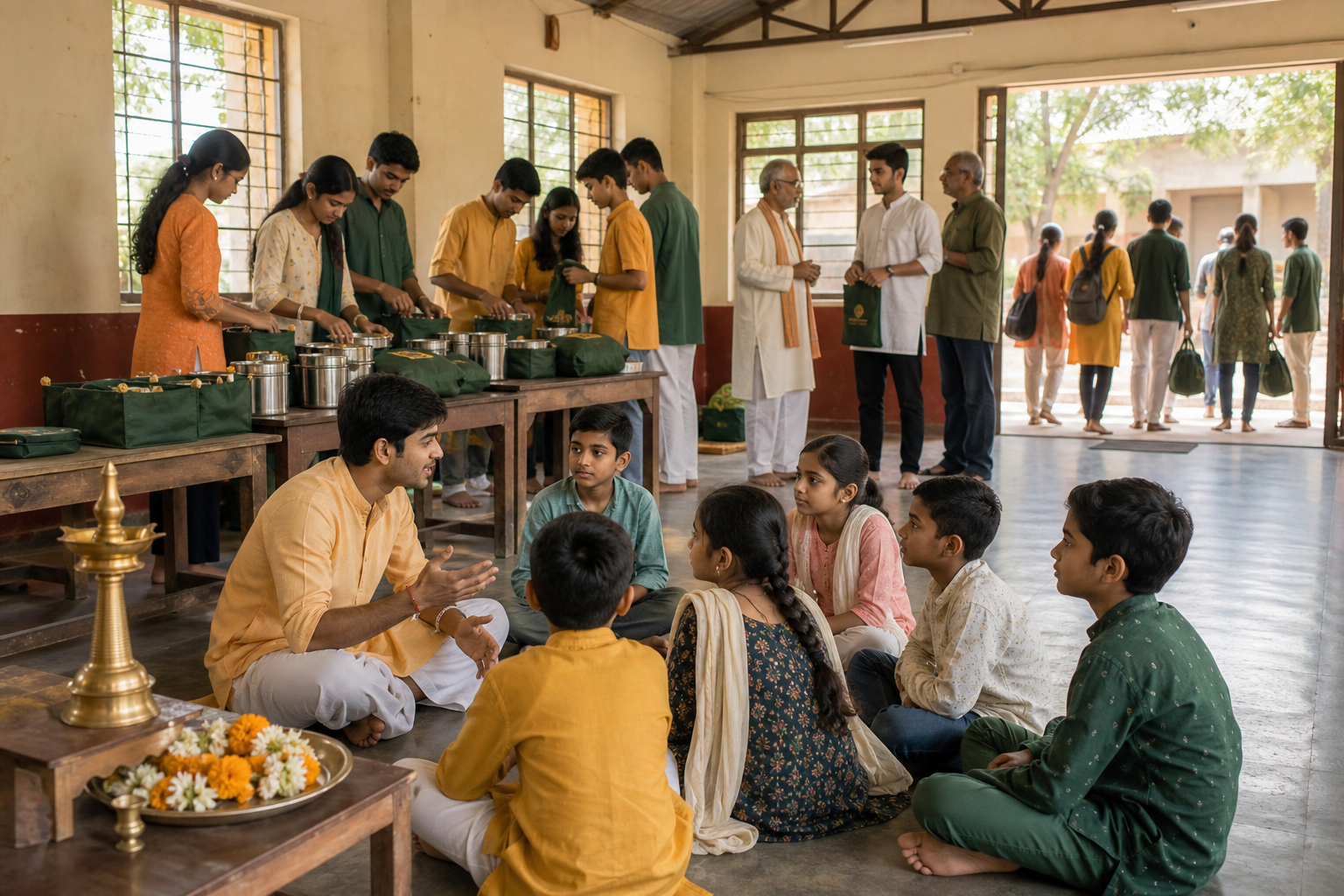
A Bal Sanskar Kendra, a satsang, a service activity and a youth gathering shouldn’t function as unrelated events. Their value grows when each prepares participants for the next kind of responsibility.
- Bal Sanskar Kendras provide the foundation. Children encounter Dharmic values in language and forms they can understand.
- Satsang provides continuity. Families and volunteers return to a dependable community rhythm instead of meeting only for festivals or crises.
- Dharma charcha develops understanding. Participants learn to ask what a principle means, how it is interpreted and how it applies to conduct.
- Seva turns values outward. Compassion, duty and discipline become visible through work that meets a real need.
- Youth responsibility sustains the cycle. Young participants progress from attendance to planning, facilitation, mentoring and accountable leadership.
When you inspect a local plan, look for the missing link. A children’s class without a route into wider community life can become another lesson to attend and forget. Discussion without service can remain abstract. Service without reflection can lose its Dharmic purpose. A youth wing without real authority can become a source of volunteers for tasks chosen entirely by adults.
Ask the organiser a direct question: “What can a participant grow into here?” A credible answer should describe increasing understanding, contribution and responsibility. It shouldn’t end with attendance.
Make every Bal Sanskar Kendra worthy of parental trust
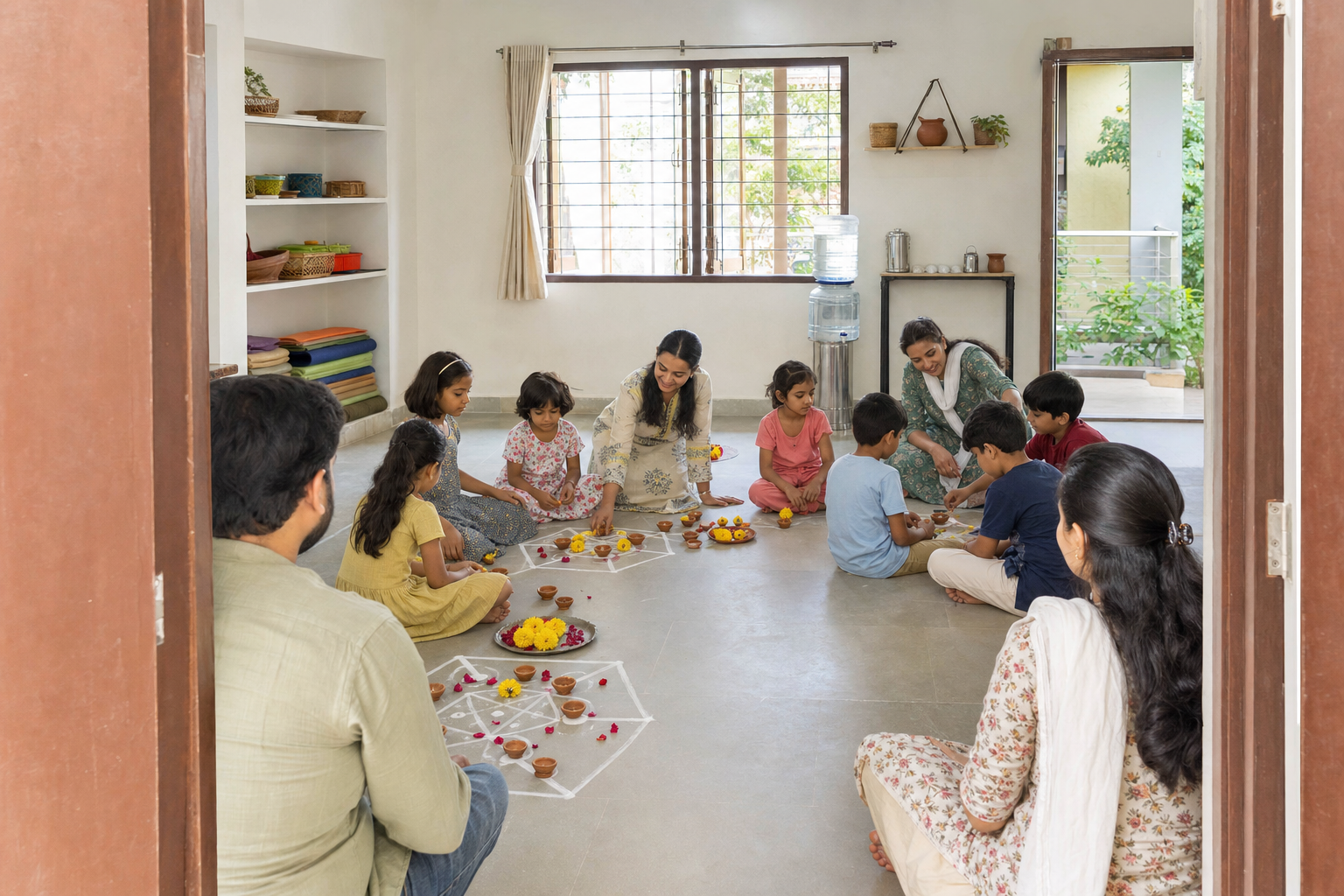
The words Bal Sanskar communicate an intention to cultivate values in children. Intention alone is not a curriculum, however. Parents should be able to see what will be taught, who will teach it and how the child’s welfare will be protected.
Before enrolling a child or helping to open a Kendra, request clear answers on these points:
- Learning aims: What should children understand or be able to practise after participating? A list of topics is less useful than a statement of expected habits, knowledge and conduct.
- Age suitability: Is the material adapted for different levels of maturity, or is the same lecture delivered to everyone?
- Dharmic context: Does the programme explain when a teaching is broadly shared and when a ritual, text or interpretation belongs to a particular sampradaya or regional tradition?
- Teacher preparation: How are instructors selected, briefed and supported? Knowing a subject and knowing how to guide children are different responsibilities.
- Parental visibility: Can parents review the learning outline, observe when appropriate and raise concerns through a named process?
- Child protection: Are attendance, arrival and handover procedures clear? Are there rules for photography, private communication, one-to-one contact, outings and complaints?
- Continuity at home: Are families given a simple way to reinforce the value being discussed through conversation or age-appropriate action?
Safeguarding is not an administrative detail to add after a programme becomes popular. It is part of dharmic responsibility. If an organiser cannot identify who is accountable for a child, how consent is handled or where a concern should be reported, resolve that gap before expanding participation.
Don’t reduce sanskar to memorisation. Recitation and stories can carry memory across generations, but the test is whether a child can connect them to behaviour. Can the child explain why truthfulness matters when lying would be convenient? Can the child recognise seva as service rather than performance? Can the child encounter a difference within Hindu tradition without contempt? Those are signs that learning is becoming judgement.
Turn satsang and dharma charcha into community practice
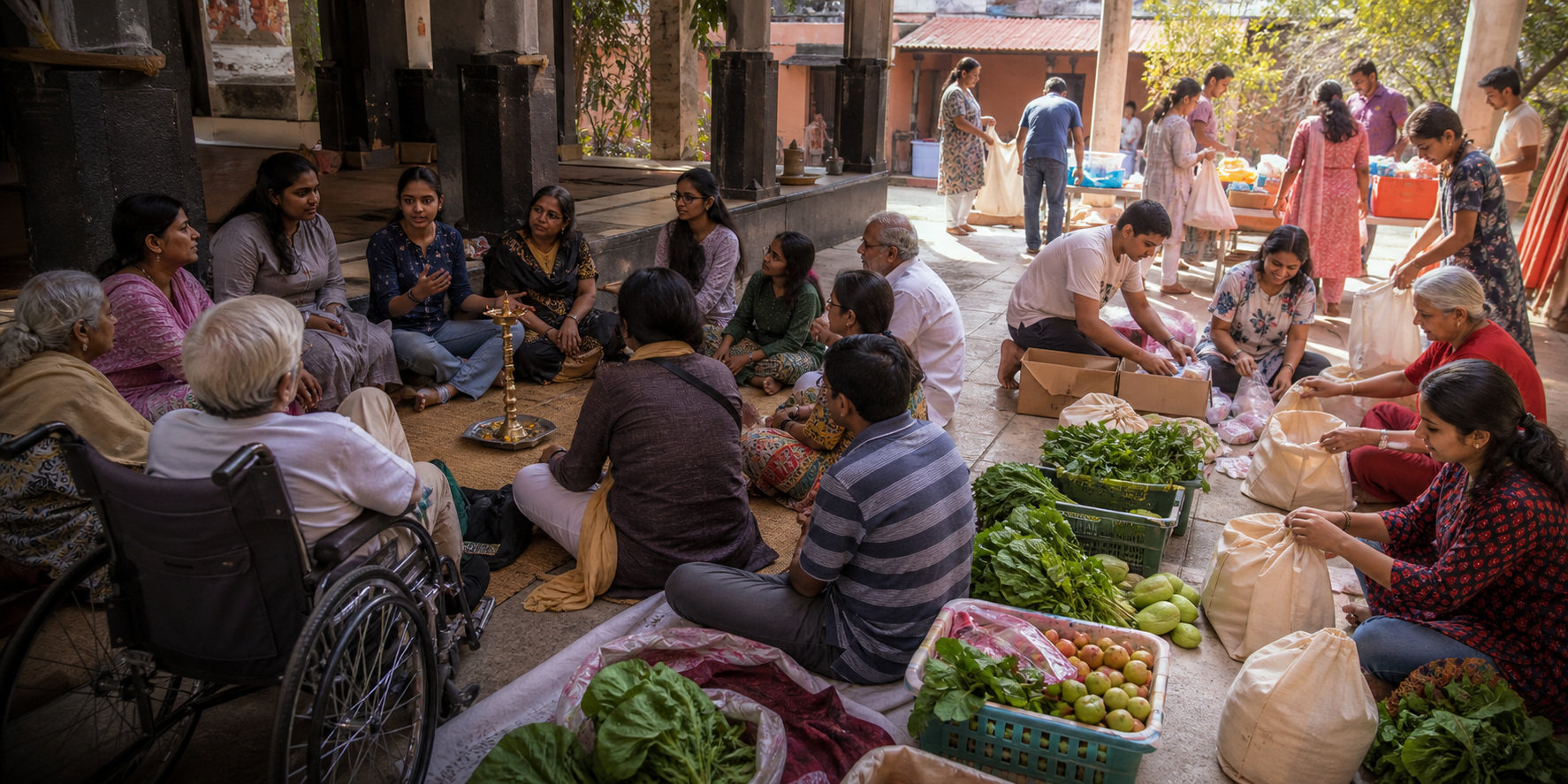
A satsang can generate belonging, but belonging becomes durable when the gathering has a purpose beyond listening. Use the meeting as the community’s operating rhythm: learn together, identify a need, assign responsibility and return to what happened.
- Begin by checking the commitment made at the previous gathering. Name what was completed, delayed or abandoned without hiding failure.
- Ground the gathering in prayer, recitation, a Dharmic teaching or another practice appropriate to the participating tradition.
- Discuss a focused question rather than moving through several loosely connected themes.
- Connect the discussion to a decision, habit or service need that participants can act upon.
- Record who accepted responsibility and how the community will hear the result.
Dharma charcha also needs intellectual discipline. When a contemporary issue is discussed, distinguish among a statement from a primary text, a traditional commentary, a historical claim and a present-day political judgement. They may all deserve attention, but they don’t carry the same kind of authority. Young people become better defenders of Dharma when they can explain that distinction instead of repeating every assertion with equal certainty.
Make room for sincere questions. A participant who asks how a teaching applies, why traditions differ or what evidence supports a historical claim is not necessarily rejecting Dharma. A well-run discussion answers what it can, identifies what requires further examination and refuses to disguise uncertainty as certainty. That approach builds confidence capable of surviving scrutiny.
Choose seva with similar care. Begin with an actual need, not merely an activity that will look impressive. Temple upkeep, educational assistance, support for elders and community collections can all be constructive in the right setting, but the recipient’s dignity, consent and privacy must remain more important than publicity. Give each task an accountable coordinator, a clear scope and a way to report what was accomplished.
A useful test is simple: if photographs and public recognition disappeared, would the work still be worth doing? If the answer is no, reconsider the activity.
Give young people decisions, not just duties
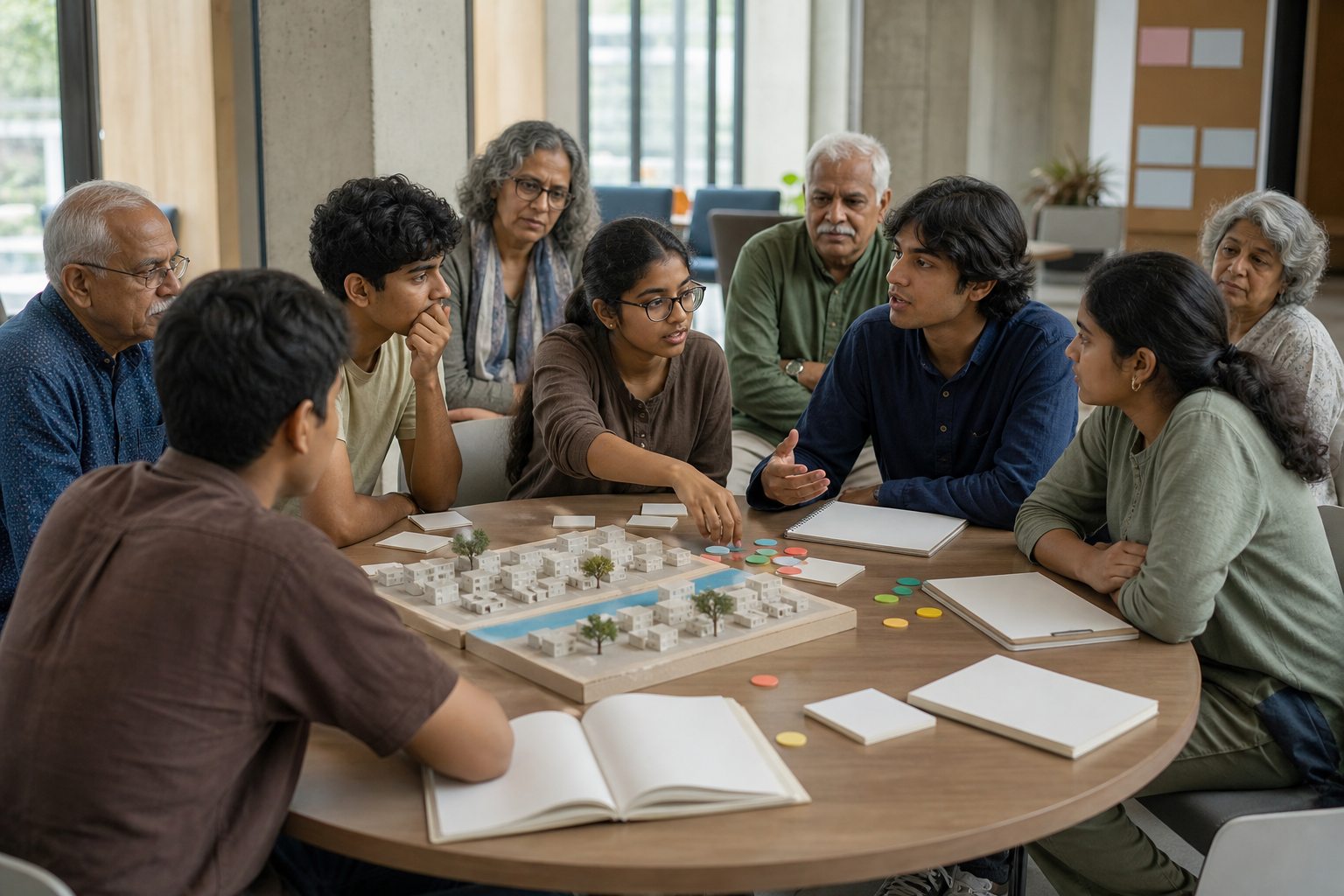
Youth empowerment is often confused with youth presence. Asking young people to fill seats, move equipment or circulate messages may be useful participation, but it doesn’t teach leadership by itself. Leadership begins when a young person can make a bounded decision, explain it and accept the result.
Create a visible progression:
- Participant: The young person attends, asks questions and joins a supervised activity.
- Contributor: The young person facilitates part of a discussion, manages a defined logistical task, prepares material or assists a younger group.
- Coordinator: The young person proposes an activity, divides work, communicates with participants and reports the outcome within agreed boundaries.
- Mentor: The young person helps another participant learn the same responsibilities while remaining accountable to the community structure.
Adults still have essential duties. They set safeguarding boundaries, intervene when legal or financial responsibility is involved and ensure that no young volunteer is left alone with a risk beyond their preparation. Children, confidential information and collected money should never be handed to an enthusiastic volunteer without procedures and accountable adult oversight.
Guardrails should protect young people without making every decision for them. Define the purpose, non-negotiable safety rules and approval points. Then let the youth team choose an approach inside those limits. If adults quietly reverse every decision, the title of “youth leader” has no substance.
After an activity, ask what decision the youth team made, what evidence shows the result, what went wrong and what responsibility participants are ready to accept next. Public praise has its place, but specific feedback is what turns an event into development.
Key takeaways before you commit
- Look for a connected path from children’s learning to satsang, reflection, seva and progressively greater responsibility.
- Ask to see the learning aims, teacher accountability, parental access and child-protection procedures of a Bal Sanskar Kendra.
- Expect dharma charcha to distinguish scripture, interpretation, historical claims and current opinion rather than blending them together.
- Judge seva by the need addressed, the dignity preserved and the follow-through completed, not by publicity.
- Test youth empowerment by identifying which decisions young people may actually make and how they account for the outcome.
- When funds or materials are collected, ask who records them, who approves their use and how participants receive a report.
- Treat the absence of a named coordinator, feedback channel or safeguarding process as a gap to fix before the programme grows.
You don’t need to wait for a large campaign. Put your local pathway in writing, identify the weakest link and improve that link first. A dependable Kendra, an honest dharma discussion, a completed seva commitment or a genuinely youth-led decision will tell you more about the health of the initiative than a crowded programme ever can.
References
