
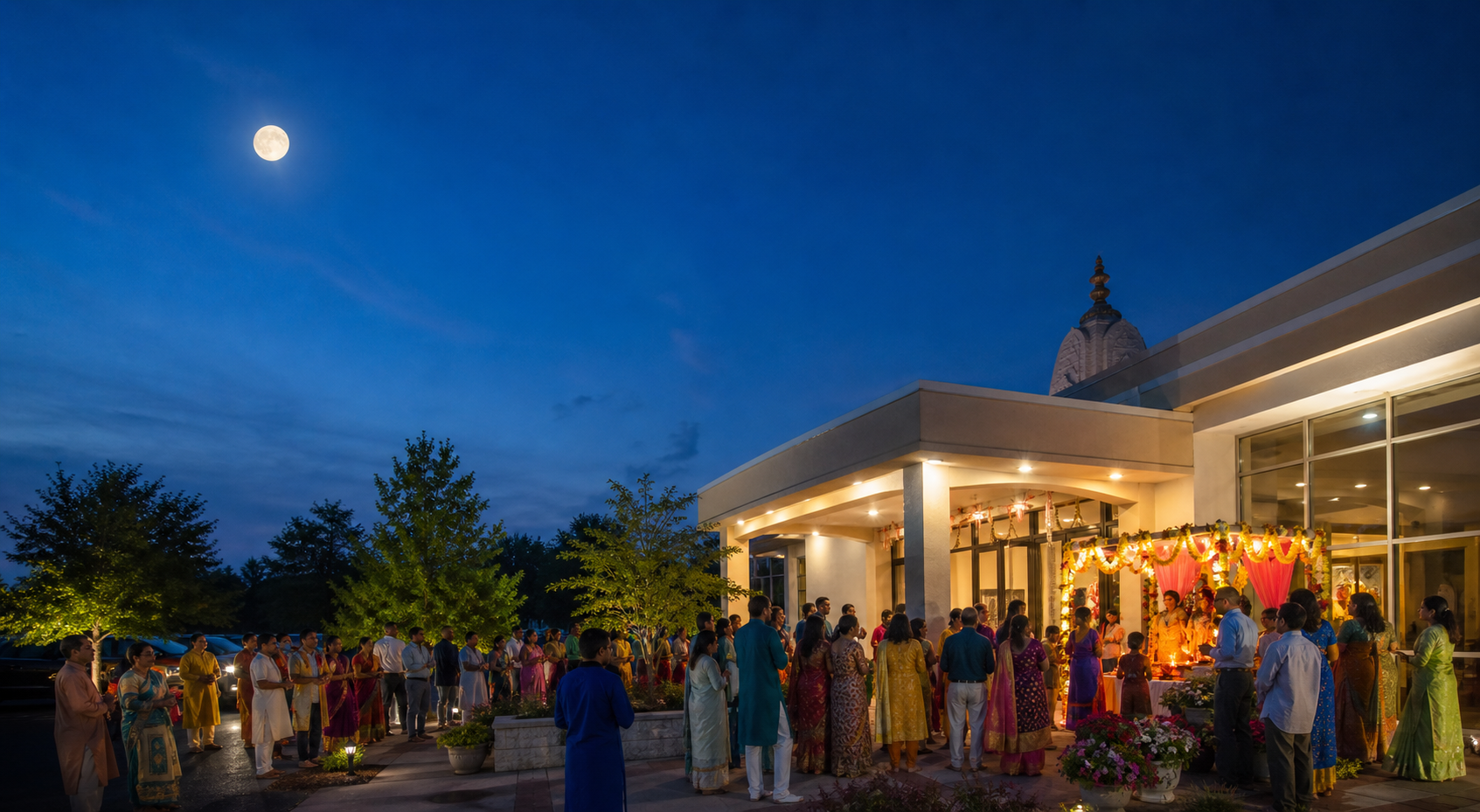
If you arrived looking for a time and address, resolve the date before making travel plans: ISKCON of Central New Jersey held its Chandra Vaahan celebration on August 30, 2026. That date has passed, so it should not be treated as an invitation to an upcoming gathering.
You can still use the confirmed festival name and temple community to look for the next observance. The key is to separate what Chandra Vaahan means from the practical details that only the temple can confirm.
What is confirmed, and what you still need to verify
Three details are safe to use when searching or contacting the temple: the observance was called Chandra Vaahan, it was associated with ISKCON of Central New Jersey, and the documented date was August 30, 2026.
Those details do not establish a street address, start time, duration, registration policy, parking arrangement, accessibility provision, prasadam schedule, photography policy, or future date. They also do not establish that the same Gregorian date will be used again.
- Do not drive to a map result merely because it contains the words ISKCON and New Jersey. Confirm that it belongs to the Central New Jersey community named for the celebration.
- Do not add August 30 as a permanently recurring date. Hindu observances may follow a lunar calendar, while special temple festivals can also be scheduled according to local devotional and practical considerations.
- Do not assume that a celebration is open to walk-in visitors. Ask whether registration, advance notice, or a capacity limit applies.
- Do not infer a complete programme from the festival name. The name identifies its devotional theme, not every ritual or activity that may accompany it.
This distinction prevents the most common planning error: finding a genuine celebration from a previous year and treating it as a current event notice. Before you arrange transport or invite family, obtain a fresh announcement carrying the correct year.
How to understand the name Chandra Vaahan
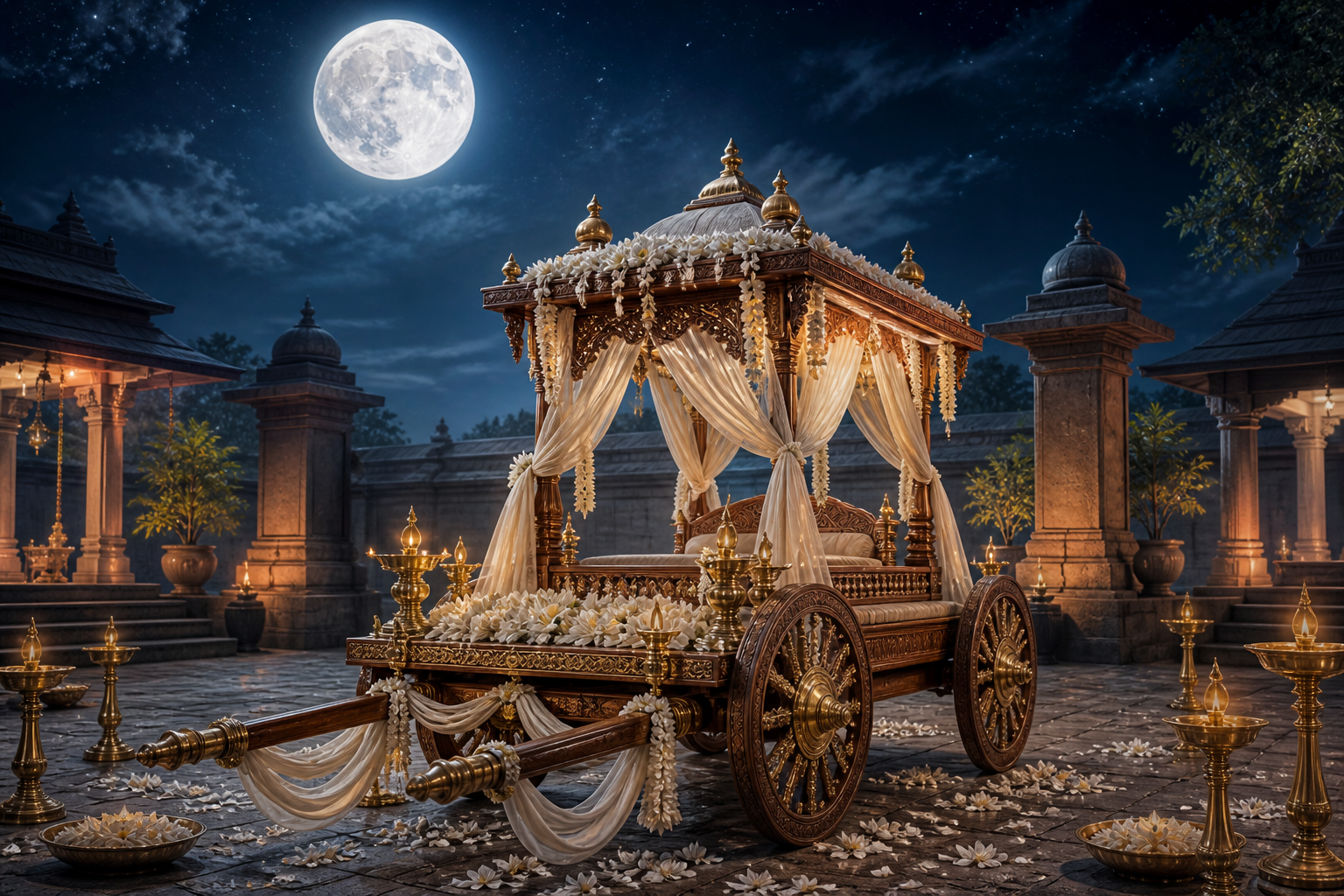
Chandra means the moon. Vaahan, commonly transliterated from Sanskrit as vahana, means a vehicle, mount, or carrier. In temple culture, a vaahan can be a ceremonial conveyance through which a deity is presented for special darshan. Chandra Vaahan therefore points to lunar imagery and a moon-associated ceremonial carrier.
That definition gives you the right starting point, but it should not be stretched into claims about the exact Central New Jersey programme. The name alone does not identify which murti was carried, how the vaahan was constructed, whether a formal procession occurred, or what sequence of worship was followed.
The most helpful devotional lens is darshan. In bhakti practice, darshan is more than looking at religious art. It is an intentional encounter with the deity. A decorated carrier, procession, or special presentation can make that encounter communal and visible beyond the ordinary altar arrangement. The artistry serves worship; it is not merely festival decoration.
Keep three distinctions in mind when you explain Chandra Vaahan to someone new:
- Lunar imagery does not by itself prove that the programme is an astronomical observance.
- The word Chandra does not by itself establish a separate Chandra-puja ritual. The local temple’s announced programme determines what is actually being observed.
- Vaahan should not be reduced to a parade vehicle. Within a temple setting, the carrier has meaning because it supports darshan, seva, and collective devotion.
If you attend a future celebration, look first at how the temple directs attention toward the deity. That will tell you more about the purpose of the observance than the size or complexity of the carrier.
The fastest way to plan your next Central New Jersey visit

A useful inquiry should settle the date, location, access, and devotional programme in one exchange. Work through these steps before committing to the journey:
- Search using both exact names: Chandra Vaahan and ISKCON of Central New Jersey. The temple name matters because results for other ISKCON communities may describe a different programme.
- Check the year attached to every result. A page about August 30, 2026 confirms a past observance, not the next one.
- Find a current communication channel operated by the temple. Use it to ask whether another Chandra Vaahan celebration has been announced.
- Request the exact address, start time, approximate end time, and recommended arrival time. Central New Jersey is a region, not a navigable venue.
- Ask whether admission is open, whether registration is required, and whether the programme is indoors, outdoors, or both.
- Confirm parking, step-free access, seating, footwear arrangements, prasadam, and photography rules according to your household’s needs.
- Save the reply or current announcement with your calendar entry. This gives you something reliable to recheck if the schedule changes.
You can send a concise message such as this: Namaste. I hope to attend the next Chandra Vaahan celebration at ISKCON of Central New Jersey. Has a future date been announced? Please share the exact address, start and approximate end time, registration requirements, parking and accessibility information, whether the programme is indoors or outdoors, and any guidance about prasadam and photography.
If you are travelling with an older relative, a young child, or someone who cannot stand for long periods, ask about seating and the expected movement of the programme before you leave home. If you need step-free access, request the accessible entrance rather than assuming it is the same as the main entrance. These details matter more than arriving with an elaborate offering.
How to attend without guessing the temple’s customs
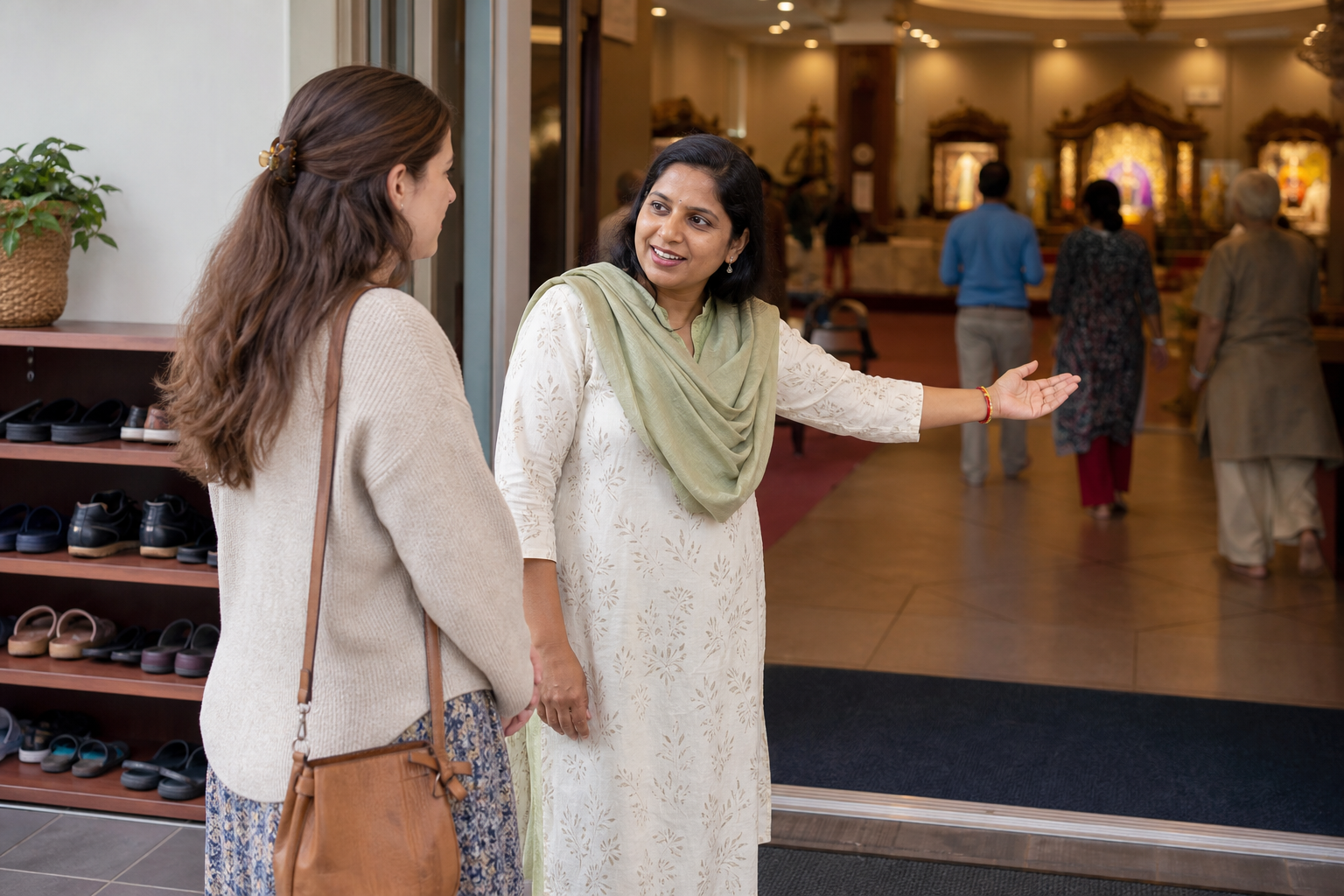
You do not need to know every mantra or gesture to attend respectfully, provided the temple confirms that visitors are welcome. You do need to pay attention to local instructions. Customs can differ even among temples belonging to the same broader tradition.
- Wear clean, modest clothing that allows you to sit or stand comfortably. Be prepared to remove footwear where directed.
- Follow the established darshan queue. Do not move across the path of a deity, ceremonial carrier, priest, or organised procession.
- Do not touch a murti, altar, vaahan, garland, ritual object, or offering unless a priest or authorised volunteer expressly invites you to do so.
- Ask before taking photographs or video. Put the phone away when photography is restricted, and never use the camera in a way that blocks another person’s darshan.
- If arati, kirtan, or another act of worship forms part of the announced programme, you may observe quietly when you do not know how to participate. Respectful attention is better than copying gestures without understanding them.
- Receive prasadam as the temple directs and check ingredients if you have an allergy. Do not assume that the presence of prasadam means a full meal will be served.
- Ask before bringing food, flowers, lamps, or other offerings. Temples may have specific rules about what can be accepted and where it should be placed.
- If you want to help, request an assigned seva. Do not move barriers, decorations, footwear, serving materials, or ceremonial items on your own.
If you are bringing a friend who is unfamiliar with Hindu practice, explain one idea before entering: this is a place of worship, not a performance venue. They can watch, listen, and ask questions at an appropriate moment without pretending to understand everything immediately. That small preparation usually does more for respectful participation than a long list of Sanskrit terms.
For diaspora communities, a temple festival also creates a setting in which children and newcomers can encounter Dharma as a living practice. The useful question is not only what the vaahan looked like, but what forms of attention, service, hospitality, and shared memory gathered around it. Notice who guides the worship, how devotees make space for one another, and how the deity remains the centre of the occasion.
Key takeaways
- The confirmed Chandra Vaahan celebration at ISKCON of Central New Jersey was associated with August 30, 2026; that date should not be reused as a future schedule.
- Chandra means moon, while vaahan means vehicle, mount, or carrier. The name conveys a devotional theme but not the complete ritual programme.
- Before travelling, obtain a current year-specific announcement and confirm the exact address, timing, access, registration, parking, and prasadam arrangements.
- Let the temple define its own customs. Follow volunteers, observe the darshan queue, and ask before photographing, touching ceremonial objects, or bringing offerings.
- Approach a future celebration as an opportunity for darshan and seva, not simply as a display of festival decoration.
Your next step is simple: use the exact temple and festival names to request a future date, then wait for a year-specific confirmation before arranging the trip. When the next Chandra Vaahan is announced, arrive prepared to give your attention to the darshan rather than merely to the novelty of the vaahan.
References
