
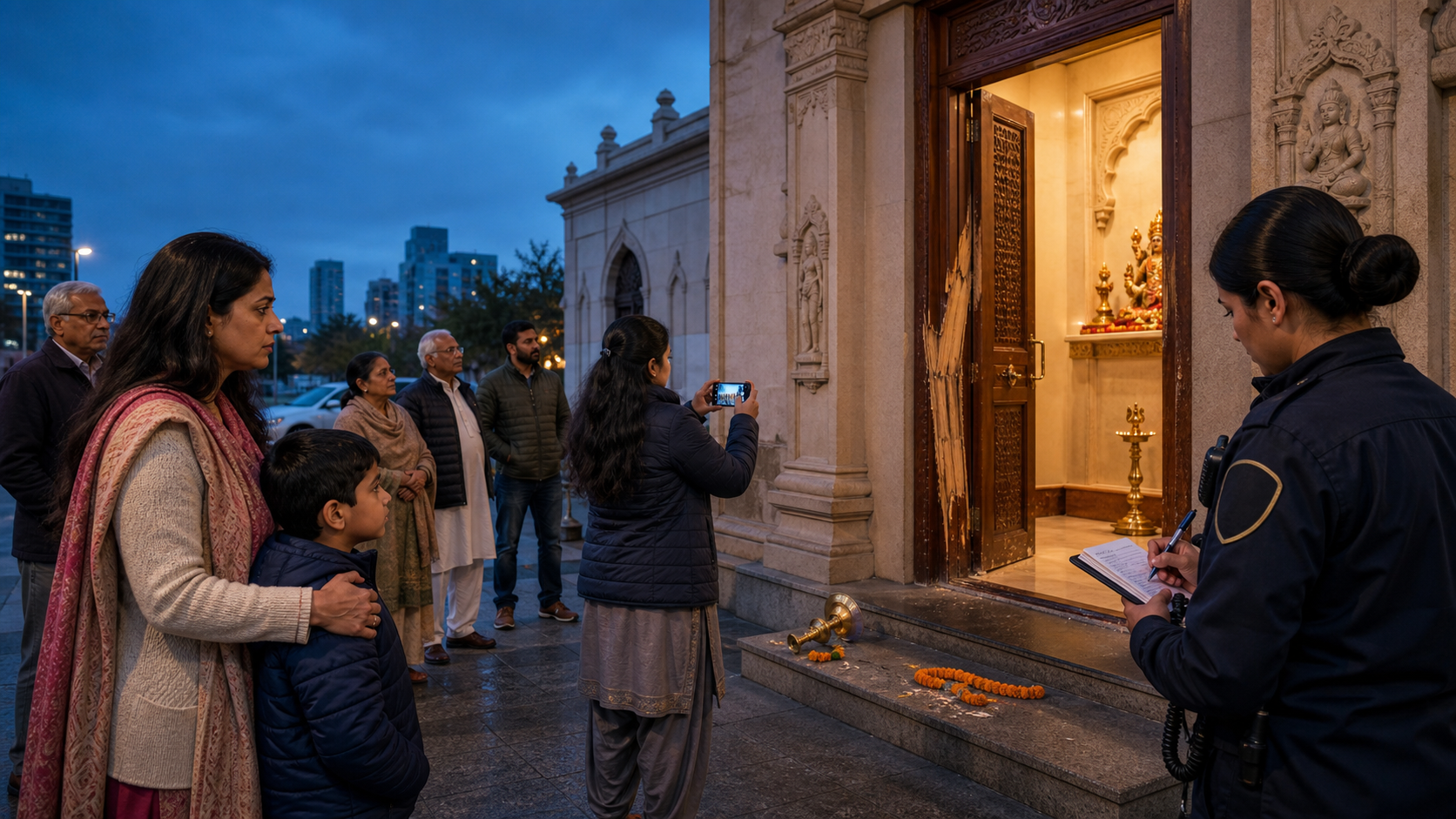
If a temple procession, schoolchild, colleague or online community is targeted for being Hindu, your next decision matters. Anger can be immediate; accountability is built more slowly. Protect people first, then create a record that a police officer, employer, school, platform moderator or lawyer can actually use.
That discipline also protects the truth. Anti-Hindu harm can take the form of physical violence, desecration, targeted intimidation, unequal enforcement or institutional discrimination. It can also be a crude insult that is morally ugly but not a crime. If you distinguish those categories instead of collapsing them, you make the serious cases harder to dismiss.
Key takeaways
- Move people out of danger before gathering evidence or confronting anyone.
- Describe the observable act, the harm and the evidence of anti-Hindu bias separately.
- Preserve original photographs, videos, messages, witness details and institutional correspondence.
- Report through every relevant channel, but keep the public account narrower than the private evidence file.
- Ask for a reference number, the rule being applied, the requested remedy and the final decision in writing.
- Challenge unequal treatment through documented comparisons, not assumptions or collective blame.
Call the harm what you can prove
Use anti-Hindu incident as a broad working description until the facts and applicable law are clearer. A hate crime is a narrower legal classification. It ordinarily requires conduct that is already an offence, together with evidence that hostility toward the victim’s Hindu identity, practice, institution or sacred symbols influenced that conduct. The precise test and available remedies depend on the jurisdiction.
Discrimination is different again. It concerns unequal treatment in a setting such as employment, education, housing, public services or institutional participation. A policy may discriminate openly, or a neutral-looking policy may be enforced selectively. A local lawyer or qualified civil-rights organisation can determine which legal protections apply to your circumstances; public anger cannot substitute for that assessment.
- Conduct: What exactly happened – assault, threat, vandalism, exclusion, disciplinary action, service denial, harassment or insulting expression?
- Target: Was the act directed at a person, mandir, murti, procession, festival, religious practice or community organisation?
- Bias indicator: Were anti-Hindu words used? Were Hindu symbols singled out? Did the timing, pattern or choice of target reveal a religious motive?
- Harm: Was anyone injured, frightened away, denied an opportunity, subjected to discipline, or left with damaged property?
- Proof: Which parts are visible in original evidence, which came from witnesses, and which remain your interpretation?
Mixed motives must remain visible. In Shillong, at least 31 vehicles were reportedly vandalised as Assamese and Bengali residents and workers faced stone-pelting and physical assault; images of Netaji Subhas Chandra Bose and Swami Vivekananda were also reportedly damaged. Ethnic, regional, political and religious hostility may overlap in such an episode. Record the indicators for each possible motive instead of forcing everything into a single category before the evidence supports it.
The same care applies to provocations around worship. When an unidentified person reportedly threw eggs near a Ganesh Murti during a procession in Mazgaon, the observable facts were the act, its location and its effect on devotees. Whether it legally amounted to desecration, public-order misconduct or a bias offence would depend on intent, evidence and local law. Write down what witnesses saw before attaching the strongest available label.
Do not treat criticism as violence merely because the criticism is offensive. A pamphlet distributed in Hosur reportedly questioned practices such as breaking coconuts, wearing flowers, lighting camphor and using sambrani. Its claims can be rebutted, and its distribution may warrant scrutiny if it formed part of targeted harassment or violated a rule governing the location. But disagreement with a Hindu practice is not automatically a hate crime. That distinction gives you credibility when actual threats, assaults or discriminatory decisions occur.
Preserve evidence before the story is rewritten
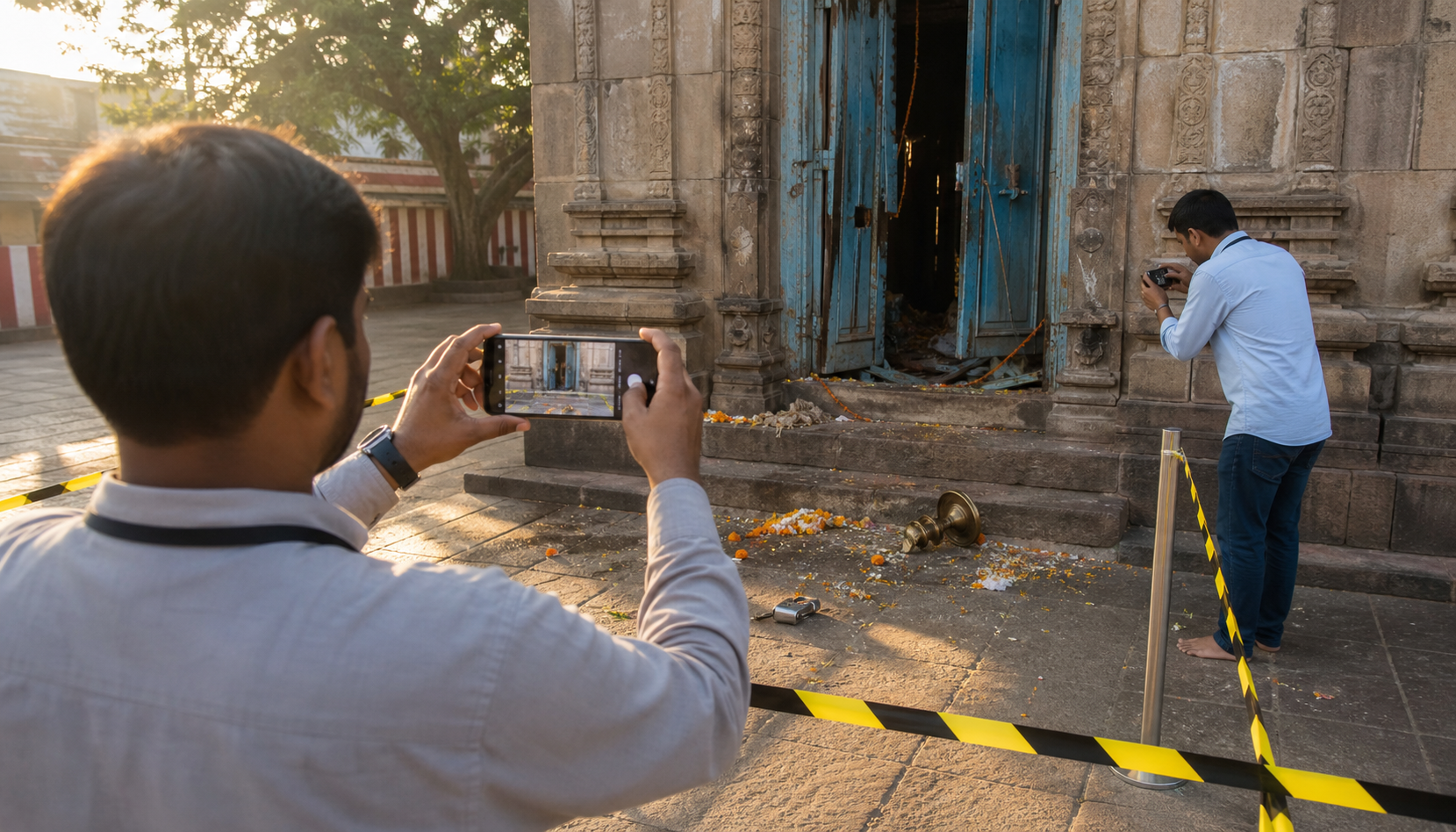
Memories diverge, posts disappear and edited clips lose context. Begin an incident file as soon as it is safe. Keep facts, interpretation and public advocacy in separate layers so that investigators and decision-makers can see what is known without having to untangle exaggeration.
- Protect people. If danger is continuing, move away and contact the appropriate emergency service. Do not remain near an attacker to obtain better footage, enter a restricted area, touch possible evidence or provoke another confrontation.
- Keep original files. Preserve photographs, videos, audio and messages in their original form with available metadata. Do not crop, annotate, compress or forward the only copy. Make working copies for captions and public use while retaining the originals separately.
- Write a contemporaneous log. Record the date, local time, exact place, sequence of events, words you personally heard, people present and actions taken. Mark each statement as something you observed, something a named witness reported, or an inference.
- Capture the whole context. Where safe and lawful, preserve wide views of the location as well as close views of damage. For an online incident, save the account name, full URL, visible date, surrounding thread and platform. A screenshot of one sentence may hide whether it was a threat, quotation, reply or fabrication.
- Ask witnesses for consent. Record names and secure contact details privately. Let a witness describe events in their own words. Do not circulate the person’s identity merely to make a social-media claim appear stronger.
- Collect institutional records. Save complaint forms, emails, attendance records, policy extracts, security notices, moderation decisions, case numbers and written refusals. An institution’s own words often matter as much as the original incident when unequal treatment is alleged.
- Protect sensitive people. Redact home addresses, phone numbers, identification documents, medical information and details that could expose children, victims or vulnerable witnesses. Give unredacted material only to authorised investigators, counsel or another appropriate recipient.
Create an evidence index rather than sending an unexplained folder. Give each item a neutral label, note who created or received it, and record where the original is kept. If a copy is edited for privacy, mark it as a redacted copy. Never ask a witness to repeat language supplied by an organiser; matching scripts can undermine reliable testimony.
Report widely, but speak publicly with precision
A single complaint creates a single point of failure. Use parallel channels that match the harm. Violence, threats and property damage belong with the appropriate law-enforcement or emergency authority. Workplace, school, housing and membership discrimination should also enter the institution’s formal grievance system. Online abuse may require a platform report, while a civil-rights organisation or lawyer may help preserve deadlines and challenge an inadequate response.
- For police or public authorities: provide a short chronology, identify immediate safety risks, list the evidence and explain the indicators of anti-Hindu bias. Ask for the complaint or case reference and whether the possible bias component has been recorded.
- For an employer, school or association: identify the policy that appears relevant, describe the adverse treatment, attach comparable records where available and request a specific remedy.
- For a platform: report the exact content under the closest applicable rule. Preserve it before reporting because removal may make later verification difficult.
- For community documentation: share only what the affected person has authorised. A community archive should support the victim, not turn the victim into permanent public content.
- For legal review: provide originals, the evidence index, every submitted complaint and every response. Do not conceal facts that appear inconvenient; counsel needs the whole record.
Complaint formula: On [date and local time] at [place or platform], [person or institution] carried out [observable act] affecting [target]. We believe anti-Hindu bias may be relevant because [specific words, symbols, pattern or comparator]. The attached evidence consists of [itemised material]. We request [protection, evidence preservation, investigation, correction, reinstatement, policy review or other concrete remedy], together with a reference number and written response.
Keep the public version shorter. State what is verified, what is alleged, what authority has been notified and what remedy is being requested. Do not publish an unconfirmed suspect’s address, employer or relatives. Do not transform a dispute with identifiable people into an accusation against an entire religious, ethnic or political community.
Independent records become especially important when official handling is itself disputed. In Bengaluru’s Basavanagudi area, video was reported to show Hindu youths being attacked during an Eid-Milad procession, while Hindu victims and protesters were subsequently reported as having been booked for communal enmity and obstruction. A circulating clip cannot by itself establish the complete sequence or legal responsibility. Preserve the full footage, obtain the complaints and case references, identify the alleged act attributed to each person, and seek qualified legal review. A slogan about police bias is not a substitute for challenging a particular decision on the record.
Demand equal treatment without feeding escalation

The most effective equality claim is concrete: the same rule, the same evidence threshold and the same remedy for comparable conduct. Do not begin with a broad claim that an institution is anti-Hindu. Begin with the decision it made and make it explain that decision.
- Which written rule governed the event, expression, clothing, leave request, facility use, complaint or disciplinary action?
- Was that rule communicated before the incident, and was it applied as written?
- How has the institution handled materially comparable conduct involving another religious or non-religious group?
- Who made the decision, who can review it and what evidence did each decision-maker consider?
- What correction would restore equal treatment: protection, access, reinstatement, removal of a penalty, repair, apology, policy change or renewed investigation?
A comparator must genuinely be comparable. A permitted religious holiday is not proof that every requested event must be permitted regardless of size, safety or scheduling. But if the same facility, rule and operational conditions produced different outcomes, document that difference and ask the institution to justify it. Precision turns a grievance into an answerable question.
Persistent ridicule can still be discriminatory even when a single remark is not criminal. Record frequency, audience, power relationship and consequences. A supervisor repeatedly mocking a Hindu employee’s practice while controlling assignments raises a different issue from a stranger posting an offensive opinion. Focus on conduct and institutional duty rather than trying to outlaw every hostile thought.
Turn incidents into institutional memory
A mandir, student group or community association should not rebuild its response from memory whenever something happens. Maintain a secure incident register with the date, location, conduct, affected person or institution, possible bias indicators, evidence status, authority notified, reference number, response, remedy and permission for public use. Use clear status labels such as alleged, corroborated, officially confirmed and closed so that an early claim is not silently converted into an established fact.
Review that register on a fixed cadence. Look for repeated interference at the same festival, recurring harassment by the same account, multiple complaints to the same institution, unexplained closures or a consistent gap between written policy and treatment of Hindu participants. Patterns should be based on linked incident files, not a collection of screenshots stripped of dates and outcomes.
Assign responsibilities before a crisis: safety coordination, evidence custody, family or victim liaison, institutional follow-up and authorised public communication. The people holding those roles should know when to involve police, counsel, medical support, safeguarding personnel or platform administrators. They should also know when silence protects an investigation or a vulnerable person better than immediate publication.
Dharmic courage is disciplined protection, not retaliatory anger. Ahimsa does not require you to erase hostility or accept unequal treatment. It requires you to resist without manufacturing guilt, endangering innocents or becoming unjust yourself. Collective blame, threats and attacks on another community’s place of worship are wrong in themselves and can destroy the credibility of a legitimate Hindu grievance.
Do not wait for the next incident to improvise. Place a blank complaint template, evidence checklist, secure intake method and contact tree in your mandir or association’s response file now. When trouble comes, protect people, preserve the facts and make every institution answer clearly for what it does.
References
