
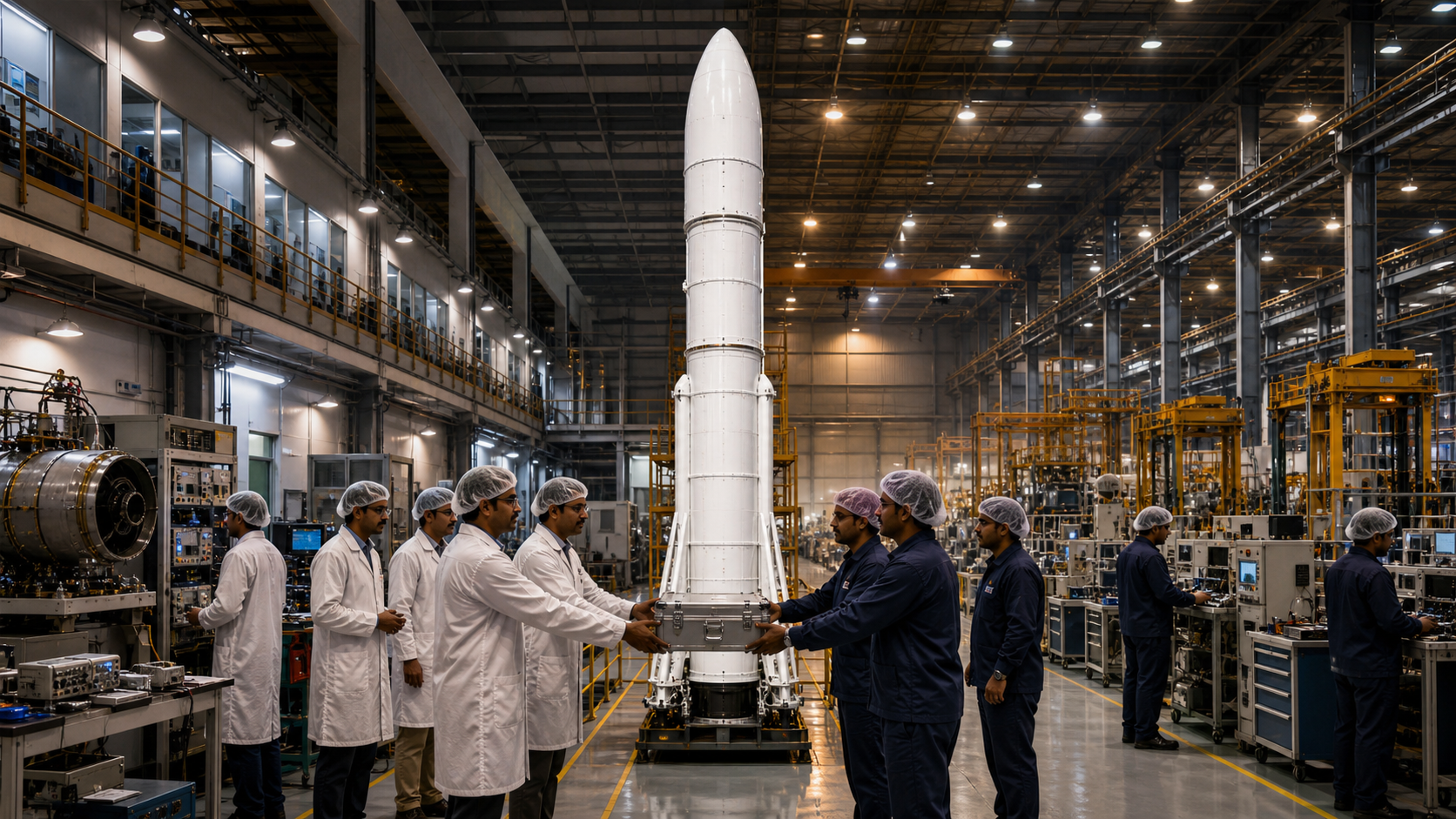
If you are trying to decide whether the SSLV handover is a genuine leap in Bharat’s space capability, do not stop at the transfer agreement. Ask a harder question: can HAL deliver a launch-ready vehicle, prove that every critical requirement has been met, resolve unexpected problems, and then do it again without ISRO quietly carrying the difficult parts?
That is the standard by which the next two years should be judged. On 10 September 2025, ISRO handed the complete Small Satellite Launch Vehicle to HAL, which secured the technology-transfer rights for Rs 511 crore. SSLV is a three-stage launcher designed to place satellites weighing about half a tonne into low orbit. The transaction has been presented as the first transfer of an entire launch vehicle from a space agency to a company.
The deal changes who must master the whole launcher

Indian companies have supplied space hardware for years. Supplying a component, however, is fundamentally different from taking responsibility for a complete vehicle. A component maker works within a specification established and controlled elsewhere. The organisation responsible for the launcher must keep thousands of such decisions coherent across design revisions, manufacturing, inspection, testing, transport, integration and launch preparation.
The legal right to build SSLV is therefore only the visible layer of the transfer. The real asset is the operating system behind the rocket: controlled technical data, qualified processes, trained people, accepted suppliers, test interpretation, configuration discipline and the authority to deal with deviations. If those elements remain dependent on informal access to ISRO veterans, ownership will have moved farther than capability.
The strategic logic is sound. Routine launcher production should migrate to industry so that ISRO can concentrate more of its attention on research, Gaganyaan and next-generation launch vehicles. But “routine” must not be mistaken for easy. In aerospace, routine means a difficult process has become controlled, documented and repeatable. It does not mean the process can tolerate shortcuts.
This gives you a useful distinction whenever a new milestone is announced. “HAL manufactured SSLV hardware” describes production activity. “HAL independently delivered an accepted vehicle” would describe transferred capability. The second claim requires much more evidence than the first.
What HAL must inherit that drawings cannot capture
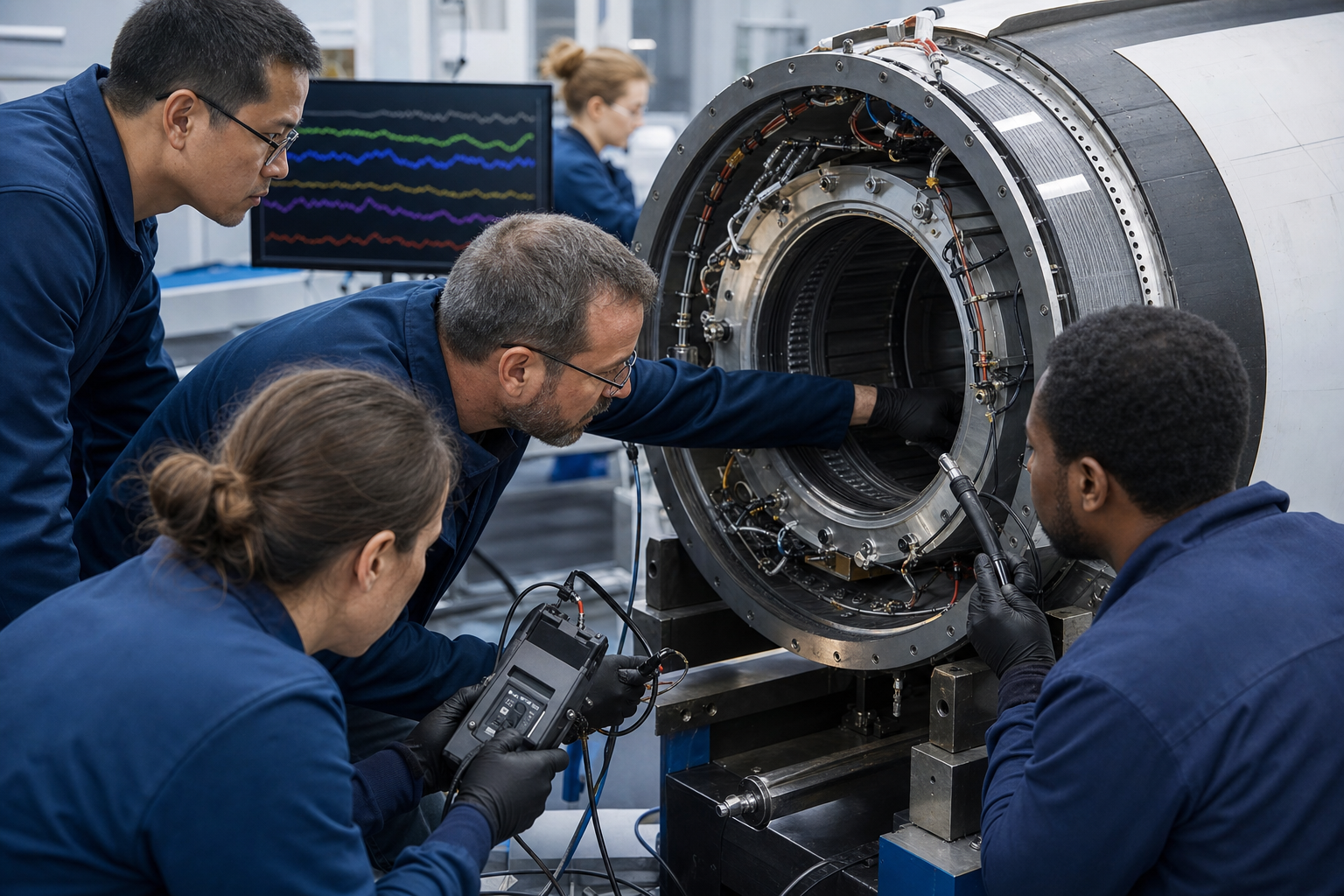
A rocket cannot be transferred like a machine purchased from a catalogue. Drawings define what the product should be, but they do not automatically reproduce the judgement accumulated while developing it. A credible SSLV handover must carry at least six connected forms of knowledge across the organisational boundary.
- A controlled product baseline. HAL needs the correct design revisions, bills of material, interface definitions, software-controlled items, inspection requirements and approved alternatives. It must also know which changes can be authorised locally and which require escalation. A drawing archive without configuration authority is a library, not a production system.
- Manufacturing process knowledge. Written instructions must capture the sequence controls, tooling conditions, handling rules and inspection points that make output consistent. Workers also need supervised practice. If acceptable hardware depends on an expert recognising an unwritten warning sign, that judgement has not yet been institutionalised.
- Test competence. Running a test and understanding its result are different capabilities. HAL must be able to prepare the hardware, validate the test setup, recognise questionable data, distinguish an instrumentation problem from a product problem, and produce an auditable acceptance record.
- Supplier control and traceability. A complete vehicle depends on material certificates, qualified vendors, controlled substitutions and records that connect each accepted item to its history. When a supplier changes a process or a part becomes unavailable, someone must have both the knowledge and authority to evaluate the consequence.
- Non-conformance and change management. Real production never consists only of perfect parts following perfect instructions. The decisive skill is dealing with departures: documenting them, identifying their effect, deciding whether repair or replacement is justified, and preventing recurrence. If every unusual case returns to ISRO for judgement, HAL is still operating as a contractor.
- Vehicle-level and launch-campaign integration. Individual stages and subsystems can pass their tests while the assembled launcher still presents interface or operational problems. HAL’s responsibility must eventually extend from factory work to the evidence needed for vehicle acceptance, launch preparation and mission-readiness decisions.
These capabilities are interdependent. A technically correct manufacturing step is not enough if its record cannot be traced. A passed test is not enough if the configuration tested differs from the configuration intended for flight. A rapid decision is not enough if no one knows who had authority to make it.
For that reason, the most revealing transfer documents will not be ceremonial certificates. They will be the controlled procedures, decision matrices, qualification records and acceptance packages used during actual production. You may never see those documents publicly, but official updates can still disclose who performed the work, who approved deviations and who accepted the final evidence.
Two years should be measured by gates, not by the calendar

Can knowledge accumulated over a long development effort be transferred in two years? It can be enough time to establish a bounded industrial capability, but the date alone proves nothing. The meaningful unit of progress is an execution cycle in which HAL performs the work, encounters real decisions and demonstrates that it can close them correctly.
A credible transfer sequence would move through four practical gates:
- Demonstration: ISRO leads while HAL personnel observe, perform assigned tasks and record not only the procedure but also the reasons behind consequential decisions.
- Assisted execution: HAL leads the work, prepares the records and proposes dispositions, while ISRO reviews and approves them.
- Shadowed autonomy: HAL executes the process and exercises its assigned authority. ISRO observes and intervenes only when a predefined trigger is reached.
- Independent acceptance: HAL produces the vehicle and its complete evidence package, resolves problems through the agreed governance system, and demonstrates readiness without routine dependence on ISRO personnel.
This sequence matters because classroom instruction can transfer explicit information, while actual builds expose tacit knowledge. The questions that appear obvious after years inside a programme may never occur to a new team until hardware, test data and schedule pressure arrive together.
One successful build would be encouraging, but it would not settle the issue. Success could still depend on borrowed specialists, unusually close supervision or components prepared before the transfer. Repeat production is the stronger test because it reveals whether procedures, suppliers, skills and decision rights survive personnel changes and ordinary variation.
SSLV is also safety-critical hardware. Schedule pressure cannot be allowed to replace evidence, and independence should not be confused with refusing help. HAL should escalate a genuinely novel problem when necessary. The goal is a defined escalation path, not an informal arrangement in which responsibility becomes unclear precisely when the risk is greatest.
Commercial success depends on repeatability, not possession
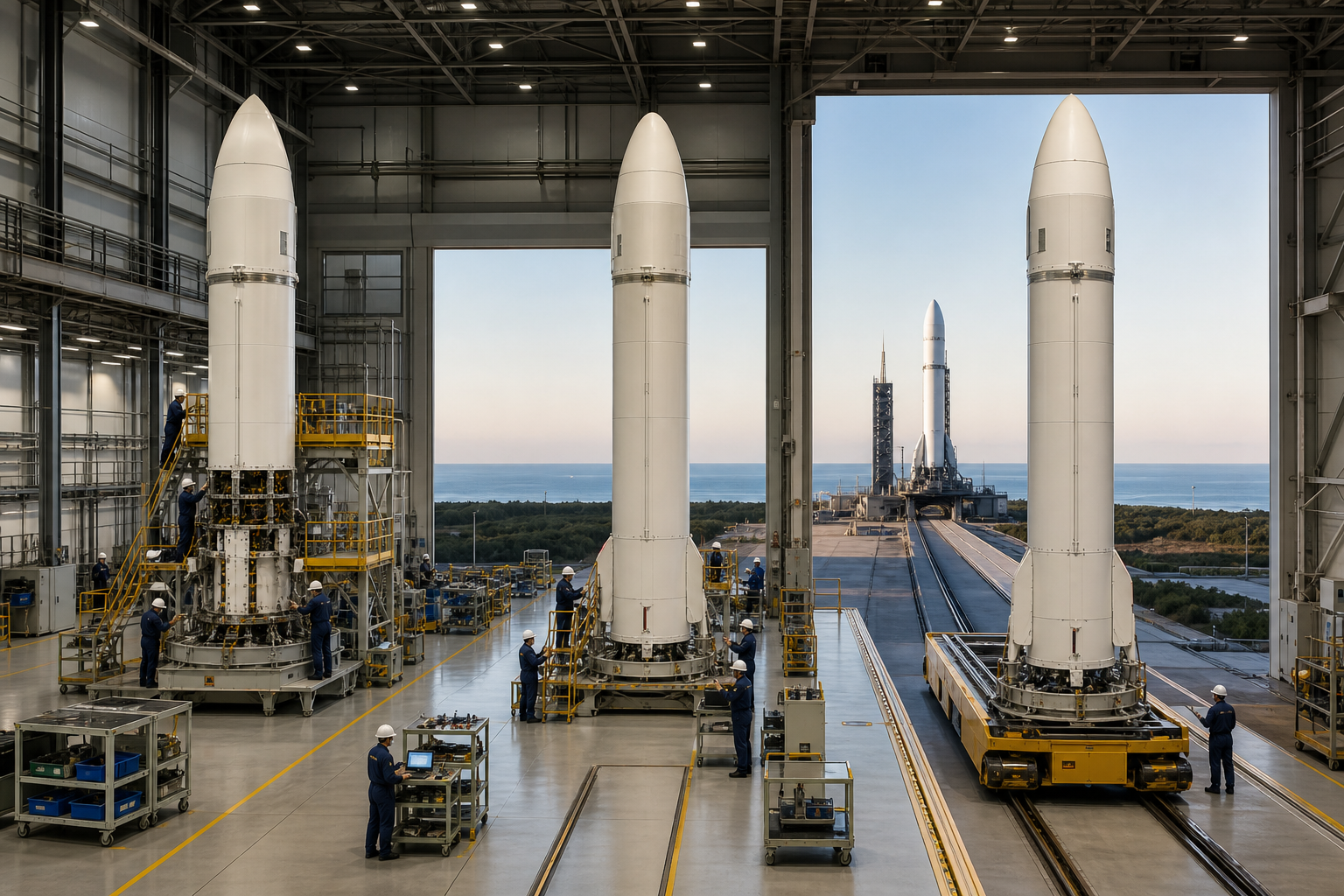
India wants a much higher launch tempo, with an ambition of a rocket leaving the pad roughly every fortnight and a national space economy worth $44 billion by 2033. Those ambitions explain why industry must assume more operational responsibility. ISRO cannot remain the indispensable operator behind every launcher while simultaneously pursuing harder research and human-spaceflight goals.
A cadence target, however, is not a manufacturing achievement by itself. Launch frequency is an outcome of the entire system: orders, available components, supplier lead times, factory flow, testing, vehicle acceptance, launch-site preparation and mission scheduling. Accelerating one factory operation will not create a fortnightly rhythm if another part of the chain remains serial or dependent on a small group of specialists.
When you encounter claims that the transfer is complete or that SSLV is commercially ready, look for operational evidence rather than broad adjectives:
- Has HAL produced flight hardware under its own controlled process, or mainly assembled items prepared under the earlier system?
- Can HAL close routine non-conformances and manage approved changes within clearly assigned authority?
- Are qualified suppliers delivering repeatably with traceable records?
- Does vehicle acceptance rely on a normal review structure, or on exceptional intervention by ISRO experts?
- Are production time, rework, test outcomes and launch readiness becoming predictable across successive vehicles?
- Is ISRO’s operational burden actually declining as HAL’s responsibility grows?
The competition for the transfer also deserves attention. HAL prevailed over two consortia, one led by Alpha Design Technologies and backed by the Adani Group, and another led by Bharat Dynamics. That contest indicates industrial interest beyond a single public-sector company. Bharat will gain more if the winning arrangement develops a broad, accountable supplier base than if knowledge merely shifts from one large state institution to another.
HAL should therefore be judged as the integrator of an industrial capability, not merely as the final assembler bearing the programme’s name. A strong integrator controls configuration and quality while enabling competent suppliers to perform defined work. A weak one concentrates paperwork at the top but remains dependent on the original developer for technical judgement.
Key takeaways
- The SSLV transaction becomes strategically meaningful only when HAL can deliver accepted vehicles without routine ISRO intervention.
- Drawings and licences are necessary, but process knowledge, supplier qualification, configuration control and anomaly resolution determine whether the launcher is reproducible.
- The two-year window should be assessed through demonstrated production and acceptance gates, not by the passage of time or the number of ceremonies completed.
- A single successful vehicle cannot prove industrial maturity; repeat performance reveals whether capability resides in the system rather than in borrowed experts.
- Commercial launch cadence depends on the entire production-and-operations chain. It cannot be inferred from factory ownership alone.
- Bharat benefits most when HAL’s leadership frees ISRO for advanced work while creating a durable aerospace ecosystem beneath the prime contractor.
The next time an SSLV transfer milestone appears, look for verbs with accountable subjects: who manufactured, who tested, who approved, who resolved and who accepted. Those details will tell you more than the phrase “technology transfer” ever can.
If HAL can answer those questions through repeated flight-ready vehicles, the handover will have done more than move a rocket programme. It will have converted public scientific knowledge into an enduring national industrial capability while giving ISRO room to pursue the next frontier. That is the outcome worth watching.
References
