

If you are arranging puja, shraddha, leave from work, or a family vrat in October 2026, put the confirmed dates into your calendar now – but do not treat a date alone as the complete instruction. A Hindu observance follows tithi, place, sampradaya, and family practice as well as the civil calendar.
The dated information available here covers October 1-3 and is framed for Indian Standard Time (IST). Use it as the beginning of your monthly plan, then verify the applicable timings and the remainder of the month with the panchang followed by your household or temple.
Confirmed observances for October 1-3, 2026
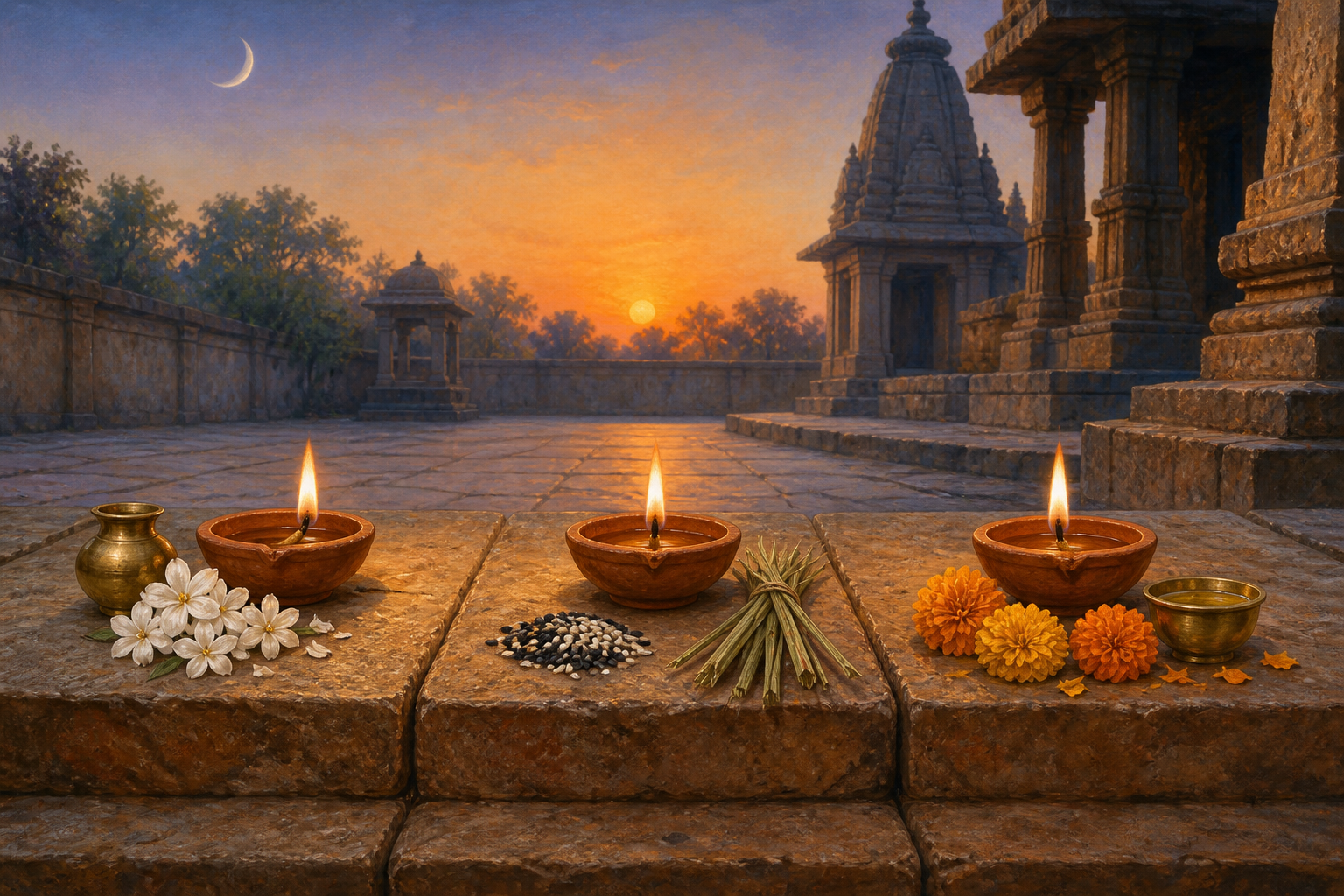
The opening days of October move through remembrance of ancestors, a sacred literary commemoration, and Mahalakshmi worship. These are different kinds of observance, so they should not all be planned as if they were public festivals.
| Date in IST | Observance | What you should verify |
|---|---|---|
| October 1, 2026 | Pitru Paksha Shraddha fortnight: Panchami Shraddha | Confirm that Panchami is the relevant ancestral tithi in your family practice, who will conduct the rite, and the local ritual time. |
| October 2, 2026 | Jnaneshwari Jayanti | Ask your temple or spiritual community whether it is holding a recitation, discourse, satsang, or another form of commemoration. |
| October 3, 2026 | The 16-day Mahalakshmi observance | Check what October 3 represents in the calendar you follow before choosing the duration or rules of a vrat. |
This is not a complete October calendar. A blank date after October 3 should not be read as a day without a festival or vrat. It means you still need a full local panchang before making commitments for the rest of the month.
Why your local panchang must settle the timing

A Gregorian date runs from midnight to midnight. A tithi does not. It is a lunar division that may begin or end partway through a civil day, and observance rules can depend on whether the tithi is present at sunrise or during another ritually relevant period. That is why two respectable calendars can place emphasis on different civil dates without either one being careless.
The schedule above is based on IST and panchang usage in India. If you live outside India, do not simply copy the Indian civil date and perform the rite at the same clock hour. Your local sunrise, sunset, and tithi boundaries may differ. Consult a panchang calculated for your city or follow the date announced by your local temple.
Family tradition also matters. For Pitru Paksha, identify the ancestral tithi your household actually observes before arranging a Panchami Shraddha. For the Mahalakshmi observance, establish whether your family follows the full cycle, a particular day within it, or another inherited form. The calendar identifies the occasion; it does not replace the ritual instructions of your parampara.
Turn each date into a workable family plan
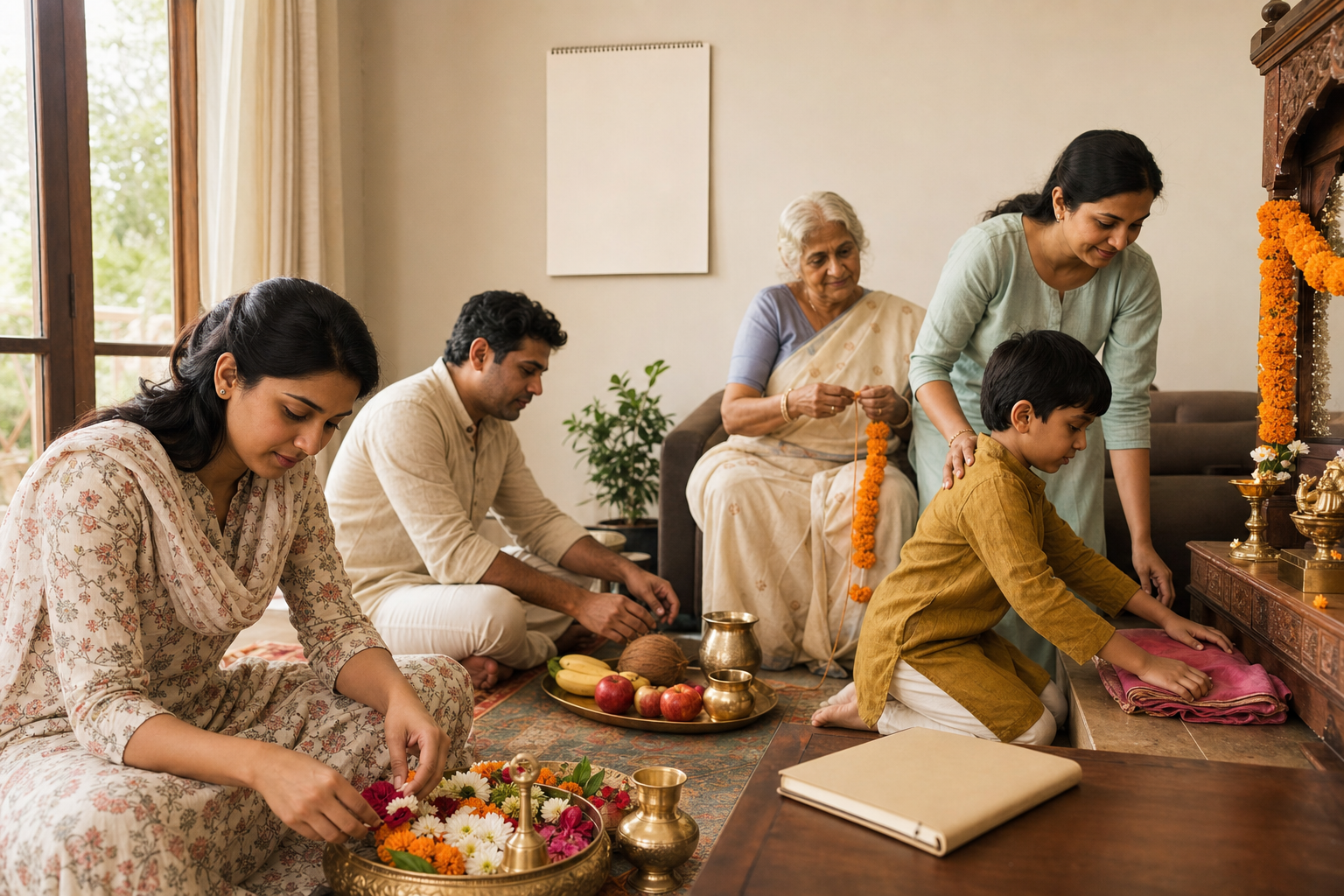
A useful calendar entry should tell you more than the name of the day. Build each observance around the decision that could otherwise cause confusion at the last moment.
- Choose the calendar authority. Record the temple, regional panchang, sampradaya calendar, or family elder whose timing you will follow. This prevents different calendar apps from reopening the question later.
- Confirm the local tithi window. Note the relevant start, end, and worship time for your location. If the temple has announced a congregational time, record that separately from the underlying tithi.
- Identify the kind of obligation. Panchami Shraddha may require family information and ritual coordination. Jnaneshwari Jayanti may call for study or participation in a community programme. A Mahalakshmi vrat may require a clearly defined sankalpa. Their preparation lists should therefore be different.
- Write down who is participating. Do not assume that every member of the household is observing the same fast, attending the same programme, or performing the same ritual role.
- List the practical requirements. Record any appointment with a priest, temple schedule, travel, offerings, meal arrangements, reading material, or household preparation that your tradition requires.
- Mark uncertain details as unconfirmed. Do not turn an incomplete calendar label into a ritual rule. Resolve the uncertainty with your temple, priest, teacher, or established family practice before taking a sankalpa.
This method is especially important for October 3. The phrase “16-day Mahalakshmi observance” identifies a longer devotional cycle, but it does not by itself tell you which action belongs on that date. Confirm the role of the day rather than guessing whether it is a beginning, conclusion, or another point in the observance.
Choose a vrat you can observe truthfully and safely
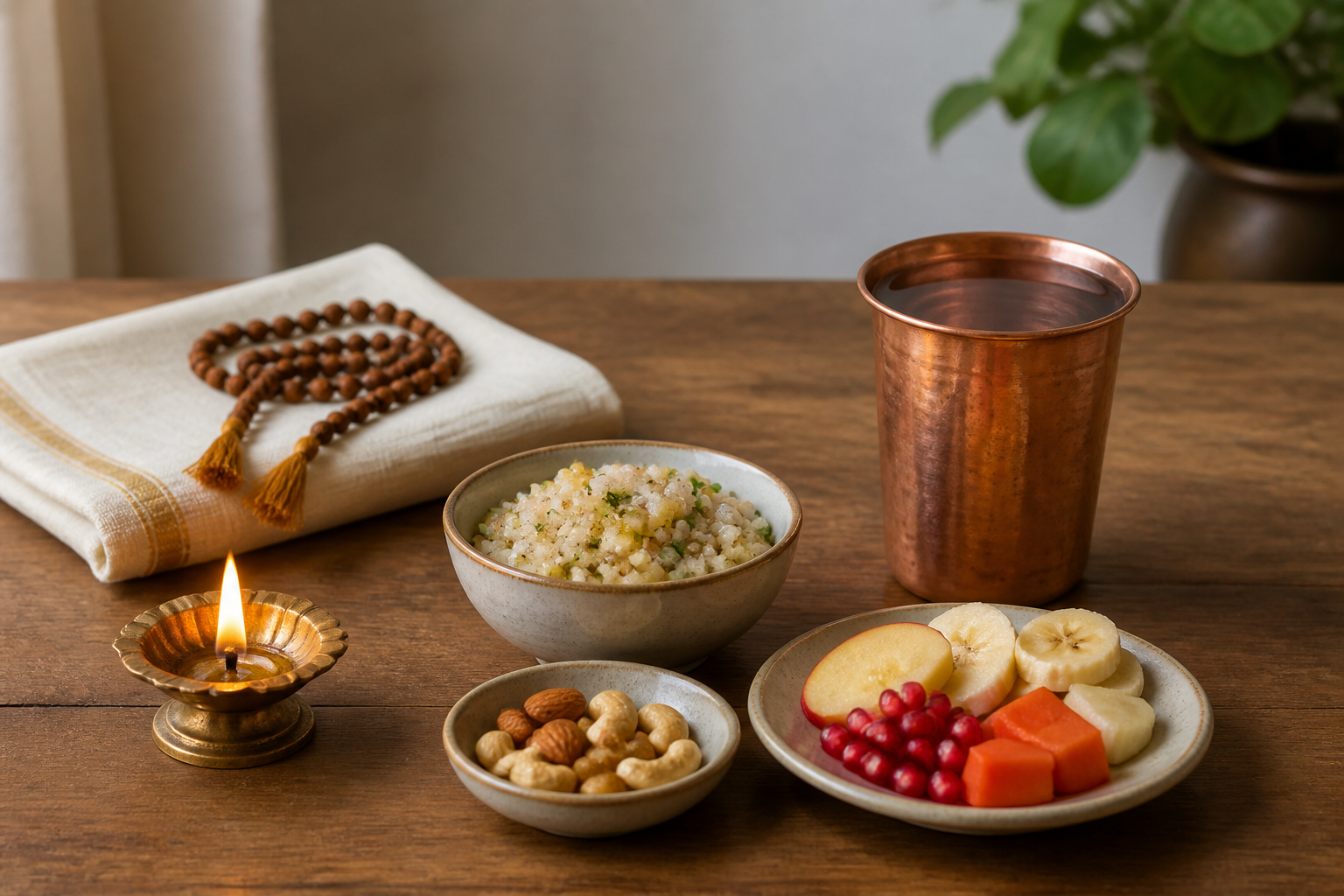
A vrat is a religious commitment, not merely an entry saying “fast.” Before you undertake one, write down the discipline you are actually accepting: its duration, worship, food or drink rules, conduct, and the way it will be concluded. Use the form taught in your own tradition instead of assembling rules from unrelated calendars.
Do not copy another person’s physical fast without considering your health. If restricting food or liquids could conflict with a medical condition, pregnancy, recovery from illness, or prescribed medicine, seek guidance from a qualified clinician before changing your intake. A priest or teacher can explain the religious options available in your tradition; medical suitability belongs with a clinician. Physical danger is not proof of greater devotion.
If a full food restriction is not suitable, ask the appropriate religious guide whether your tradition permits another disciplined form of observance. The important point is to make a clear, sustainable sankalpa and fulfil it attentively, rather than promise an unsustainable austerity and improvise midway through the day.
Key takeaways
- October 1, 2026 is associated with Panchami Shraddha during the Pitru Paksha fortnight.
- October 2, 2026 marks Jnaneshwari Jayanti.
- October 3, 2026 is associated with the 16-day Mahalakshmi observance, but you should verify what role that date has in your own calendar.
- All three dates are presented in IST; people outside India need location-specific tithi and ritual timings.
- The dates after October 3 remain to be completed from a full local panchang.
- Decide the vrat rules, participants, ritual authority, and health-safe form before making a sankalpa.
Start by entering these three dates, naming the panchang your household will follow, and contacting the relevant temple, priest, or teacher about anything still unclear. Once the local timings are settled, complete the rest of October from that same calendar so your observances form one coherent plan.
References
