
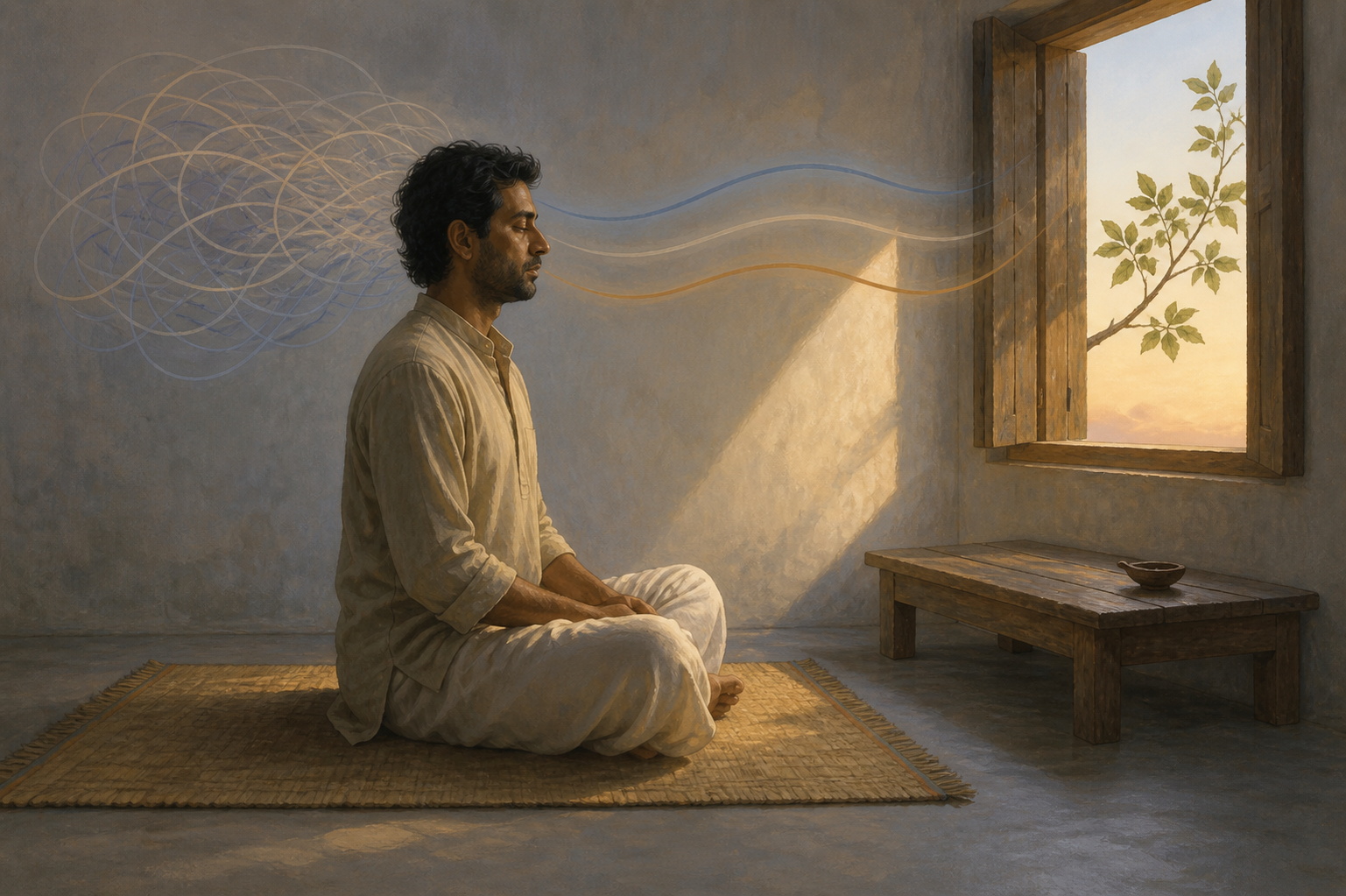
You finally get time alone, sit down to think, and discover that the noise has followed you inside. Old conversations replay. Several possible futures compete for attention. A decision that looked simple becomes a courtroom in which every thought argues its own case.
This is where solitude becomes useful. Its purpose is not to produce an impressive feeling of peace. It is to reveal how your mind moves, place discrimination above impulse, and help you return to your duties with a decision you can actually carry out.
Solitude exposes the mind; it does not automatically discipline it
Being alone removes some external demands, but it does not remove habit, fear, desire, memory, or self-justification. Unstructured solitude can therefore become worry, fantasy, resentment, or endless rehearsal. The room may be quiet while the mind remains crowded.
A useful Hindu vocabulary makes the inner task more precise: the faculty that wavers among alternatives and weighs their advantages and disadvantages is manas; the faculty that discriminates and decides is buddhi; and will is the active expression of buddhi. These are not three unrelated minds. They are distinguishable functions within your mental life.
Manas is not an enemy. You need it to notice possibilities, compare courses of action, and anticipate consequences. Trouble begins when deliberation refuses to conclude. The same evidence is rearranged repeatedly, emotional discomfort is mistaken for new information, and indecision begins to look like carefulness.
Buddhi asks a different kind of question. It does not merely ask which option feels easiest. It asks what is true, what is relevant, what your dharma requires, and which consequence you are prepared to accept. When that judgment becomes clear, will carries it into conduct. Solitude trains the mind when it helps this sequence occur: manas presents, buddhi discriminates, and will acts.
A practical discipline for your next period of quiet
Do not enter solitude with the vague command to “clear your mind.” A mind cannot obey an instruction that gives it nothing definite to do. Give the period a purpose before you withdraw from conversation, messages, news, or entertainment.
- State the purpose. Choose one matter: a decision, a recurring reaction, a neglected duty, or a spiritual practice you keep avoiding. Do not bring your entire life into the session.
- Remove fresh input. Put away anything that allows you to escape into another person’s words. If your chosen sadhana includes prayer, japa, or scriptural recitation, use it deliberately; do not drift from it into casual browsing.
- Settle before analyzing. Let the body become still and place attention on the practice in front of you. The aim is not to force thoughts away. It is to stop obeying each thought as soon as it appears.
- Observe manas without giving every movement a trial. When a thought arises, identify its function plainly: fact, memory, fear, desire, imagined argument, or practical obligation. A label is enough. You do not have to prosecute or defend it.
- Invite buddhi to judge. Ask: What do I actually know? What am I assuming? Which duty applies? Is information genuinely missing, or am I postponing an uncomfortable choice? What action would remain right even if it did not protect my preferred self-image?
- End with an executable decision. Write down the next action, the boundary you will keep, or the specific fact you must obtain. If you are not ready to decide, define what would make a decision possible. “Think about it more” is not a next action.
- Return to ordinary duty. Make the call, complete the task, offer the apology, keep the vow, or gather the missing information. The value of solitude appears after you leave it.
A simple notebook can prevent contemplation from turning into literary self-absorption. Divide the entry into three parts: mental movement, discriminative judgment, and action. Under the first, record what pulled at you. Under the second, record what you concluded. Under the third, record what you will do. If the third part stays empty, the session probably remained within manas.
Judge progress by conduct, not by how peaceful you felt
A calm session can be pleasant without being transformative. An uncomfortable session can be fruitful if it exposes an excuse and leads to right action. Mental discipline is therefore not the permanent absence of thought. It is the growing ability to keep thought in its proper place.
You can notice that growth in ordinary situations. A provocation no longer compels an immediate answer. A familiar inner argument is recognised before it consumes the day. Once a sound decision has been made, you stop reopening it merely because obedience feels difficult. When a genuinely relevant fact appears, however, you can revise the decision without treating revision as humiliation.
That last distinction matters. Strong will without awakened discrimination is not discipline; it can become rigidity. Buddhi must govern will, or persistence simply gives greater force to error. The disciplined person is firm about principle, attentive to reality, and willing to correct a judgment when truth requires it.
Use a reopening rule for decisions that tend to loop. Once you have judged a matter, revisit it only when there is a relevant new fact, a changed duty, or evidence that the original judgment was unsound. A returning feeling is real as a feeling, but it is not automatically a new reason. This rule keeps manas from disguising repetition as prudence.
Keep solitude connected to dharma, relationship, and service
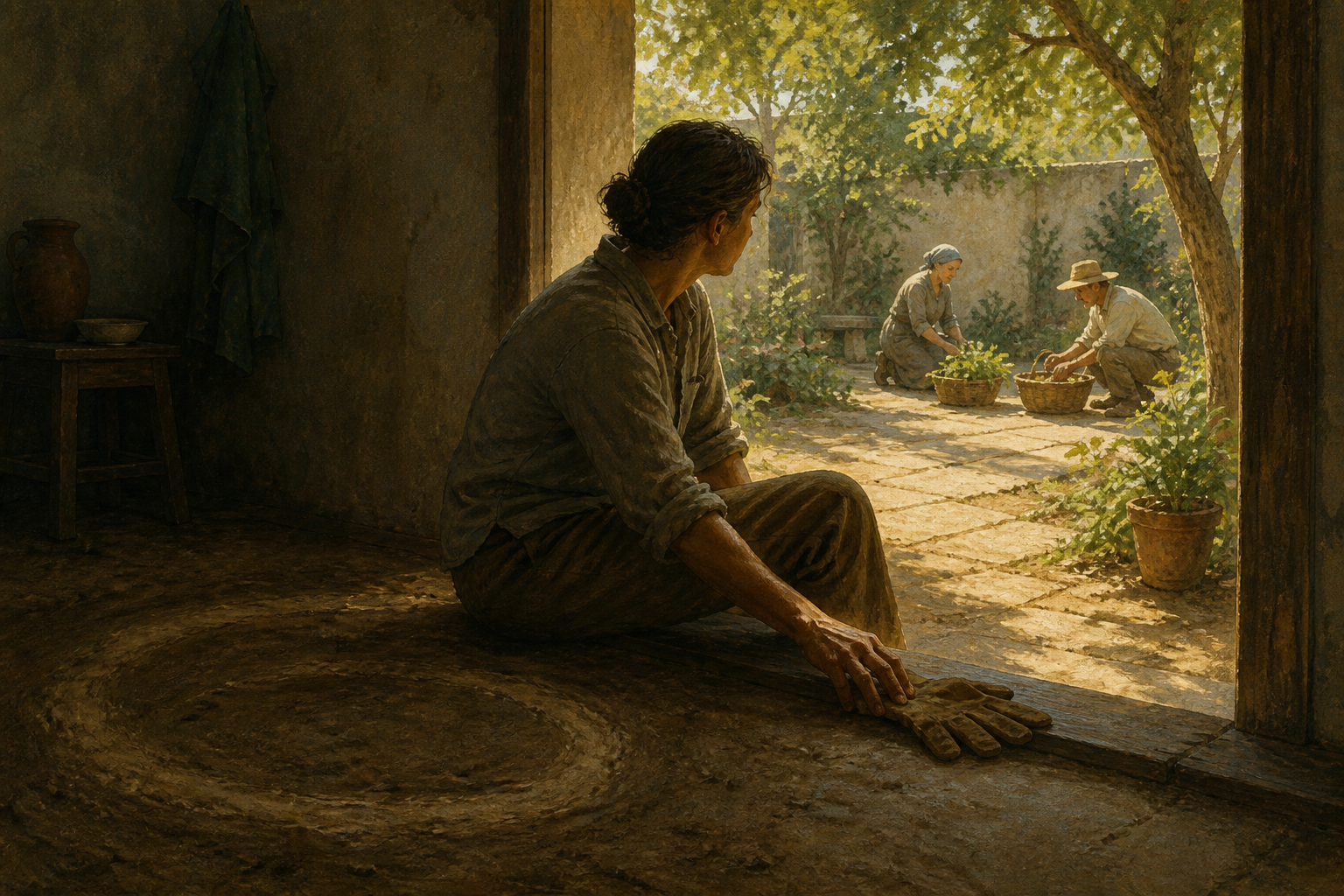
Solitude becomes escapism when you use it to avoid the very duties it should clarify. Watch for the pattern: you postpone a necessary conversation in the name of reflection, prefer an imagined state of purity to the demands of family or community, use silence to punish someone, or become less willing to receive correction. In such cases, more withdrawal is unlikely to solve the problem.
End the retreat and perform the next evident duty. Seek counsel from a trusted elder, teacher, or competent person when the matter exceeds your judgment. If a decision materially affects other people, private clarity is only the first stage; you still need to hear those affected and account for facts that were not available inside your own mind.
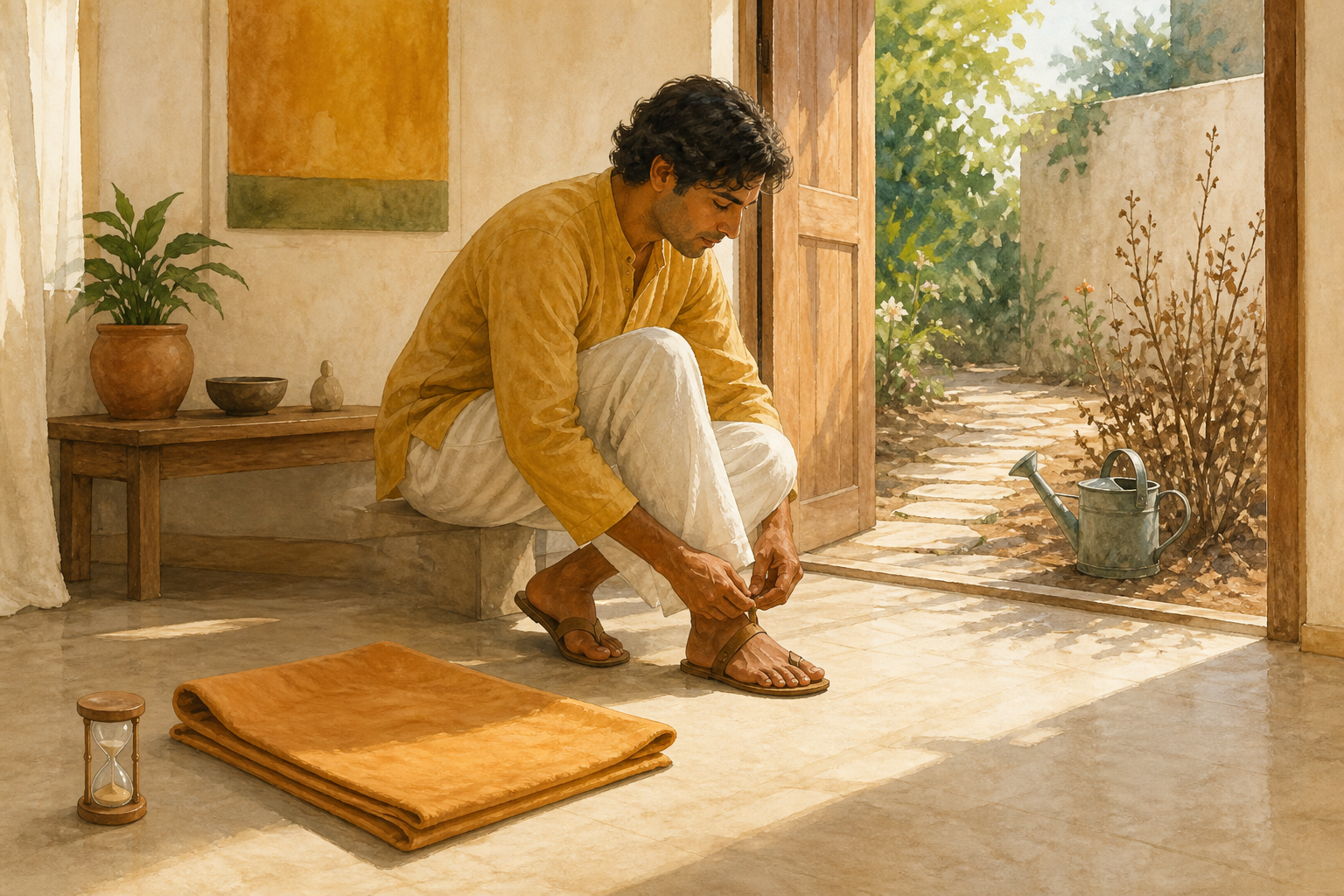
Choose a modest, repeatable appointment with quiet rather than making a dramatic declaration about withdrawing from the world. Attach it to a transition you already encounter, such as the period before opening messages or the pause between finishing one set of duties and beginning another. Consistency gives you repeated opportunities to recognise mental habits and practise acting on sound judgment.
Solitude should also deepen, not replace, satsanga: wholesome association with people who orient you toward truth and dharma. Private examination can reveal your motives, but other people can expose blind spots that private thought protects. Healthy discipline needs both inward honesty and outward correction.
If being alone intensifies thoughts of self-harm, panic you cannot contain, loss of contact with reality, or inability to carry out basic responsibilities, do not treat the situation as a test of will. Stay connected to another person and seek qualified mental-health or emergency support. Spiritual solitude is not a substitute for necessary psychological or medical care.
Key takeaways
- Solitude is a training condition, not an achievement. It reveals mental movement so that you can work with it.
- Let manas present possibilities, but do not allow deliberation to continue merely because a decision feels uncomfortable.
- Use buddhi to distinguish fact from assumption, desire from duty, and missing information from avoidance.
- Close every session with an action, boundary, or clearly defined information need.
- Test the practice after you return to life: clearer conduct, steadier duty, and greater openness to correction matter more than a peaceful mood.
At your next quiet interval, take one unresolved matter with you. Observe what manas produces, let buddhi decide what deserves authority, and leave with one honest action. Then carry it out before asking solitude for another answer.


References
