
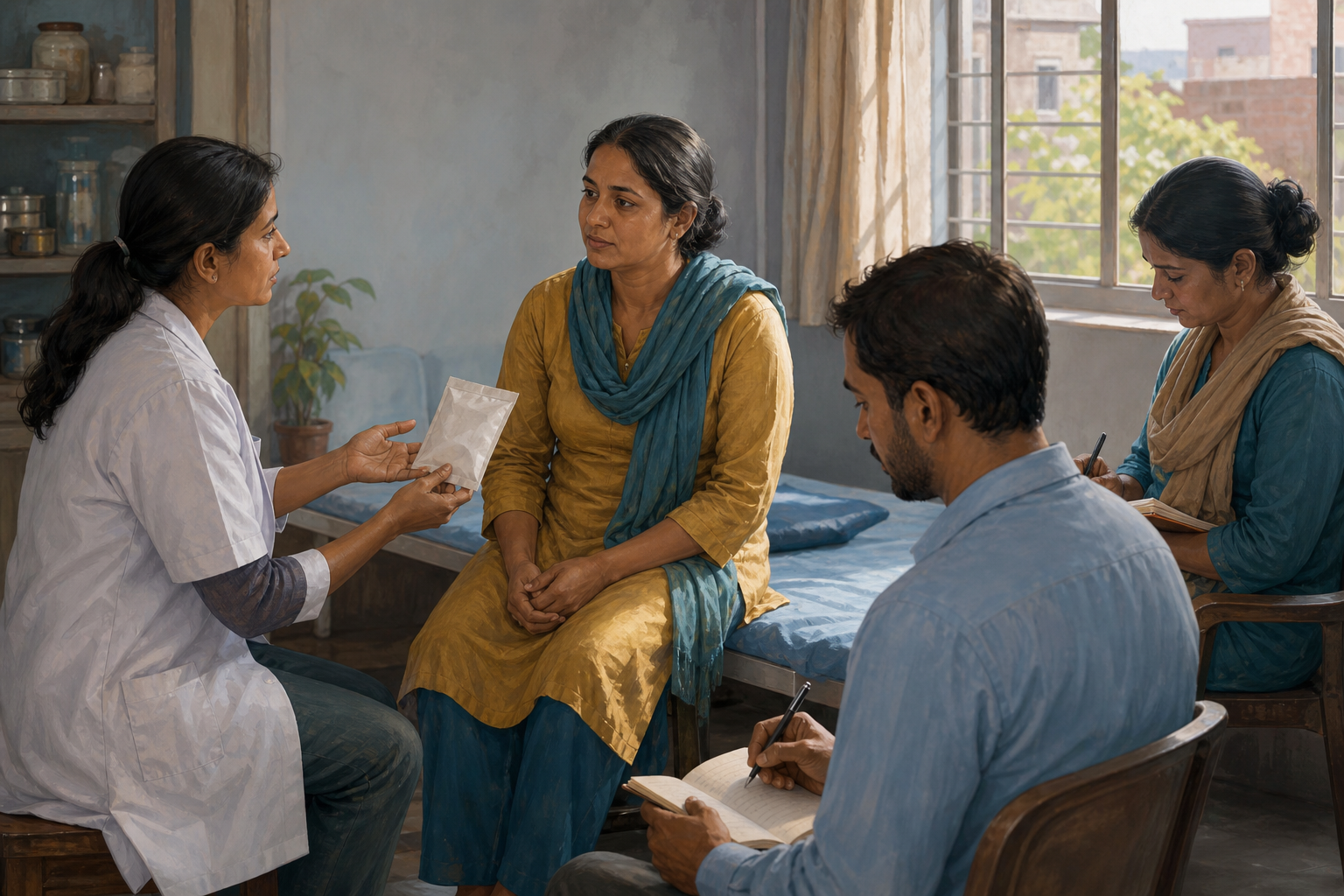
You hear a claim that a sick neighbour was offered treatment on the condition that they join a Christian prayer gathering. Before a crowd forms or a name goes online, you need to know whether the help was truly conditional, whether the patient is safe, and what can actually be proved.
Start with two duties at once: protect the person’s access to medical care and establish whether a religious condition was attached to that care. Dropping either duty can harm the same person you intend to defend.
What is known in the Dhamtari case, and what is not
In Dhamtari’s Risaipara locality, a home prayer gathering became the focus of a protest over alleged religious conversion on a Tuesday evening. Hindu Jagran Manch workers said three young women at the house had come from a church and alleged that people were being encouraged to convert through the gathering. They also alleged that treatment was being offered as an inducement.
The safe conclusion is narrow: the accusations were made and a protest followed. No independently verified conversion, explicit treatment condition, or wrongdoing by the three women has been established in the information available. Their presence, their alleged church connection, and the fact that a prayer meeting occurred cannot carry that burden by themselves.
That distinction is not softness toward conversion activity. It is the difference between investigating possible exploitation and assigning collective guilt. A pro-Hindu response does not need a lower standard of truth. Dharma is not protected when suspicion is presented as proof.
Use the conditionality test before calling aid an inducement

Medical help from a Christian individual or organisation is not automatically a conversion inducement. Nor does a prayer offered beside charitable assistance prove coercion. For community fact-finding, the decisive practical question is conditionality: would the same assistance have been given if the recipient declined every religious request?
If treatment, medicines, transport, hospital payment, or access to a provider depends on attending prayer, professing belief, joining a church, accepting baptism, concealing the arrangement, or maintaining religious contact, the concern becomes concrete. If the aid remains available after an informed refusal, the situation may instead be charity accompanied by religious advocacy. Advocacy can still be unwelcome or persistent, but it is not the same fact as conditional medical aid.
Ask the recipient privately and in plain language:
- What exactly was offered: a clinical consultation, medicine, transport, payment, a referral, or only a promise of spiritual healing?
- Who offered the help, who would pay for it, and who would provide the actual treatment?
- What religious act, statement, meeting, or future commitment was requested?
- Was that request made before the help, while it was being provided, or afterward?
- What did the person believe would happen if they refused?
- Was the recipient free to continue ordinary medical care and seek a second opinion?
- Are there messages, forms, leaflets, receipts, appointment records, or independent witnesses that preserve the exact terms?
The timing matters. A voluntary prayer after unconditional assistance is materially different from making a profession of faith the price of getting medicine. Likewise, calling an event a prayer meeting does not neutralise an explicit condition if one can be shown.
Key takeaways
- Protect access to medical care before confronting anyone or collecting publicity material.
- Test the alleged link between aid and religion: what was withheld, and what religious act was demanded?
- Record exact words and conduct rather than conclusions such as conversion racket.
- Do not treat a prayer gathering, church affiliation, or a visitor’s presence as proof of coercion.
- Give verified material to lawful authorities and protect the patient’s identity while facts are checked.
What to do during the first hours of an allegation
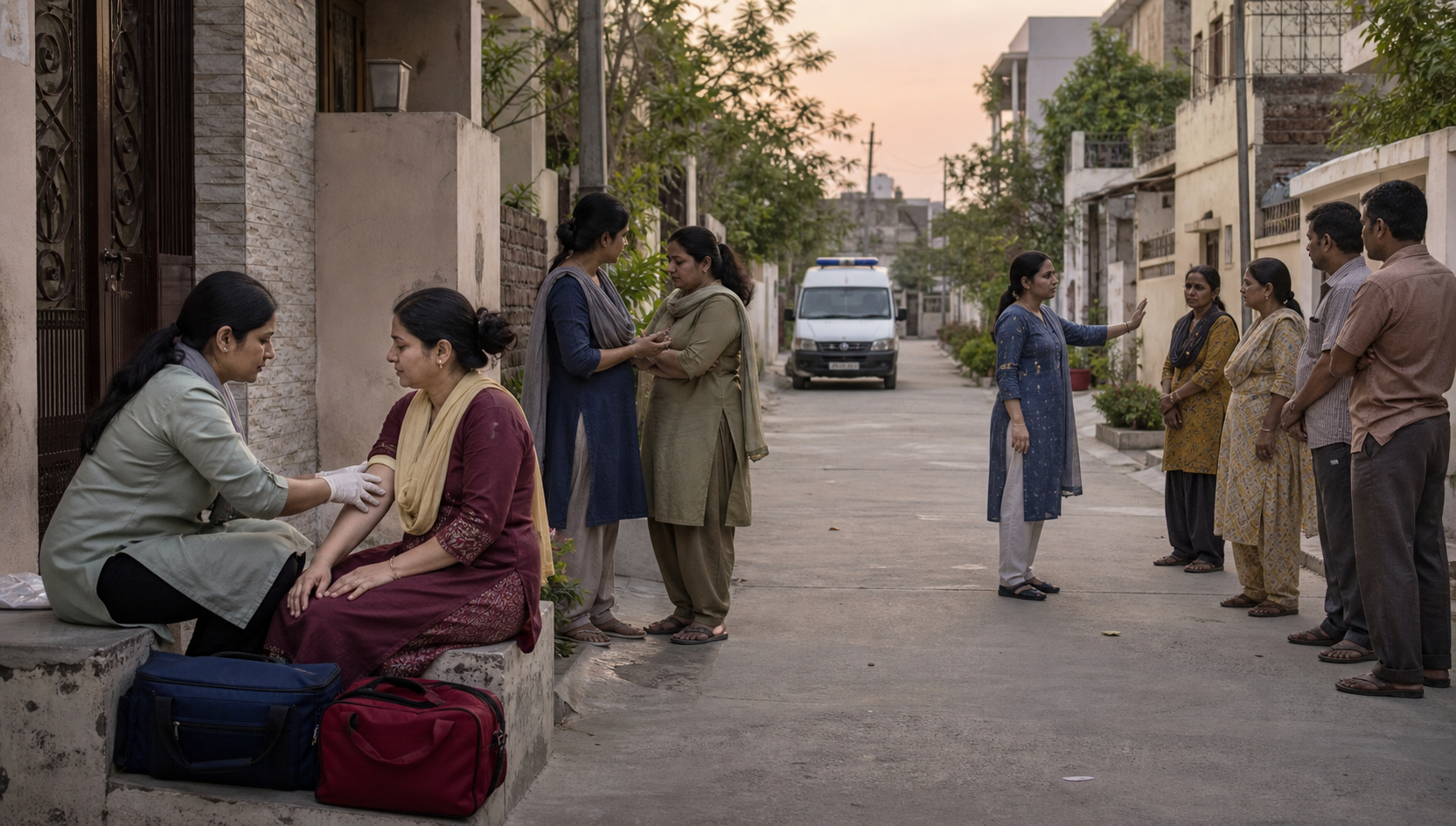
- Put the patient’s health first. If medical attention may be urgent, obtain professional care immediately. Do not delay treatment to stage a confrontation, record a video, or debate theology. Prayer may accompany care when the patient wants it, but a claimed spiritual cure must not replace medical assessment.
- Speak to the patient away from organisers, activists, and onlookers. Let the patient choose a trusted support person. Use open questions such as what happened next rather than questions that supply the desired answer.
- Separate the roles involved. Identify who invited the patient, who led the prayer, who promised assistance, who controlled money or transport, and who would deliver treatment. Several people at one gathering should not be treated as one actor without evidence.
- Preserve lawfully available material in its original form. Save complete message threads, leaflets, receipts, appointment slips, medicine packaging, and call details. Note the date, place, participants, and the recipient’s words as soon as possible. Do not crop, edit, caption, or circulate files before retaining an untouched copy.
- Submit a fact-based complaint if coercion, fraud, or conditional aid is suspected. Provide police or the appropriate district authority with a written chronology and copies of supporting material, keep the originals, and request acknowledgement of receipt. Ask a qualified local lawyer which rules apply rather than relying on claims circulating online.
- Prevent the response from becoming another form of intimidation. Do not force entry into a private home, surround patients or women, threaten participants, damage property, or publish private names and phone numbers. Such conduct can endanger witnesses, contaminate evidence, and shift attention away from the alleged inducement.
If someone is too frightened to speak in front of either side, do not treat silence as proof for your preferred conclusion. Create a safe opportunity for the person to describe the offer privately. The recipient’s welfare matters more than obtaining a statement that can be used in a public argument.
Document evidence without turning an allegation into a verdict

Keep two columns in your notes: observation and inference. An observation might be that a person offered to pay a medical bill and asked the recipient to attend prayer. The claim that this was part of an organised conversion programme is an inference until additional facts support it. Never move an inference into the observation column merely because several people repeat it.
The most useful evidence answers a direct question about control or pressure:
- Exact words linking treatment to a religious act.
- A refusal followed by the withdrawal or threatened withdrawal of assistance.
- Repeated pressure after the patient clearly declined.
- Records showing who controlled payment, transport, medicine, or access to the provider.
- Directions to stop prescribed care in favour of a claimed religious cure.
- Independent witnesses or unedited records that corroborate the recipient’s account.
By contrast, religious literature, an invitation to pray, church affiliation, or the presence of visitors at a house does not by itself prove that medical assistance was conditional. Those facts may justify questions, but they do not answer them.
If you must communicate publicly, describe the allegation and its evidentiary status every time. A defensible notice has this shape: at a stated place and time, a named or described person allegedly offered a specific form of aid; the recipient states that it depended on a specified religious act; listed material has been submitted to a named authority for verification. Do not announce that an individual converts Hindus through treatment unless that conclusion has been properly established.
Before naming a private person, releasing a patient’s medical information, or publishing a recording, obtain local legal advice. Privacy, defamation, evidence, and recording rules can differ. Public exposure is difficult to reverse even when an accusation later proves incomplete or mistaken.
Close the medical vulnerability through unconditional Dharmic seva
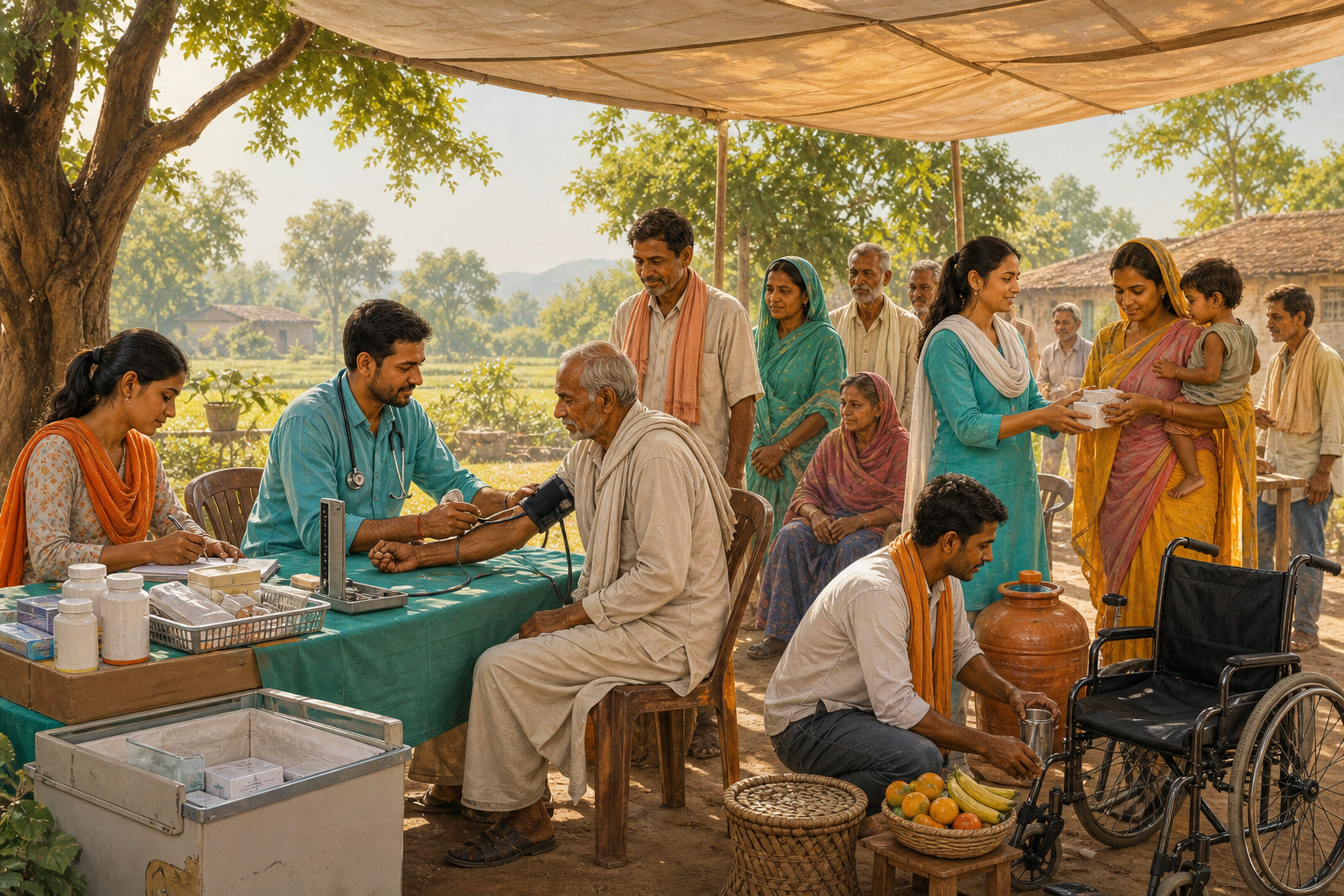
Investigating a disputed gathering addresses one event. Reducing dependence on unknown intermediaries addresses the recurring vulnerability. Medical distress narrows a family’s choices; a dependable local support system expands them.
Temples, gurdwaras, Jain sanghs, Buddhist viharas, and neighbourhood associations can build a response that does not wait for the next confrontation:
- Maintain a verified directory of nearby clinics, hospitals, diagnostic facilities, pharmacies, transport providers, and patient-assistance contacts.
- Create a transparent medical-aid fund with written eligibility rules based on need, receipts for expenditure, and more than one person approving payments.
- Train volunteers to help families navigate appointments and paperwork without demanding worship, publicity, political participation, or religious conformity.
- Publish a short care charter stating that aid is never conditional on ritual, membership, belief, or conversion.
- Protect medical confidentiality. A patient’s photograph, diagnosis, and family circumstances should not become the price of receiving seva.
- Provide one channel for reporting coercive religious conditions and another for complaints about the conduct of community volunteers.
This is where a Dharmic response acquires moral force. Seva is strongest when the recipient owes no creed in return. We should oppose the exploitation of illness without copying the same mechanism from the opposite direction.
If a similar claim reaches your locality, act in this order: secure the person’s care, write down the exact alleged condition, preserve the original evidence, and place verified facts before lawful authorities. Then ask what reliable medical support your community can build before another vulnerable family has nowhere else to turn.
References
