

If you came here wondering whether the Sangli killing was simply a quarrel over garbage, the short answer is no. Garbage appears to have triggered the final confrontation, but the family’s account describes repeated intimidation before the violence. That distinction matters because it changes what families, neighbours and police should notice before a dispute becomes an emergency.
On 15 August 2026, Manisha Mohan Kesarekar was fatally stabbed and her husband, Mohan Nagappa Kesarekar, suffered grave head injuries in Sangli’s MIDC Kupwad area. A neighbour, Farid Abdul Sheik, was arrested as the accused. The allegations must still be tested in court, but the sequence already offers a practical warning: when targeted dumping, stone-throwing, intrusive behaviour and threats recur, you should treat them as a pattern rather than a collection of minor annoyances.
What happened in Vighnaharta Shanti Colony
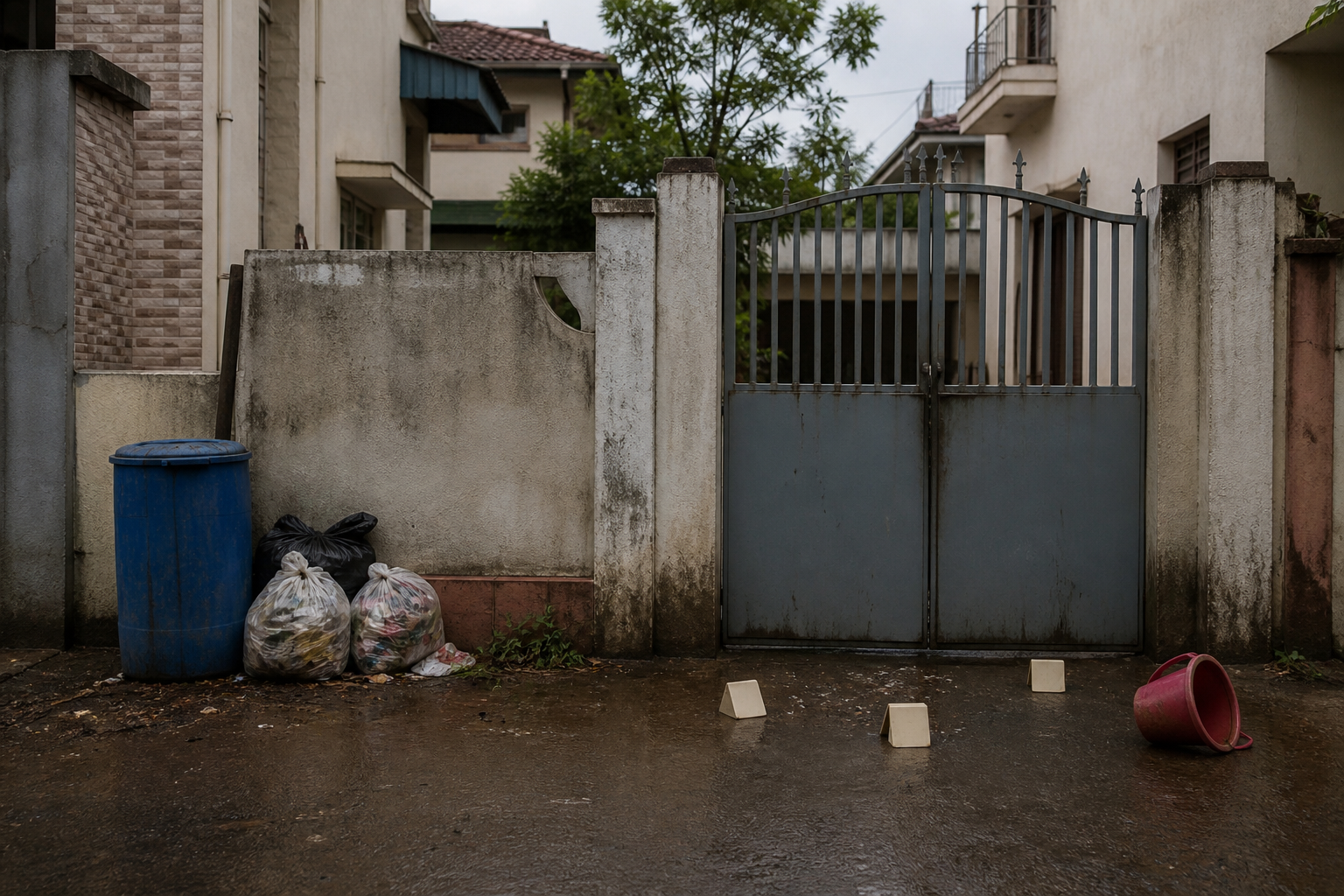
The confrontation began at approximately 6:00 a.m. on Independence Day in Vighnaharta Shanti Colony near Chanakya Chowk. Manisha, 38, had gone outside to prepare an outdoor stove for heating water. She saw garbage near the family’s residence and questioned Sheik about dumping it there.
The couple’s 17-year-old daughter told police that her father, 45-year-old Mohan, came outside after hearing the argument and attempted to intervene. Sheik allegedly slapped him, went into his own house, and returned with a hammer and a knife. That trip inside is a crucial part of the sequence: the confrontation allegedly moved from an argument to an armed attack after the accused had an opportunity to disengage.
Sheik allegedly struck Mohan on the head with the hammer. When Manisha tried to protect her injured husband, she was stabbed repeatedly in the abdomen and pelvic area. Their daughter threw wooden logs toward the attacker and knocked the hammer from his hand. Neighbours then gathered in response to the family’s cries, and the accused fled on a bicycle while carrying weapons.
Neighbours took the couple to Miraj Civil Hospital. Manisha was declared dead at 1:30 p.m. A post-mortem examination at the Government Medical College and Hospital in Miraj attributed her death to stab injuries of the abdomen and pelvis. Mohan underwent emergency treatment for extensive head injuries and was reported to be in critical condition.
MIDC Kupwad Police apprehended Sheik within four hours and registered FIR No. 0198/2026. The reported provisions of the Bharatiya Nyaya Sanhita, 2023, are Sections 103(1), 109(1), 115(2) and 351(3), covering murder, attempted murder, voluntarily causing hurt and criminal intimidation. An FIR records accusations and starts the criminal process; it is not a finding of guilt. Farid Abdul Sheik is the accused, and responsibility must be determined through evidence and the judicial process.
Why the words “garbage dispute” conceal the risk trajectory
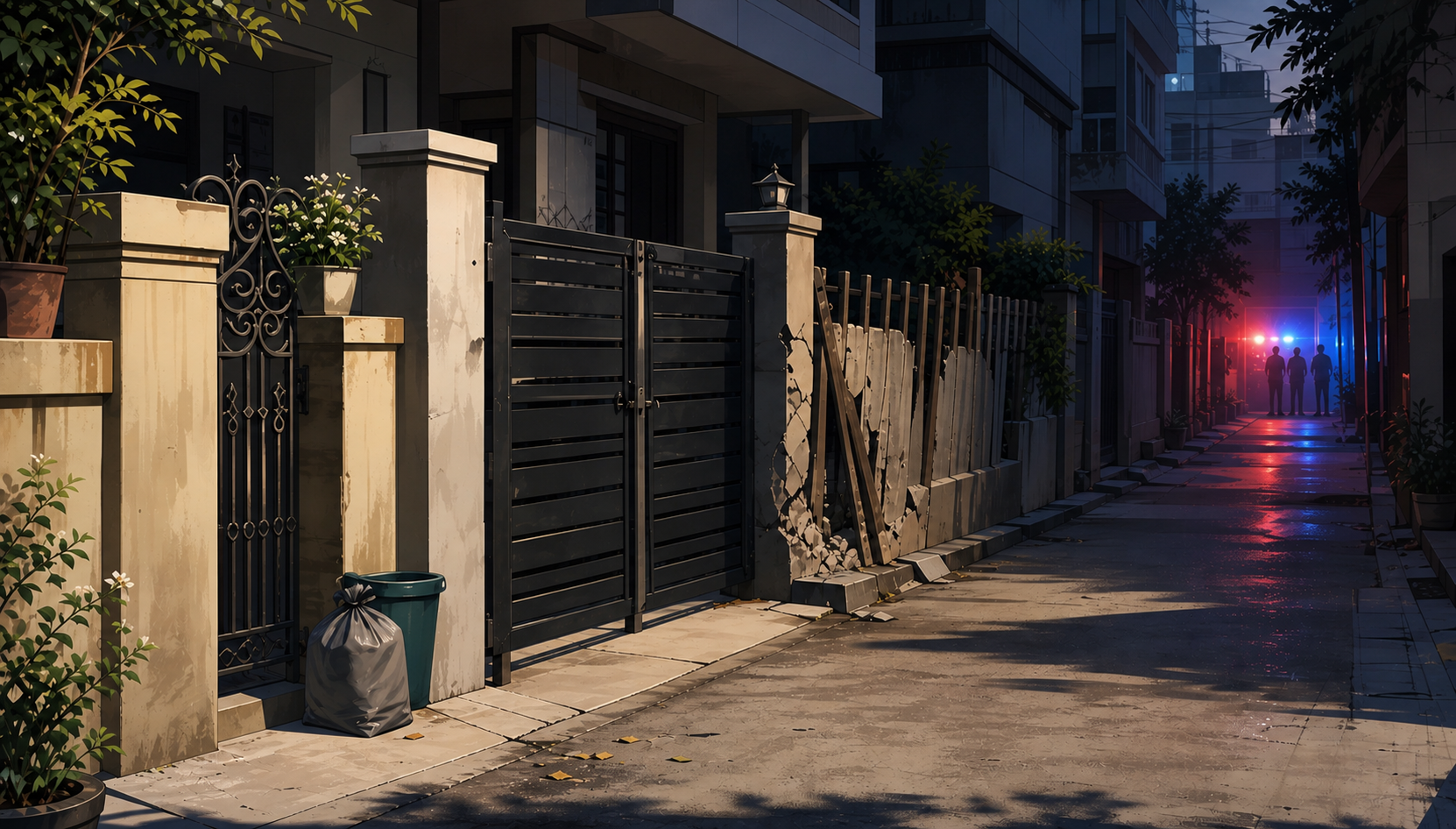
A brief label can identify the immediate trigger while hiding the history that made the encounter dangerous. The Kesarekar family had moved to the colony roughly ten months earlier. Their account describes harassment during the preceding two months, including garbage placed outside their residence, stones thrown at their windows and torchlight directed toward their home. Sheik was also accused of spitting while staring at Manisha.
Any one of those incidents might be dismissed in isolation. Repetition changes the assessment. The same household was allegedly targeted through different acts, the conduct reached the family’s doorstep and windows, and the final confrontation ended with the accused reportedly retrieving two weapons. You do not need to predict a murder before recognizing that the risk is increasing.
Four transitions should change your response
- From an ordinary civic problem to targeted conduct: Garbage in a public area may be a sanitation matter. Garbage repeatedly placed at one family’s entrance can become targeted harassment, especially when accompanied by other hostile acts.
- From inconvenience to intrusion: Stones at windows and lights directed into a home bring the behaviour to the boundary of the family’s private space. Record the incidents together, not under separate labels such as littering, mischief and neighbour trouble.
- From insult to an expressed threat: Words indicating that a family should leave an area can reveal an exclusionary purpose. Write down the precise words, language, time, location and names of everyone who heard them.
- From argument to possible armed return: If an agitated person leaves a confrontation and goes inside a building or vehicle, do not assume the encounter is over. Move behind a lockable barrier or to another safe place and contact emergency services. Do not wait nearby to see whether the person returns with a weapon.
The operational lesson is simple: classify the behaviour by its combined pattern and direction, not by the apparent smallness of each incident. A chronology can show escalation that no single photograph or complaint conveys on its own.
Investigate the anti-Hindu allegation without outrunning the evidence

The victims were a Hindu couple and the accused is their Muslim neighbour. BJP MLA Gopichand Padalkar has alleged that the couple had been told, "Don’t live in our area." That allegation is serious. If witnesses confirm that the words were used, investigators should establish their exact context and determine whether the prior harassment was intended to drive the family away because they were Hindu.
At the same time, religious identity and a reported exclusionary remark do not by themselves establish an organized ideological or terrorist motive. Assistant Police Inspector Anandrao Ghadge publicly described an attack arising after a dispute about garbage dumped outside the home. The reported FIR provisions concern the violent acts and intimidation; communal motive remains a question requiring evidence rather than a judicial finding already made.
You should resist two premature conclusions. The first is that religion cannot be relevant because the immediate argument involved garbage. The second is that a wider jihadist conspiracy has already been proved because the accused is Muslim and the victims were Hindu. Neither conclusion follows automatically from the established facts.
A rigorous pro-Hindu response asks precise questions: Who heard the alleged instruction to leave? What words were used and when? Did earlier acts contain religious references? Were any messages, recordings or contemporaneous complaints preserved? Did neighbours witness the pattern? What motive does the police investigation ultimately identify? Those questions neither erase possible anti-Hindu hostility nor convert an allegation into a verdict.
Dharma is not served by replacing evidence with collective blame. The accused must be held individually accountable if the charges are proved, while any communal dimension must be investigated honestly. Accuracy protects the victims’ case from being weakened by claims that cannot be substantiated.
Key takeaways and a practical response plan
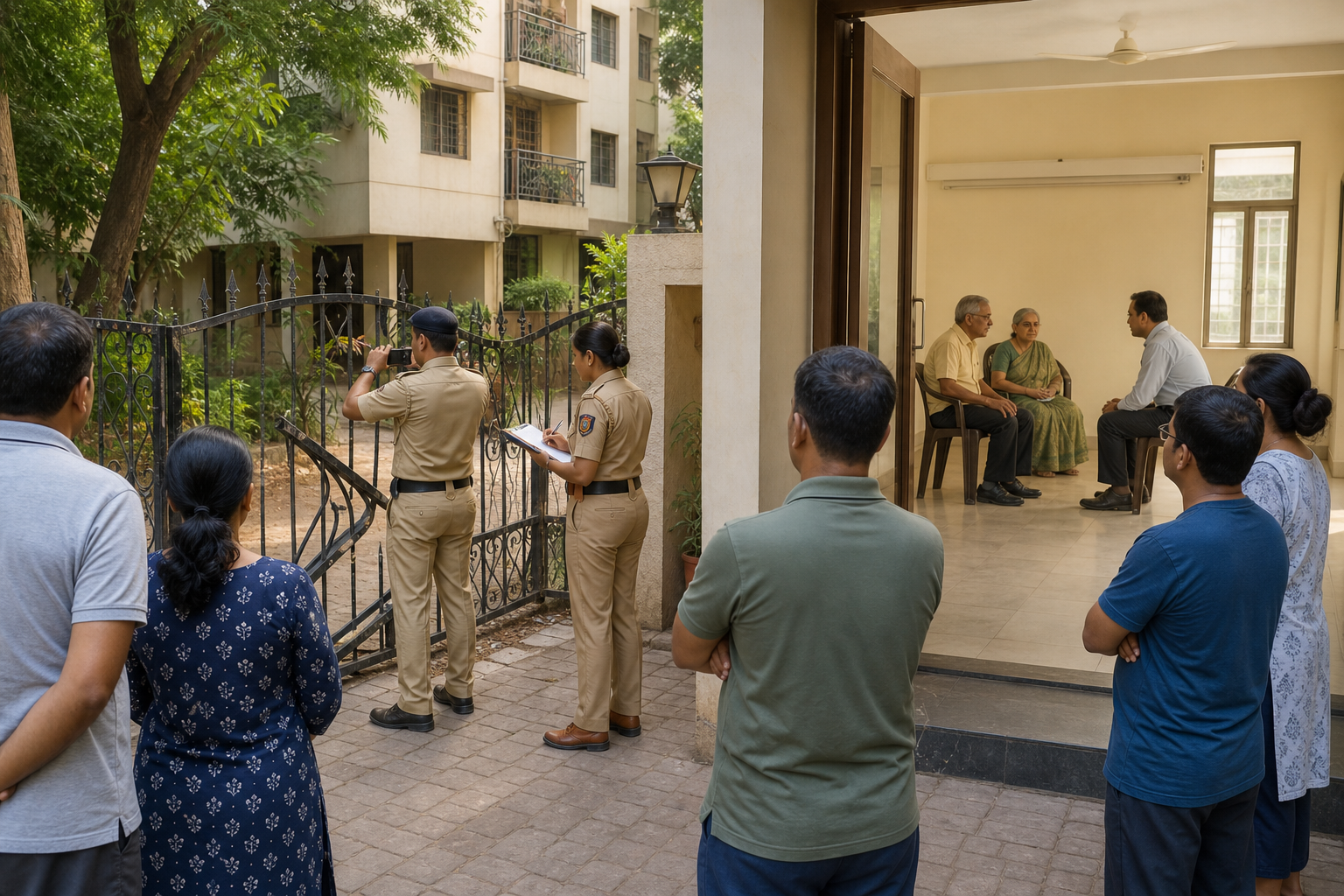
Key takeaways
- The garbage was the reported trigger, not the whole history; the family described approximately two months of preceding harassment.
- Repeated acts aimed at the same home should be recorded as one escalating pattern, even when each act appears minor by itself.
- If a hostile person leaves an argument and may return armed, creating distance and calling emergency services take priority over filming or continuing the discussion.
- The alleged demand that the Hindu family leave the area warrants a careful communal-motive inquiry, but motive must be established through witnesses and other evidence.
- An arrest is the beginning of accountability, not its completion; medical support, witness protection, evidence preservation and judicial follow-through still matter.
If the pattern resembles something happening near you
- Leave the confrontation first. If a person is threatening violence, reaching for an object, entering a house to retrieve something or blocking your exit, move yourself, children and older relatives to safety. Tell emergency responders the exact location, whether a weapon is visible and whether anyone is injured. Collecting proof is secondary when remaining in place exposes you to attack.
- Build one incident chronology. For every occurrence, record the date, approximate time, location, conduct, exact words and witnesses. Add photographs of dumped waste or damaged property only when they can be taken safely. Preserve original files and keep a backup; edited clips and forwarded copies may lose useful context.
- Make the pattern visible in writing. A complaint about the latest incident should also list the earlier conduct in chronological order. State plainly why you fear escalation. Ask for an acknowledgment or identifying number and keep a copy. If you need advice about the appropriate legal route, consult a qualified local advocate rather than relying on social-media instructions.
- Coordinate witnesses without creating a crowd confrontation. Trusted neighbours can agree in advance who will call for help, who can open a safe home and who can identify what they personally observed. A witness should distinguish direct observation from something heard later.
- Protect people as carefully as evidence. Do not touch a weapon or approach an injured attacker. Do not publish a minor witness’s address, phone number, school, unblurred image or daily routine. Graphic photographs may circulate quickly while adding little to the legal record and exposing the family to further harm.
- Escalate repeated inaction through documented channels. Keep copies of complaints, acknowledgments, medical records and damage photographs. A local lawyer can advise which police or judicial authority is appropriate for the circumstances. Documentation cannot guarantee prevention, but it gives each authority the same chronology and makes it harder for a recurring pattern to be reduced to isolated quarrels.
None of these steps requires you to prove the attack that you fear. Their purpose is to create distance during danger and make repeated behaviour legible before the next incident. Do not confront a volatile neighbour merely to obtain a clearer recording or force an admission.
Justice now depends on follow-through, not slogans
The rapid arrest was important, but it did not finish the work. Investigators still need to reconstruct the prior harassment, test the alleged exclusionary statement, preserve weapon and medical evidence, and distinguish what each witness saw from what circulated afterward. The criminal case must also account for the attack on Mohan, whose head injuries required emergency treatment, as well as Manisha’s death.
The couple’s teenage daughter witnessed the attack and intervened while both parents were being assaulted. She is a witness and a bereaved child, not material for unrestricted online exposure. Community support is most useful when it reduces the family’s burden: accompanying relatives through administrative procedures, helping them reach medical and legal appointments, preserving verified case information, and protecting the children’s privacy.
Public attention should remain fixed on verifiable questions. Follow FIR No. 0198/2026 through the investigation and court process. Ask whether the earlier conduct and alleged demand to leave were examined as possible evidence of motive. Seek reliable updates about Mohan without spreading rumours about his condition. Do not let graphic imagery substitute for scrutiny of the case.
If you recognize a similar progression around your own home, act before the next face-to-face argument: write the chronology today, give a copy to someone you trust, report the pattern and decide where your family will move if danger suddenly rises. For Sangli, the responsible demand is equally concrete: a complete investigation, a fair prosecution, protection for witnesses and sustained support for Manisha Kesarekar’s family.
References
