

You searched for a Mahavidya suited to Kanya Rashi because you want something more precise than generic Devi worship. The useful answer is not merely a goddess’s name: Kanya can shape the discipline of your practice, but it cannot by itself confer initiation or settle which Mahavidya belongs in your life.
If you have no instruction from a guru or sampradaya, begin with simple, public Devi devotion. Use Kanya’s strengths—discernment, careful speech, practical order, and service—to make that devotion steady. If you already have lineage instruction, let it outrank any zodiac correspondence you encounter online.
Let Kanya shape the discipline, not dictate the deity
The relevant astrological premise is that Kanya is governed by Budha and associated with intellect, analysis, practicality, communication, and meticulous service. These qualities point toward a recognizably Kanya-aligned method: learn carefully, keep the practice orderly, speak accurately, and translate worship into seva.
They do not amount to a universal rule assigning every Kanya native the same Mahavidya. The Mahavidyas are complete forms of Devi within Shakta traditions, not personality types or interchangeable astrological accessories. A symbolic correspondence may help a teacher explain a practice, but it is not the same thing as adhikara—the authority or fitness to undertake it.
First verify what “Kanya” means in your case. It may refer to your Chandra rashi, your lagna, or simply the Virgo sun sign shown by a Western horoscope. Those labels are not interchangeable. If you cannot identify which placement an astrologer used, do not build a tantric prescription on the result.
A rashi is also only one part of a birth chart. More importantly, a birth chart is only one part of deciding a spiritual path. Your existing ishta-devata, kula tradition, sampradaya, initiation, temperament, and ability to maintain the required observances all matter. If your family or guru has already given you a valid form of Devi upasana, Kanya Rashi is not a reason to abandon it.
Build a Kanya-aligned foundation without crossing initiation
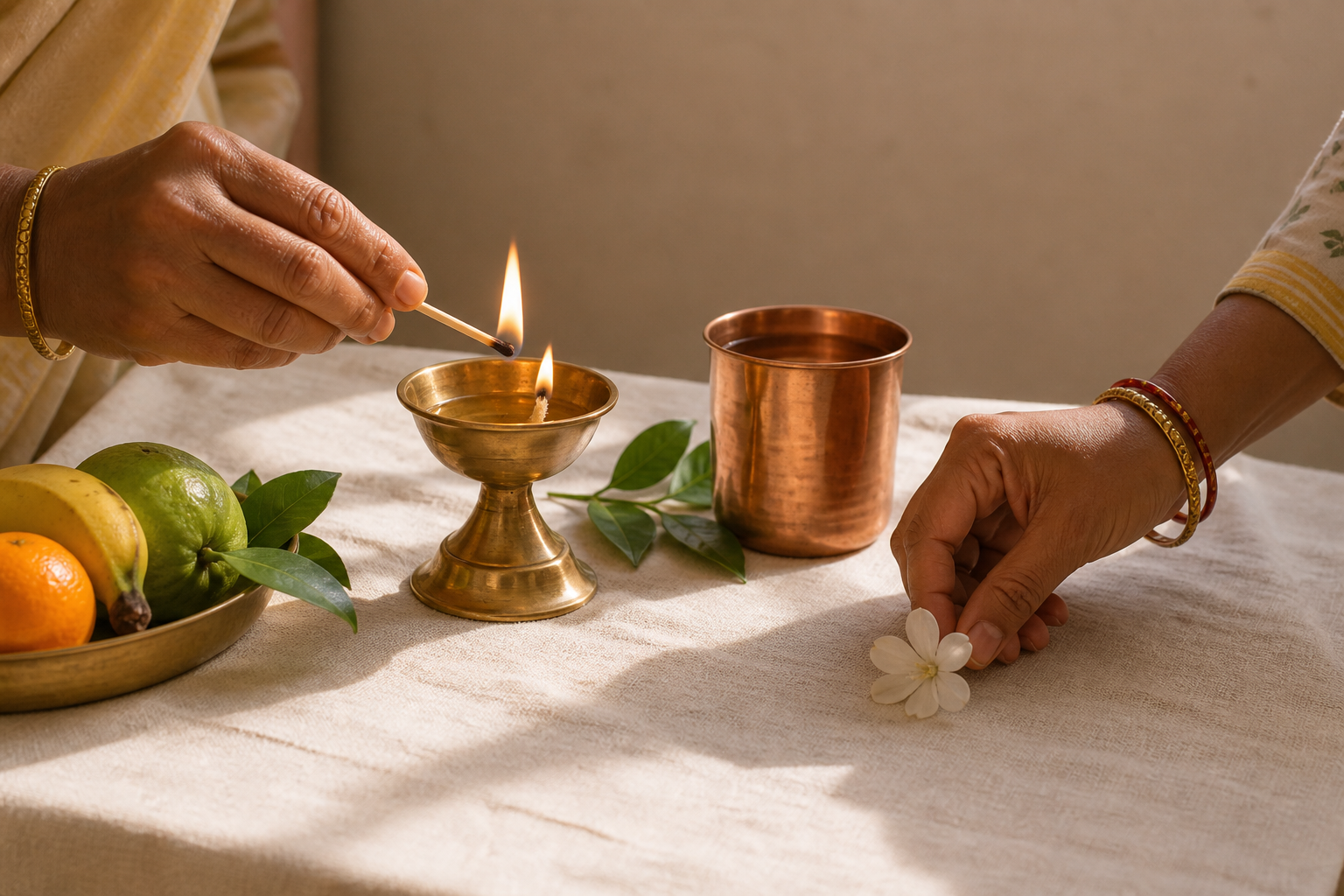
You can establish a serious devotional foundation without borrowing restricted mantras or assembling a ritual from fragments. The boundary is straightforward: use prayers, names, hymns, and offerings that are public or already accepted in your household tradition; seek direct guidance before undertaking a bija mantra, nyasa, yantra procedure, homa, or lineage-specific tantric sequence.
- Identify your actual authority. Write down whether your practice comes from family custom, a guru, a named sampradaya, a clearly public devotional text, or an online recommendation. Do not treat these as equal forms of permission.
- Keep one stable place for practice. Clean it and arrange only the image, lamp, water, flowers, or other simple items that your home tradition permits. Order should support attention, not become an altar-decorating project that replaces worship.
- State a dharmic intention. Ask for discernment, truthful communication, humility, and the capacity to serve. Avoid turning Mahavidya worship into a demand for control over another person or a guarantee of a particular worldly result.
- Offer what you understand. A familiar, sattvic offering made with attention is better than an unusual substance copied from an unexplained ritual. If a practice has special offerings, substitutions, or disposal rules, learn them from the person authorizing it.
- Recite only what you can identify. Use a public nama, prayer, or stotra whose origin and pronunciation you have checked, or the exact practice your teacher gave you. The appearance of a mantra on a website or video does not prove that it is open for uninitiated use.
- Carry worship into conduct. After prayer, choose one practical expression of it: correct a misleading statement, finish a neglected duty, help without seeking recognition, or refrain from unnecessarily harsh speech.
- Close the practice properly. Offer pranam, handle offerings according to your custom, and leave the space ready for the next sitting. A simple practice completed respectfully is more useful than an elaborate one repeatedly abandoned halfway.
On a difficult day, preserve continuity through the smallest form your tradition permits. Without a prescribed routine, that may simply mean cleaning your hands, offering pranam, saying a familiar prayer to Devi, and performing a deliberate act of seva. Kanya’s love of precision becomes an obstacle when only a perfect session is allowed to count.
Ask what “suited to Kanya” actually means

When someone recommends a particular Mahavidya for Kanya Rashi, ask what kind of recommendation is being made. “Suited” may mean a symbolic affinity with Budha, an astrological remedy for a specific chart condition, a generally devotional relationship, or an initiatory tantric practice. Those claims require different levels of evidence and authority.
- Is this recommendation based only on the rashi, or on a complete chart and an established lineage method?
- Is the proposed practice public devotion, an astrological remedy, or initiated upasana?
- Does this sampradaya explicitly connect the named Mahavidya with Budha or Kanya, or is that correspondence being imported from elsewhere?
- Which text, pronunciation, sequence, and form of the deity does the practice use?
- What daily commitment, observances, exceptions, and closing procedures apply?
- What should you do when travel, illness, family responsibilities, or work disrupt the routine?
- Who will correct mistakes and answer questions after initiation?
A competent guide should be able to distinguish a suggestion from an instruction. “This symbolism may resonate with Kanya” is not the same as “you have been authorized to perform this sadhana.” That distinction protects both the sanctity of the tradition and the practitioner from confusion.
Recognize pressure disguised as spiritual authority
Step back if someone guarantees rapid siddhi, threatens supernatural punishment for asking questions, or demands secrecy before explaining the basic nature of the commitment. Pressure for escalating payments, isolation from family, intoxicants, or sexual access is not made acceptable by tantric language. No spiritual rationale cancels consent, lawful conduct, or ordinary personal safety.
It is reasonable for an initiated mantra or ritual detail to remain private. It is not reasonable to use secrecy to prevent you from knowing who teaches the practice, what lineage they represent, what obligations you are accepting, or how to stop safely if you cannot continue.
Turn Kanya tendencies into sadhana rather than obstacles
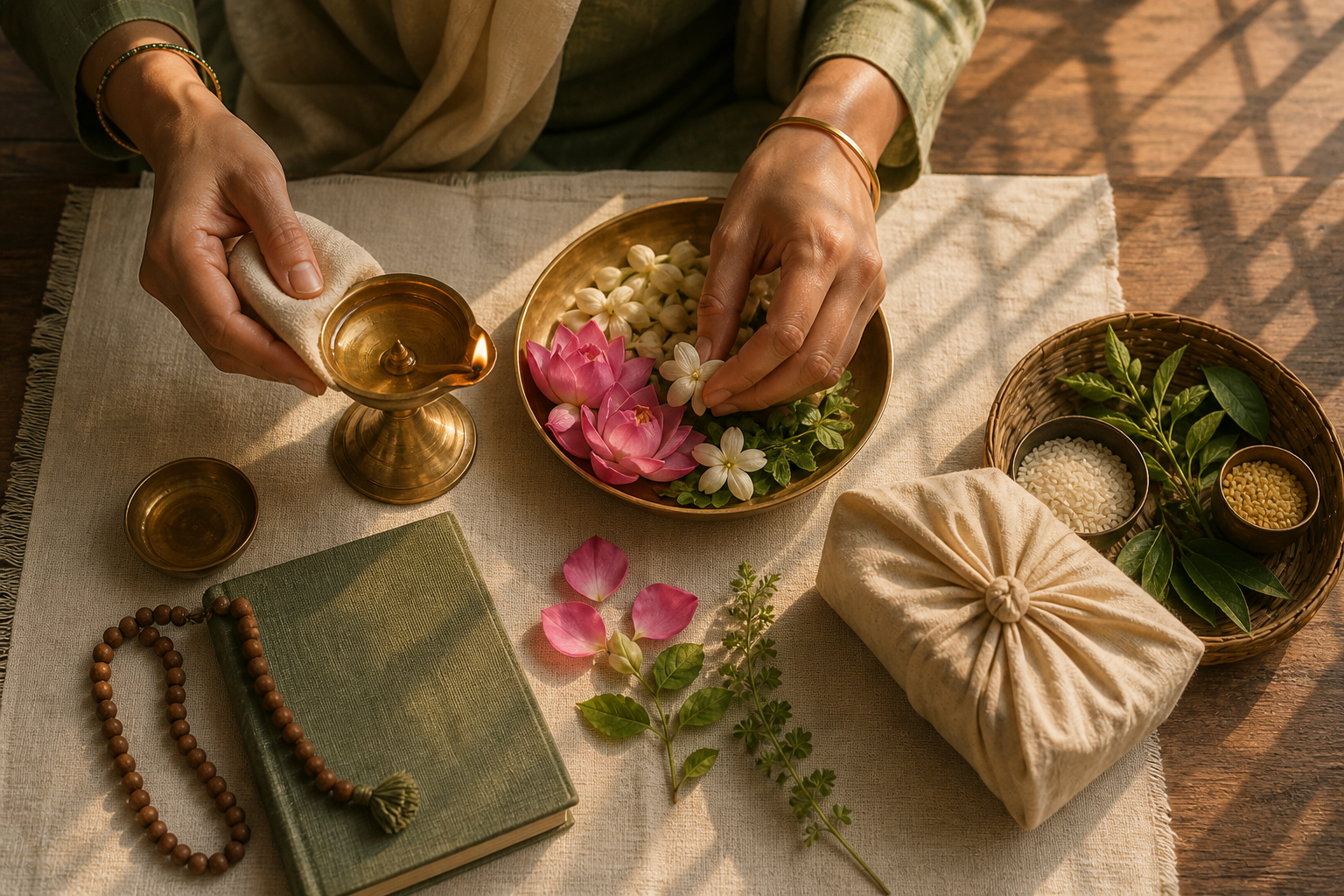
Kanya’s analytical and practical character can support upasana, but every strength can become a form of avoidance. Notice which pattern appears in your own practice and make the corresponding correction.
- When analysis becomes endless searching: select one authorized prayer or instruction and stop collecting alternatives. Compare teachings before committing, not during every sitting.
- When precision becomes perfectionism: define a simple standard you can maintain on an ordinary day. Add complexity only when it has been taught and you can sustain it without neglecting work, family, or health.
- When communication becomes argument: make speech part of the practice. Verify before asserting, correct your errors promptly, avoid needless humiliation of others, and say what is useful as clearly as you can.
- When service becomes compulsive fixing: choose seva that is genuinely needed and within your capacity. Practical help offered without vanity is worship; trying to control everyone else’s life is not.
- When carefulness becomes self-attack: record the obstacle plainly, make the correction, and resume. Shame consumes attention that should return to Devi.
Do not judge the practice chiefly by dreams, coincidences, dramatic sensations, or immediate material gains. Ask whether your speech is becoming cleaner, your duties more reliable, your discernment less self-serving, and your seva less dependent on praise. These changes do not prove spiritual attainment, but they keep your aspiration connected to dharma rather than fantasy.
Key takeaways
- Kanya Rashi can inform the method and virtues of your practice; it does not universally assign one Mahavidya.
- Verify whether Kanya refers to Chandra rashi, lagna, or a Western sun sign before accepting an astrological recommendation.
- Let an existing guru, sampradaya, ishta-devata, or kula tradition outrank a generic zodiac association.
- Without initiation, remain with public Devi prayers, familiar offerings, pranam, disciplined speech, and seva.
- Before accepting a mantra or ritual, ask whether it is symbolic, remedial, devotional, or initiatory and who has authority to teach it.
- Measure the foundation of practice through steadiness and dharmic conduct, not promises of instant results.
Your next step is concrete. Identify where your Kanya label came from, then identify the authority behind the practice you are considering. If all you have is a zodiac label and an online mantra, keep your worship general and look for accountable lineage guidance. If you already have clear instruction, follow that instruction faithfully and let its first test be the quality of your ordinary life.
References
