
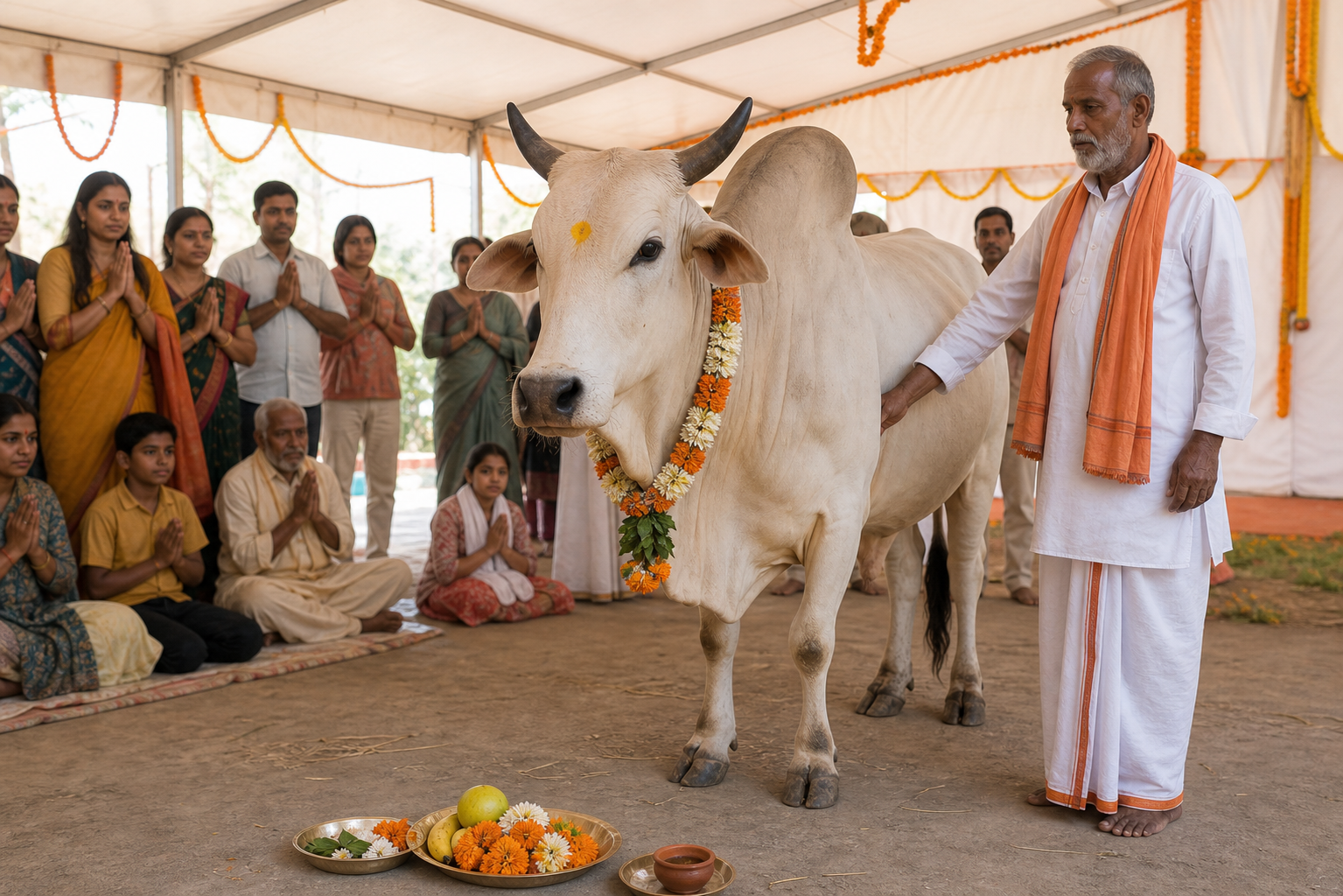
You may come to Gau Puja with a simple question: what should you do when the ceremony begins? The answer is not to imitate every movement around you. Begin by understanding what is being honored, watch for guidance, and act in a way that keeps the cow calm.
That approach lets you participate without treating the ceremony as either a photo opportunity or a ritual test. You do not need specialist knowledge to be respectful. You need attention, restraint, and a willingness to let reverence affect what you do after the festival.
See a sacred relationship, not a festival spectacle
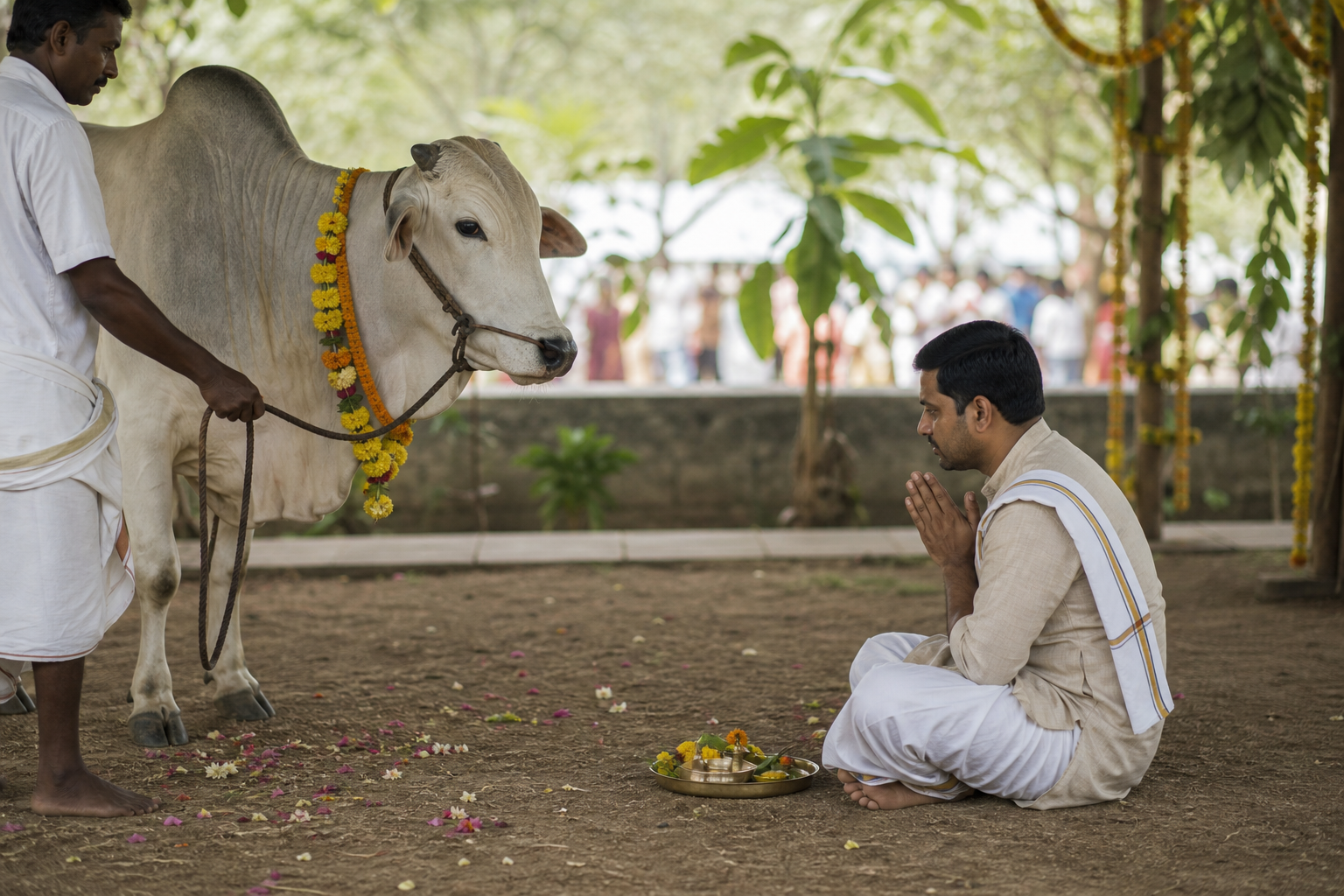
The 2026 Gau Puja at the Prabhupada Festival in Los Angeles is identified as a cow-worship ceremony. The name gives you the essential frame: gau means cow, while puja is an act of reverential worship expressed through attention, offerings, prayer, and service.
The English phrase “cow worship” can be misleading when it is heard outside its Dharmic setting. For many Hindus, honoring the cow recognizes sacred life, maternal giving, and the network of dependence that sustains human society. The cow is not a stage prop or an abstract symbol detached from the living animal in front of you. Reverence has to include concern for her comfort and care.
This distinction changes how you participate. If you are focused only on completing a gesture, collecting a photograph, or proving that you know the ritual, you can miss the relationship the puja is meant to illuminate. Watch how the cow responds. Notice the people responsible for her. Let the pace of the ceremony be set by worship and animal welfare, not by your desire to get closer.
Participate respectfully without guessing the ritual
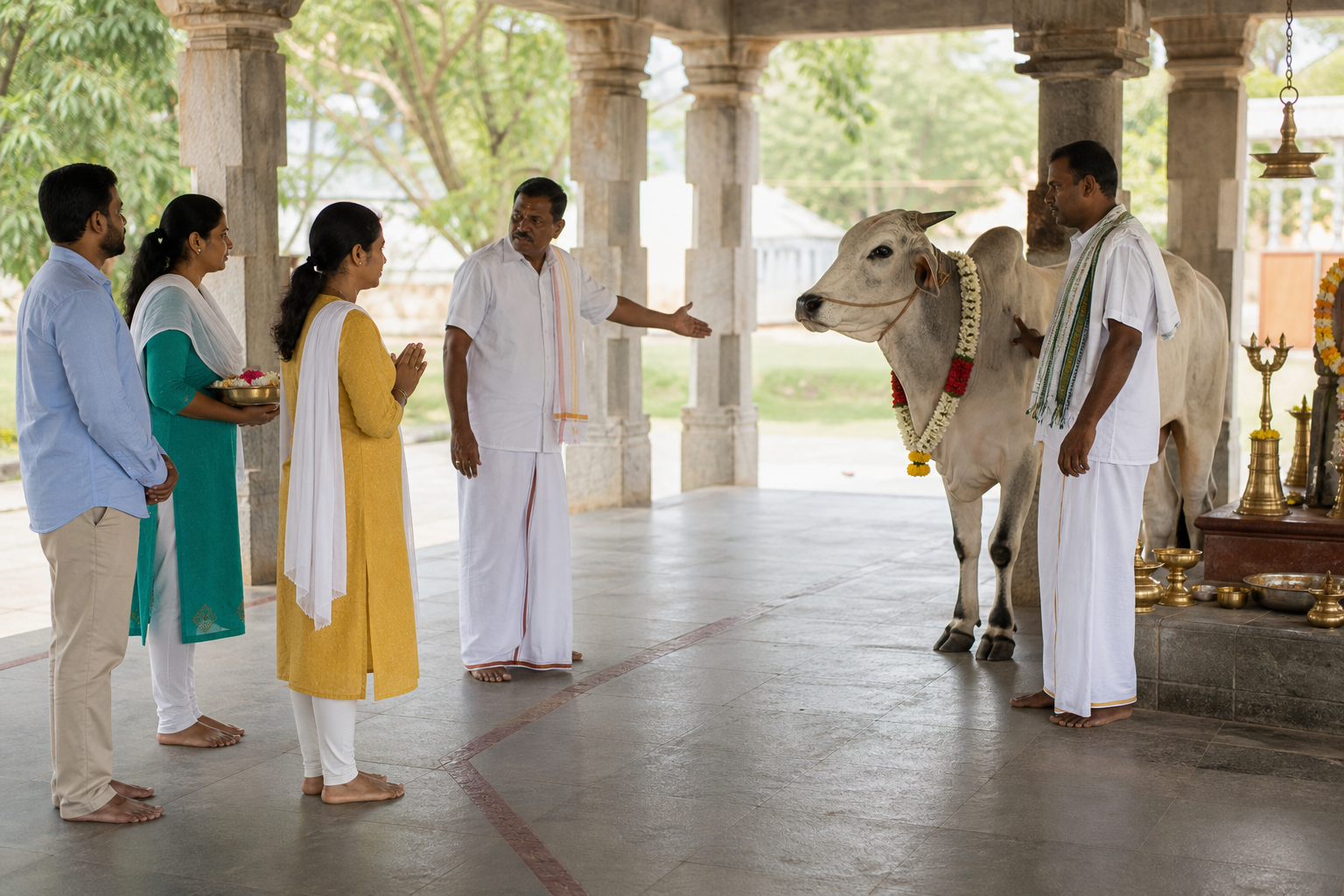
Different communities can arrange puja in different ways. Do not assume that a practice you have seen elsewhere will appear here in the same order. The safest and most respectful method is simple:
- Settle before you participate. Silence your phone, make room for others, and observe before moving toward the ritual area.
- Follow the officiants’ cues. Stand, sit, chant, approach, or circumambulate only when the ceremony’s leaders invite participants to do so.
- Keep personal offerings with you until they are accepted. An item that is customary in another temple or household may not be appropriate for this ceremony or safe for this cow.
- Ask before touching or feeding the cow. Permission should come from the people handling and caring for her, not merely from another attendee.
- Accept only what you can honor. If prasada is distributed, receive it respectfully and avoid taking more than you will consume.
If you do not understand a mantra or action, attentive silence is an honorable form of participation. You can join a response once you recognize it, or continue listening. Pretending to know the sequence usually creates more distraction than simply learning in place.
Protect the cow’s calm while the crowd gathers
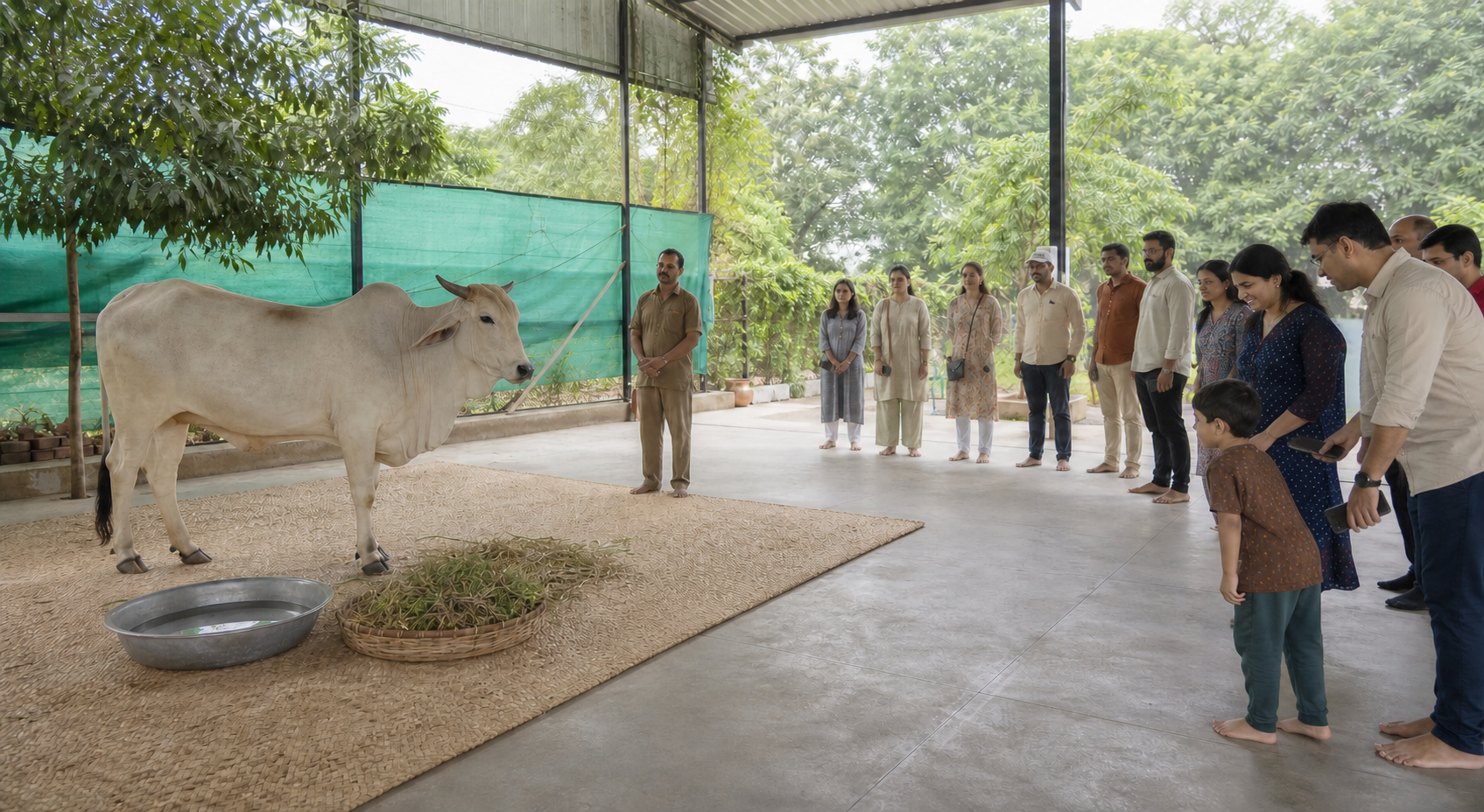
A cow is a living being with her own awareness, limits, and reactions. Crowds, unfamiliar hands, flashes, sudden noises, and food offered from several directions can overwhelm an animal. Religious intention does not remove that risk. Your conduct should reduce it.
- Do not crowd the cow, block her path, or separate her from the designated handlers.
- Approach from the front or side only when invited. Never position yourself directly behind her.
- Keep children beside a responsible adult. Explain beforehand that Gau Puja is not a petting activity and that touching depends on permission.
- Avoid flash photography, abrupt gestures, shouting, and attempts to make the cow face a camera.
- Never bring or offer food unless the handlers approve it. An animal’s diet and feeding plan are matters of care, even when an offering is well meant.
- If you need closer access because of mobility, hearing, or visual needs, ask an organizer for help instead of pressing through the gathering.
These are not secondary rules around the “real” ritual. They express its ethical center. A ceremony meant to honor the cow contradicts itself if her peace is traded for proximity, entertainment, or a better image.
Let Gau Puja lead to informed cow protection
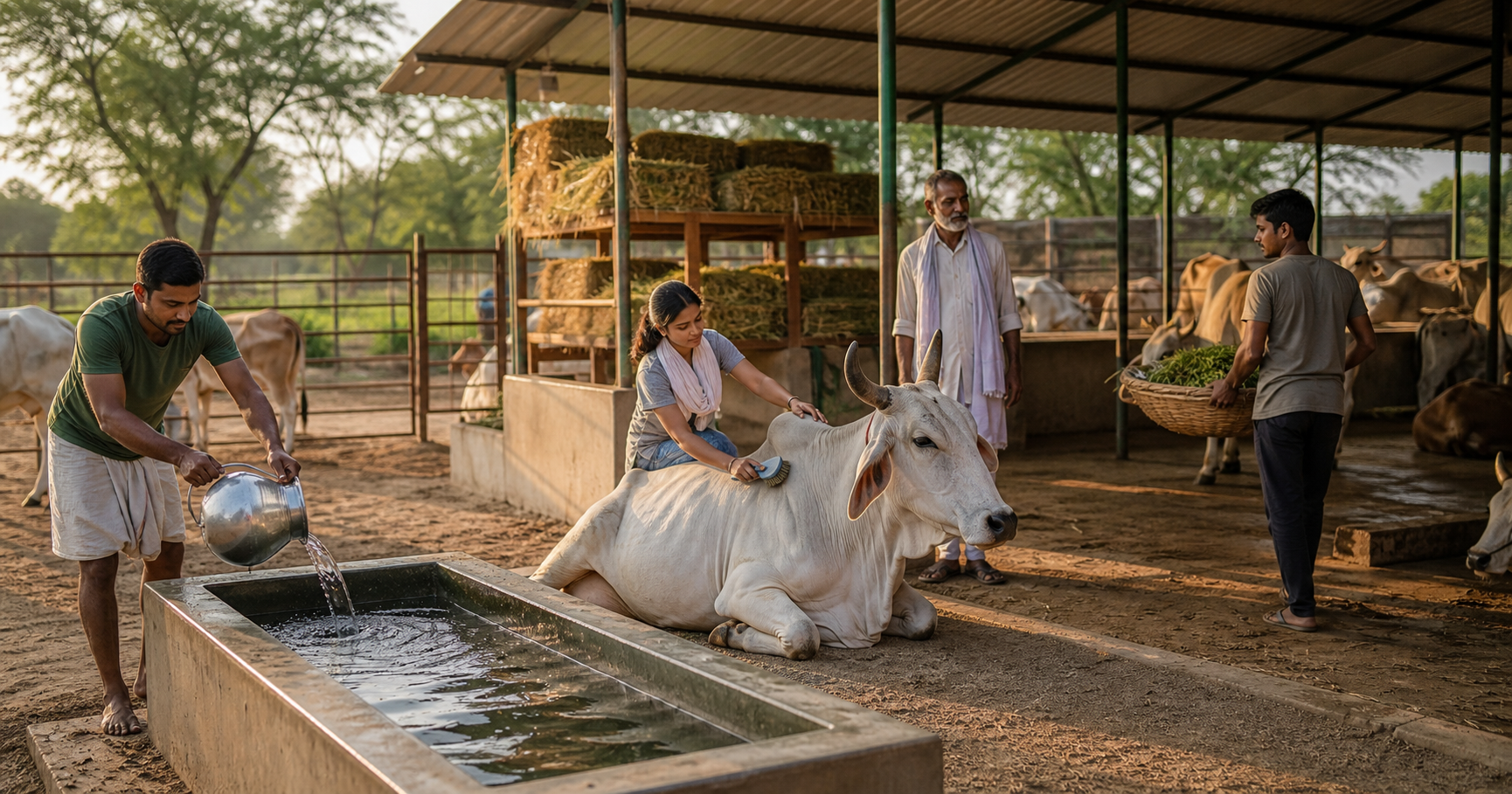
Puja gives gratitude a form, but gratitude becomes durable through seva. After the ceremony, the useful question is not merely whether you felt inspired. Ask what responsibility follows from what you honored.
If you are considering support for a goshala, cow-protection project, or related organization, look beyond devotional language. Respectful questions help you determine whether care continues when an animal is no longer productive:
- Does the organization provide lifelong care for aged, injured, ill, and non-lactating animals?
- What happens to bulls and male calves?
- Who manages daily feeding, shelter, cleanliness, and veterinary needs?
- Is the number of animals appropriate for the available land, labor, and resources?
- Can supporters see how donations are used and what long-term obligations the project has accepted?
You can also examine your household habits. Avoid wasting milk, ghee, food, and other resources associated with agricultural labor. Learn what you can about how the products you buy are obtained. When that information is unavailable, admit the uncertainty rather than allowing a sacred label or attractive package to answer a welfare question it cannot answer.
Ahimsa is not passive admiration. It asks you to notice avoidable harm and reduce your participation in it. Gau Puja becomes more than a festival moment when it sharpens that attention.
Key takeaways
- Approach Gau Puja as reverence for a living relationship, not as a performance to watch or copy.
- Observe first and follow the officiants rather than assuming a universal ritual sequence.
- Do not touch, feed, crowd, or photograph the cow in ways that bypass her handlers or disturb her calm.
- Attentive silence is appropriate when you do not know a mantra or action.
- Carry the puja forward by examining animal care, supporting transparent seva, and reducing waste in your own life.
Before you leave the festival, choose one duty that your reverence has made clearer. It may be supporting responsible lifelong care, changing a wasteful habit, or learning how cows are treated within a supply chain you use. The most faithful next step is the one you will still practice when no ceremony is taking place.
References
