
If you are planning this Ekadashi, the main question is not simply whether to fast on Friday. You need to distinguish the Ekadashi observance on October 17 from the Dwadashi parana expected on the morning of October 18.
The published 1:18 PM transition is a regional almanac time, not a universal clock time. Use it to understand the two-day pattern, then confirm the exact tithi and parana window for your own location before making your final schedule.
Put the two-day observance on your calendar correctly
Friday, October 17, 2025 falls under Krishna Paksha, the waning half of the lunar month. In most regions, Ekadashi continues until 1:18 PM in the applicable regional almanac, followed by Dwadashi. The expected day for parana is Saturday, October 18.
| Civil date | Tithi pattern | What you should plan |
|---|---|---|
| Friday, October 17 | Krishna Paksha Ekadashi until 1:18 PM in the cited regional timing; Dwadashi follows | Keep the Ekadashi vrata and give the day to restraint, japa, dhyana, sacred reading, and satvik conduct according to your tradition |
| Saturday, October 18 | Dwadashi is the expected parana context | Break the fast after local sunrise and within the parana period specified for your location and sampradaya |
A tithi is a lunar division, so it does not begin and end neatly at midnight. That is why Ekadashi can end during Friday afternoon while the customary fast-breaking still belongs to the following morning. The change to Dwadashi at 1:18 PM should not, by itself, be read as an instruction to eat immediately.
If your city-specific Panchang gives a different end time, follow the local calculation. Sunrise, lunar position, almanac method, and community custom can affect the applicable window. Families attached to a temple, matha, guru-parampara, or established household practice should use the calendar recognized by that tradition rather than combining timings from several calendars.
A practical observance plan for October 17 and 18
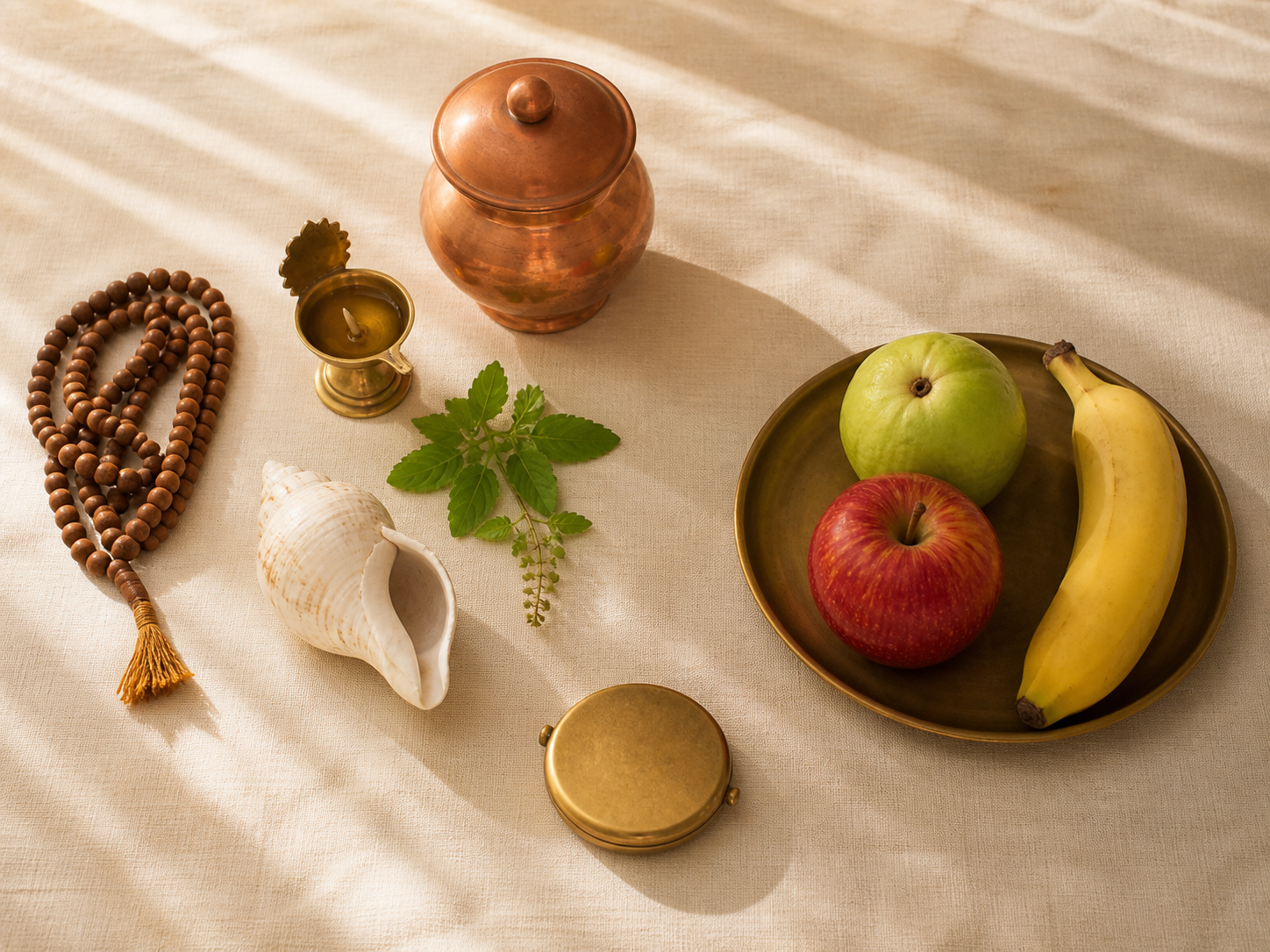
- Check your local Panchang before Friday. Record the Ekadashi end time, the October 18 sunrise, and the stated parana interval. A generic national time is not enough when you are trying to observe a location-dependent muhurta.
- Choose the vrata you can actually keep. Follow the form of fasting prescribed by your family or sampradaya. Food rules vary, so do not turn an unfamiliar internet list into a religious obligation.
- Make a clear sankalpa. Decide what the day will contain beyond dietary restraint: japa, dhyana, quiet reading of a sacred text, satvik speech, daana, or mindful seva. A short, definite commitment is more useful than an elaborate plan that disappears into an ordinary workday.
- Reduce avoidable distraction on Friday. Protect at least one quiet period for practice, moderate entertainment and unnecessary argument, and let restraint shape your conduct as well as your meals.
- Keep Saturday morning available. Do not schedule parana solely from the Friday afternoon tithi change. Break the fast after sunrise on October 18, once Ekadashi has ended and the locally prescribed parana window has opened.
If you need a priest, elder, or temple calendar to settle a difference, ask one precise question: “Which parana window applies to my location on October 18?” That will produce a more useful answer than asking whether 1:18 PM applies everywhere.
Keep the vrata centred on discipline, not food alone
Krishna Paksha encourages an inward movement: less display, less distraction, and more deliberate attention. Ekadashi gives that movement a practical form. Fasting may be central to your observance, but the discipline is weakened if hunger is accompanied by anger, gossip, careless speech, or constant entertainment.
Choose one spiritual practice that can anchor the day. You might maintain your customary japa, sit for dhyana, read a manageable portion of a sacred text, perform quiet seva, or make daana according to your means. The point is not to crowd the calendar with religious activity. It is to create enough inner space to notice your habits and redirect them.
If abstaining from food would conflict with a medical need, do not treat the calendar as medical instruction or disregard professional guidance. You can still practise restraint, prayer, ethical speech, sacred reading, or seva, but whether a modified observance fulfils a formal vrata is a question for your own tradition. Speak with both the relevant clinician and a trusted dharmic guide rather than improvising an extreme fast.
Avoid the timing mistakes that cause most confusion
- Do not universalize 1:18 PM. It is the stated regional almanac time. Your local Panchang may show another time because tithi and sunrise calculations are location-dependent.
- Do not confuse the start of Dwadashi with the parana instruction. Although Dwadashi begins on Friday afternoon in the stated timing, the expected parana is after sunrise on Saturday, October 18.
- Do not borrow Nakshatra, Rashi, or shubh muhurta details from an unrelated city. Those details were not established by the general schedule and should be checked locally if they matter to your puja, sankalpa, or daana.
- Do not mix several almanacs selectively. Taking the earliest time from one and the most convenient instruction from another can produce a schedule that belongs to no coherent tradition. Use one recognized local Panchang consistently.
- Do not reduce Ekadashi to a menu. Dietary restraint without japa, reflection, satvik conduct, or compassionate action misses the discipline the day is meant to cultivate.
Key takeaways
- Observe Krishna Paksha Ekadashi on Friday, October 17, 2025; the cited regional timing places its end at 1:18 PM, with Dwadashi beginning afterward.
- Plan parana for the morning of Saturday, October 18, after local sunrise and within the window given by your regional Panchang.
- Treat 1:18 PM as location-dependent rather than universal.
- Follow your family or sampradaya for the form of fasting, and make japa, dhyana, satvik conduct, seva, or sacred reading part of the vrata.
- Check local calculations before relying on any Nakshatra, Rashi, or shubh muhurta detail.
Prepare the evening before, not during the fast
Before October 17, write down three things: the local parana window, the spiritual practice you will keep, and the household or community tradition you are following. That small preparation removes most of the next day’s uncertainty and lets you give your attention to the vrata itself.
Then leave Saturday morning unhurried. Complete parana in the locally prescribed period and carry the steadiness of Ekadashi into the rest of Dwadashi through measured speech, gratitude, and one concrete act of service.
References
