
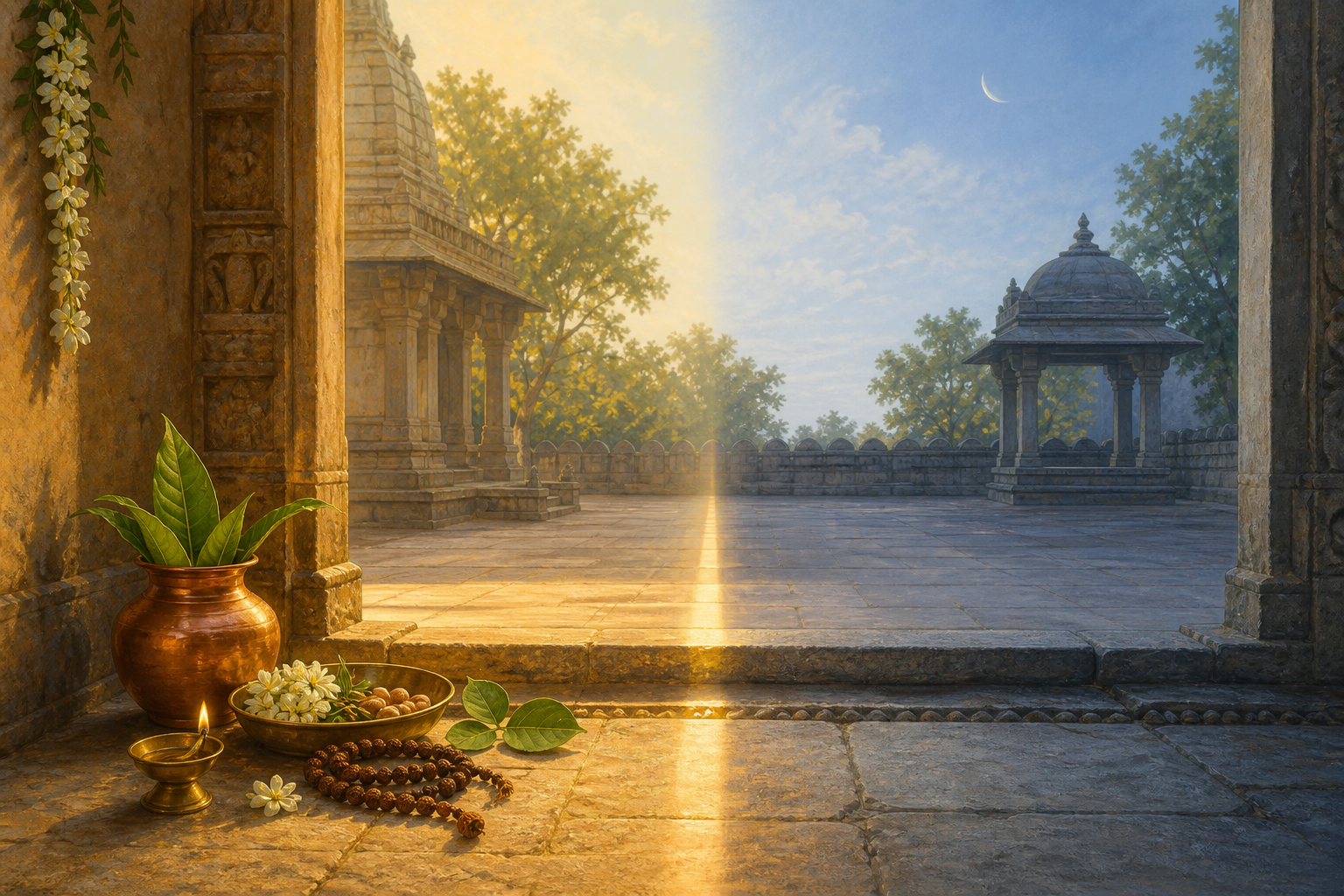
If you found both Trayodashi and Chaturdashi attached to October 19, there is no contradiction to resolve. On Sunday, October 19, 2025, Krishna Paksha Trayodashi prevails until 1:55 PM, followed by Krishna Paksha Chaturdashi, with local and regional variation possible.
That change of tithi is the key to using the day well. Place Trayodashi-oriented practice before the transition, let the afternoon mark a deliberate inward turn, and verify local guidance before treating any clock time as the basis for a formal vrata, puja, daana, sankalpa, or temple visit.
The day’s hinge is 1:55 PM, not midnight
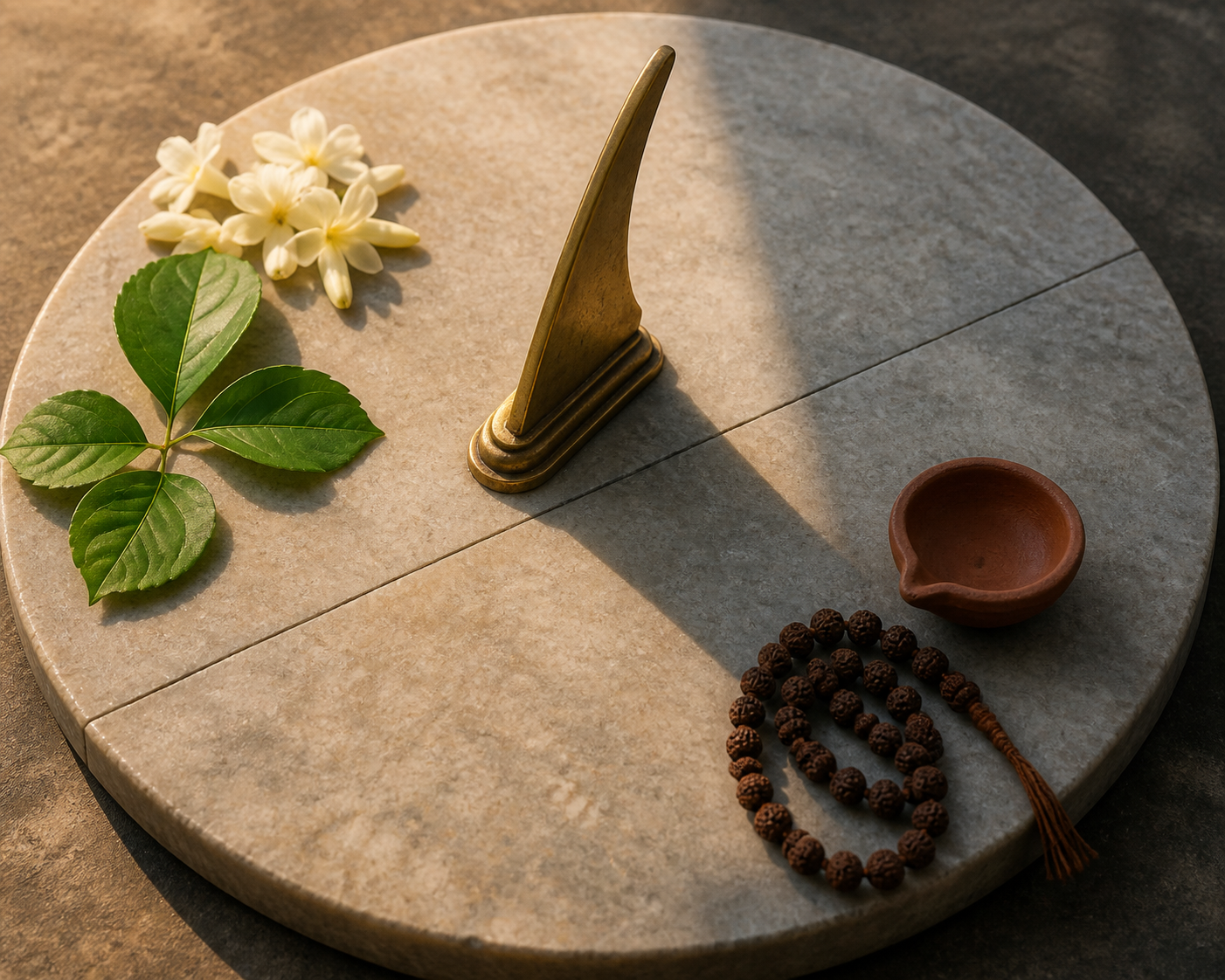
A tithi is a lunar division determined by the changing angular relationship of the Sun and Moon. It does not begin and end with the civil day. One calendar date can therefore contain the end of one tithi and the beginning of the next, as October 19 does.
For the stated schedule, the morning and early afternoon belong to Krishna Paksha Trayodashi. At 1:55 PM, the date moves into Krishna Paksha Chaturdashi. The practical mistake is to choose one tithi for the whole Sunday merely because a printed calendar places that name beside the date.
Treat 1:55 PM as the boundary for the locality and calculation behind this Panchang record, not as a universal timestamp. Sunrise, sunset, time zone, location, and almanac method can shift local results. You also should not infer Nakshatra, Rashi, or a Shubh Muhurat from the tithi alone. Exact timings for rites should come from a trusted regional Panchang or temple notice.
Your required level of precision depends on what you are doing. The broad division of the day is enough for informal prayer, study, meditation, or seva. A rule-bound vrata or muhurta requires the local calendar used by your family, sampradaya, or temple.
Key takeaways for October 19
- Krishna Paksha Trayodashi continues until 1:55 PM in the stated schedule.
- Krishna Paksha Chaturdashi begins at 1:55 PM and shapes the rest of the day.
- Use the Trayodashi portion for study, seva, japa, or simple Shiva-bhakti where these belong to your practice.
- Use the Chaturdashi portion for restraint, quiet prayer, meditation, purification, or a simple lamp offering.
- Do not decide a formal Pradosh Vrat or copy the 1:55 PM time into another location without checking local guidance.
Before 1:55 PM: keep Trayodashi steady and simple
The waning fortnight supports a quieter mode of practice, and Trayodashi gives the morning a natural structure. Choose one defined act instead of assembling an elaborate programme: complete a set period of japa, read a short passage of scripture attentively, perform a simple puja, or give time to useful seva.
If Shiva worship is part of your tradition, the Trayodashi portion can hold Shiva-nama japa or a familiar home puja. Follow the procedure you have actually received from family, guru, or temple. The date itself does not create new fasting rules, mantras, or ritual permissions.
At the transition: finish one intention before opening another
You do not need to turn 1:55 PM into a separate ceremony. Use it as a practical boundary. Complete the morning’s study or seva, pause, and let the afternoon become less outwardly busy. If a sankalpa depends on Trayodashi, verify the local cutoff before beginning rather than discovering the timing problem halfway through the act.
After 1:55 PM: let Chaturdashi deepen the inward turn
Chaturdashi approaches Amavasya and can be observed through restraint rather than accumulation. Reduce avoidable distraction, sit for a short meditation, review the day’s conduct, light a lamp, or offer gratitude in the form customary to your household. These are suitable devotional responses, not a claim that every family must perform the same rite.
The useful test is simple: the evening practice should make the mind more collected. If an ambitious ritual plan creates haste, conflict, or anxiety, return to one familiar act performed with attention.
Pradosh Vrat needs a local decision
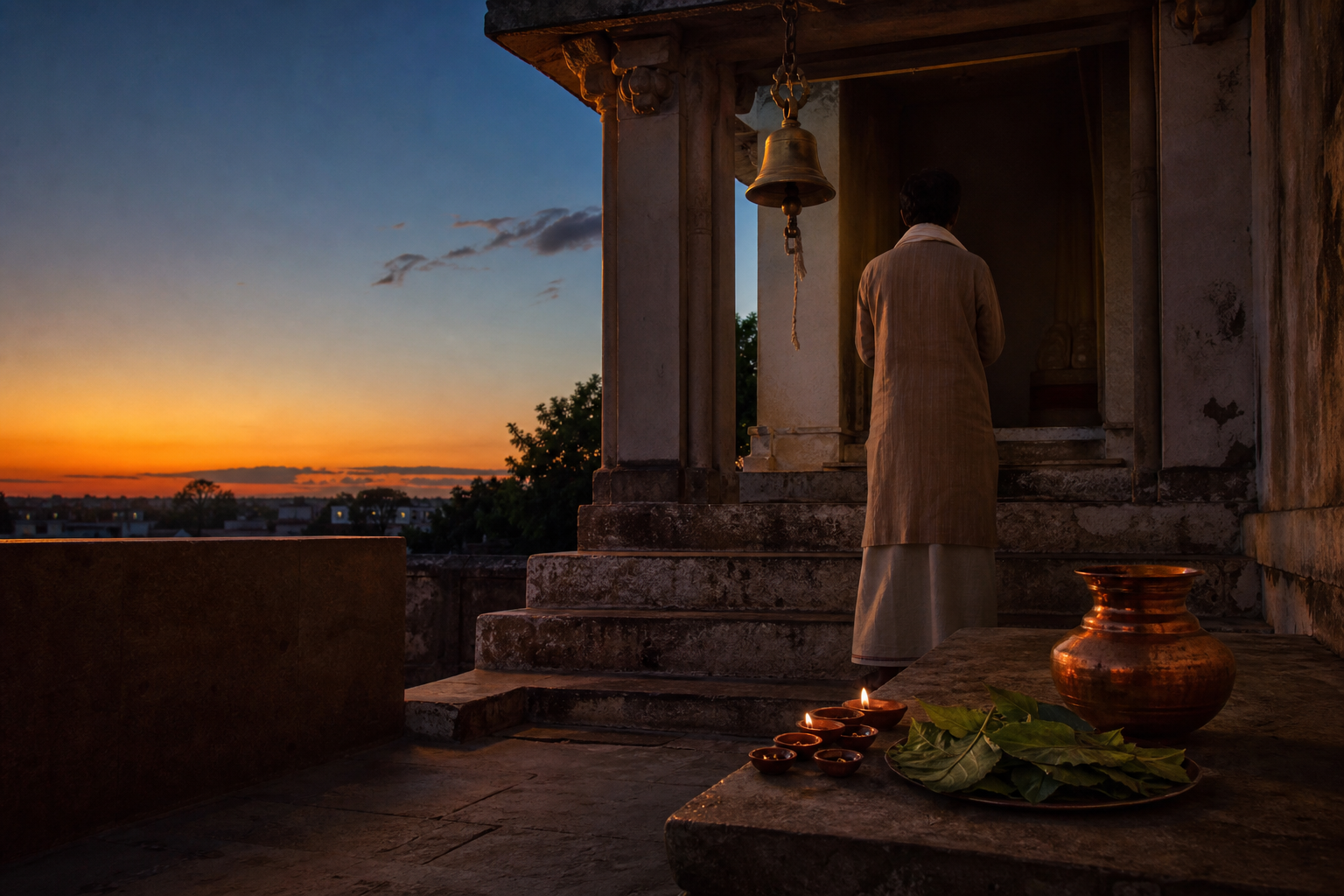
Trayodashi is widely associated with Pradosh Vrat and Shiva devotion during twilight. October 19 requires care, however, because its Trayodashi portion is listed only until 1:55 PM, while the twilight observance belongs to the evening period. The date label by itself therefore does not settle how a formal vrata should be assigned in every region or tradition.
If you are deciding whether to keep Pradosh Vrat on this date, use this sequence:
- Set the city or locality for which you need the observance.
- Check a regional Panchang that explicitly lists the Pradosh Vrat date, not only the daytime tithi transition.
- Check the temple notice if you intend to join temple worship; its programme should govern your arrival and participation.
- Keep your established family or sampradaya convention when calendars use different computational or observance rules.
- Use the local twilight period given for that place. Do not convert 1:55 PM by merely adding or subtracting a time-zone difference.
This distinction prevents two opposite errors. You need not abandon Shiva-bhakti simply because Trayodashi changes in the afternoon, but you also should not declare a formal Pradosh observance from a generic date listing when local ritual guidance is available.
Shared inwardness does not erase distinct paths
The waning phase can invite reflection across Dharmic communities, but it does not turn Hinduism, Buddhism, Jainism, and Sikhism into one ritual system. You can honour a shared movement toward discipline and remembrance while remaining faithful to the language and practice of your own path.
- For a Hindu practitioner, the Trayodashi portion may hold Shiva-bhakti, japa, svadhyaya, seva, or a simple puja. The later Chaturdashi period can hold meditation, a lamp offering, or quiet purification.
- For a Buddhist practitioner, breath awareness or another established contemplative practice can express the day’s inward rhythm without importing a Hindu vrata into Buddhist discipline.
- For a Jain practitioner, pratikraman or deliberate reflection on ahimsa can turn the waning phase into an examination of conduct.
- For a Sikh practitioner, simran or recitation can provide an evening of recollection without suggesting that a Hindu lunar tithi imposes a Sikh ritual obligation.
Choose the practice that belongs to the tradition you actually follow. Respectful parallel observance is more coherent than combining unfamiliar rites merely to make the day appear comprehensive.
Make a calendar entry you can trust later

If you are preserving the date for family records, a temple archive, or future calendar planning, separate verified facts from local decisions. Record Sunday, October 19, 2025; Krishna Paksha Trayodashi until 1:55 PM; and Krishna Paksha Chaturdashi thereafter. Mark the time as locality-dependent until you have checked the Panchang used in the relevant place.
Then add observance information in a separate field. Note whether the family or temple assigned Pradosh Vrat to the date, which regional calendar supplied that decision, and what local time governed the programme. Do not copy this combination of weekday, tithi, and clock time into another year. Lunar dates must be calculated anew.
For personal practice, decide first whether you need a devotional rhythm or a rule-bound observance. In the first case, place one steady practice before the transition and one quiet practice afterward. In the second, make local Panchang or temple confirmation your first act. That keeps sincerity ahead of false precision.
References
