

If you are trying to form a principled view of the Israel-Hamas conflict, you may feel pressured to accept an entire political package: sympathy for one population, suspicion of another, and silence about whichever suffering inconveniences your side. You do not have to accept that bargain.
You can condemn Hamas’s hostage-taking, defend the security of Israelis, insist on the protection and legitimate rights of Palestinians, support humanitarian access, and reject hatred toward Jews and Muslims at the same time. That is not evasive neutrality. It is the discipline required to judge conduct without surrendering your conscience to a camp.
Begin with duties that do not depend on identity

War encourages moral bundling. A civilian becomes a representative of a government. A hostage becomes a bargaining instrument. A grieving family becomes useful only when its pain supports a preferred narrative. A Dharmic response starts by undoing those substitutions.
- Hostages must be released. Their civilian status and dignity do not disappear because captors believe they possess political leverage.
- Israeli and Palestinian civilians must not be treated as extensions of armed actors. Civilian protection is a duty, not a reward for political agreement.
- Humanitarian assistance must reach people according to need. Food, medicine, psychosocial care, and emergency support should not become instruments of collective punishment or ideological loyalty.
- Families need credible identification, clear communication, and dignified repatriation when a captive or missing person is found dead.
- Accountability must attach to conduct. It must not mutate into blame against an ethnicity, nationality, or religion.
These are not merely gestures of goodwill. They reflect core humanitarian obligations concerning hostage-taking, non-combatants, humanitarian access, identification, and communication with families. Political disagreement may affect how parties negotiate, but it does not make the captive less human or the wounded child less deserving of care.
Keep the categories exact. Hamas is not a synonym for Palestinians or Muslims. An Israeli government or military decision is not a synonym for Jews. Palestinians are not interchangeable with armed factions, and Jewish civilians are not stand-ins for every act of the Israeli state. When language collapses these distinctions, collective hostility becomes easier and accountability becomes harder.
The death of Bipin Joshi shows why precision matters. On 14 October 2025, the Nepalese Hindu student was confirmed dead after more than two years in Hamas captivity, alongside three other hostages. He had gone abroad with the ordinary aspirations of a student and worker, not as a participant in the conflict. His fate reminds you that the human field extends beyond the two populations most often named. Foreign students, migrant workers, families abroad, and third-country communities can also be pulled into the machinery of war.
Before sharing a claim about any victim, ask four questions: Who was harmed? What is actually known? Which duty was violated? What remedy is now required? If a message gives you only a group identity and an invitation to rage, it is probably recruiting you into a narrative rather than helping anyone.
Use Dharmic principles as disciplines, not decorations
Ahimsa, satya, karuna, and seva can guide a response to war, but only when they change what you do. Repeating Sanskrit or Indic terms while excusing cruelty by a favoured actor empties them of force. Each principle imposes a distinct obligation.
Ahimsa requires protection as well as restraint
Ahimsa is not passive indifference to kidnapping, attacks, or threats. It asks whether action protects life, whether force is directed toward an actual threat, whether restraint is being practised, and whether less destructive means remain available. Refusing to protect the threatened can also abandon them to violence.
This means you need not choose between security and compassion as abstract opposites. A serious position asks how security can be achieved without treating an entire civilian population as the enemy. It also asks how humanitarian concern can be expressed without minimizing the danger posed by hostage-taking or organized violence.
Satya requires a visible boundary around what is known
Conflict information arrives through governments, armed groups, campaigners, witnesses, media organizations, and fast-moving social platforms. Their claims do not all carry the same degree of verification. Satya therefore requires more than avoiding a conscious lie. It requires you to mark the difference between a confirmed fact, a party’s allegation, and your own inference.
- Attach a date to a developing claim. Old footage or an earlier statement can be true in its original setting and misleading when recirculated without context.
- Name the actor precisely. Do not convert a claim about a government, military unit, armed faction, or individual into a claim about an entire people.
- Preserve uncertainty. If identification, responsibility, or circumstances remain unconfirmed, say so rather than filling the gap with whatever your politics makes plausible.
- Correct an error with the same visibility with which you shared it. Quietly deleting a false claim does not repair the impression left with everyone who saw it.
Karuna rejects selective humanity without forcing equal blame
Compassion does not require you to declare every act morally identical. It requires you to recognize the dignity of every innocent person affected by those acts. You can make a precise judgment about responsibility while mourning people on more than one side. Refusing selective grief is not the same as manufacturing a false equivalence between perpetrators, policies, or circumstances.
A simple test helps: would you still defend the principle if the victim’s identity changed? If hostage-taking is wrong, it remains wrong when the captive is outside your community. If the denial of necessary aid is wrong, it remains wrong when the recipient follows another faith. If dehumanizing speech is wrong, it remains wrong when it is aimed at a population whose leaders you oppose.
Seva turns concern into work that reaches someone
Seva asks what your sympathy produces. A carefully organized vigil can give bereaved families dignity. Support routed through a verified humanitarian organization can fund medical, psychosocial, or emergency needs. A university can improve safeguards for students abroad. A community association can maintain reliable consular contacts instead of improvising after a crisis begins.
Hindu itihasa also needs careful handling here. The Mahabharata and Ramayana show that moral responsibility may require action against grave wrongdoing; they do not give us permission to assign present-day peoples the permanent roles of heroes and demons. Their useful lesson for conflict is that moral purpose must be joined to measured action, patience, accountability, and a just objective. Once an epic analogy is used to portray a whole ethnicity or religion as irredeemable, it has stopped illuminating Dharma and started licensing collective hatred.
Judge every peace proposal by five practical tests

A ceasefire can stop immediate killing without resolving the conflict. A signed framework can establish direction without surviving its first breach. An announcement can also be little more than political theatre. The identity or claimed destiny of a leader tells you far less than the design of the agreement.
Whether a proposal is associated with Donald Trump or any other leader, apply the same standard. Fragmented leadership, regional rivalry, domestic polarization, unequal incentives, and spoiler violence can defeat an agreement after the ceremony. A credible plan must anticipate those pressures rather than merely promise that goodwill will overcome them.
- Does it protect life immediately? Look for explicit treatment of hostages, civilian safety, and humanitarian access. If these are postponed until every political question is settled, people remain exposed while negotiators debate the final order.
- Does it define implementation? Ask who confirms that commitments have been fulfilled, how breaches are reported, and what keeps one violation from collapsing the entire process. Trust can support an agreement, but it cannot replace verification and institutional responsibility.
- Does it hold security and legitimate rights together? A plan that ignores Israeli security fears is unlikely to endure. A plan that denies Palestinian dignity, identity, or legitimate rights cannot produce a just peace. Treating one concern as real and the other as an obstacle only stores the conflict for later.
- Does it account for actors who benefit from failure? Armed spoilers, fractured leadership, regional competitors, and domestic political factions may have reasons to sabotage compromise. A serious framework identifies these incentives and builds resilience against them.
- Does it build a life after the agreement? Security guarantees are necessary, but so are economic pathways, locally owned institutions, interfaith contact, and forms of narrative reconciliation that allow people to see one another as human. These are not sentimental extras. They are part of preventing a temporary pause from becoming the interval before another war.
Do not confuse spiritual language with a mechanism. Karma does not mean that political outcomes arrive independently of human agency. Prayer, hope, or a belief that a leader has a special role may sustain individuals, but they do not specify verification, secure humanitarian access, release a hostage, or reconcile competing claims. Institutional design is part of moral responsibility.
The same caution applies to absolutist ideologies. A peace process cannot be durable if it demands the erasure, conversion, permanent humiliation, or political disappearance of another community. A plural order must leave room for Jews, Muslims, Christians, and others to retain identity, security, and civic dignity. Agreement does not require theological sameness. It requires rules under which difference is not treated as a reason for domination.
Turn humanitarian concern into accountable action
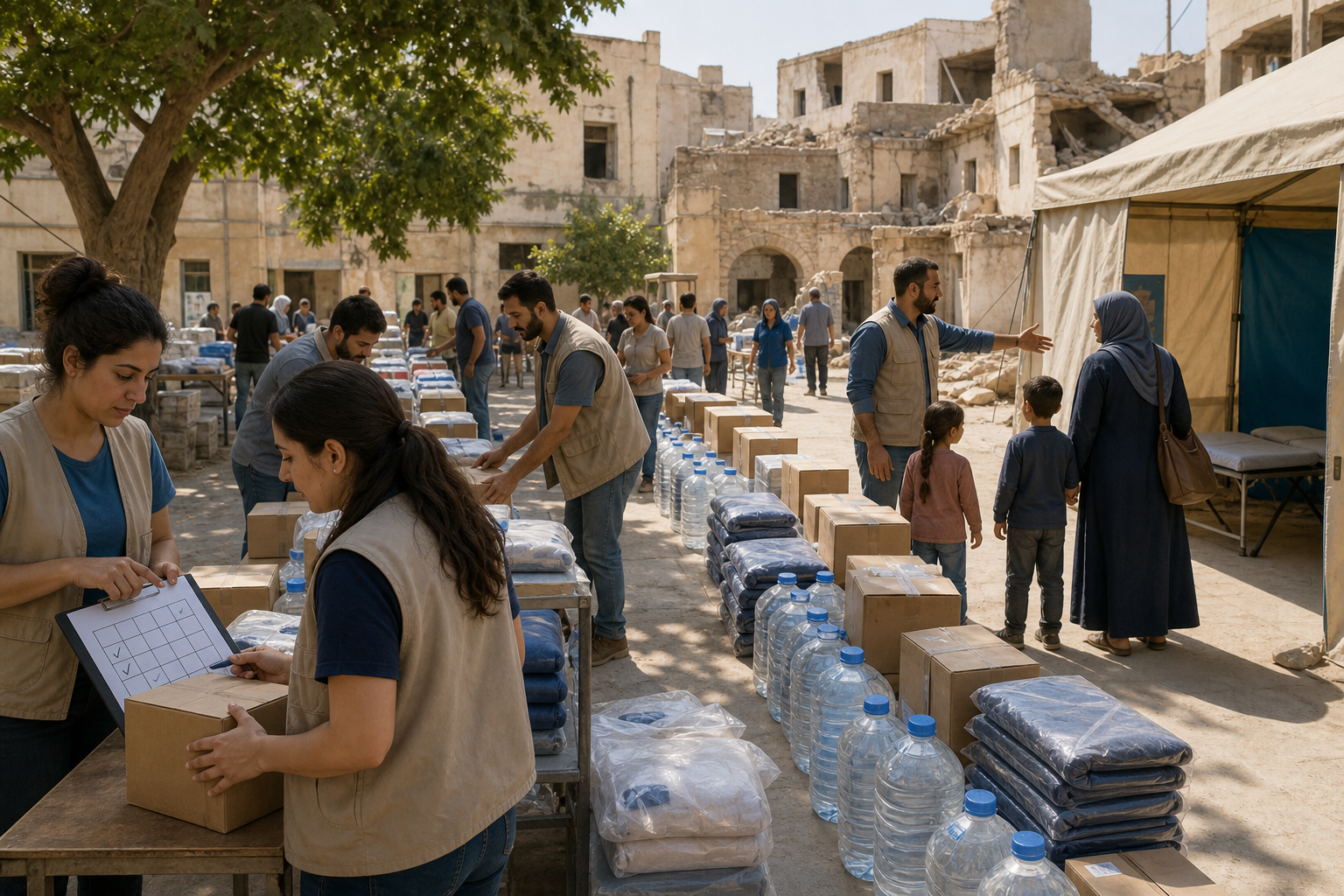
You may not be at the negotiating table, but your actions still affect the information, institutions, and community climate around the conflict. Choose work with an identifiable beneficiary and a way to check whether it was done.
- When you donate, use a verified humanitarian organization and look for a clear description of the medical, psychosocial, consular, or relief work being funded. A moving image is not proof that an appeal can deliver assistance responsibly.
- When you organize a vigil, name the purpose in advance: remembrance, hostage release, civilian protection, support for families, or a combination of these. Establish a rule against antisemitic, anti-Muslim, or collectively dehumanizing speech so grief is not converted into recruitment for hatred.
- When you contact a representative or advocacy organization, ask concrete questions. How does the proposed policy address hostage release, civilian protection, humanitarian access, identification of the dead, family communication, security guarantees, and implementation after a breach?
- When you discuss the conflict, criticize the responsible institution or actor by name. Replace claims about Jews, Muslims, Israelis, Palestinians, or Arabs as undifferentiated groups with the narrowest accurate description.
- When information is not confirmed, do not increase its apparent certainty with an emphatic caption. Say what remains unknown and return to the claim when reliable confirmation exists.
Bipin Joshi’s case also points to obligations closer to Bharat and the wider South Asian diaspora. Students and workers continue to cross borders in search of education and opportunity. Universities, employers, community bodies, and governments should treat crisis preparation as part of that mobility, not as an improvised response after contact is lost.
- Before departure, provide a country-specific safety orientation and current consular emergency channels.
- Give students and workers a named institutional contact, not only a general mailbox that may go unanswered during a crisis.
- Define the check-in and escalation chain to be used when conflict begins or a person cannot be reached.
- Coordinate institutions, employers, families, and consular services so each knows who is responsible for the next communication.
- Plan post-incident support for survivors and affected families, including psychosocial care and reliable assistance with official processes.
Pre-departure orientation, crisis-response training, consular coordination, and post-incident care will not remove the danger of war. They can prevent families from losing critical time to confusion and unclear responsibility. That is a concrete form of seva.
Key takeaways
- Reject the demand to choose between condemning hostage-taking and protecting Palestinian civilians. Both duties can be held without moral contradiction.
- Apply ahimsa to means, satya to claims, karuna to every innocent life, and seva to work with a real beneficiary.
- Judge a peace initiative by civilian protection, implementation, security and rights, resistance to spoilers, and the institutions needed after an agreement.
- Keep Hamas distinct from Palestinians and Muslims, and keep Israeli state conduct distinct from Jews. Precise language protects both truth and accountability.
- Convert grief into an accountable act: support verified relief, improve safeguards for people abroad, demand clear family communication, or correct dehumanizing speech in your own community.
Your next step need not settle the Middle East. It should make one part of your own response more truthful and useful. Correct one collective accusation, ask one precise question about a peace proposal, strengthen one student-safety procedure, or support one verified channel of care. Peace is built through agreements, but a culture capable of sustaining peace begins with these disciplined choices.
References
- DharmaRenaissance Blog – Essential Dharmic Lens on Trump’s Middle East Peace: Discover Hope, Risks, and Paths Forward
- DharmaRenaissance Blog – Essential Update: Nepalese Student Bipin Joshi Confirmed Dead After Hamas Captivity – A Call to Unity
