
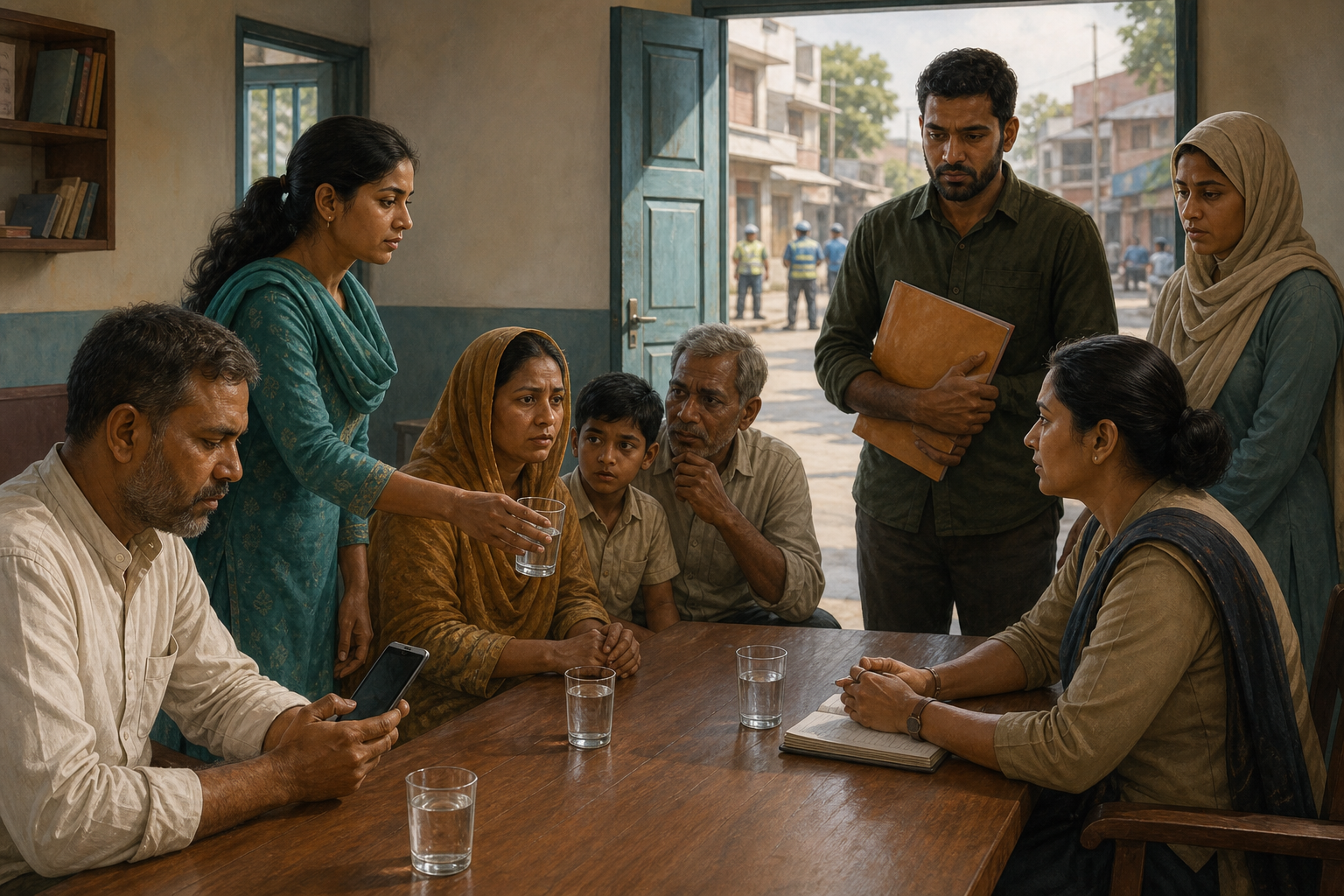
You open your phone and see an allegation of communal violence, a disturbing video, or a dispute already being described as a religious conspiracy. Silence may feel like abandonment. Immediate sharing may expose a victim, compromise evidence, or turn an unverified claim into a new flashpoint.
Your first decision is not which side to defend online. It is what kind of event is in front of you, who may still be at risk, and which action can reduce harm. The framework below will help you move from alarm to a documented, lawful demand for minority protection without minimizing anti-Hindu violence or assigning collective guilt.
Separate an emergency from a civic or legal dispute
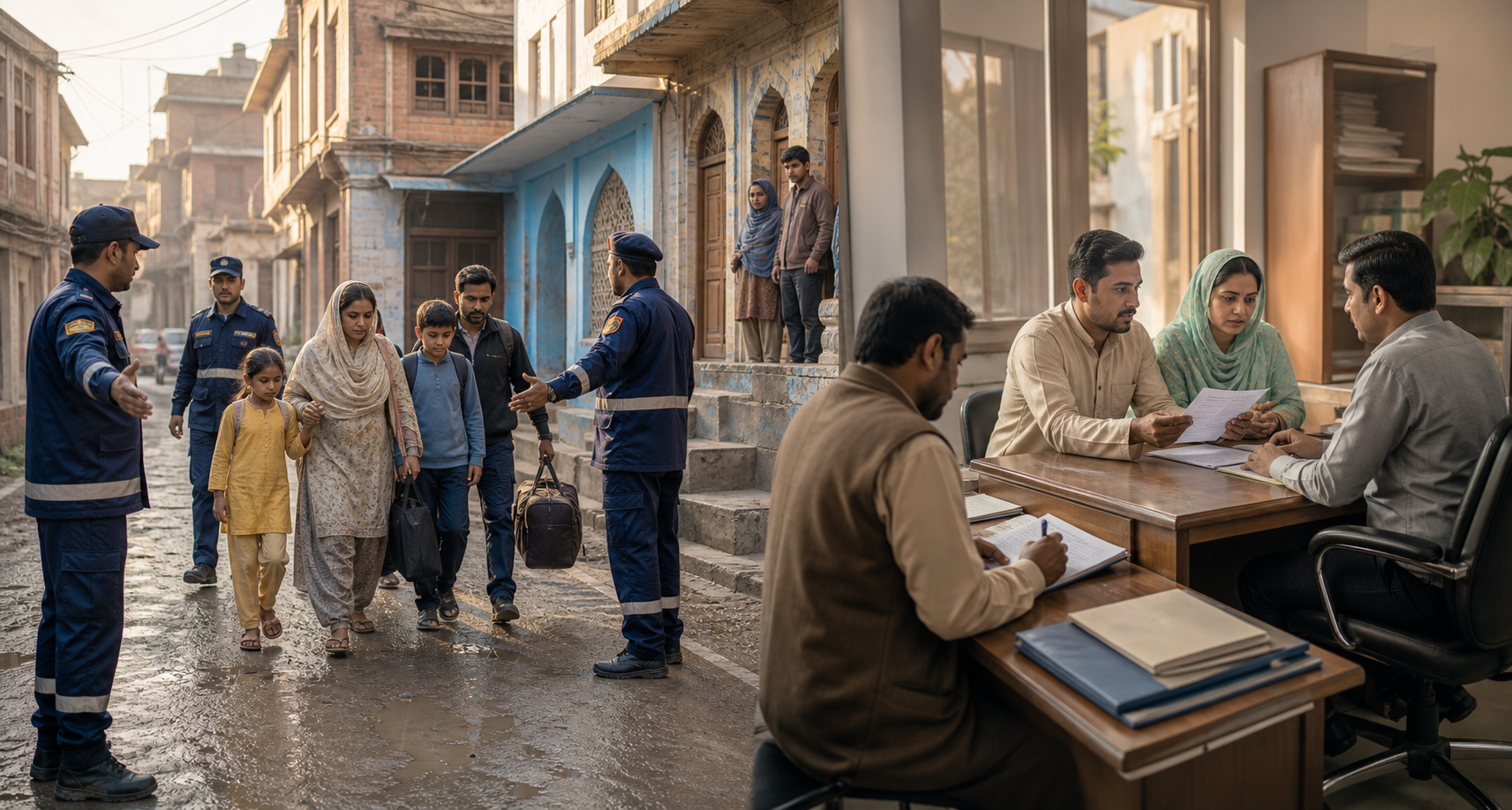
Religious tension is a social condition, not a single type of case. A violent attack, a direct threat, a land dispute, and a viral allegation require different first responses. Treating all four as interchangeable weakens the very claim you want authorities to take seriously.
Consider the difference between two recent controversies. Subrata Chandra Das was reportedly killed in daylight in Subarnachar, Noakhali, on 14 October 2025. That is first a human-safety and criminal-accountability matter. In Jabalpur, the central allegation concerned unauthorized madrasa construction on government land. That question turns on title records, boundaries, permissions, notices, and lawful adjudication.
| Situation | Question to answer first | First useful action |
|---|---|---|
| Attack or continuing violence | Is anyone still in danger or in need of medical help? | Reach local emergency services, move people to safety, and preserve the scene and original evidence. |
| Direct threat or intimidation | Who is threatened, how specific is the threat, and does the person have a safe place? | Document the exact words or conduct, protect identifying information, and seek an immediate risk assessment from competent authorities. |
| Land, construction, or permit dispute | Who owns the parcel, where are its legal boundaries, and what approvals exist? | Request title records, cadastral maps, a neutral survey, sanctioned plans, and applicable permissions. |
| Viral claim, image, or video | Can the date, place, people, and current status be independently established? | Save the original privately, label every uncertainty, and delay public conclusions until the basic facts are confirmed. |
Use one overriding rule: if someone may still be in danger, act on safety before debating motive. If nobody faces an immediate threat, do not import emergency rhetoric into an administrative dispute. A suspected encroachment does not become a proven communal plot because an inflammatory label is attached to it. A killing does not become less serious because every detail of motive is not yet known.
Use a first-hour, first-day, first-week protocol

A viral clip is not a case file. Authorities, lawyers, community organizations, and courts need material that can be checked. Your task is to protect life first and then preserve a reliable chain from event to evidence to official action.
In the first hour: reduce danger and preserve originals
- Check immediate safety. Contact the locally applicable emergency service. Do not enter an unstable scene or organize a confrontation. If medical help is needed, do not delay it to collect more footage.
- Save original material. Keep the first file you received, the accompanying message, the sender’s details, and the time of receipt. Do not crop, caption, enhance, or repeatedly re-export the only copy.
- Start a factual log. Put each statement under one of three labels: personally observed, attributed to a named person, or not yet verified. Record the date, approximate time, location, immediate risk, and action already taken.
- Protect witnesses and victims. Do not publish home addresses, telephone numbers, travel plans, medical details, or the identity of a vulnerable witness. Ask for consent before circulating a victim’s name or image unless it is already part of a responsible public record.
- Choose one coordinator. In a community response, one person should maintain the log and one should communicate with authorities. Conflicting versions from several volunteers can make a genuine complaint look unreliable.
In the first day: turn the incident into an official record
- Submit a written complaint through the procedure that applies locally. Where an FIR process applies, seek prompt registration and retain the reference or acknowledgment provided.
- List evidence without editing it: original files, eyewitness names, photographs, medical documents, property records, or relevant correspondence. Keep a duplicate outside the device used in the field.
- Ask what immediate protection is available for the victim, family, witnesses, place of worship, school, business, or neighborhood at risk.
- Nominate a family-approved or community-approved contact so that authorities do not disclose sensitive information through multiple informal channels.
- Issue a public statement only after the minimum facts are stable: what allegedly happened, where, when, who is at risk, which authority was notified, and what remains unknown.
In the first week: follow the process, not the news cycle
Create a simple follow-up register with the complaint reference, date of every contact, name or office of the responsible official, evidence submitted, protection requested, next promised action, and follow-up date. This is more useful than a folder of screenshots because it shows where institutional responsibility currently rests.
Continue practical support after public attention falls: safe transport, medical follow-up, access to locally qualified counsel, help replacing damaged documents, and confidential witness contact. If an authority is unresponsive, ask counsel about the lawful escalation route in that jurisdiction. South Asia is not one legal system, and filing requirements differ; general civic guidance cannot replace advice from a lawyer qualified where the incident occurred.
Ask the state for actions that can be audited
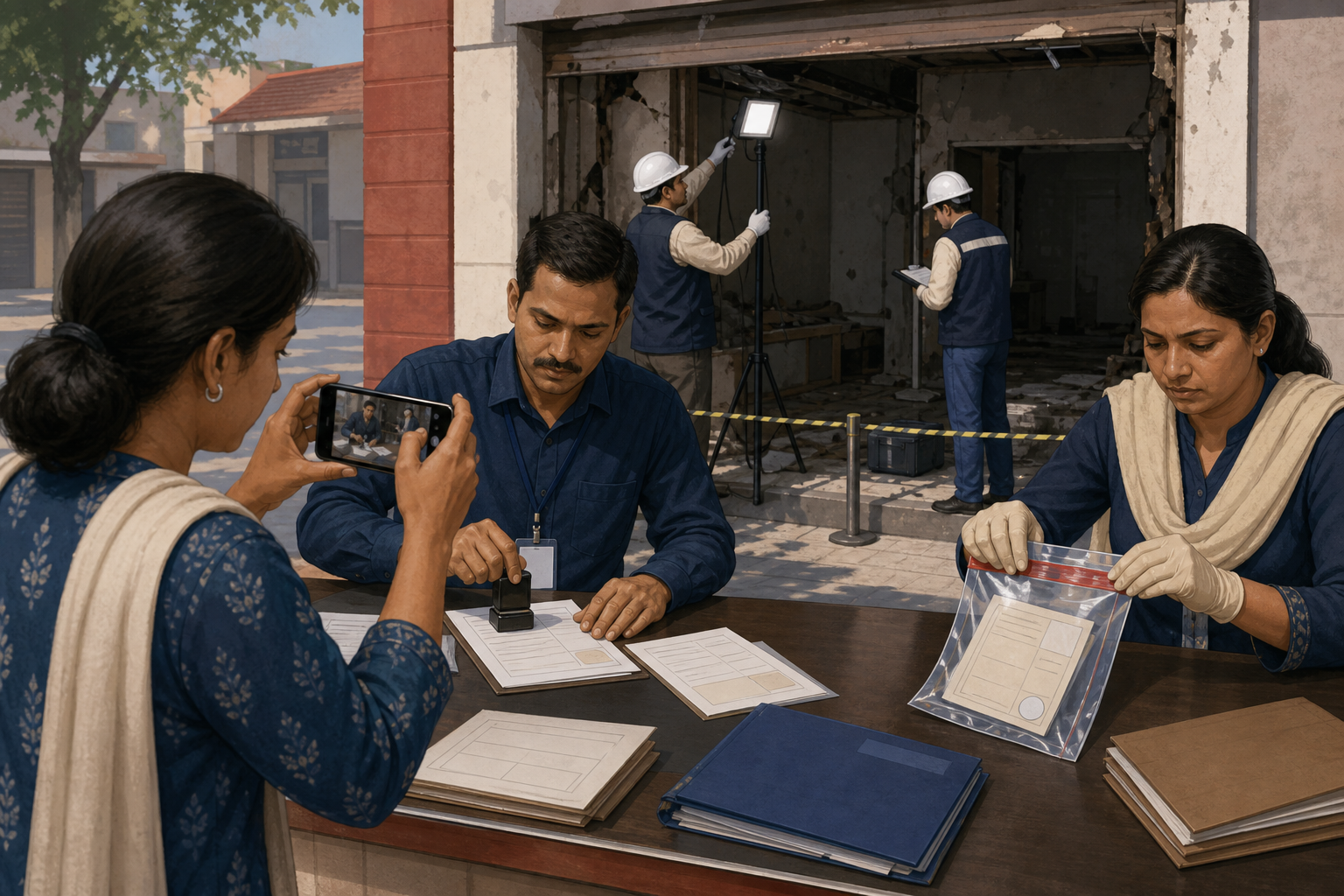
Protect minorities is a morally clear demand, but it is administratively incomplete. An accountable request names the authority, the action required, the record that should result, and the date by which a response is expected. That makes neglect visible and reduces the space for symbolic assurances.
For violence, threats, or targeted intimidation
- Ask for formal recording of the complaint and written acknowledgment.
- Request preservation of physical and digital evidence, timely forensic examination where relevant, and a documented list of material received.
- Seek a risk assessment for the victim, family, witnesses, and any location that could face retaliation.
- Request confidential witness contact and practical protection rather than public identification of witnesses.
- Ask which unit or official owns the next step, what that step is, and when a status update will be available.
- Where tension affects a neighborhood, request proportionate patrols and a public channel for correcting rumors without disclosing sensitive case details.
The response to the Noakhali killing illustrates why these details matter: calls centered on investigation, witness protection, stronger security in sensitive areas, legal aid, and clear public communication. Each is an action that can be assigned and tracked. Outrage alone cannot tell a family whether a witness is safe or whether evidence has been preserved.
For land, construction, and institutional-property disputes
- Identify the parcel precisely and obtain the current title or custody record.
- Compare the cadastral map with a neutral on-site boundary survey.
- Request the sanctioned site plan, building permission, zoning status, and any environmental clearance that applies.
- Ask whether notice was served, who was allowed to respond, and which official has authority to decide the matter.
- If the facts remain disputed, seek locally qualified legal advice about interim relief and final adjudication through the competent court or tribunal.
The governing standard should not change with the institution’s religion. If the records establish unauthorized occupation or construction, the lawful remedy should follow. If valid authorization exists, officials should disclose it and explain the basis. Land records, sanctioned maps, permissions, and a documented civic inquiry answer the dispute more reliably than slogans.
Suggested wording for a written request: Please confirm the legal status of the incident or property, identify the responsible office, acknowledge the evidence or records received, state the immediate protective or procedural action being taken, and provide a date for the next written update.
Keep the request narrow enough to answer. A sweeping demand about an entire religious community invites a political speech. A request for a parcel map, complaint acknowledgment, witness-safety contact, or investigation status requires a concrete response.
Protect the minority without creating another target

A pro-Dharmic response does not have to choose between naming anti-Hindu violence and exercising restraint. Ahimsa is not passivity. It rejects both concealment of harm and retaliation against uninvolved people. Justice becomes stronger when the alleged act is described precisely, the vulnerable are protected, and responsibility is attached to evidence rather than identity.
Use language that preserves the case
- Name the act, place, and status. Say reported attack, alleged threat, disputed construction, or pending inquiry. Do not present motive, ownership, or guilt as settled before it is established.
- Keep responsibility individual or institutional. Name an alleged offender, organization, official decision, or documented failure when the information supports it. Do not substitute a whole religious population for the actor whose conduct is at issue.
- Do not let a label replace a testable claim. Expressions such as Land Jihad and Kinnar Jihad were used while framing the Jabalpur allegations, but neither expression establishes who owns the land or whether a permit exists.
- Do not use graphic suffering as promotional material. Preserve original footage for investigators and counsel. If public circulation serves a legitimate purpose, remove identifying details where necessary and avoid looping, sensational captions, or images that strip the victim of dignity.
- Correct visibly. If a date, location, identity, or procedural claim proves wrong, update the same channels that carried the error. Quiet deletion leaves the false version circulating.
Equal protection does not dilute the claim of Hindu, Buddhist, Jain, or Sikh minorities. It gives that claim a durable principle: the state must protect a person facing violence or intimidation regardless of faith, and it must investigate targeted hostility without using communal peace as a reason to suppress uncomfortable facts.
Build the protection network before the next flashpoint
Minority protection fails when it begins only after a killing, riot, threat, or property confrontation. A local temple, gurdwara, vihara, Jain institution, neighborhood association, or civil-rights group can prepare a modest response system without becoming a vigilante body.
- Maintain a current contact tree for local emergency services, civic authorities, locally qualified lawyers, medical transport, victim-support volunteers, and trusted religious institutions.
- Use one incident form with fields for date, time, place, immediate danger, people notified, firsthand observations, attributed accounts, original files, consent restrictions, and required follow-up.
- Designate a confidential witness-support contact and a separate public spokesperson.
- Create a small cross-community channel that can verify local conditions and correct rumors without negotiating away a victim’s legal rights.
- In places with a history of tension, confirm contact numbers and protection requests before major festivals or periods of political uncertainty. Localized tensions can become especially concerning around political flux and festival seasons.
- After an incident, review what failed: the first alert, emergency response, evidence handling, official acknowledgment, witness safety, or public correction. Assign one repair to a named person or institution.
Do not turn this network into an armed patrol, a rumor-monitoring mob, or a substitute police force. Confrontational groups can expose volunteers and residents to physical danger and legal consequences. The useful role is narrower: alert, document, accompany, support, refer, and follow up.
Key takeaways: a workable standard for minority protection
- Classify the event before campaigning about it: emergency violence, direct threat, administrative dispute, or unverified media.
- When danger may be continuing, prioritize safety and medical help over filming, argument, or public narration.
- Separate what was observed, what a named person reported, and what remains unknown.
- Convert general demands into auditable requests for records, protection, evidence preservation, responsible officials, and dated updates.
- Describe alleged offenders and institutional failures precisely; never make an uninvolved religious population answer for them.
- Prepare legal-aid, witness-support, rumor-correction, and official-contact channels before a predictable period of tension.
If a troubling claim reaches you today, begin with one page: what happened, who may be at risk, what is verified, what remains uncertain, which authority owns the next action, and when you will follow up. That page will not solve religious tension. It will, however, give a threatened person practical support, preserve the truth, and create a case that institutions can be required to answer.
References
- Struggle for Hindu Existence — Essential Breakdown of Jabalpur Madrasa Land Row: Facts, Legal Pathways, and Harmony-Building
- Struggle for Hindu Existence — Complete Report: Noakhali Subarnachar Murder Sparks Outrage, Strengthening Dharmic Unity
