
Your map of Braj can fill faster than your heart. Temple names, sacred kundas, village routes, photographs, and hurried darshan can leave you with a record of where you went but little clarity about what the pilgrimage asked of you.
If you want your journey to be centered on Sri Radha, organize it around a different question: not “How much can I see?” but “How should I learn to see?” In Yavat, Kishori Kunda, Kokilavan, and Radha-kunda, the answer takes a practical form: receive darshan attentively, chant without performing, study before interpreting, respect the people who live in Braj, and let restraint become an expression of devotion.
Begin with a vow, not a list of places
A Radha-centered pilgrimage is not simply an itinerary containing more temples of Radha. Within a Gaudiya Vaishnava frame, centering Sri Radha means allowing seva, receptivity, and reverence to govern the way you approach Krishna’s land. The test is not whether you can produce an intense emotion on demand. It is whether your attention becomes less possessive and your conduct becomes more careful.
Before entering the first shrine, form a private sankalpa. It does not need elaborate language. Decide what you will do when excitement, fatigue, conversation, or the urge to photograph begins to scatter your attention.
- Receive before requesting. Let darshan begin with looking and listening. Do not make your first inward movement a demand for an experience, blessing, answer, or sign.
- Give every place a practice. Pair a shrine with prayer, a village path with nama-kirtan, a kunda with quiet remembrance, or a lila-sthala with careful reading. This keeps the visit from collapsing into passive sightseeing.
- Treat local people as custodians and neighbors. Braj is a living region, not an empty devotional stage. Keep lanes passable, avoid filming people without invitation, and do not expect village life to rearrange itself around your schedule.
- Leave behind less than you brought. Carry packaging away, use local arrangements for offerings, and do not abandon plastic, food containers, or devotional objects beside a shrine or water body.
- Choose a practice that will return home with you. A pilgrimage becomes durable when at least part of its discipline survives beyond the journey.
This sankalpa changes the function of an itinerary. Places no longer compete for your attention. Each becomes a setting in which you practise a particular quality of devotion.
Learn to read Braj as sacred geography
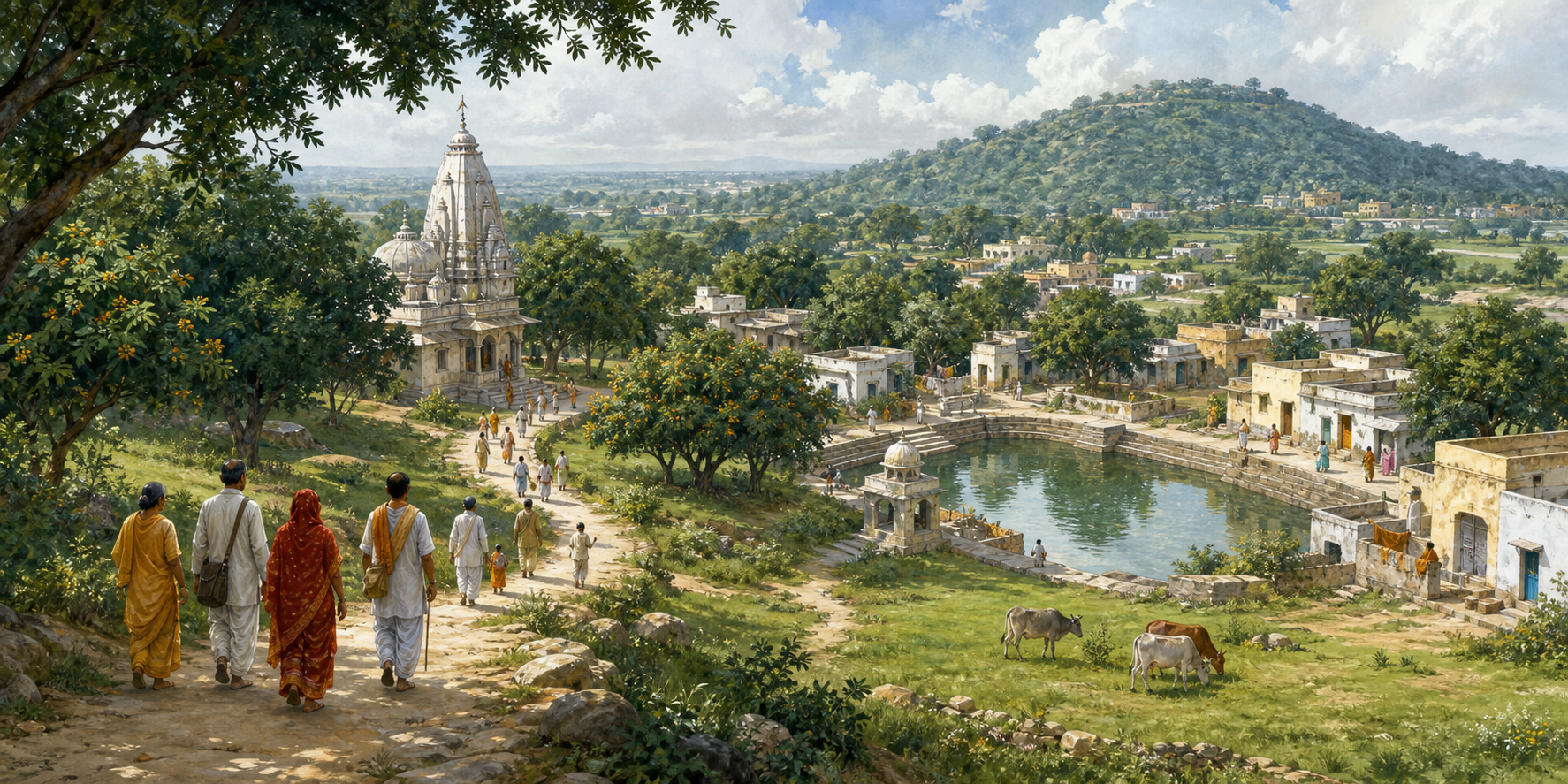
Braj communicates through association. A village, grove, temple, path, or kunda is remembered in relation to divine lila, a devotional personality, a text, or a continuing ritual practice. You therefore need more than a place name. You need to know what the place asks you to remember and how that memory should affect your behavior.
Within Gaudiya Vaishnava tradition, Yavat is associated with Radharani’s residence and with Abhimanyu, Jatila, and Kutila. State that association with its proper devotional context. There is no need to turn pilgrimage into a contest over who can make the broadest historical claim. Saying “this is how the place is remembered in Gaudiya tradition” is both more accurate and more respectful of the distinct ways in which Vaishnava communities receive Braj.
Use a simple set of questions whenever you enter a lila-sthala:
- What person, relationship, or lila is remembered here?
- Which devotional quality does that remembrance place before you?
- What practice belongs here: darshan, kirtan, japa, hearing, parikrama, or silence?
- What conduct protects the sanctity of the place and the dignity of its residents?
At Kishori Kunda, for example, the darshan of Radha Brajkishorji can be joined to reflective reading. Chamatkar Chandrika by Srila Visvanatha Chakravarti Thakura provides a literary and theological frame for the remembered pastimes of Yavat. Read a short passage slowly. Ask what each person desires, how the relationships unfold, and which form of service the narrative honors. Do not rush to turn intimate lila into a slogan about your own spiritual advancement.
This combination of place, practice, and text protects you from two opposite mistakes. Sentiment without disciplined hearing can become projection. Study without prayer can reduce sacred geography to material for a lecture. Braj invites the intelligence to serve remembrance, not replace it.
The wider dharmic family offers a useful parallel without erasing theological differences. Quiet decorum at Buddhist stupas, purity and discipline at Jain tirthas, and dignity around Sikh gurdwara sarovars all express the principle that sacred places are approached rather than consumed. If you travel with pilgrims from other Dharmic paths, begin with that shared ethic of reverence. Then explain Radha-centered conduct in its own Vaishnava vocabulary instead of pretending that every tradition teaches the same theology.
Turn Yavat and Kokilavan into a devotional sequence
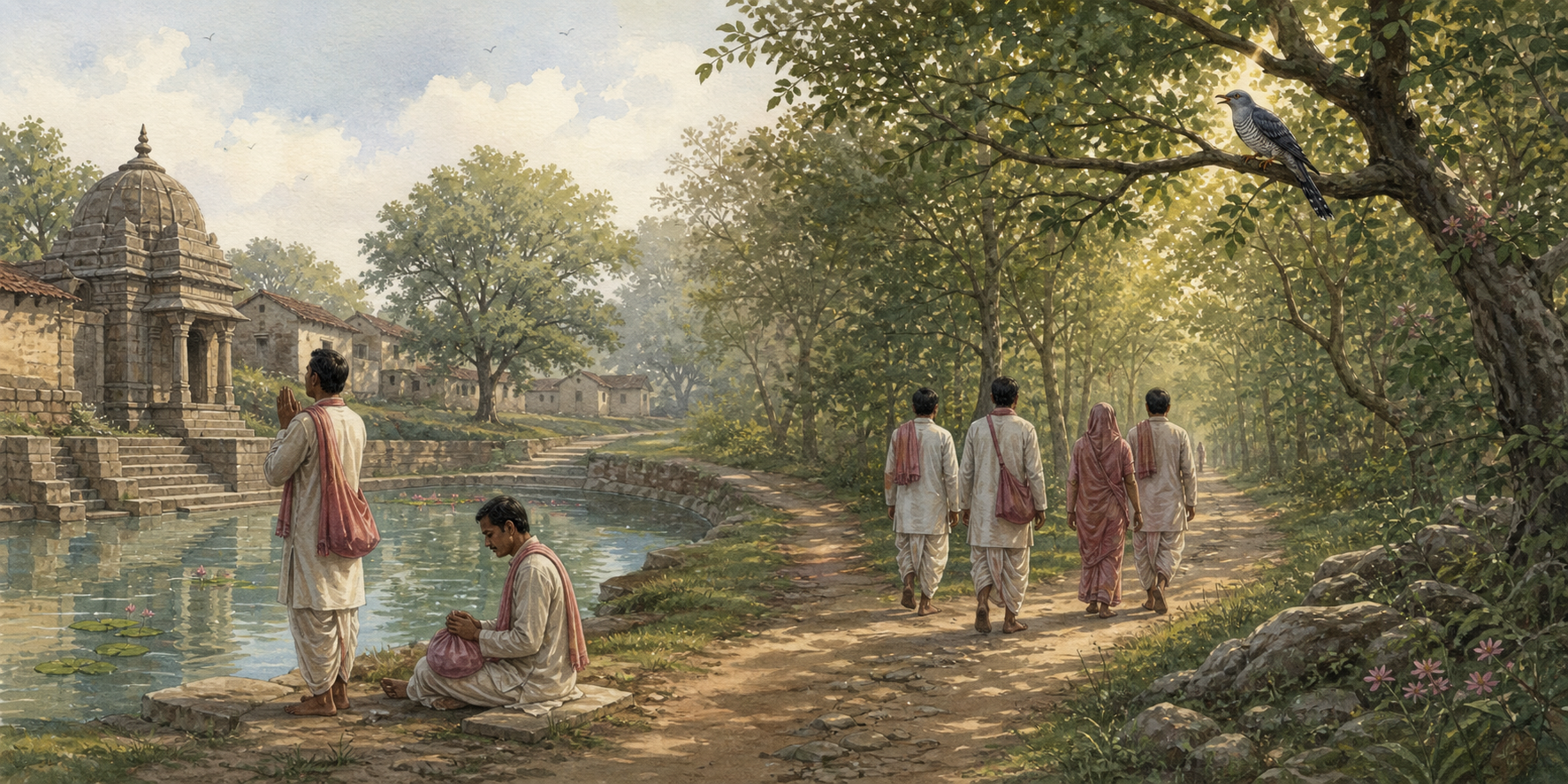
The movement from Yavat through Kishori Kunda and onward to Kokilavan can form a coherent devotional sequence. Its logic is inward rather than logistical: darshan steadies the senses, kirtan gathers the mind, study deepens remembrance, and parikrama gives that remembrance a bodily form.
- Begin at Radha Radhakanta in Yavat. At the principal shrine, stop before reaching for your phone or beginning a conversation. Let the bells, incense, prayer, and darshan mark the transition from travel mode to pilgrimage. Offer pranam, look attentively, and allow some quiet after darshan before discussing the next destination.
- Let Harinam connect shrine and village. Congregational chanting through Yavat can carry remembrance beyond the temple walls. Keep the kirtan prayerful rather than theatrical. Match the group, remain aware of residents and traffic, and do not use volume as a measure of devotion. The Holy Name should gather people without making the village feel occupied by a visiting performance.
- Pause at Kishori Kunda for darshan and hearing. After visiting Radha Brajkishorji, read or hear a selected Yavat lila from Chamatkar Chandrika. Keep the discussion close to the narrative. Ask what it reveals about attention, loyalty, cleverness, longing, or service. End with quiet remembrance instead of allowing the study circle to drift into unrelated debate.
- Enter Kokilavan through its layered sacred character. Kokilavan carries associations with Krishna’s lilas and with groves remembered for the calls of cuckoos; it also contains a revered Shani Dev temple. Honor these layers without forcing them into a single undifferentiated story. Undertake parikrama with measured attention, chant or remember quietly, and let the movement itself become an offering.
This sequence is not a fixed transport schedule. Local access, temple instructions, and the needs of the people accompanying you take priority. If circumstances shorten the route, preserve the devotional pattern: attentive darshan, shared nama, grounded hearing, and reflective movement. A smaller circuit practised well is more coherent than a crowded itinerary completed in distraction.
Keep transitions simple. Conversation between sites tends to determine the atmosphere you carry into the next one. If the journey becomes dominated by logistics, complaints, shopping, or image review, pause before entering the next sacred place. Recite the Holy Name, recall the association of the site, and cross the threshold only after your attention has returned.
At Radha-kunda, restraint is a form of closeness
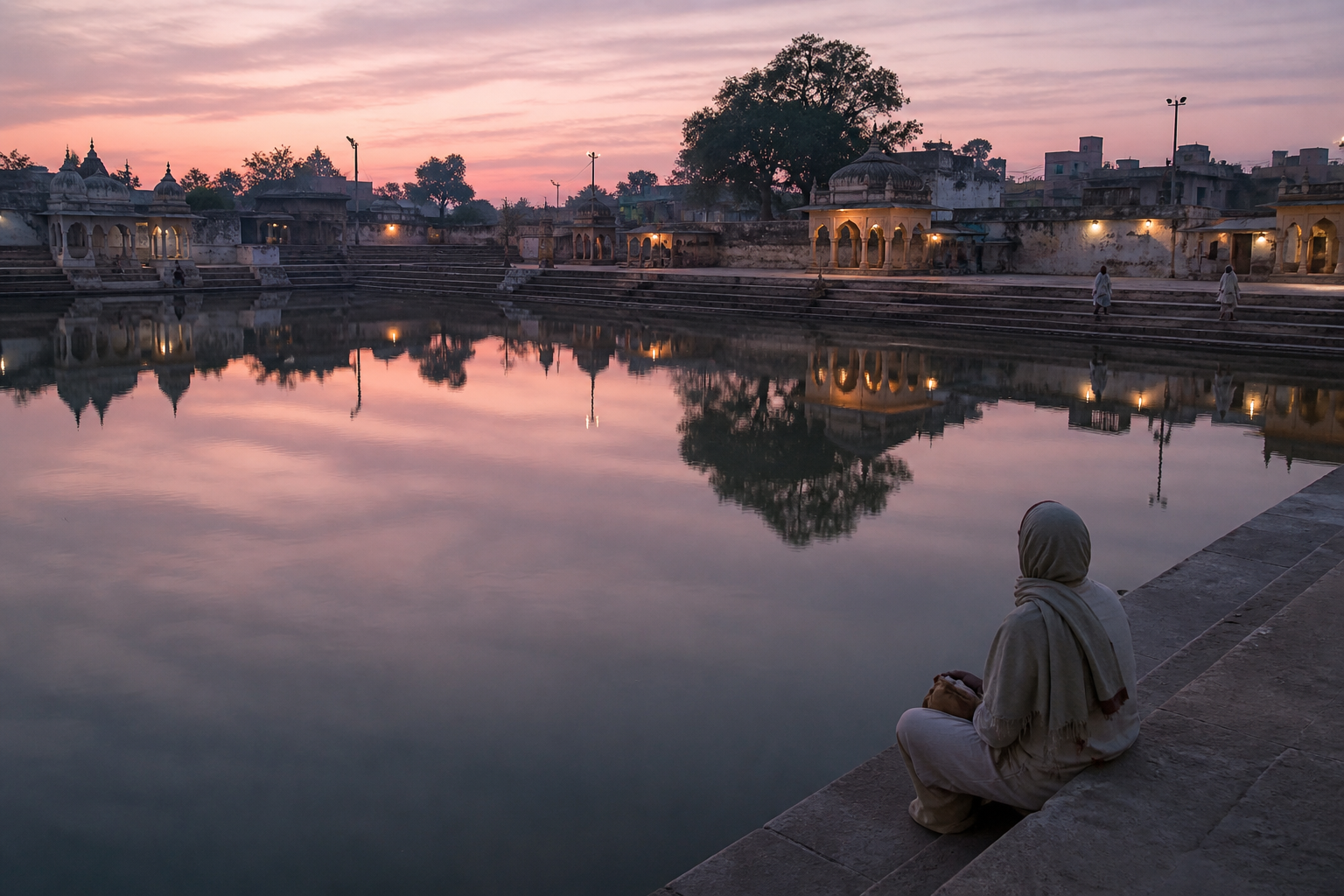
Radha-kunda requires a particularly clear standard of conduct because intimacy is easily confused with informality. A.C. Bhaktivedanta Swami Prabhupada expressed the theological basis of his instruction in direct language:
There is no difference between Radha-kunda and Radharani.
A.C. Bhaktivedanta Swami Prabhupada
Within this teaching, reverence for Radha-kunda is reverence for Radharani herself. The theology therefore becomes etiquette. Physical access does not give you permission to treat the water as a recreational amenity, and emotional enthusiasm does not cancel bodily discipline.
- Do not swim or wade. Entering for recreation contradicts the standard of approaching the kunda as a revered person rather than an object for enjoyment.
- Keep your feet out of the water. Do not sit or stand in a way that allows them to touch the kunda casually.
- Receive the water with restraint. In Prabhupada’s instruction, a pilgrim may take a little water and respectfully place it upon the head. If you are uncertain about the proper local procedure, ask an accompanying senior devotee or responsible local practitioner before acting.
- Favor japa and prayer over social conversation. Finish logistical discussions before approaching the edge. Silence is not mandatory display; it is a way to make room for remembrance.
- Make offerings responsibly. Flowers and prayers are more fitting than recreational use, but even a devotional offering should follow local arrangements and should not add waste to the kunda.
- Discipline your camera as well as your body. A photograph may preserve a view, but repeated posing, directing, and filming can turn a sacred encounter into a production. Take only what does not disturb worship or other pilgrims.
Reverence should not become anxious self-display. You do not honor Radha-kunda by loudly correcting strangers, policing every gesture, or using etiquette to advertise your own advancement. Begin with your own feet, voice, gaze, and phone. If correction is genuinely necessary, let someone with local or pastoral responsibility handle it whenever possible.
Different groups may follow different inherited practices. You can remain faithful to the discipline taught in your lineage without ridiculing another pilgrim or starting a theological dispute at the water’s edge. Sacred restraint includes restraint in speech.
Key takeaways for your pilgrimage
- A Radha-centered pilgrimage is measured by the quality of your attention and service, not by the number of sites you complete.
- Pair each sacred place with a fitting practice: darshan, nama-kirtan, scriptural hearing, japa, parikrama, or silence.
- In Yavat, approach Radha Radhakanta first, allow Harinam to connect temple and village, and use Kishori Kunda for grounded reflection on the remembered lilas.
- At Kokilavan, honor its Krishna-lila associations, grove memory, Shani Dev temple, and parikrama without flattening its layered heritage.
- At Radha-kunda, do not swim, wade, or touch the water with your feet; follow the restrained standard of placing a little water on the head.
- Respecting residents, local customs, and the environment is part of devotion, not an administrative concern added after worship.
Before you leave Braj, write down the practice that will continue at home. Make it modest and precise: a set period of nama-japa, regular reading from a Radha-Krishna text honored in your lineage, a recurring act of seva, or more disciplined conduct whenever you enter a temple. Do not choose an aspiration so elaborate that it belongs only to pilgrimage conditions.
Begin that practice on the first ordinary day after your return. When the visual memory of Braj becomes less vivid, the discipline you brought home can continue its work. Let that ordinary day show what you received in Sri Radha’s land.
References
- Dandavats — Complete Pilgrim’s Guide to Yavat and Kokilavan: Discover Devotion, Heritage, and Harmony
- Dandavats — Ultimate Guide to Highest Radha-kunda Consciousness: Discover Reverence That Transforms
