
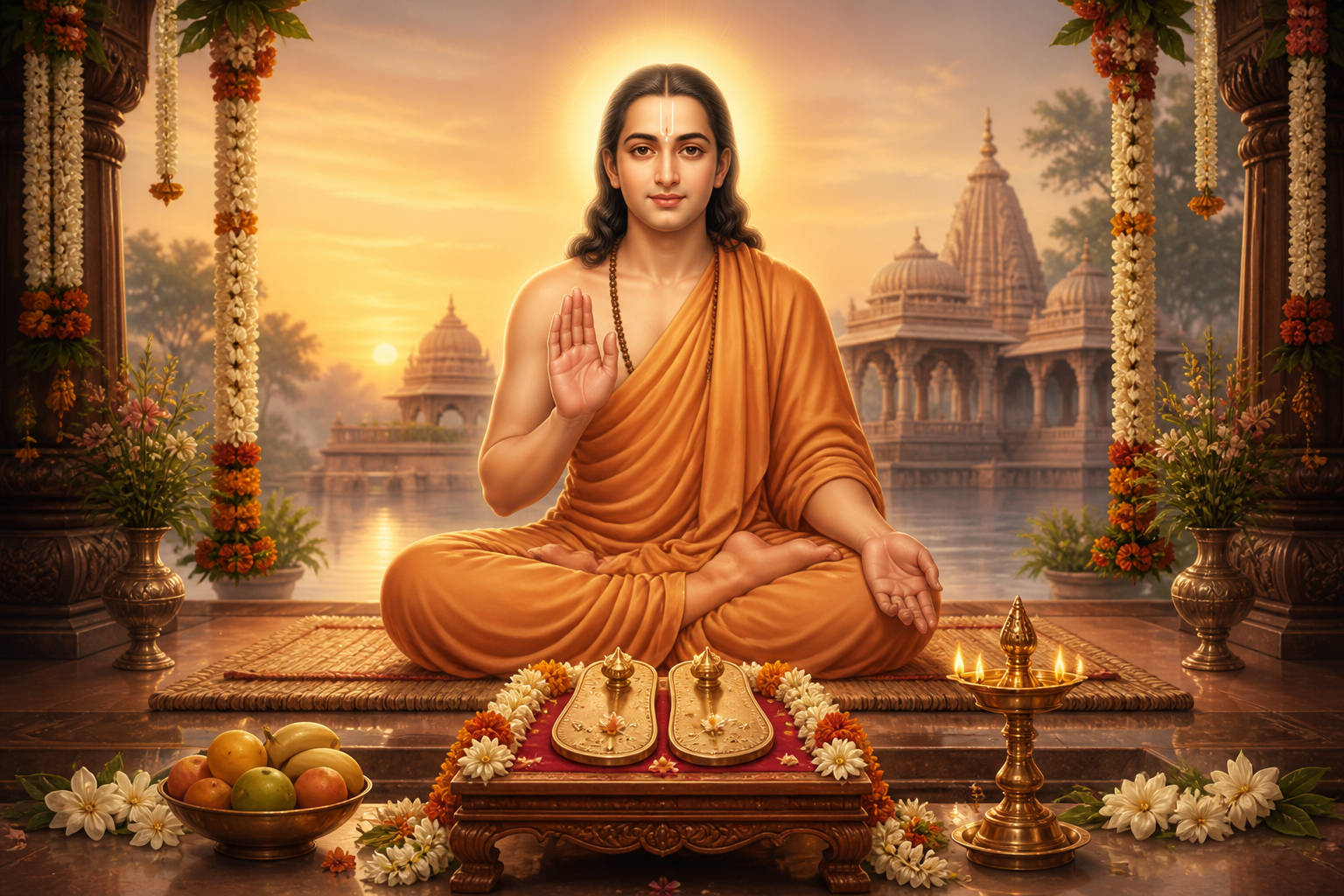
You want to honor Sri Pada Sri Vallabha, but the practical questions arrive first. Which date should you use? Is fasting essential? Must you complete a long parayana? And if you cannot travel to Pithapuram, can the observance at home still be meaningful?
The simplest way forward is to separate the heart of Guru Dwadashi from the details that vary by place and lineage. Remembrance of the Guru, disciplined attention to the teaching, and seva form the center. Calendar timing, fasting rules, the length of recitation, and the sequence of puja should follow your local panchang and the tradition you actually practice.
First settle the date in your own location
Guru Dwadashi is observed on Krishna Paksha Dwadashi, the twelfth lunar tithi of the waning fortnight in Ashwin. The month is also called Ashwayuja in several regional calendars. Because a tithi does not begin and end at civil midnight, Dwadashi can extend across portions of two calendar dates.
This is why a festival date printed for another city may not answer your question. In 2025, for example, the Pithapuram Guru Dwadashi puja was observed on October 17, while the Dwadashi tithi extended across October 17 and 18 in many locations. Those statements answer different questions: one identifies a temple observance, while the other describes a lunar interval that varied by location.
Before making travel, puja, or fasting plans, check three things:
- Use a panchang calculated for the town or city where you will observe the vrata. Do not copy the timing from a calendar prepared for a distant location.
- Confirm which civil date your Datta temple or family tradition treats as the operative day for Guru Dwadashi.
- If you intend to fast, ask when and how the vrata is concluded in your tradition. Knowing only when Dwadashi begins is not enough to plan the entire observance.
If you are attending a temple, its announced program determines when you should be present. Your local panchang and inherited practice determine how you undertake a personal vrata. Keeping those two decisions separate prevents most calendar confusion.
What Sri Pada Sri Vallabha Aradhana asks you to remember
Guru Dwadashi has particular importance for devotees of Sri Guru Datta. Sri Pada Sri Vallabha is widely revered as an incarnation of Sri Dattatreya, and many Datta traditions associate this lunar observance with the conclusion of his earthly presence. Aradhana therefore carries both remembrance and renewal: the embodied Guru is remembered, while the continuing force of the Guru’s teaching is brought back into the disciple’s life.
This distinction matters. Guru-bhakti is not exhausted by admiration for a sacred personality. The Guru is honored as the principle that dispels confusion, corrects the seeker, and turns knowledge into lived Dharma. If the day produces many offerings but no greater willingness to learn, serve, or correct yourself, its central demand has been missed.
The customary observances each give that inner work an outward form:
- Guru Dattatreya puja directs attention toward gratitude and surrender.
- Parayana of the Shri Guru Charitra places the teaching, rather than personal preference, at the center of the day.
- Bhajans and kirtans transform private remembrance into shared devotion.
- Vrata trains restraint and steadiness when it is undertaken with discernment.
- Anna-daan and other charitable service carry reverence for the Guru into the treatment of living beings.
You do not have to turn these practices into a measure of spiritual rank. A long recitation performed hurriedly is not automatically more attentive than a shorter passage read carefully. An elaborate puja is not automatically deeper than simple worship performed according to what you have genuinely been taught. Choose a form you can complete with concentration and respect.
Reverence for spiritual guidance also has resonance across the dharmic family, including Buddhism, Jainism, and Sikhism. That kinship need not erase theological differences. In a household containing more than one dharmic tradition, shared silence, gratitude toward teachers, ethical reflection, and service can create a truthful meeting point without pretending that every tradition understands the Guru in precisely the same way.
A practical Guru Dwadashi observance at home
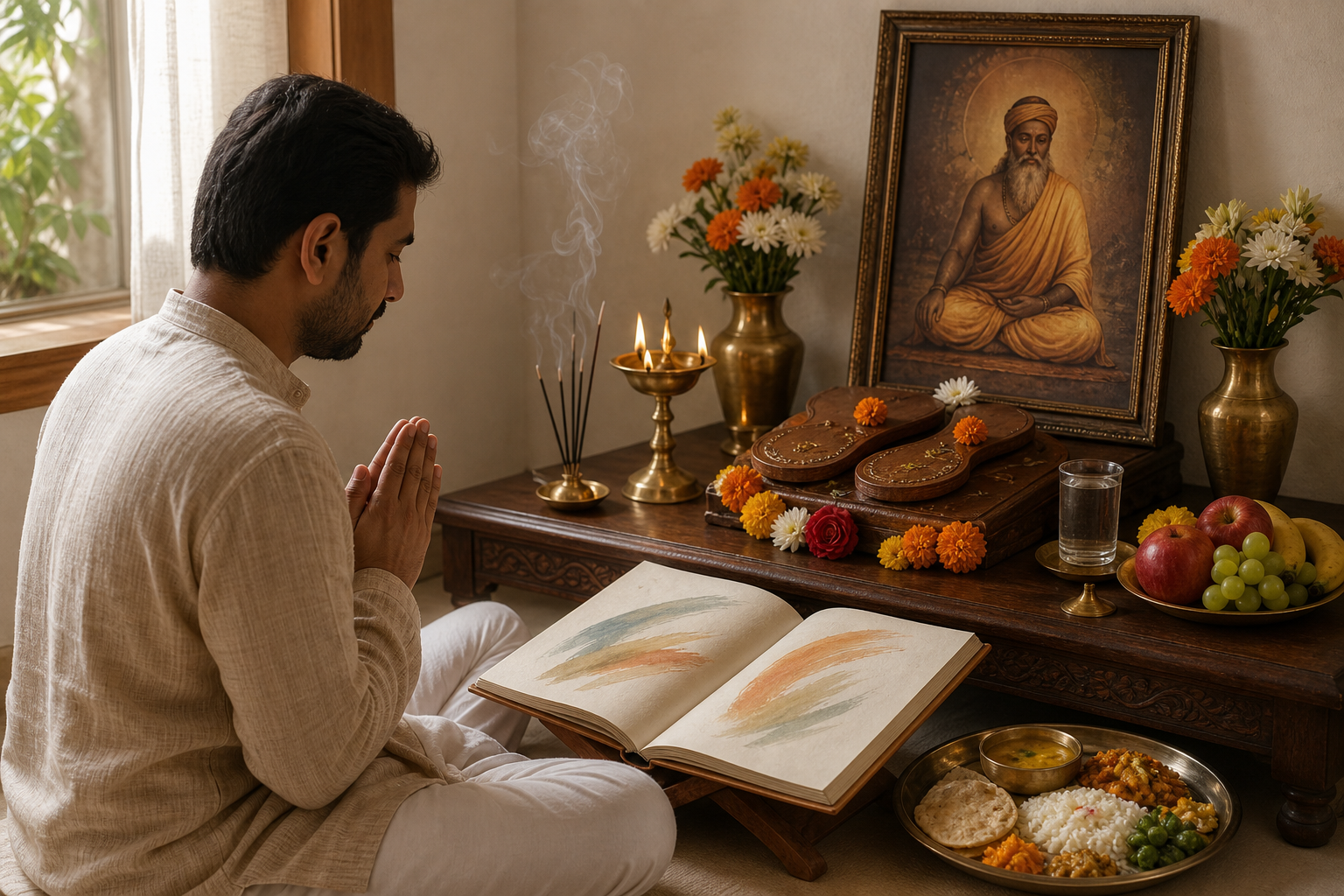
A home observance does not need to imitate the scale of a temple utsavam. It needs a clear intention and an orderly sequence. Decide on that sequence before the day begins so that you are not searching for texts, debating fasting rules, or arranging charity in the middle of worship.
- Confirm the local Dwadashi timing. Record the relevant date and the observance followed by your household or nearby Datta temple.
- State a simple sankalpa. In your own words, resolve to remember Sri Guru Datta and Sri Pada Sri Vallabha, undertake the practices you have selected, and carry one part of the teaching into conduct.
- Perform the puja you know. Follow the paddhati taught in your family, sampradaya, or temple. If you have not been instructed in an elaborate ritual, simple and respectful worship is better than assembling unfamiliar procedures from unrelated traditions.
- Make parayana attentive and achievable. The Shri Guru Charitra is a customary text for this observance. Decide beforehand whether you will follow an established full parayana discipline or read a selected portion carefully. Do not promise a form you cannot complete with due attention.
- Allow devotional sound to lead into quiet. Bhajans or kirtans can be followed by silent reflection on where you currently resist guidance, correction, or disciplined practice.
- Complete a concrete act of seva. Arrange anna-daan or another charitable act within your means. Make the recipient or channel clear in advance so that seva becomes an action rather than a vague intention.
- End with one continuing discipline. Choose a modest practice connected to the day: regular sacred reading, more consistent prayer, service, or a specific correction in conduct. Write it down and decide when you will begin.
Fasting is a common Guru Dwadashi practice, but vrata should not become carelessness toward the body. Follow the form handed down in your tradition if it is safe for you. If abstaining from food may conflict with an illness, medication, pregnancy, recovery, or another health need, do not improvise a strict fast. Seek appropriate medical advice when needed and observe a safe form of restraint, prayer, study, or seva instead.
Families can also divide responsibilities without fragmenting the observance. One person can prepare the worship space, another can select the reading, and another can organize anna-daan. Gather for the shared elements. This keeps household work from falling on one person while everyone else treats the day as a finished event to attend.
If you are observing the aradhana in Pithapuram

Pithapuram offers a setting in which sacred geography and living Datta worship meet. The kshetra is revered as Padagaya and is associated with the Astadasha Shakti Peethas, while the worship of Sri Dattatreya and Sri Pada Sri Vallabha brings Vaishnava, Shaiva, and Shakta currents into a shared sacred landscape. The Sreepada Vallabha Mahasamsthanam observes the aradhana with special pujas, recitations, darshan, and devotional gatherings.
If you plan to go, begin with the temple program rather than a generic festival calendar. Confirm the announced observance date and timings close to your journey. Arrive early enough that travel and queues do not consume the attention you intended to give to worship, and prepare for a larger gathering than on an ordinary temple day.
Set your priorities before entering the kshetra:
- Identify which scheduled puja or recitation you most want to attend.
- Leave unhurried time for darshan rather than packing every available activity into the visit.
- Carry only what is permitted and useful, and follow local temple etiquette.
- Include seva or anna-daan in the pilgrimage plan instead of treating it as something to consider after all personal rituals are finished.
- Protect some inward quiet. A pilgrimage can easily become a sequence of transport, photographs, queues, and purchases unless you deliberately make room for recollection.
Do not turn the journey into a transaction in which the kshetra is expected to deliver a particular worldly outcome. Go prepared to receive darshan, participate in the sampradaya’s worship, and examine the quality of your discipleship. That disposition remains available even when travel is impossible; observing at home with sincerity is a real practice, not a consolation prize.
Key takeaways
- Guru Dwadashi falls on Ashwin Krishna Paksha Dwadashi, but its civil date and timing must be checked for your location.
- A temple’s event date and the full local span of the Dwadashi tithi may differ without contradicting each other.
- Sri Pada Sri Vallabha Aradhana centers on remembrance of the Guru, receptivity to teaching, disciplined practice, and seva.
- Common observances include Guru Dattatreya puja, Shri Guru Charitra parayana, bhajans, fasting, temple worship, and anna-daan.
- Follow your family or sampradaya for ritual and fasting details; do not manufacture an elaborate paddhati from disconnected practices.
- If you visit Pithapuram, confirm the Mahasamsthanam’s program, arrive with clear priorities, and preserve time for quiet reflection.
Your most useful preparation can begin before the tithi: check the local panchang, choose the worship and reading you can undertake attentively, and arrange one definite act of service. Then decide what discipline will remain after Guru Dwadashi has passed. The observance reaches its purpose when reverence for the Guru becomes greater teachability in you.
References
- DharmaRenaissance Blog – Complete Guide to Sri Pada Sri Vallabha Aradhana Utsavam: Guru Dwadasi 2025 at Pithapuram
- DharmaRenaissance Blog – Guru Dwadashi 2025: Discover the Complete Guide to Date, Significance, and Observances
