
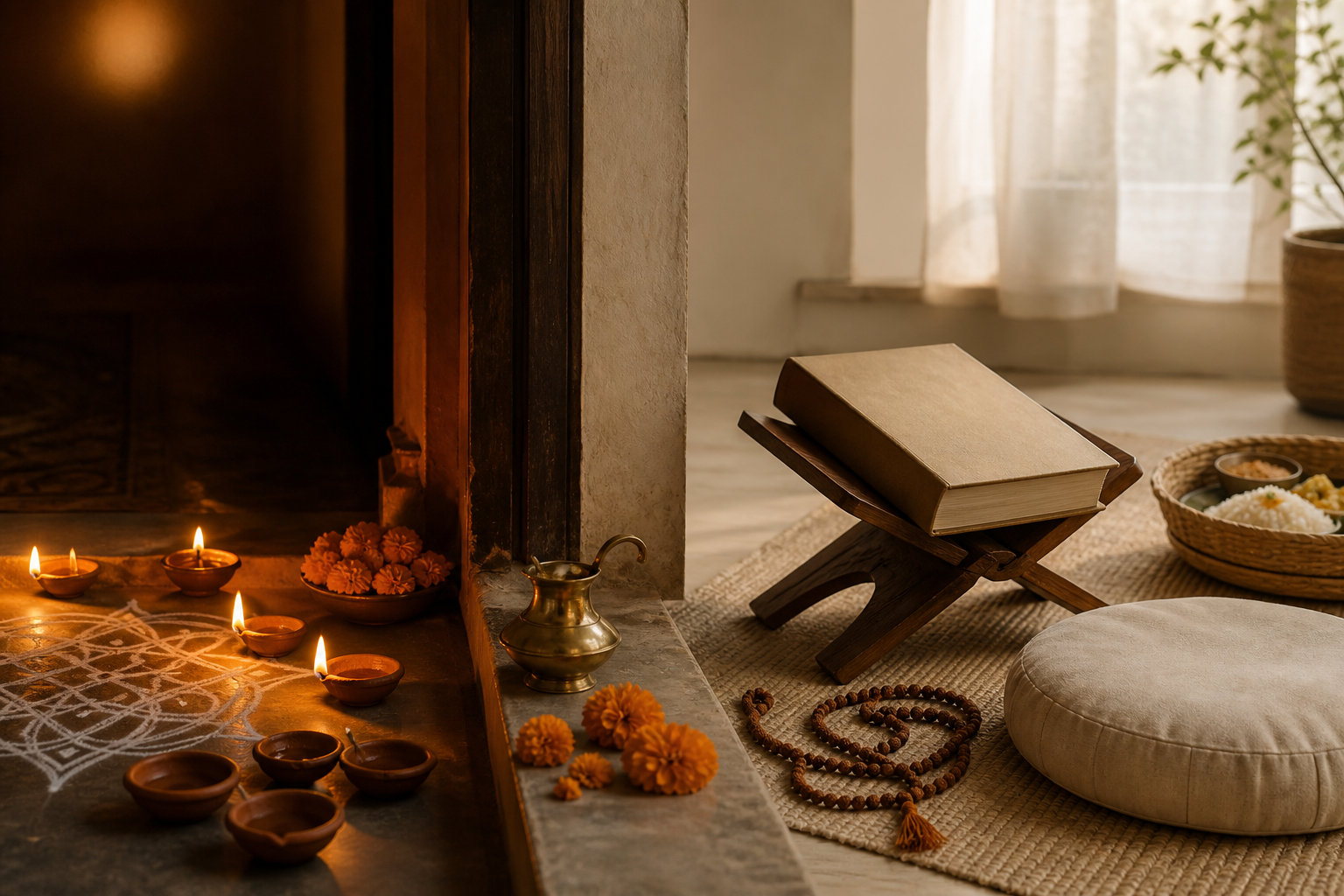
If you are arranging worship, family visits, or temple participation for late October 2025, two dates need different kinds of attention. October 20 carries the ritual intensity of Naraka Chaturdashi within the Deepavali cycle. October 26 is a quieter Shukla Paksha Panchami suited to study, japa, meditation, and seva.
The date alone is not a complete ritual instruction. Regional custom determines whether your household treats Naraka Chaturdashi as the principal Deepavali morning or as Choti Diwali, while your location determines the locally valid panchang timings. Settle those two questions before copying a schedule from another city or family tradition.
Key takeaways for your October calendar
- Naraka Chaturdashi falls on October 20, 2025, during Krishna Paksha Chaturdashi of Kartik.
- South Indian households commonly observe that morning as their principal Deepavali celebration; North Indian households generally mark it as Choti Diwali before the main Lakshmi Puja on the succeeding Amavasya night.
- A pre-dawn abhyanga snana, lamps, remembrance of Krishna’s victory over Narakasura, and evening Yam Deep Daan form a practical home observance.
- On Sunday, October 26, Chaturthi continues only until 12:31 AM in the supplied timing; Shukla Paksha Panchami prevails for the rest of the day.
- Exact muhurta, nakshatra, and related panchang details can change with location and calculation method. Use a regional panchang or temple calendar for time-sensitive rites.
Read the two dates by tithi, not by midnight alone
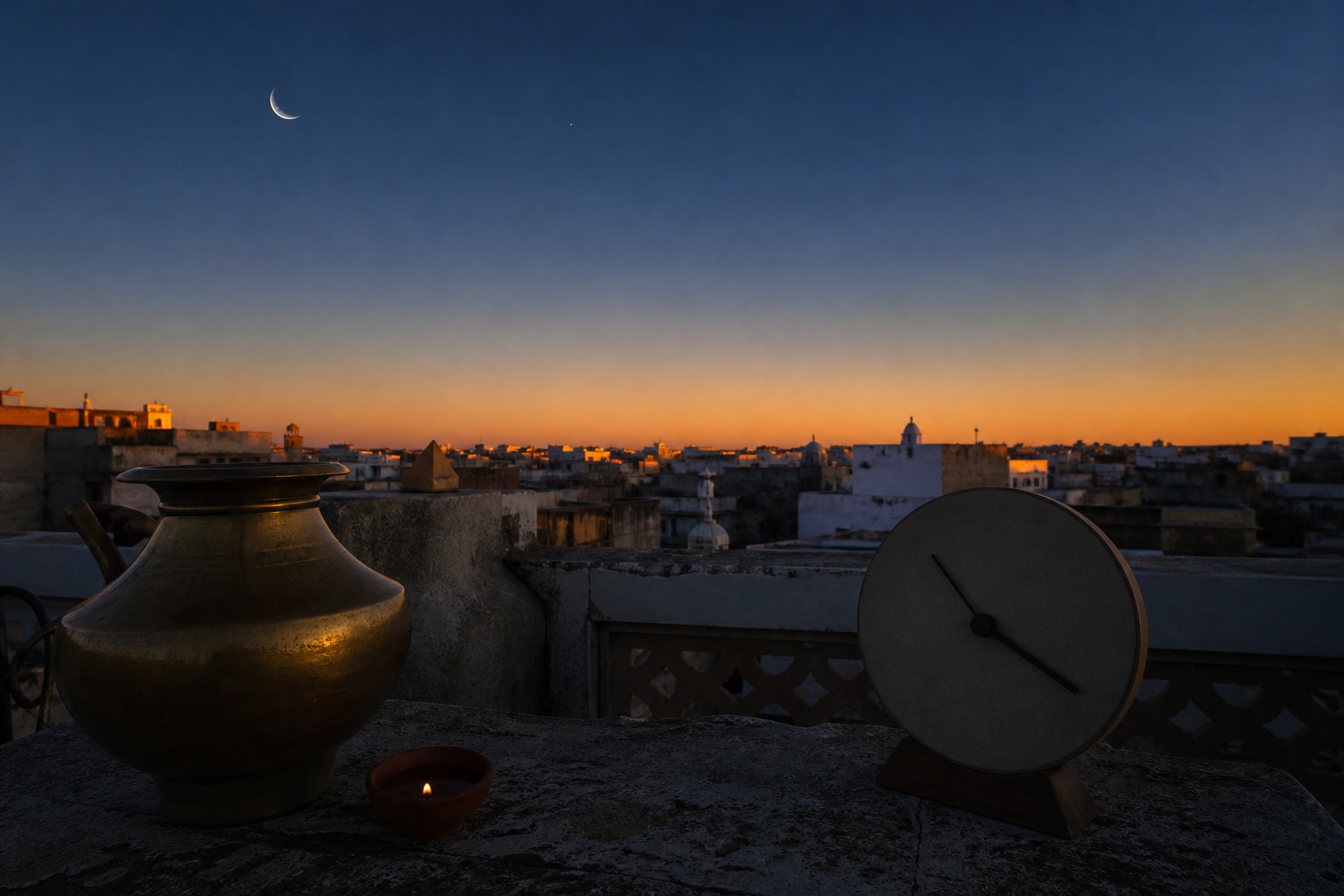
| Civil date | Calendar marker | Practical emphasis |
|---|---|---|
| October 20, 2025 | Kartik Krishna Paksha Chaturdashi | Naraka Chaturdashi, abhyanga snana, lamps, Deepavali preparation or principal Deepavali morning according to regional custom |
| October 26, 2025 | Shukla Paksha Panchami after 12:31 AM in the stated timing | Study, devotional practice, meditation, steady work, and seva |
A tithi is determined by the changing longitudinal separation of the sun and moon. It therefore does not have to begin at sunrise or at civil midnight. That is why Chaturthi can end shortly after midnight on October 26 and Panchami can govern nearly the whole civil day.
This distinction matters whenever an observance depends on which tithi is present at a particular moment. The 12:31 AM transition helps you understand the day, but it should not be treated as a universal local muhurta. Nakshatra, rashi, auspicious windows, and even the displayed transition time may vary with geography, local coordinates, daylight adjustments, and the calculation school used by the calendar.
For a general family plan, mark October 20 and October 26 now. For a sankalpa, temple visit, or rite tied to a precise tithi condition, confirm the time in a trustworthy panchang prepared for your location. When sharing the schedule with relatives, include the city and regional tradition rather than sending a bare date.
Plan Naraka Chaturdashi around your living tradition
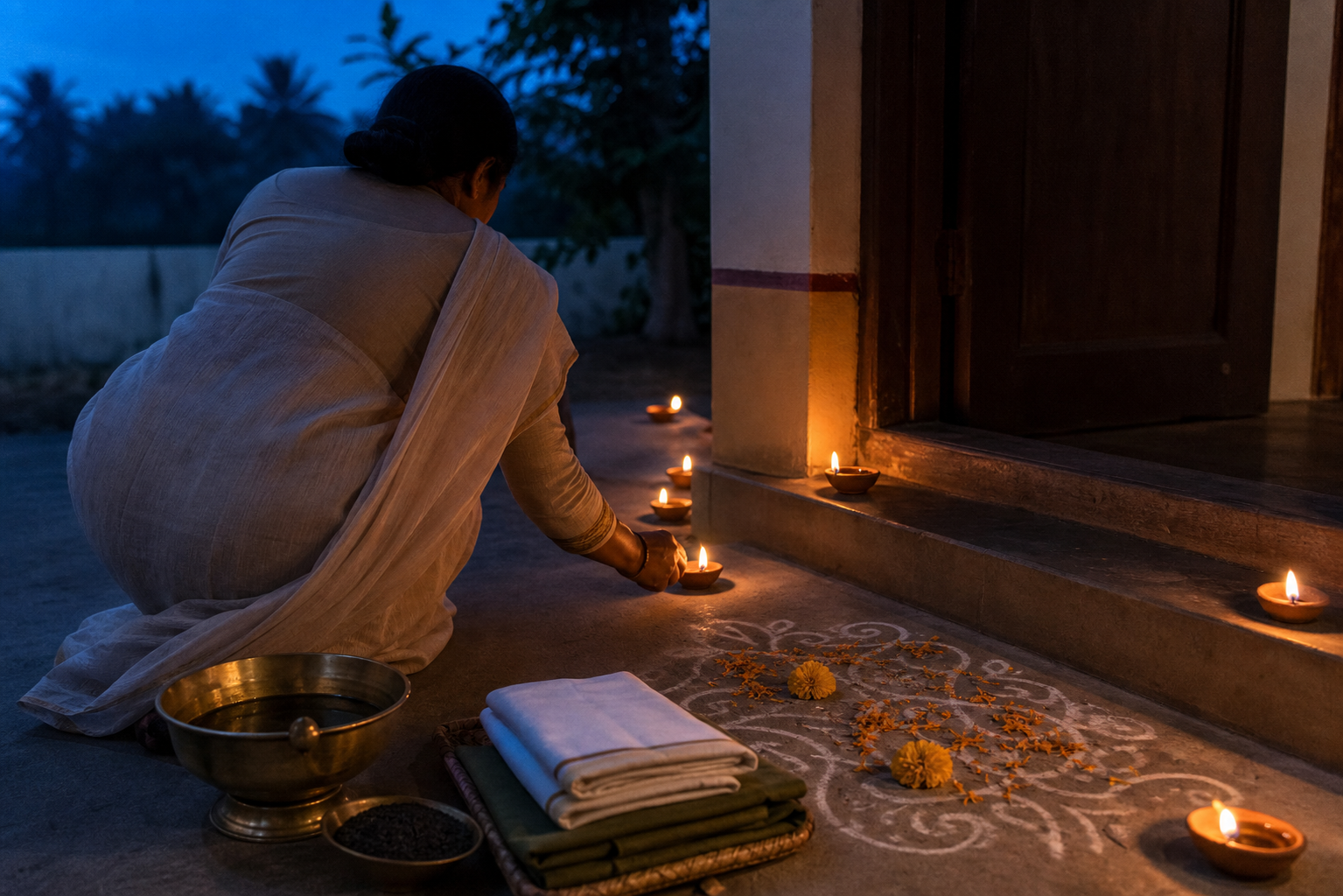
Naraka Chaturdashi remembers Lord Krishna’s defeat of Narakasura. Its ethical center is the removal of tamas – ignorance, inertia, and destructive conduct – so that clarity and dharma can prevail. The ritual day works best when the outer cleaning, bathing, lamps, and celebration are joined to an inward decision about what you are prepared to change.
If your family follows a South Indian observance
Treat the pre-dawn period as the center of the celebration. The traditional sequence begins with an oil bath before sunrise, followed by clean or new garments, prayer, festive food, and celebration. In this setting, Naraka Chaturdashi is not merely preparation for another festival day; it is the principal Deepavali morning itself.
Prepare the practical items before going to sleep: oil for the abhyanga snana, bathing supplies, garments, lamps, wicks, and the space for household worship. Pre-dawn observance becomes needlessly hurried when these simple tasks are left until the morning.
If your family follows a North Indian observance
Observe October 20 as Choti Diwali. Give the day to final cleaning, diya preparation, a simple puja, and evening Yam Deep Daan, while keeping the principal Lakshmi Puja for the succeeding Amavasya night in accordance with your household calendar. This is a difference in ritual sequence, not a contradiction about the meaning of Naraka Chaturdashi.
Do not force both regional patterns into one overloaded timetable. Follow the form received in your family, sampradaya, or temple community. If your household contains more than one regional tradition, name both customs openly and decide in advance which parts you will observe together.
A workable home sequence for October 20
- Prepare the bathing area, garments, diyas, wicks, and puja space on the preceding evening.
- Rise for the pre-dawn abhyanga snana if that is part of your family practice. Let the bath mark a deliberate break from habits you do not want to carry forward.
- After bathing, light lamps and offer a simple prayer. Retell Krishna’s victory over Narakasura in language children can understand: courage must protect others, and power must serve dharma.
- Share sweets and festive food without allowing hospitality to turn into strain or competitive display.
- Choose a concrete act of service. Help a neighbor, include someone who might otherwise be alone, or support the practical needs of your temple or community.
- At dusk, place lamps at the threshold for Yam Deep Daan according to household custom and pray for protection and well-being.
- If fireworks form part of the celebration, make safety, local rules, consideration for neighbors, and environmental care non-negotiable.
No universal lamp count, direction, or clock time is established by the information available here. If those details matter in your lineage, obtain them from your family acharya, temple, or local panchang rather than filling the gap with a generic online instruction.
Use October 26 Panchami to turn celebration into discipline
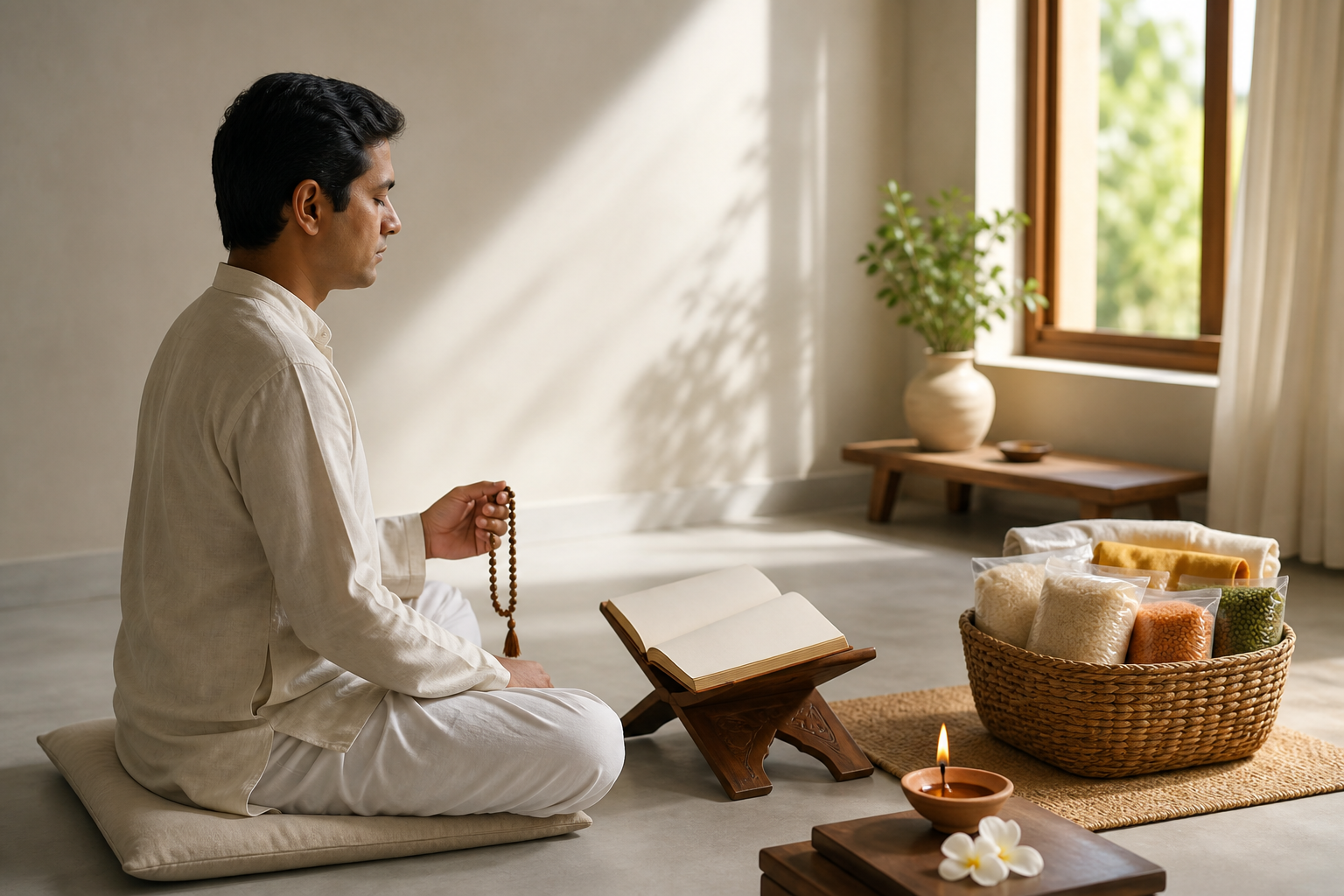
By October 26, the calendar has moved into the waxing fortnight. Shukla Paksha Panchami is the fifth lunar day of that brightening phase. Its constructive emphasis makes it a suitable point for steady learning, devotional practice, and service after the sensory intensity of Deepavali.
You do not need to manufacture an elaborate event. Choose a practice that can continue after the day ends:
- Read a defined passage from a scripture or commentary instead of browsing disconnected quotations.
- Resume mantra japa, meditation, or quiet prayer at a time you can keep consistently.
- Organize the household worship space after the festival and store reusable items carefully.
- Begin or renew a study routine connected to Sanskrit, a regional language, philosophy, history, or sacred literature.
- Complete a specific act of seva rather than leaving service as a good intention.
The useful movement is from illumination to continuity. Naraka Chaturdashi asks what darkness must be removed; Panchami asks what worthy habit will occupy the space that has been cleared. A resolve becomes credible when it appears in your calendar as a repeatable action.
There is also a broader dharmic lesson here. Hindu, Buddhist, Jain, and Sikh communities do not share one identical set of rites, and their distinctions should not be blurred. They can still recognize the value of disciplined attention, truthfulness, non-harm, self-examination, and service. In a mixed dharmic gathering, discuss those ethical commitments without presenting a specifically Hindu tithi observance as a universal ritual requirement.
Before placing these dates on a family or community calendar, write the location and tradition beside them. Then confirm any time-sensitive observance locally, prepare the October 20 materials in advance, and reserve October 26 for the practice you intend to carry into the following weeks. That turns a festival schedule into a lived rhythm of purification, worship, learning, and seva.
References
- DharmaRenaissance Blog – Naraka Chaturdashi 2025: Discover the Complete Date, Rituals, and Deepavali Significance
- DharmaRenaissance Blog – October 26, 2025 Panchang: Essential Guide to Shukla Paksha Panchami, Meaning and Observance
