
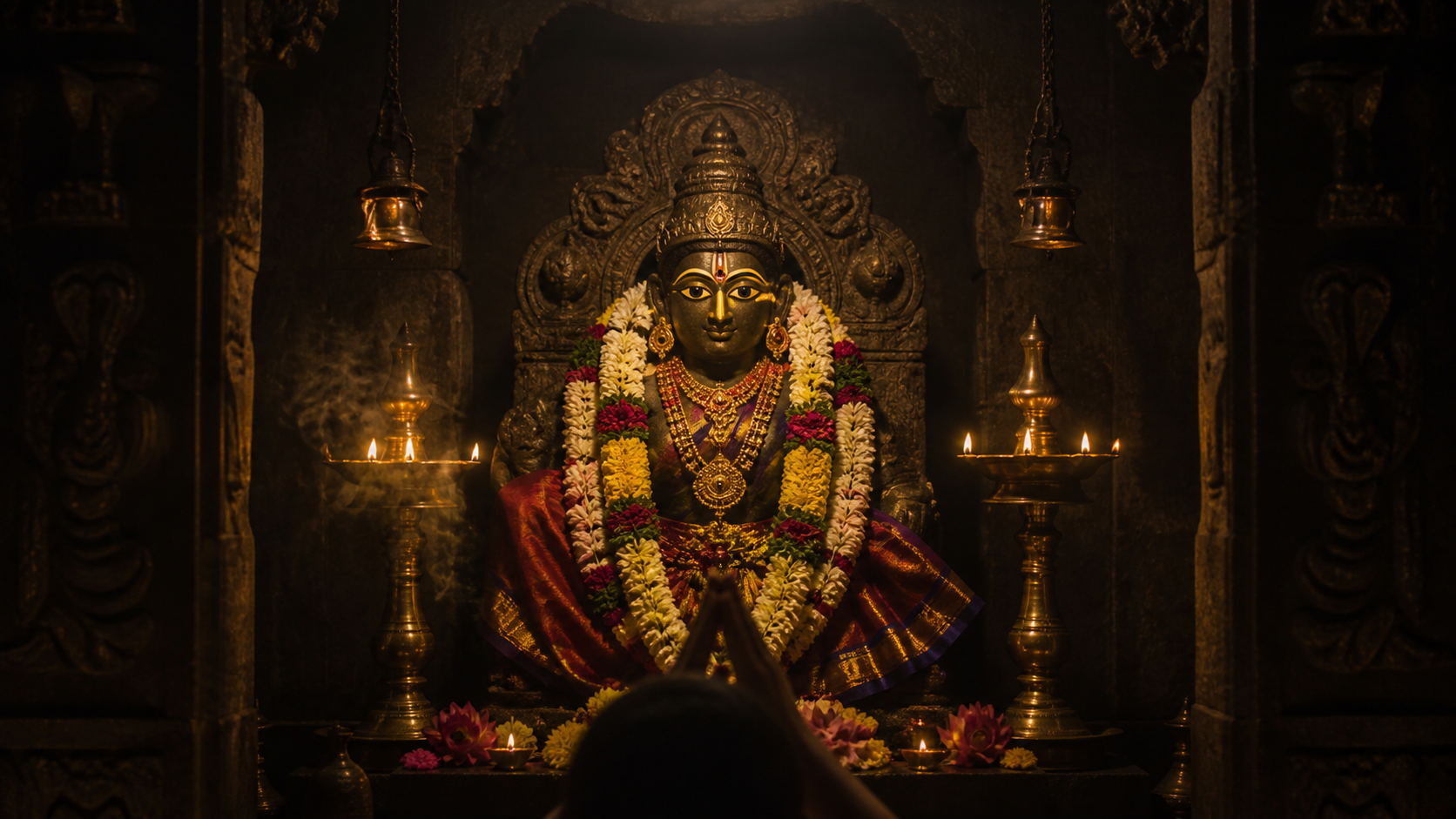
You are standing before a Hindu sculpture, and the eyes refuse to become just another detail. They may be broad, unwavering, half-lidded, newly painted, or more arresting than the rest of the face. If you read them only as an artist’s attempt at realistic expression, you will miss what they are doing.
The useful question is not simply what the eyes symbolize. Ask what kind of encounter the image was made to sustain. That shift helps you distinguish a devotional murti from a decorative representation, interpret its gaze without relying on a simplistic code, and behave appropriately whether you meet it in a temple or a museum.
Key takeaways
- The eyes of a murti belong to a sacred relationship, not merely to a sculpted face.
- Consecration matters more than appearance when you are determining whether an image functions as a living focus of worship.
- Open, lowered, or intensified eyes offer clues, but posture, gesture, attributes, deity, setting, and local tradition must confirm the reading.
- Darshan makes seeing reciprocal: the devotee approaches not only to look, but to stand within the deity’s gaze.
- Temple etiquette and museum analysis require different actions, even when the material object looks similar.
First determine what kind of presence you are facing
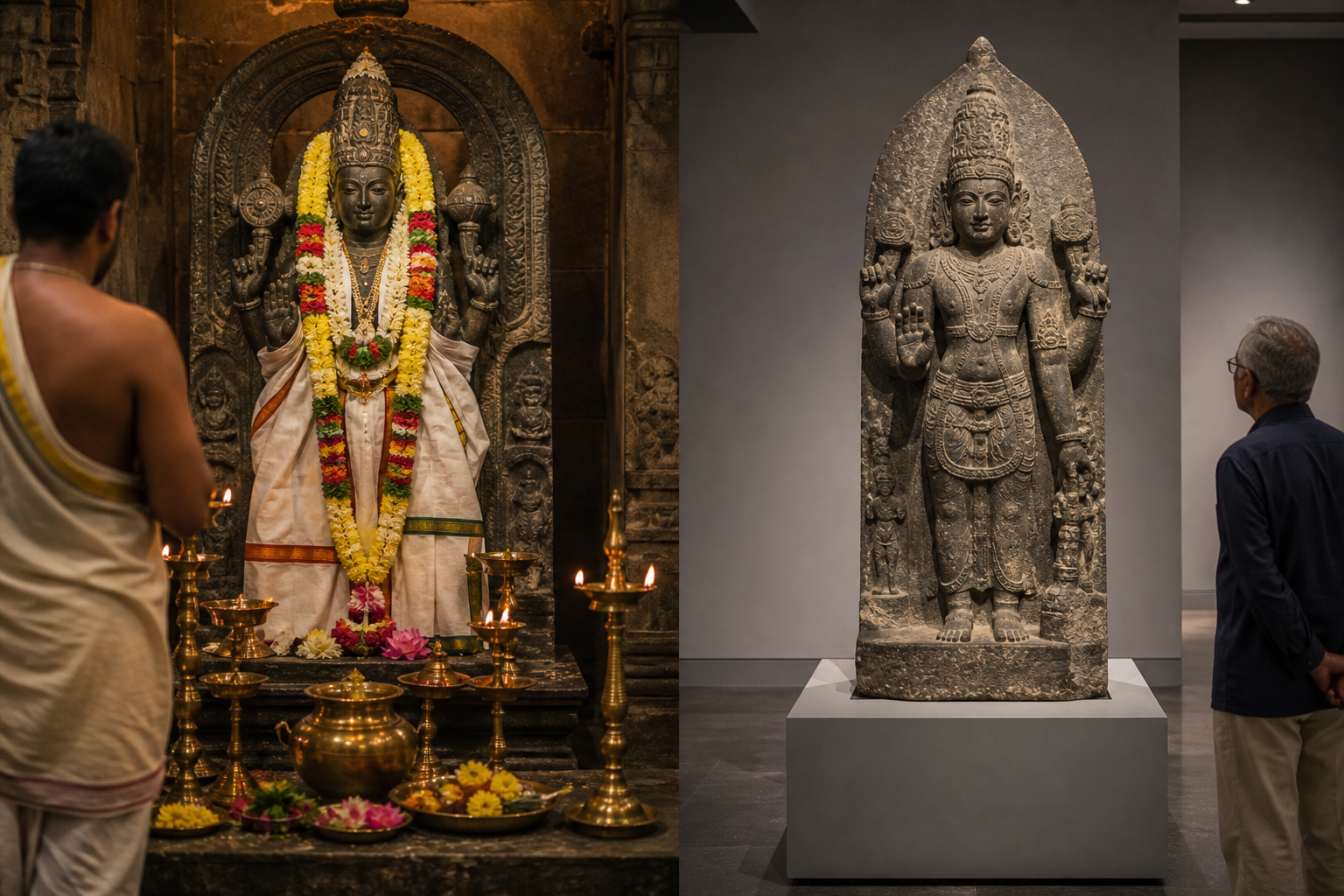
A Hindu sacred image can be aesthetically accomplished and spiritually significant at the same time. Calling it art is not necessarily wrong. Treating art as its complete identity is the mistake.
A murti intended for worship is fashioned as a suitable embodiment of divine form. Within Hindu tradition, proper consecration changes its religious status from crafted material into an active sacred presence. The stone or metal does not cease to be material. What changes is the relationship established through it: the image can be approached, served, adorned, greeted, and beheld as the deity’s manifest form.
This distinction prevents two opposite errors. One is to dismiss every murti as a decorative object with an unusual face. The other is to assume that every sculpture of a Hindu deity is presently consecrated and receiving worship. A newly carved image awaiting installation, a replica made for sale, a damaged architectural figure, and the central murti of an active temple do not have identical ritual standing.
Before interpreting the eyes, establish the setting with three questions:
- Is this image in active worship, awaiting consecration, displayed as art, or removed from its original context?
- Are the eyes part of the original carving or casting, or do paint, repair, wear, or later restoration affect what you now see?
- Does the temple or community identify a particular form of the deity and a living ritual tradition that governs how the murti is approached?
In an Agamic temple setting, image, ritual preparation, installation, and continuing worship belong to a connected discipline. You should therefore resist extracting the eyes from that system and treating them as a free-floating symbol. If the ritual status is unknown, say that it is unknown. Visual intensity alone cannot prove consecration.
Read the gaze through the whole murti
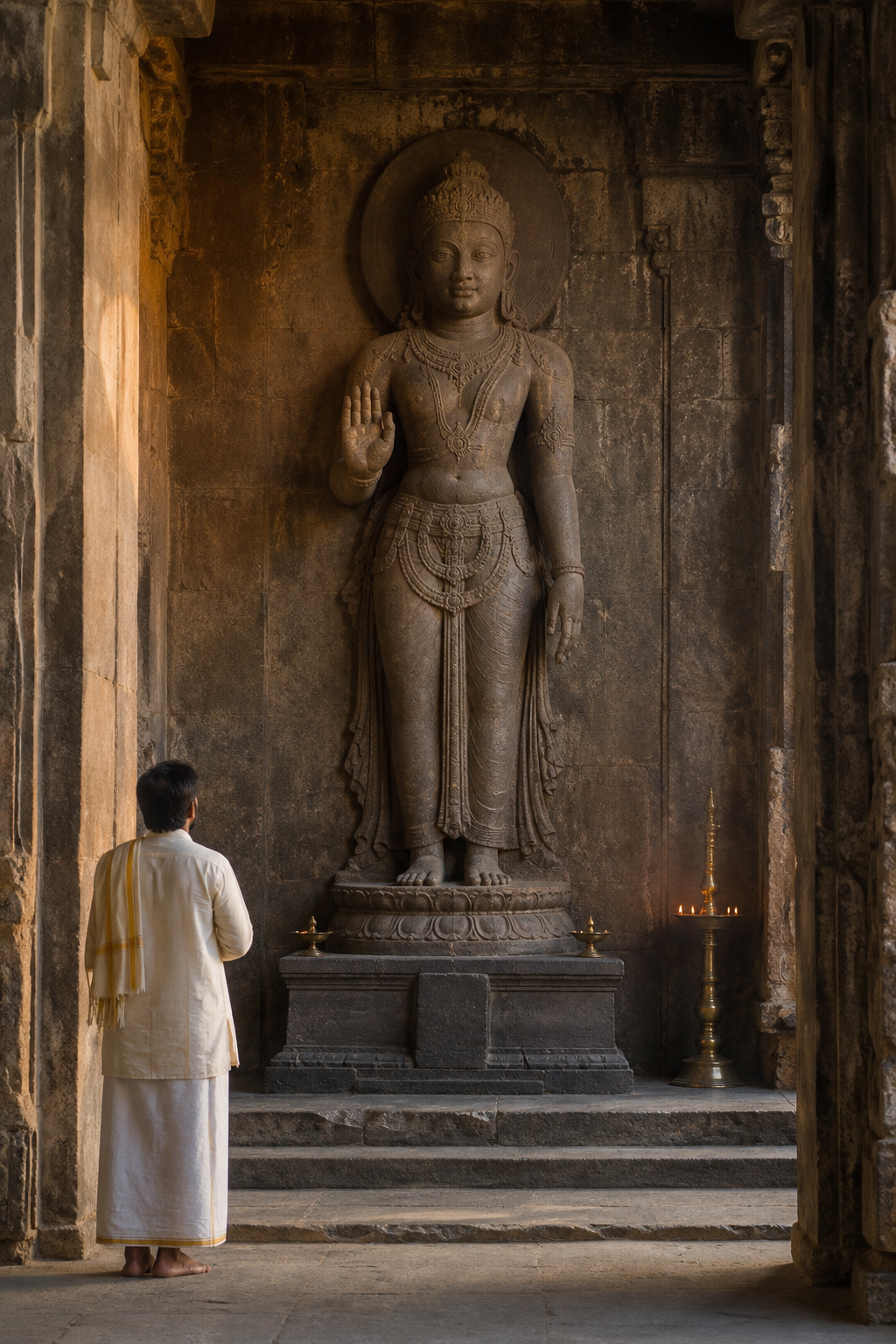
There is no dependable one-line dictionary in which large eyes always mean one thing and lowered eyes always mean another. Hindu iconography is structured, but the same visual feature can work differently across deities, forms, regions, and devotional settings. The eyes give you a direction for interpretation; the rest of the murti tests it.
Broad or frontal eyes can create an immediate encounter. Depending on the form, that directness may convey vigilance, availability, sovereignty, protection, or an inescapable awareness. Do not automatically translate intensity into anger. A powerful gaze may be protective rather than hostile.
Lowered or half-lidded eyes often turn attention toward composure and meditative depth. They need not imply withdrawal from the world or indifference to the devotee. The face may hold inward stillness while the hands, stance, or surrounding figures express active engagement.
An additional eye, where it properly belongs to the deity’s established form, should not be read as ornamental eccentricity. It moves the image beyond ordinary biological sight and toward a capacity to know, perceive, or act beyond the human range. Its meaning still has to be read with the identity and activity of that particular form.
Use this sequence when you examine a murti:
- Identify the deity or divine form if the setting provides that information. Do not guess solely from the face.
- Notice where the eyes direct your attention: outward, downward, inward, toward a devotee, or toward another figure in the composition.
- Read the expression with the posture. Stillness, movement, seated authority, and protective readiness change the force of the same gaze.
- Check the hands and attributes. A reassuring gesture, weapon, teaching gesture, lotus, or other established element can clarify whether the eyes accompany blessing, instruction, protection, contemplation, or divine power.
- Compare nearby images from the same setting. Shared eye shapes may reveal a regional or workshop convention rather than a unique theological statement.
- Account for the object’s condition. Missing inlay, abrasion, repainting, or restoration can change the apparent direction and emotional force of the eyes.
This method keeps you from projecting a modern psychological portrait onto the face. The sculptor is not necessarily showing a passing mood. Sacred iconography more often presents an abiding mode of presence: compassionate, contemplative, protective, royal, fierce, or serene.
Darshan makes looking a reciprocal act
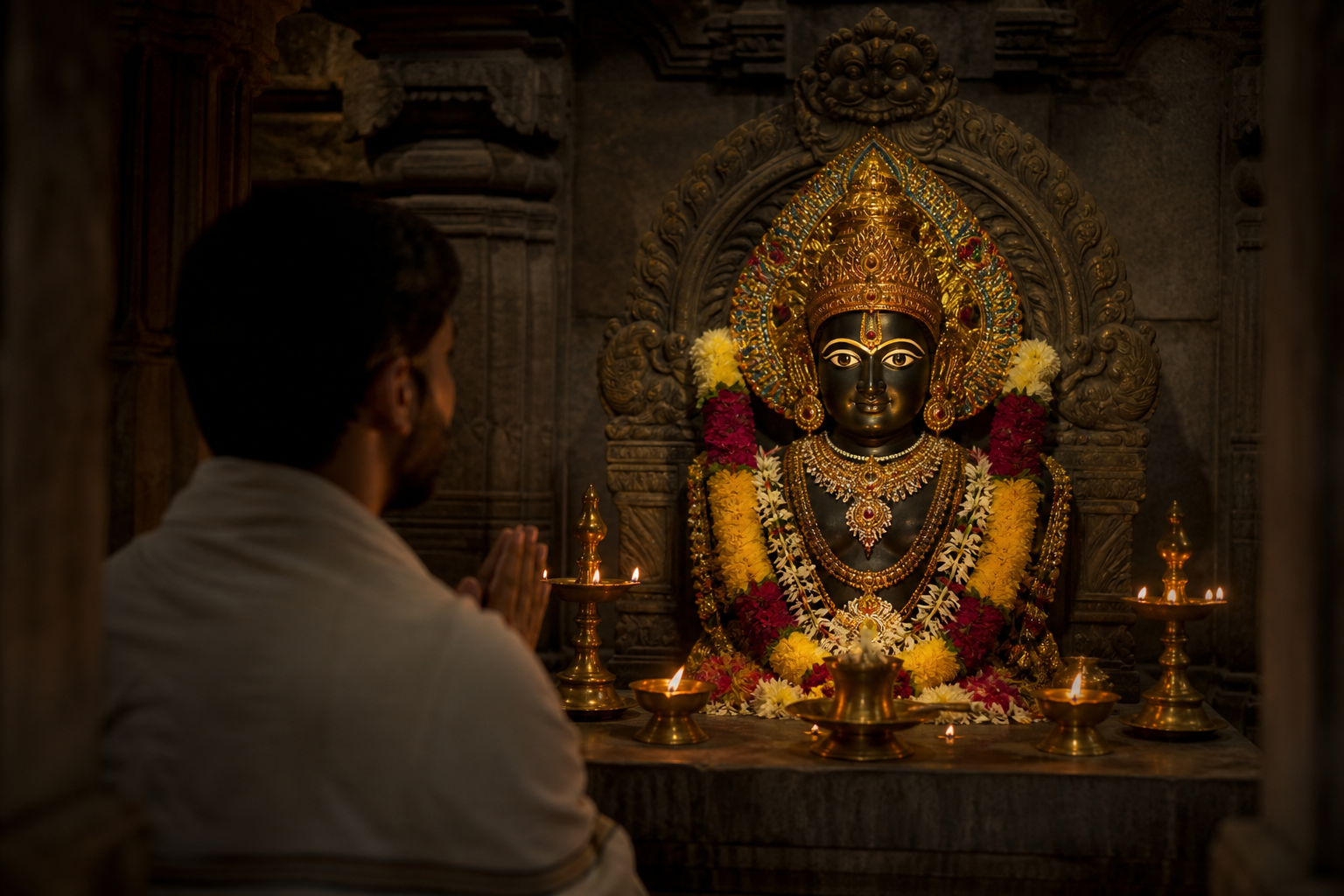
In an ordinary gallery encounter, you are the observer and the object is what you inspect. Darshan unsettles that one-way arrangement. A devotee comes to behold the deity and to be beheld. The murti’s eyes make this reciprocity visible.
This is why the gaze can feel central even when the eyes occupy little physical space. They establish relation. The deity is not imagined as an inert specimen that remains religiously untouched by the encounter. For the worshipper, standing before the murti is an act of presence, attention, and receptivity.
You do not have to imitate a devotee’s convictions to understand the category accurately. If you are visiting as a student, traveller, artist, or non-Hindu guest, begin by recognizing that others around you may not be looking at an object in the same way you are. That recognition should change your conduct: occupy the sightline briefly, lower your voice, and avoid turning another person’s moment of darshan into a photographic obstacle.
If you are approaching devotionally, resist the urge to catalogue every feature immediately. First see the whole form. Let your attention meet the eyes, then widen again to the face, hands, posture, ornaments, attendants, and sanctum. Iconographic analysis can deepen darshan, but it need not displace it.
Look differently in a temple and a museum
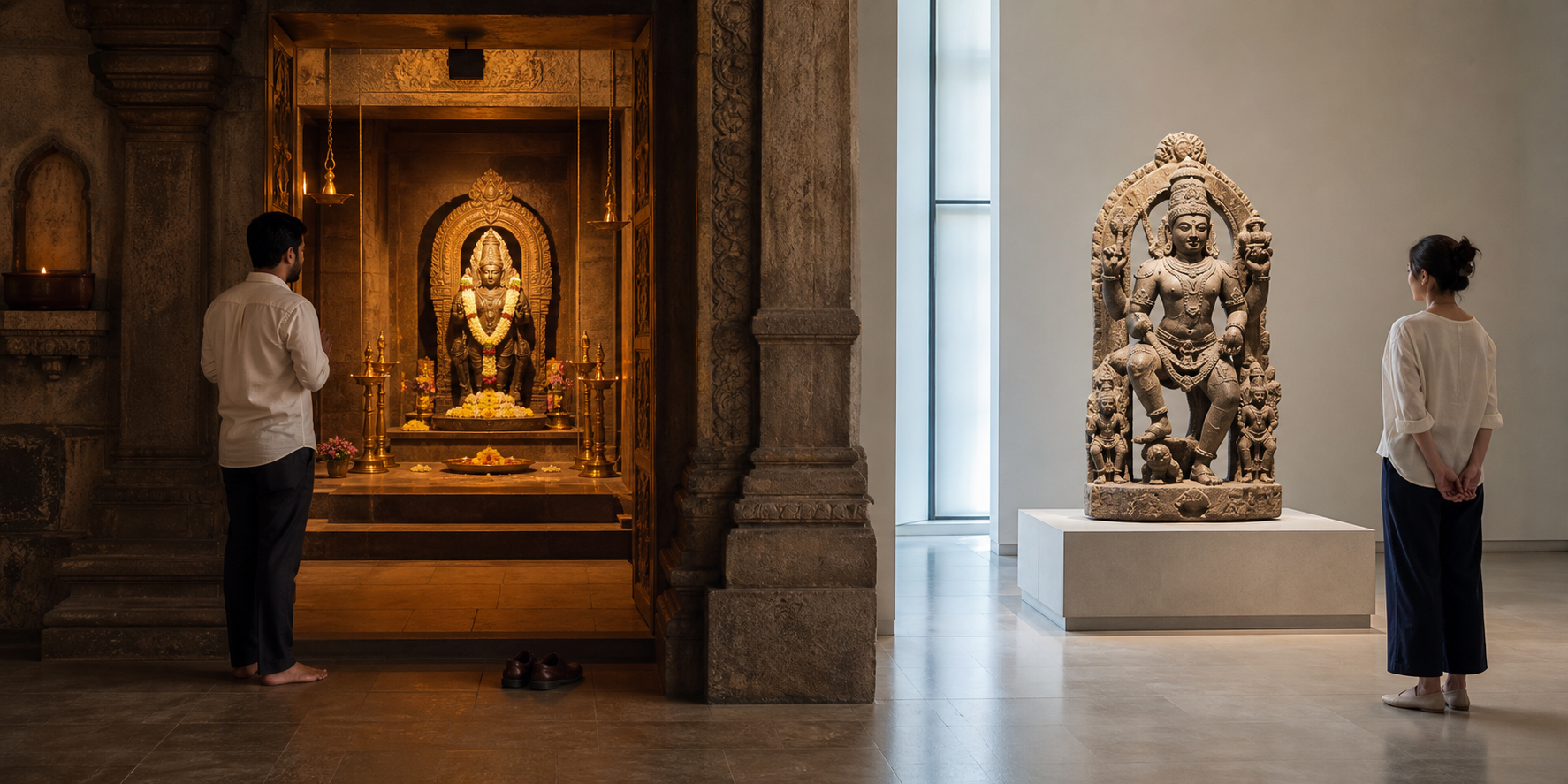
In an active temple
Local practice outranks a visitor’s assumptions. Pause before entering the immediate worship area and notice what regular devotees do. Signs, barriers, attendants, and the flow of the queue usually tell you more than a generic rule copied from another temple.
- Ask before photographing. A visible murti is not automatically available for photography.
- Do not touch the murti, altar, offerings, or ritual implements unless you are expressly invited.
- Keep the central sightline moving when others are waiting for darshan.
- Do not step past a threshold or barrier merely to obtain a clearer view of the eyes.
- Save detailed questions for a suitable moment; active worship is not always the right time to request an iconographic explanation.
In a museum or collection
A museum gives you time to study material, technique, date, and regional style, but it may also remove the image from the architecture, ritual actions, lamps, garments, flowers, sounds, and viewing distance that once shaped its encounter. Treat the display as evidence, not as a complete reconstruction of sacred use.
- Read the label for original location and function, not only dynasty, date, and material.
- Look for notes about consecration, temple use, excavation, removal, damage, or restoration.
- Change your viewing distance if the gallery permits. Features that seem exaggerated at arm’s length may have been made to remain legible from farther away.
- Inspect the eyes for surviving pigment or inlay before assuming the bare surface matches the sculpture’s earlier appearance.
- Compare the murti with related works in the same gallery, while remembering that formal similarity does not establish identical ritual status.
At your next encounter, do not begin with whether the face looks realistic or attractive. Establish the image’s status, read the eyes with the whole form, and notice what kind of relationship the gaze creates. In a temple, let that understanding become respectful conduct. In a museum, let it become a more disciplined way of seeing.
References
