
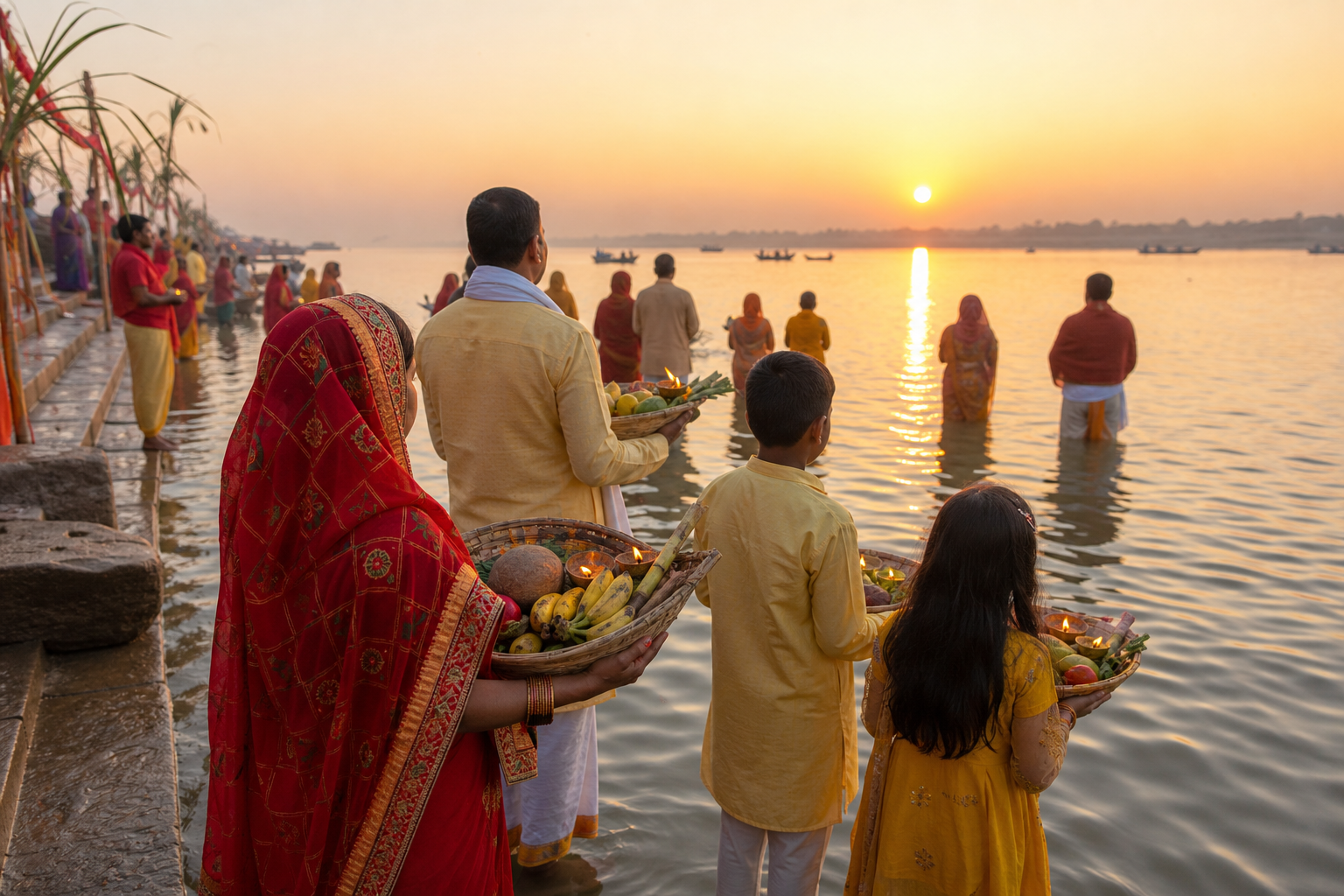
If you are arranging leave, preparing prasad, or taking your family to a ghat, fix two details before making the rest of the plan: the correct date and the location where you will offer arghya. In 2025, Sandhya Arghya falls on 27 October and Usha Arghya on 28 October, but their clock times depend on the local sunset and sunrise.
That distinction prevents the most common timing mistake. A time copied from Patna, Ranchi, Varanasi, Kolkata, or a social-media card may not be right for the place where you are standing. Use the four-day schedule below to set the dates, then calculate the two arghya moments from your own city’s solar timings.
Chhath Puja 2025 dates at a glance
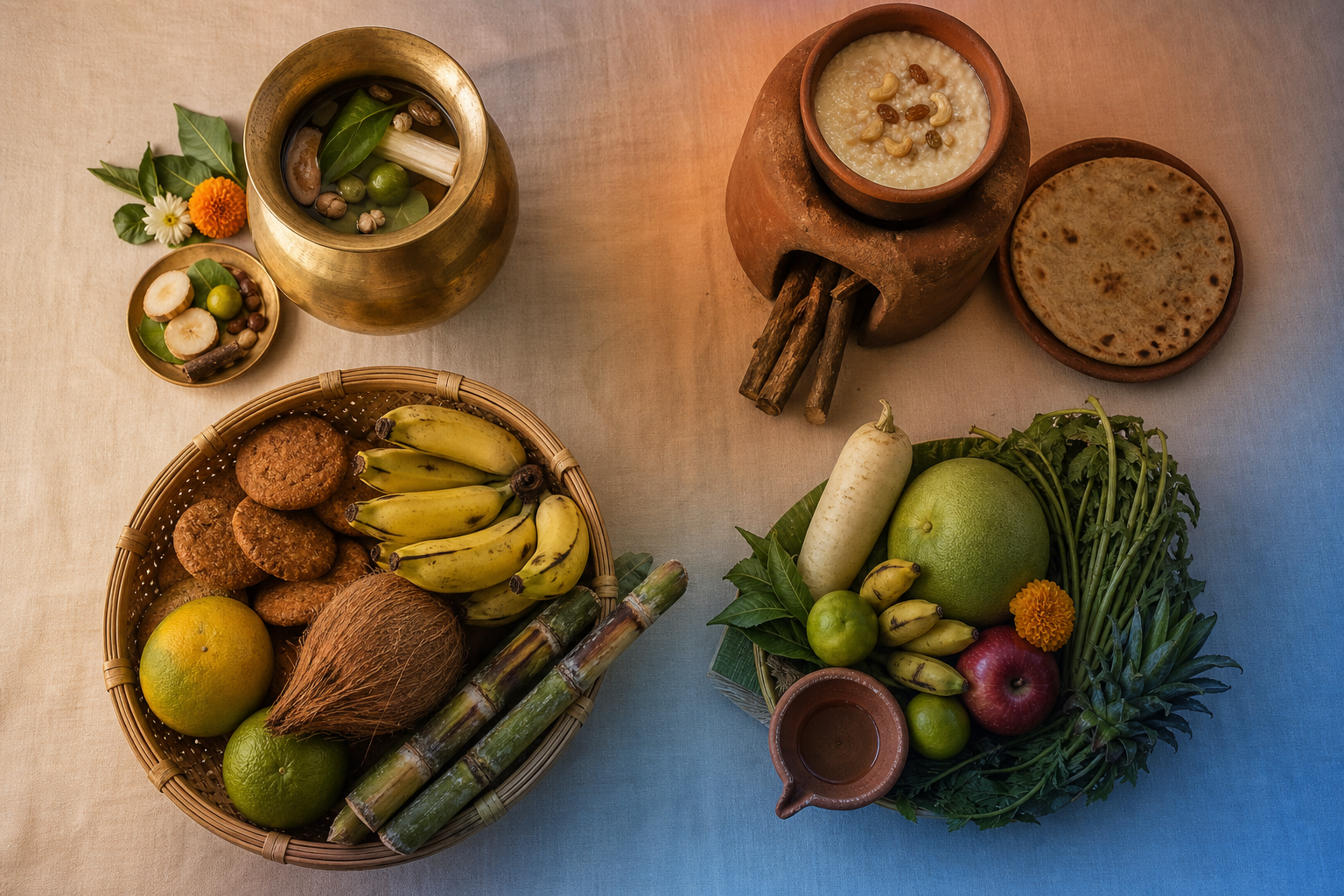
The observance proceeds from Kartik Shukla Chaturthi through Kartik Shukla Saptami. The four-day sequence is Nahai Khai, Kharna, Sandhya Arghya, and Usha Arghya. Each day prepares the vrati and household for the next; Chhath is not limited to the two public gatherings at the water.
| Date | Observance | Timing to follow | Main action |
|---|---|---|---|
| 25 October 2025 | Nahai Khai, also written Nahay Khay | Ritual bath before sunrise; sanctified meal later in the day | Purify the home and kitchen, prepare sattvic food, and begin the vrata |
| 26 October 2025 | Kharna or Lohanda | Evening, after the day’s fast | Offer and receive the traditional kheer-roti prasad |
| 27 October 2025 | Sandhya Arghya or Sanjhiya Arghya | At the sunset published for the place of worship | Offer arghya to the setting Surya |
| 28 October 2025 | Usha Arghya | At the sunrise published for the place of worship | Offer arghya to the rising Surya, then complete the vrata with parana |
Nahai Khai falls on 25 October 2025, establishing the first fixed point in the household calendar. Kharna follows on 26 October, before the two arghyas on 27 and 28 October. If your family tradition, temple, or community committee follows a regional panchang with a different instruction, settle that difference before beginning the vrata rather than changing calendars midway.
How to determine the correct arghya time in your city

Sandhya Arghya does not have one universal clock time for every devotee. It is offered at the local sunset on 27 October. Usha Arghya is similarly tied to the local sunrise on 28 October. The ritual moment is therefore a solar event, not an arbitrary hour or a broad all-day muhurta.
This remains true even within Bharat. Patna’s clock time should not automatically be transferred to Ranchi, Varanasi, or Kolkata. A family outside Bharat must use the sunrise and sunset for the city where the arghya will actually be offered, not the time in its ancestral village.
- Fix the worship location. Record the city and the specific ghat, lake, pond, reservoir, seafront, or community water space where your family will gather.
- Check the correct solar event. Find that city’s sunset for 27 October 2025 and sunrise for 28 October 2025 in a reliable local panchang or authoritative sunrise-sunset listing.
- Confirm the community arrangement. Compare the solar time with the notice from your temple, purohit, ghat committee, or local Chhath organizers. This is especially important where a community follows a particular regional panchang.
- Separate arrival time from arghya time. Road closures, security checks, parking, crowds, and the walk to the water can all delay entry. Reach the ghat early enough to arrange the soop and offerings before the solar disc approaches the horizon.
- Follow local safety directions. Administrators may announce entry periods or staggered access to control crowds. Treat those instructions as your planning window while keeping the actual offering aligned with the local sunset or sunrise as the community directs.
The visible solar disc at the horizon is the practical focus of both offerings. Weather and atmospheric conditions may affect visibility, so do not create a private alternative timing rule at the ghat. Follow the established direction of your family tradition, purohit, or organizing committee if the horizon is obscured.
Build the household observance around the two arghyas
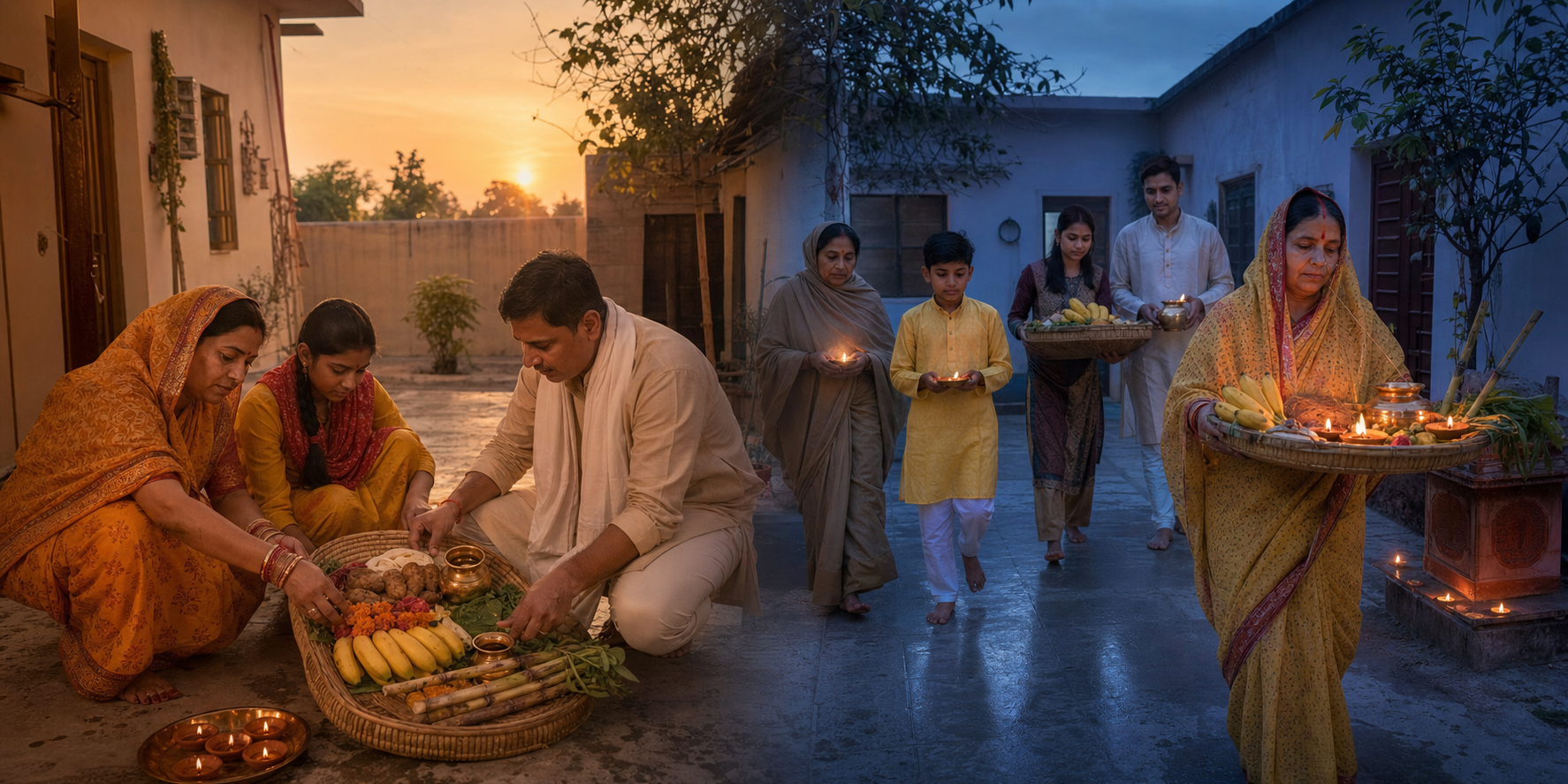
The easiest way to avoid a rushed Chhath is to work backward from local sunrise on 28 October. Once that time and the previous evening’s sunset are written down, place preparation, travel, food, and rest around them.
- 25 October: establish purity through Nahai Khai. The vrati bathes before sunrise in a clean river, pond, sea, or other appropriate water body. When that is not available, the bath may be performed at home with due sanctity. Clean the cooking space carefully and reserve clean utensils for the sattvic meal. Lauki Bhat or Kaddu-Bhat commonly combines bottle gourd with plain rice and may include chana dal, ghee, and rock salt while excluding onion, garlic, and heavy spices. Offer the meal as bhog to Surya before it is received as prasada.
- 26 October: keep Kharna uncluttered. The vrati observes the day’s disciplined fast and concludes it in the evening with a simple offering, commonly kheer and roti. Prepare the ingredients and clean utensils beforehand so that shopping, visitors, or ordinary kitchen activity do not disrupt the observance.
- 27 October: finish the soop before leaving for Sandhya Arghya. Arrange thekua, fruits, sugarcane, and seasonal offerings in bamboo baskets or soops. Check the sunset time again for the worship location, then leave early enough to pass through the announced entrance and settle at the water without haste.
- 28 October: plan the return to the ghat before dawn. Use the local sunrise, not the previous day’s sunset, to set the departure time. After Usha Arghya to the rising Surya, the vrati completes the observance through parana according to the family’s tradition.
This sequence gives Chhath its inner coherence. Purification on Nahai Khai leads into restraint at Kharna; restraint leads into gratitude at sunset; and the night’s vigil resolves in the offering to the rising sun. The vrata joins devotion to Surya Bhagawan and Chhathi Maiya with reverence for water, food, nature, family memory, and disciplined conduct.
Protect the vrata with practical ghat planning
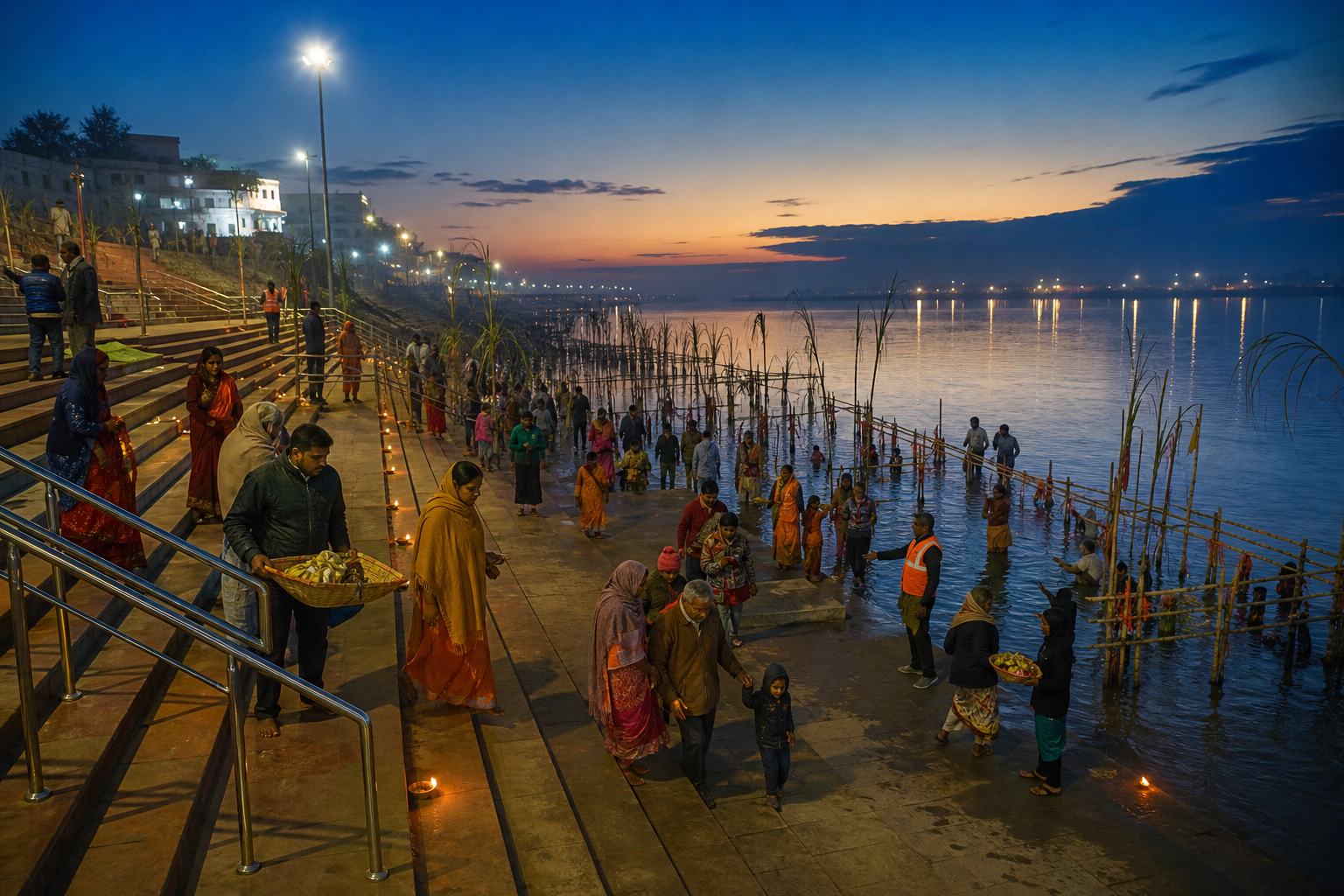
At a crowded ghat, small logistical decisions directly affect your ability to remain attentive during worship. Make these decisions before the first day rather than while carrying a loaded basket toward the water.
- Check the designated entrance, route restrictions, parking or drop-off arrangement, and the committee’s crowd-flow instructions for both 27 and 28 October.
- Review local notices about weather, water levels, lighting, and permitted access before each visit. Do not enter restricted water or bypass barriers in order to obtain a preferred position.
- Keep children, older relatives, and anyone needing assistance on a stable and approved approach to the water. Decide in advance who will carry each basket and who will remain free to help family members.
- Use bamboo baskets and biodegradable materials where possible. Avoid plastic at the ghat, and remove packaging or waste that came with your household.
- Wash and arrange fruits, sugarcane, and thekua before departure. Last-minute sorting at the water increases congestion and makes it easier to leave waste behind.
- Treat the fast as a vrata, not a test of bravado. A vrati with a health concern should seek appropriate healthcare guidance in advance and discuss any necessary adaptation with trusted family elders or spiritual guidance. Do not make an individual medical decision from a general festival schedule.
Cleanliness at the water is not separate from worship. Chhath expresses gratitude to the forces that sustain life, so leaving plastic, food packaging, or synthetic decorations behind contradicts the care embodied in the offerings themselves.
Chhath Puja 2025 timing questions
Is there one official arghya clock time for all of India?
No. The dates are fixed: Sandhya Arghya is on 27 October 2025 and Usha Arghya is on 28 October 2025. The clock time must match sunset and sunrise at the place where you worship.
Which location should a travelling family use?
Use the solar timing for the city where the arghya will physically be offered. Your home city’s time, your ancestral village’s time, and a forwarded timing card are irrelevant if you are observing at another location.
Can Nahai Khai be observed away from a major river?
Yes. A clean local water body can be used for the ritual bath, and a devotee without suitable access may bathe at home with the required cleanliness and devotional intent. Do not use an unsafe or polluted water body merely to imitate a riverbank setting.
When is the Chhath fast completed?
The four-day vrata concludes after Usha Arghya to the rising sun on 28 October. The vrati then performs parana according to the household’s established practice.
Write your local sunset and sunrise beside the two arghya dates now, then build travel and preparation backward from those moments. With that one page settled before Nahai Khai, your household can move through all four days without letting uncertainty at the clock disturb the vrata.
References
- DharmaRenaissance Blog – Chhath Nahai Khai 2025: Discover the Complete Guide to the Sacred Bath and Lauki Bhat
- DharmaRenaissance Blog – Chhath Puja 2025 Dates Explained: The Complete Guide to Rituals, Meaning, and Dharmic Unity
- DharmaRenaissance Blog – Complete Chhath Puja 2025 Muhurat Guide: Master Sandhya & Usha Arghya on 27-28 Oct
