
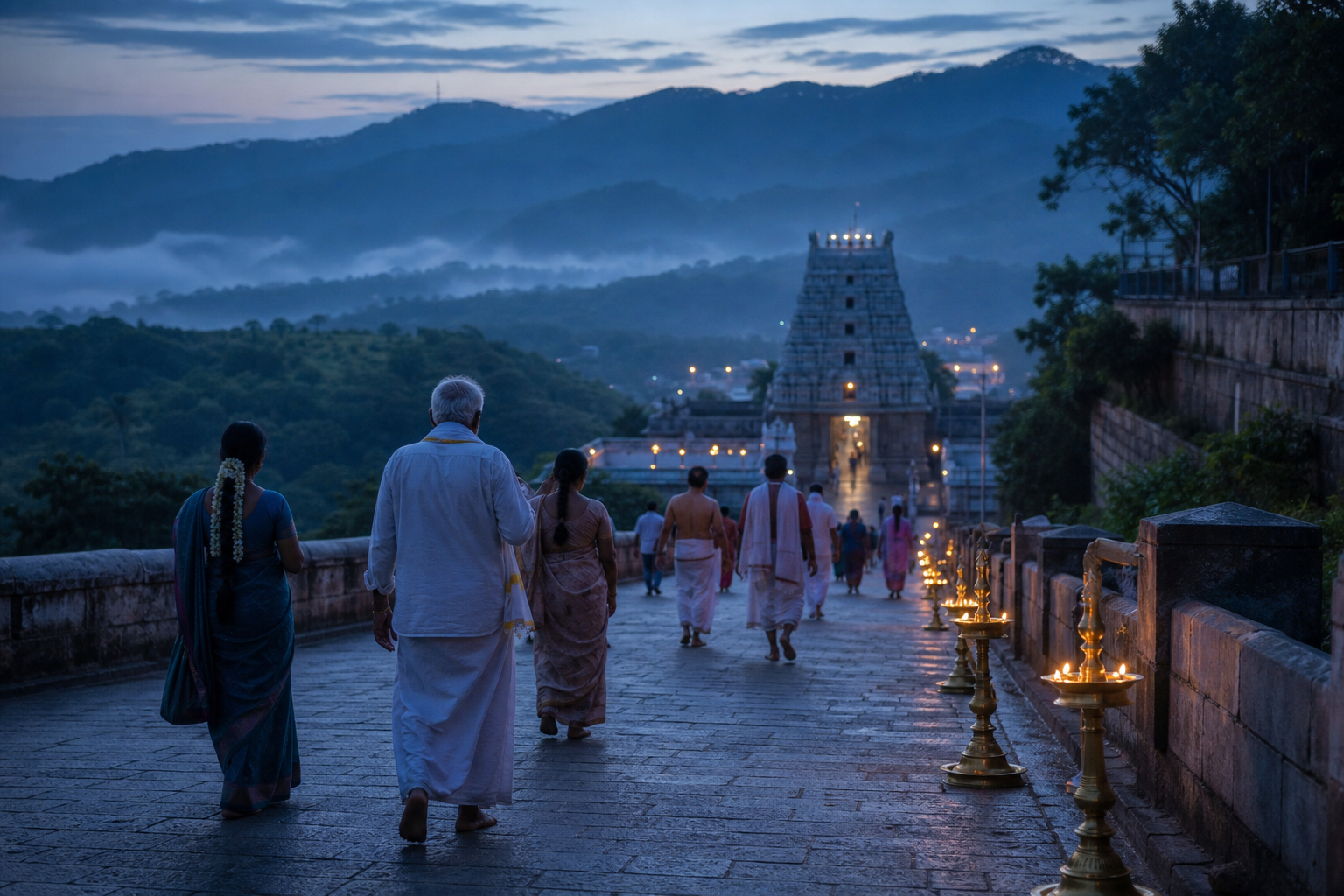
If you are planning a pilgrimage to Tirupati and Tirumala, the difficult question is not how many observances you can fit into the journey. It is which form of devotion you can enter with full attention. A homam at Sri Kapileswara Swamy Temple asks something different of you than a procession, mass bhajan or metla puja on the sacred hill.
You do not need to attend everything to make the pilgrimage meaningful. Choose one principal observance, understand its devotional grammar, follow the discipline of the setting and carry one part of it into daily life. That turns a crowded itinerary into a coherent act of sadhana.
Choose the devotional form before building your itinerary
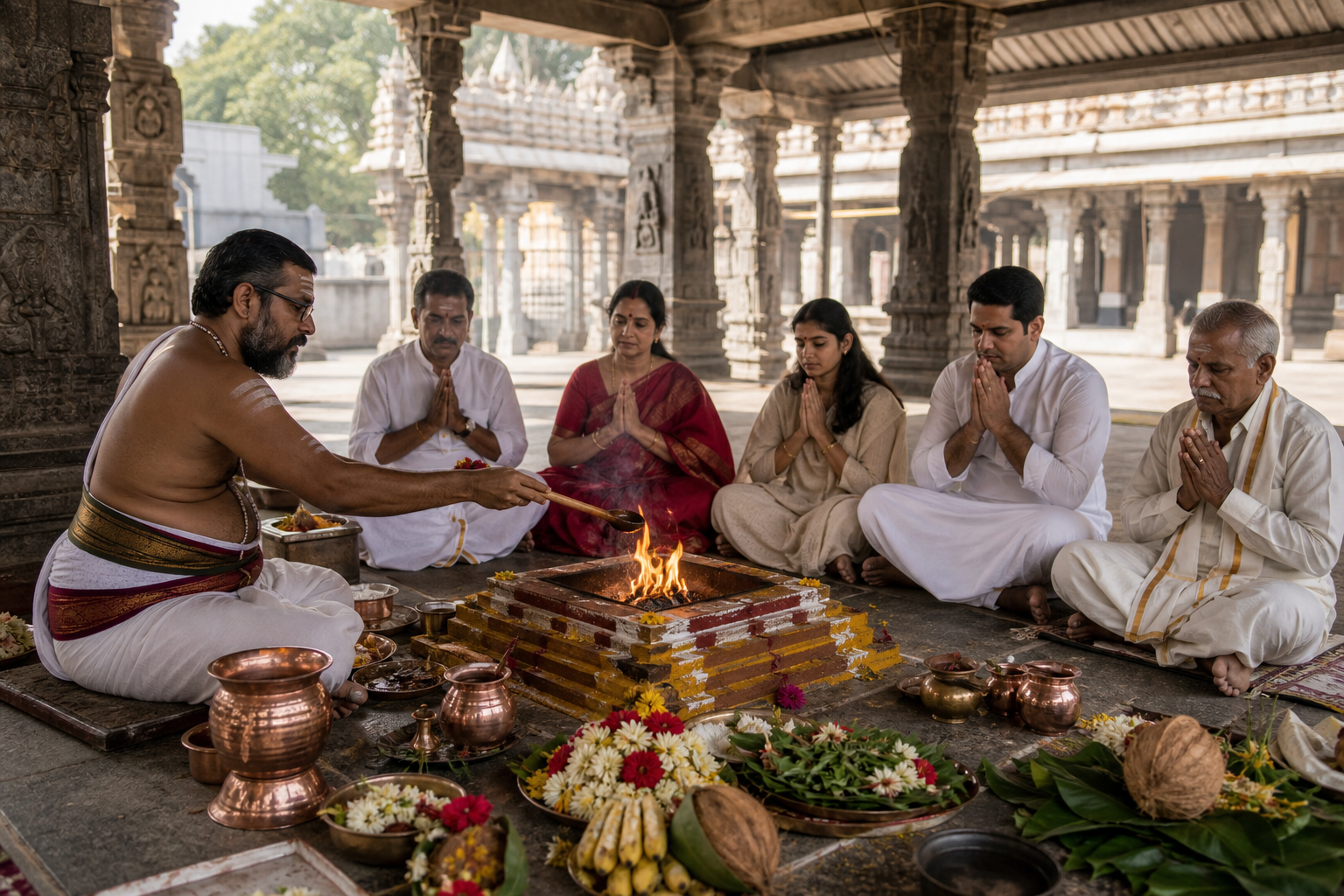
Tirupati-Tirumala observances often place two complementary modes of bhakti within the same pilgrimage landscape. One gathers attention around mantra, consecrated fire and precisely ordered offerings. The other gathers people through song, procession, sacred movement and seva. Neither mode is spiritually superior. They train different capacities.
A homam is the better anchor when you want a concentrated period of listening and contemplation. At Sri Kapileswara Swamy Temple in Tirupati, the Sri Subramanya Swamy Homam held from 24 to 26 October 2025 formed part of a month-long Kartika Masa program. Vedic chanting, the establishment of the sacred fire, and offerings of ghee and other sanctified materials gave the observance its disciplined rhythm.
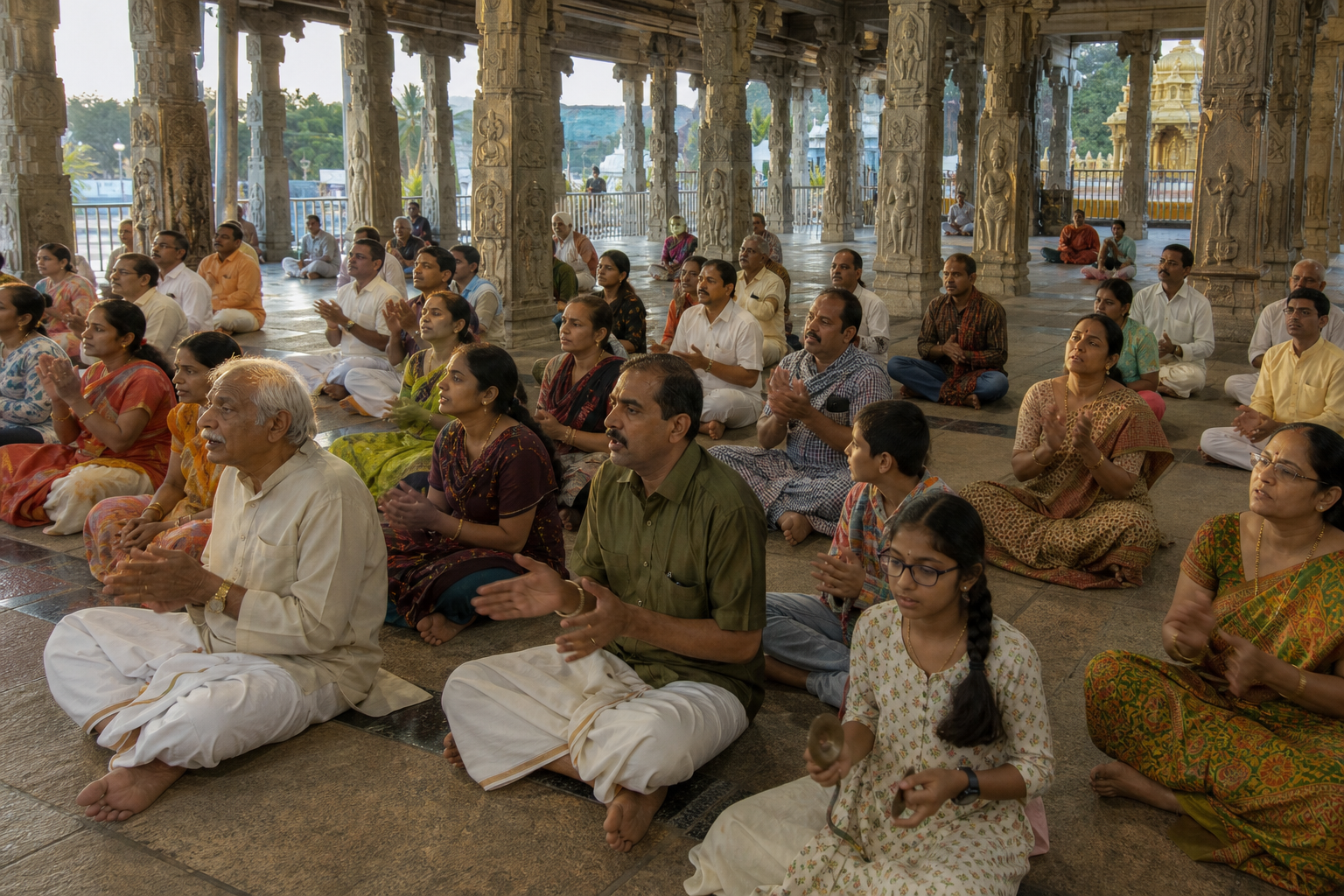
A festival such as Traimasika Metlotsavam is the better anchor when you want to encounter collective bhakti. The recurring observance of TTD’s Dasa Sahitya Project brings together shobha yatra, group bhajans and metla puja at Tirumala. Its 2025 celebration ran from 30 October to 1 November, with nearly 3,000 bhajan troupes traditionally participating from Andhra Pradesh, Telangana, Tamil Nadu and Karnataka. The scale matters because the worship is not merely performed in front of a crowd; disciplined collective singing is itself a principal devotional act.
Keep the locations distinct when you plan. The homam described above took place at Sri Kapileswara Swamy Temple in Tirupati, while Metlotsavam unfolded at the hill shrine of Sri Venkateswara in Tirumala. Do not treat the words Tirupati and Tirumala as interchangeable entries on an itinerary. Confirm the announced venue, date, timing and access instructions for the particular observance you intend to attend. A date from a previous cycle establishes the character of the tradition, not the schedule of the next one.
Enter each ritual according to what it asks of you
At a homam, make attention your offering
You do not have to understand every mantra to participate respectfully in a homam. You do need to resist turning the rite into background activity. Arrive early enough to settle before the sequence absorbs your attention. Maintain contemplative silence near the homa kunda, leave room for the ritual order to unfold and follow temple directions without improvising your own acts of worship.
Watch for the relationship among mantra, sacred form and action. In the traditional vocabulary of homa, these can be understood as sound, form and disciplined kriya working together. The fire is not a decorative centrepiece, and the offerings are not isolated gestures. Repetition, sequence and consecrated intention bind the parts into one act.
The deity also gives the observance an ethical orientation. Subramanya, also revered as Skanda or Murugan, is associated with courage, wisdom and protection. That makes the question after the ritual more exact than a general hope for blessings: where does your life require courage governed by clear understanding?
The 2025 Kartika schedule made this relationship unusually visible. Three days of Subramanya Swamy Homam were followed on 27 October by Dakshinamurthy Swamy Homam, oriented toward knowledge, contemplation and right understanding. Read devotionally, the sequence prevents valour from becoming mere force and knowledge from becoming passive abstraction. Courage needs wisdom; wisdom must eventually guide action.
At Metlotsavam, practise collective discipline
Traimasika Metlotsavam changes the devotional posture. The shobha yatra makes reverence visible through procession. Bhajans transmit the Dasa Sahitya tradition through shared melody, rhythm and response. Metla puja directs worship toward the sacred steps, turning ascent into an expression of humility, perseverance and gratitude.
If you belong to an organised bhajan troupe, your discipline includes coordination with the group and the event’s arrangements. If you do not, listening is still genuine participation. You can remain attentive, pray silently or undertake orderly seva without pushing yourself into a role that has not been assigned to you. In a gathering of this size, restraint protects both devotion and the movement of other pilgrims.
The sacred steps also correct a common pilgrimage habit. A pilgrim can become so focused on reaching the destination that every intervening stage feels like an inconvenience. Metla puja asks you to notice the path itself. The step beneath you is not merely something to clear; it can become the place where pride gives way to gratitude.
Turn a temple event into a practice you can sustain
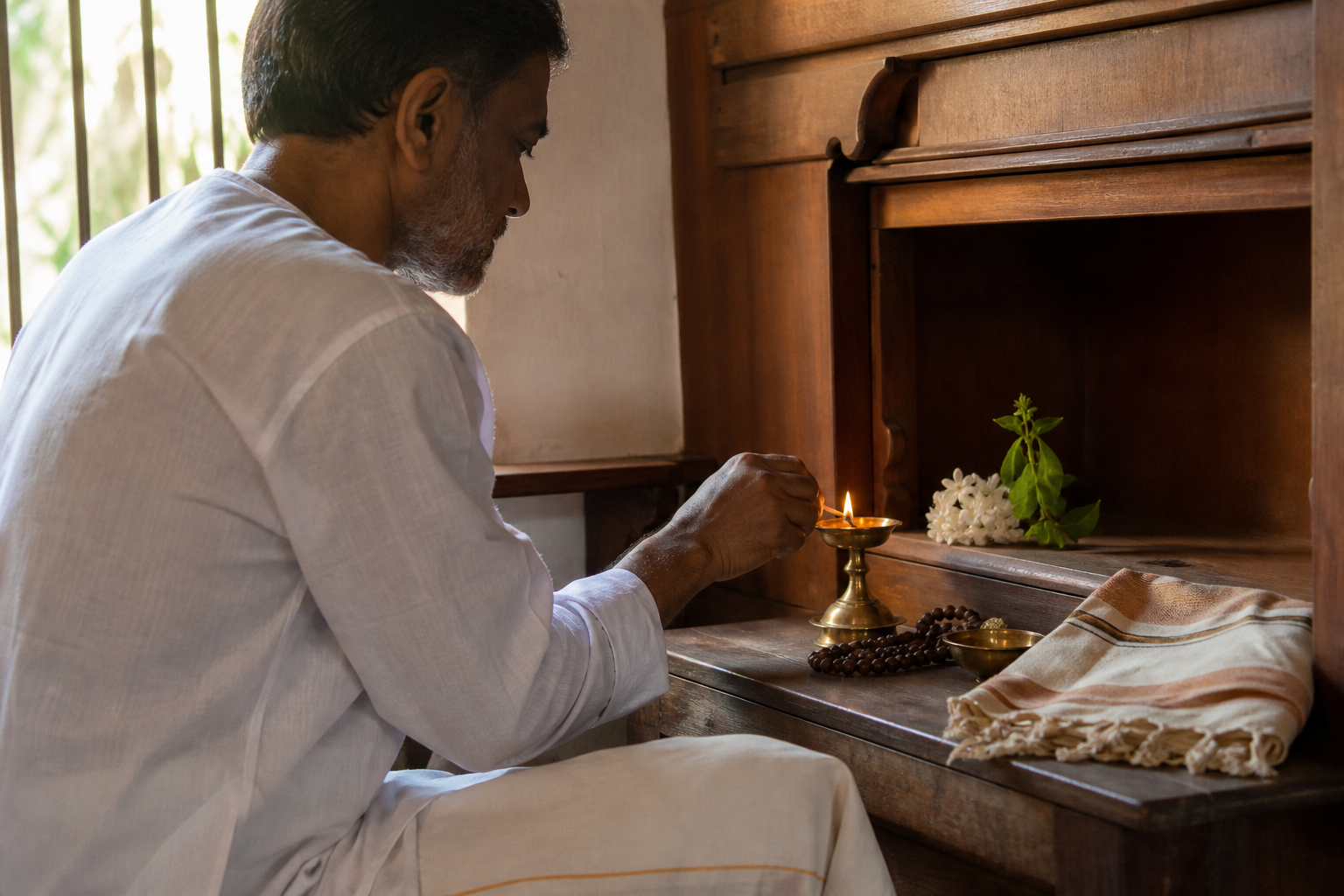
Kartika Masa is associated with intensified devotion, self-discipline and concern for collective welfare. That does not mean you must construct an elaborate private regimen around every temple event. A smaller observance kept consistently is usually more honest than an ambitious vow abandoned as soon as the journey ends.
Use a three-stage approach:
- Before the observance, name the virtue. For Subramanya worship, that may be courage joined to wisdom. For metla puja, it may be humility and perseverance. For collective bhajan, it may be the willingness to subordinate your individual voice to shared devotion.
- During the observance, choose one discipline. Keep silence at the homam, listen without distraction during the bhajans, move with the procession as directed or perform the seva available to you. Do one thing wholeheartedly instead of several things restlessly.
- After the observance, retain one daily act. Devotees commonly complement Kartika worship with deepa lighting, scriptural recitation and charity. Select the practice you can actually continue, and connect it to the virtue you identified before the visit.
This movement from intention to action is the ethical heart of the observance. Mantra, music and pilgrimage should not remain sealed inside a sacred interval. They should refine how you speak, restrain harmful impulses and increase your readiness to serve. Nonviolence, self-restraint and seva give devotion a form that remains visible after the lamps, fire or music have receded.
Families can make the same movement together. Before attending, explain the central virtue in one clear sentence so that the day is not experienced merely as a series of crowds and ceremonies. Afterward, ask each person to name one element they noticed: the cadence of a mantra, the order of the offerings, the discipline of a bhajan group or the reverence shown to the steps. Then choose one modest family practice, such as shared deepa lighting, recitation or charity. This gives intergenerational devotion a concrete continuation rather than leaving it as a pleasant memory.
The wider Dharmic significance lies here as well. Hindu, Buddhist, Jain and Sikh traditions do not share identical rites, and their differences should not be blurred. They do, however, give serious weight to disciplined intention, ethical conduct, self-restraint and the welfare of others. A Hindu homam or bhakti procession can therefore strengthen respect across the Dharmic family without pretending that every path uses the same ritual language.
Key takeaways for a respectful pilgrimage
- Choose one principal observance rather than measuring the pilgrimage by the number of events you enter.
- Distinguish the concentrated silence of a homam from the collective discipline of bhajan, procession and metla puja.
- Confirm the current venue, date, timing and temple instructions; a previous year’s calendar is not a current announcement.
- At a homam, arrive early, maintain silence near the sacred fire and allow the ordered relationship of mantra and offering to hold your attention.
- At Metlotsavam, participate through an assigned group, attentive listening, silent prayer or orderly seva; you do not need to become a performer to be a devotee.
- Carry home one sustainable practice: deepa lighting, scriptural recitation, charity or another discipline linked to the virtue you contemplated.
Before you settle your next Tirupati-Tirumala itinerary, write one sentence completing this thought: “I am attending this observance to cultivate…” Let that answer determine the event you prioritise, your conduct while you are there and the practice you keep when you return home.
References
- DharmaRenaissance Blog — Essential Guide: Subramanya Swamy Homam at Kapileswara Temple, Tirupati: Dates and Significance
- DharmaRenaissance Blog — Discover Traimasika Metlotsavam 2025 at Tirumala: Complete Guide to Dates and Rituals
