
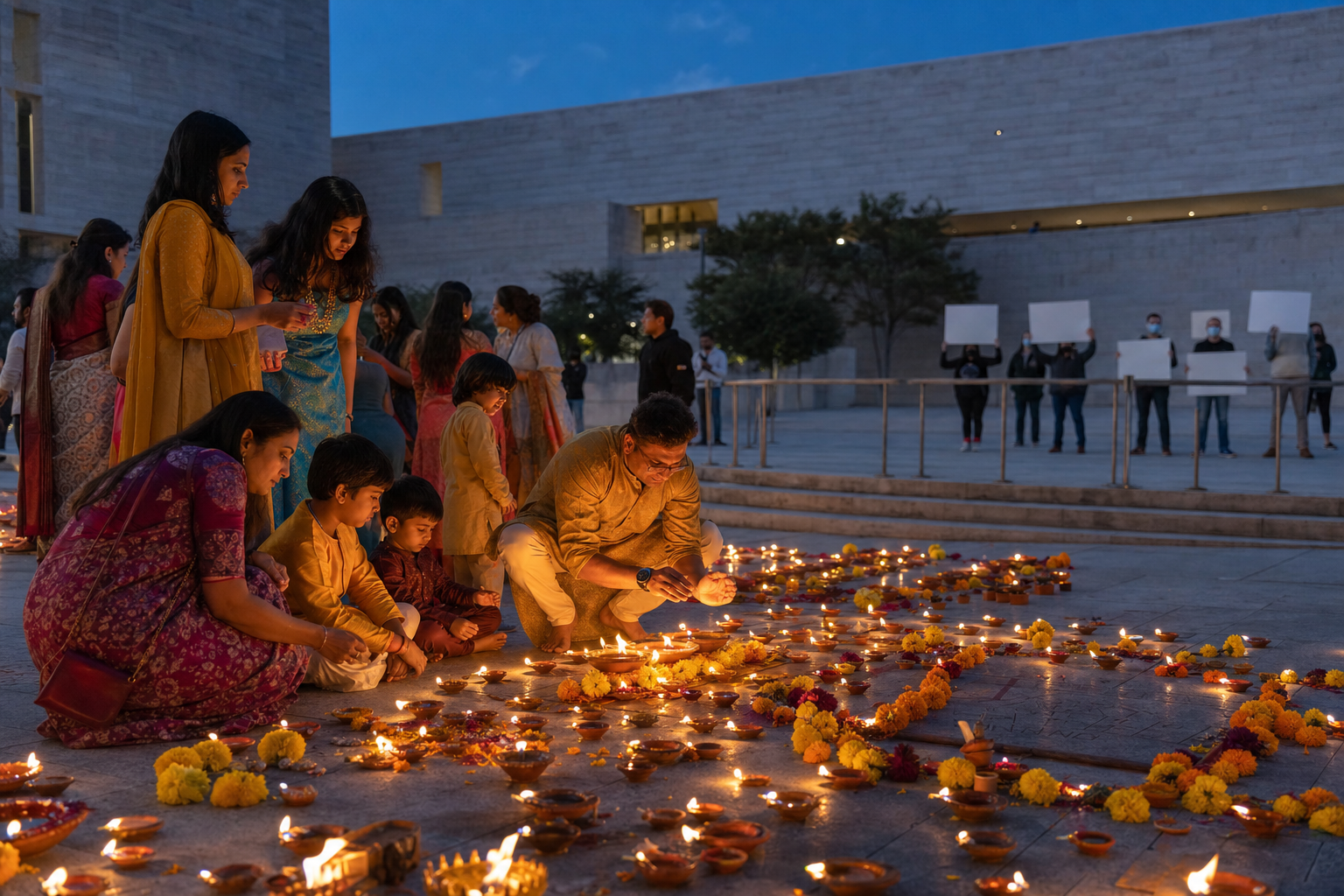
If reports of the Texas anti-Diwali protest left you angry, your next move matters more than your sharpest reply. The useful response is disciplined: preserve the evidence, distinguish religious contempt from an immediate threat, protect the people celebrating, and require civic institutions to apply equal standards.
A small group of masked protesters in Texas reportedly described Diwali as “garbage”. That is sufficient reason to condemn the disparagement. It is not, by itself, evidence about the size of a wider movement, the responsibility of an entire political constituency, or whether a prosecutable offense occurred. Precision protects Hindu families from danger without giving a fringe provocation more power than the verified facts justify.
Key takeaways
- Call anti-Diwali contempt what it is, but make claims only about conduct and affiliations you can verify.
- Preserve original files, links, exact language, chronology, and witness accounts before a viral repost strips away context.
- Do not treat Hinduphobia and a hate crime as interchangeable labels. One describes religious hostility; the other requires a fact-specific legal assessment.
- Put safety before argument when harassment, intimidation, obstruction, damage, or a specific threat accompanies the speech.
- Build the long response around confident Diwali observance, Dharmic cooperation, interfaith allies, civic education, and clearly assigned incident roles.
Name the harm without exaggerating the evidence
Hinduphobia is contempt, prejudice, exclusion, or hostility directed at Hindus because of their religious identity, or at Hindu institutions, symbols, and practices as a way of stigmatizing the people who value them. When contempt for Diwali is used to tell Hindu families that their public presence is inferior or unwelcome, the term is appropriate.
The term becomes less useful if it is applied to every disagreement involving a Hindu person. Someone can criticize a ritual, theological claim, organization, or government policy without expressing hatred toward Hindus. The practical test is not whether a statement caused offense. Ask what was targeted, what was actually said, and what conduct accompanied the words.
- Identify the target. Was the speaker disputing an idea, insulting Diwali, demeaning Hindu people, or trying to exclude a celebration from a shared public space?
- Record the exact content. Preserve the words rather than replacing them with a more dramatic paraphrase. Include surrounding remarks when they change the meaning.
- Describe the conduct. Note whether the participants remained at a distance, approached families, followed individuals, blocked access, damaged anything, or made a threat.
- Verify claimed affiliations. A slogan, sign, or partisan phrase is relevant evidence, but it does not prove that a political party, religious community, or wider population organized or endorsed the incident.
This discipline is not timidity. “Masked protesters disparaged Diwali” is a strong statement when that is what the evidence shows. “Texas rejects Hindus” would convert the behavior of a small group into an unsupported accusation against millions of people. The first formulation exposes bigotry. The second invites an argument about exaggeration and lets the original conduct escape scrutiny.
Apply the same rule to partisan framing. If political rhetoric appeared at the protest, document it accurately and ask relevant leaders to reject religious disparagement. Do not assign collective guilt to everyone who shares a voting preference. Hindus gain credibility when we demand one consistent civic principle: no community should be demeaned or intimidated for celebrating its faith.
Draw a bright line between insult, harassment, and threat
An ugly insult and a safety emergency are not the same event. Offensive expression can remain legally protected even when it is morally indefensible. Threats, targeted harassment, intimidation, physical interference, or violence can change the legal and operational situation. Whether a particular incident crosses a legal threshold depends on its facts and the applicable jurisdiction, so obtain qualified legal or civil-rights guidance when the answer matters.
Hinduphobia and hate crime should therefore not be used as synonyms. Hinduphobia describes the prejudice or hostility you are confronting. A hate-crime determination concerns unlawful conduct and the role of bias in that conduct. Bias can be evidence in a legal inquiry, but the presence of bias does not, on its own, settle the legal classification.
Use the following table as an operational triage tool, not as a legal verdict:
| What you observe | Immediate priority | What to preserve |
|---|---|---|
| Mockery or disparagement without a threat | Keep the gathering calm, decide whether a factual public response will help, and avoid a shouting match. | The original recording, exact words, location, visible signs, surrounding context, and source link. |
| Repeated targeting, following, or direct harassment | Move the targeted person away, alert event or venue personnel, and assign someone other than the target to document. | A chronology, separate witness accounts, identifying details visible in public, and every report made. |
| A specific threat or intimidating approach | Do not debate the speaker. Create distance, contact the appropriate authorities, and use emergency services if danger is immediate. | The unedited message or footage, the exact threat, when and where it was delivered, and who received it. |
| Physical interference, property damage, or violence | Protect people first, avoid disturbing potential evidence, and report the conduct promptly. | Images from a safe position, witness information, damage records, and the reference number for any official report. |
Do not turn children or frightened witnesses into public spokespeople. Ask permission before publishing a witness’s name, face, telephone number, or account. A community can document an incident without exposing families to further targeting. Keep an unedited master copy of every file and work from duplicates when preparing clips for public release.
Build the incident record before building the campaign
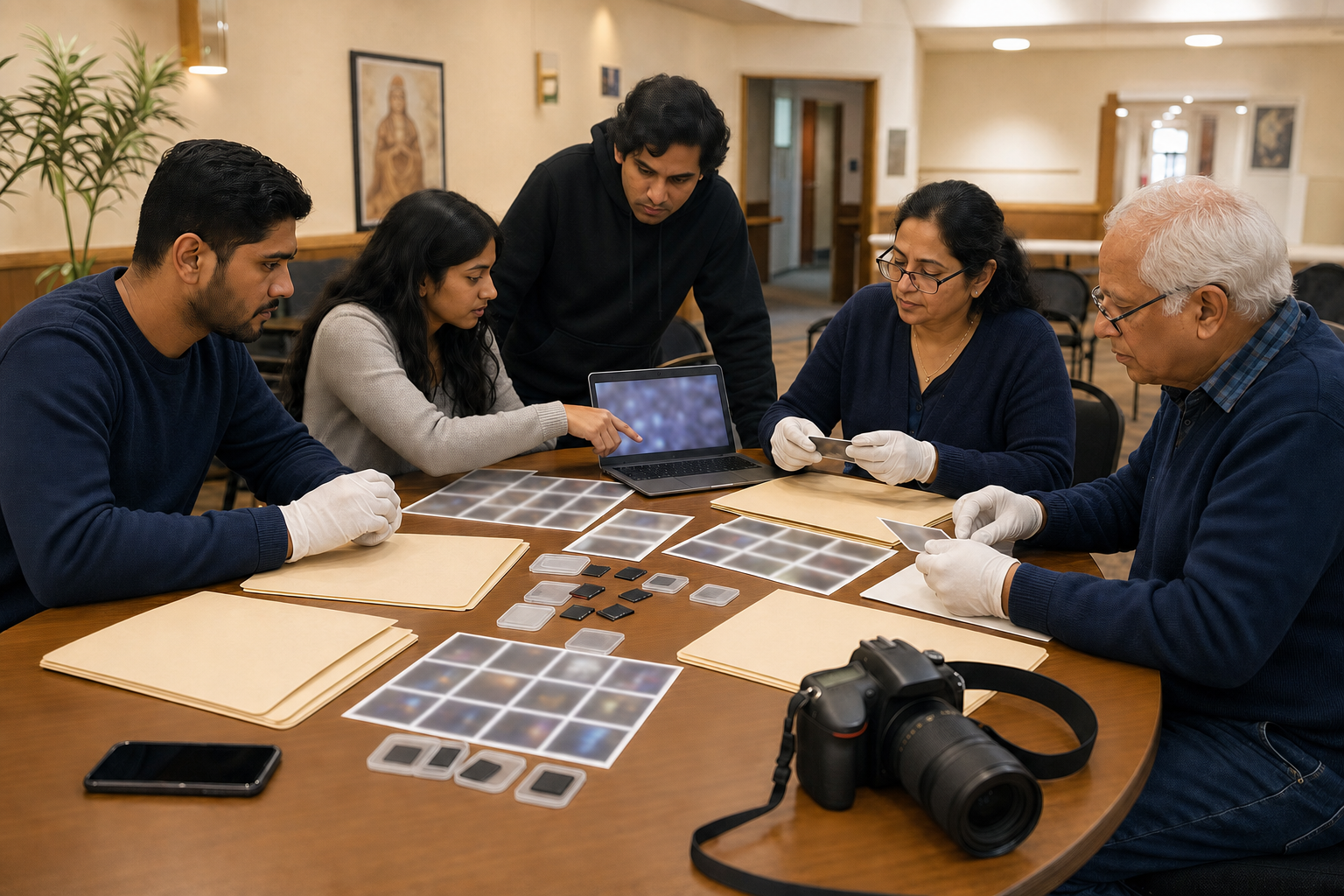
Online outrage moves faster than verification. A cropped clip may remove the words immediately before a confrontation, lose the original location, or merge observation with speculation. Once an inflated claim becomes the movement’s headline, correcting it can look like retreat. Establish the record first.
- Save the original material. Retain the original video, photograph, message, caption, account link, and surrounding public context. Do not edit or overwrite the master file.
- Write a factual chronology. Separate what a witness directly saw or heard from what that person inferred. Record uncertainty instead of filling gaps.
- Collect accounts separately. Independent recollections are more useful than a group statement produced after witnesses have compared memories.
- Assess the safety channel. Route an immediate danger to emergency services, suspected unlawful conduct to local authorities, event disruption to organizers or venue management, and discrimination concerns to an appropriate civil-rights organization or qualified adviser.
- Choose one public point of contact. Give that person the verified chronology, approved media, current safety status, and the community’s specific request.
- Correct the record when necessary. If a detail changes, state what changed and why. Quietly deleting an error leaves opponents free to define the correction as concealment.
Public statement template: “At [verified place or event], [verified conduct] occurred. Disparaging or intimidating people because they celebrate Diwali violates the equal dignity Hindu families should receive in public life. We have preserved the available evidence and contacted [relevant organization or authority]. We ask [named institution or leader] to take [specific, lawful action], and we will publish corrections if further verified facts change this account.”
The request at the end matters. Ask a venue to explain its safety response, an elected representative to condemn anti-Hindu hostility, a school board to protect equal participation, or an investigating body to provide a case or reference number. “Do something” is easy to acknowledge and ignore. A named decision-maker and a defined action make follow-up possible.
Set firm boundaries around retaliation. Do not publish private addresses, encourage harassment, speculate about employers or relatives, or answer religious contempt with racial and religious slurs of your own. Such conduct can harm uninvolved people, create new safety risks, and shift public attention from the original wrongdoing to the response. Ahimsa here is not passivity; it is refusing to injure indiscriminately while taking proportionate action against verified conduct.
Answer exclusion by widening Diwali’s civic presence
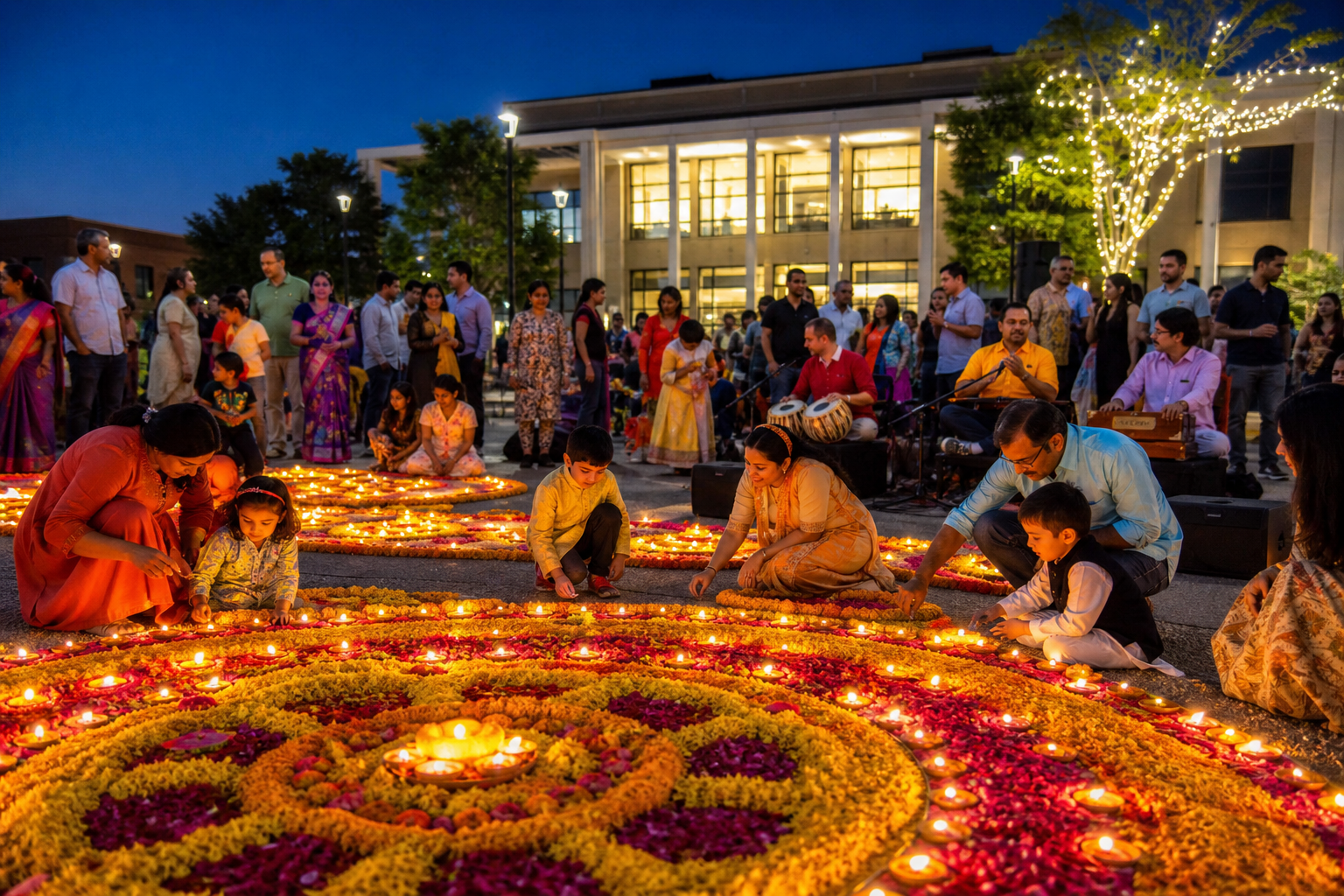
Public education is not a condition Hindus must satisfy before receiving basic respect. It is a strategic choice that can prevent a hostile group from defining Diwali for everyone else. The strongest answer to “your festival does not belong here” is a celebration that is visibly rooted, well prepared, and supported by neighbors who understand what they are defending.
A temple or community center can invite a synagogue, church, gurdwara, school, or civic association to co-host an open house without diluting Hindu practice. Keep the program concrete:
- Let a Hindu host explain Diwali through its ethical meaning – light over darkness, responsible action, renewal, family, and community – rather than reducing it to food and decoration.
- Invite Jain, Sikh, Buddhist, and other Dharmic participants to speak from their own traditions where appropriate. Cooperation does not require pretending that every lineage observes the festival identically.
- Ask an interfaith ally to state the civic principle plainly: Hindu neighbors possess the same right to gather, worship, celebrate, and be safe as every other religious community.
- Give attendees a clear route for reporting harassment or a safety concern. Put a designated contact on the event material instead of improvising after trouble begins.
- Connect celebration with service. A locally chosen service activity demonstrates dharma through conduct and creates relationships that remain after the lamps and decorations are put away.
Brief city councils, school boards, venue managers, and local officials before a major public observance. A useful briefing sheet explains what the gathering is, where it will occur, what activities are planned, what safety concern exists, and who has authority to speak for the organizers. Ask for normal procedures to be applied fairly, not for officials to endorse Hindu theology or grant exceptional privilege.
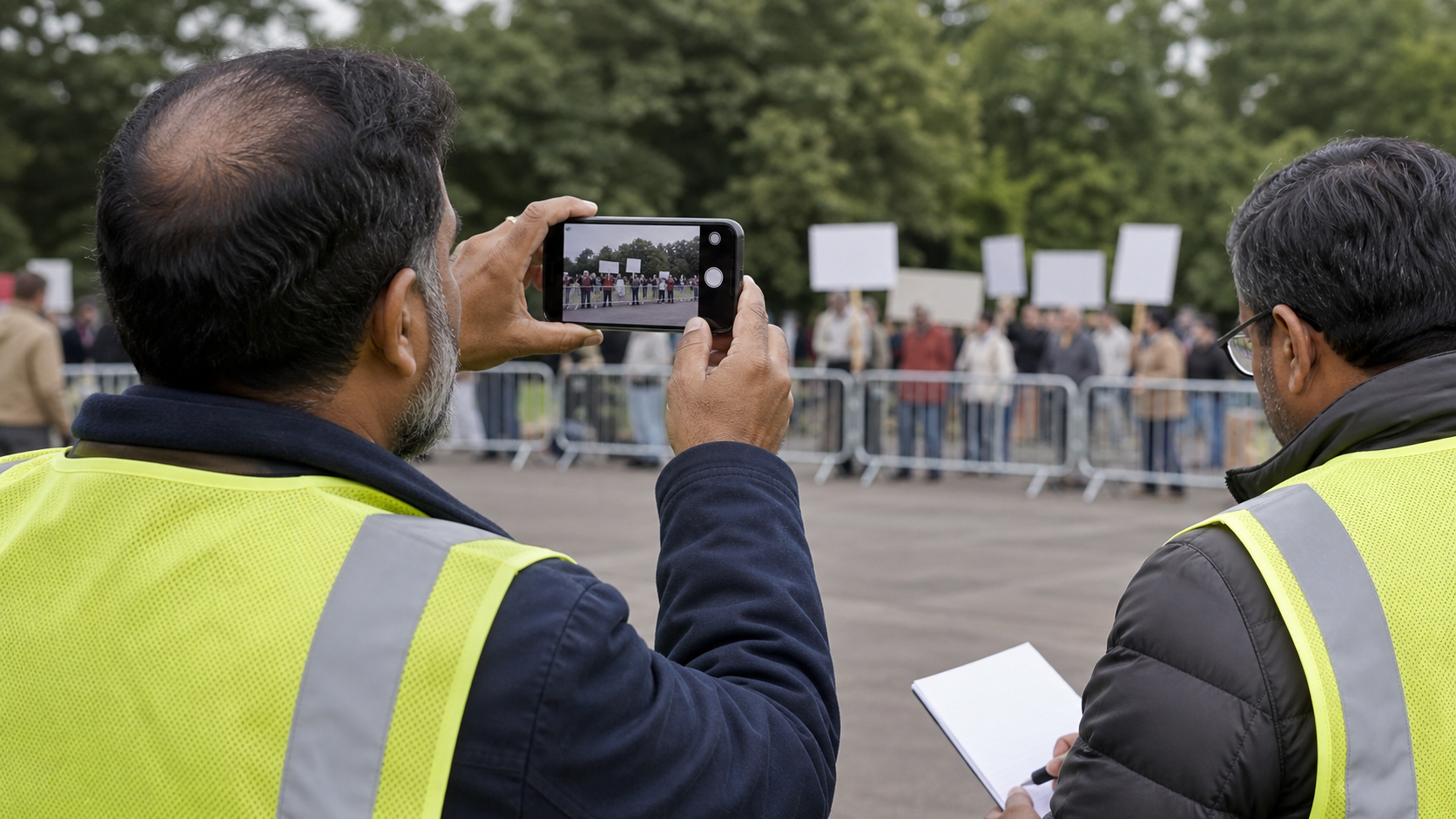
Prepare volunteers as deliberately as you prepare the program. Decide in advance who will preserve evidence, who will contact venue staff, who will guide families away from a confrontation, and who will answer journalists. Volunteers should know that documenting is not the same as provoking a better camera angle. No recording is worth moving closer to a person who appears dangerous.
Interfaith solidarity also works best when it is reciprocal. Hindu organizations should defend the same public dignity for synagogues, churches, mosques, gurdwaras, Jain centers, Buddhist communities, and people with no religion. Consistency makes the case against Hinduphobia harder to dismiss as a demand for special treatment. It also turns a festival partnership into a durable civic relationship.
Before your next public Diwali gathering, put the documentation lead, safety contact, spokesperson, venue liaison, and community partners into the organizer’s brief. Then walk through one question together: if hostile protesters appear, what does each person do first? That small act of preparation lets Hindu families celebrate confidently while denying provocateurs control of either the space or the story.
References
