

Perhaps a bereavement, diagnosis, dismissal, betrayal, or sudden loss of standing has made the future feel smaller overnight. In that condition, being told simply to be fearless is not useful. You need a way to steady the mind without denying what happened, and then to decide what dharma asks of you now.
Dharmic resilience is not emotional numbness. It does not require you to call suffering unreal, pretend that every outcome is welcome, or explain another person’s pain as deserved karma. It means that fear does not become sovereign. Pain may be present, but it does not get to choose your values, your speech, or your next action.
Separate what happened from what fear is predicting

A reversal usually arrives twice. First comes the event itself: a death, illness, broken relationship, financial setback, public defeat, or loss of control. Then comes the mind’s rapid forecast: everything is ruined, nothing will be safe again, or no meaningful action remains. The event may be irreversible. The forecast is still a forecast.
Begin with three sentences. Write them if you can:
- The fact is…
- My mind is predicting…
- The duty still available to me is…
Keep the first sentence observable. The appointment was cancelled is a fact. No one will ever help me is a prediction. I must contact the person responsible, tell the truth, and arrange the next step is a duty. This separation does not guarantee a good outcome. It prevents an imagined future from disguising itself as present reality.
If your body is highly agitated, postpone large interpretations. Breathe slowly for one to three minutes, using an even rhythm such as four counts in and four counts out if that is comfortable. Do not force or hold the breath. The immediate purpose is modest: lower the intensity enough to recover your capacity to choose.
Next, identify the kind of suffering in front of you. Grief needs space, ritual, and companionship. Moral confusion needs discernment. A practical emergency needs concrete action. Repetitive nighttime fear needs a calming routine. Treating all four as one vague spiritual problem is how people end up chanting when they need to make a call, arguing when they need to mourn, or making irreversible decisions while panicked.
Acceptance is equally easy to misread. To accept that something has happened is to stop bargaining with the fact of it. It is not approval of injustice, surrender to adharma, or a promise to remain passive. Clear action begins when you can see the actual field on which you must act.
Use dharma as a decision rule when fortune turns

When external certainty disappears, dharma gives you a question more useful than How do I get my old life back immediately? Ask instead: What is the right action available in the life that exists now? That question moves attention away from status and toward character without making you indifferent to consequences.
The Ramayana makes this distinction unusually concrete. Rama moves from heir-apparent to forest exile in a single night, yet does not allow the loss of position to decide his conduct. Bharata refuses to turn another person’s dispossession into his own legitimacy. Sita preserves dignity and discernment through radical changes of circumstance. Vibhishana places dharma above the demands of lineage. Ravana shows the opposite danger: power and brilliance cannot protect a person who rejects restraint and wise counsel. These turns of fortune expose character rather than manufacture it on the spot.
You can turn those examples into a five-question screen for a difficult decision:
- What do I know? Separate verified facts from suspicion, humiliation, and anticipated judgment.
- What role is actually mine? A parent, leader, friend, citizen, caregiver, or practitioner has duties, but not unlimited control.
- Which option reduces needless harm? Ahimsa is not passivity. It asks you to avoid cruelty, retaliation, and avoidable damage while still protecting what must be protected.
- What truth am I tempted to hide? Fear often offers short-term relief through denial, blame, or exaggeration. Satya removes those exits.
- Whose counsel would make me more honest? Seek someone who is not dependent on flattering you and who understands both the practical situation and the values at stake.
Then choose the smallest action that is both ethical and real. It may be documenting what occurred, apologising without defending yourself, declining an unjust benefit, asking for help, keeping a commitment, or refusing to retaliate. If an action is irreversible and no immediate safety issue requires it, wait until your attention is steadier and obtain relevant counsel.
This is not a promise that dharma will restore the same position, relationship, or comfort. Rama’s conduct does not erase the exile. Sita’s integrity does not make captivity harmless. Dharma protects the quality of your participation when control of the result has been taken away. That is a harder claim than positive thinking, but it is also more dependable.
Let the Dharmic view of death deepen life, not silence grief
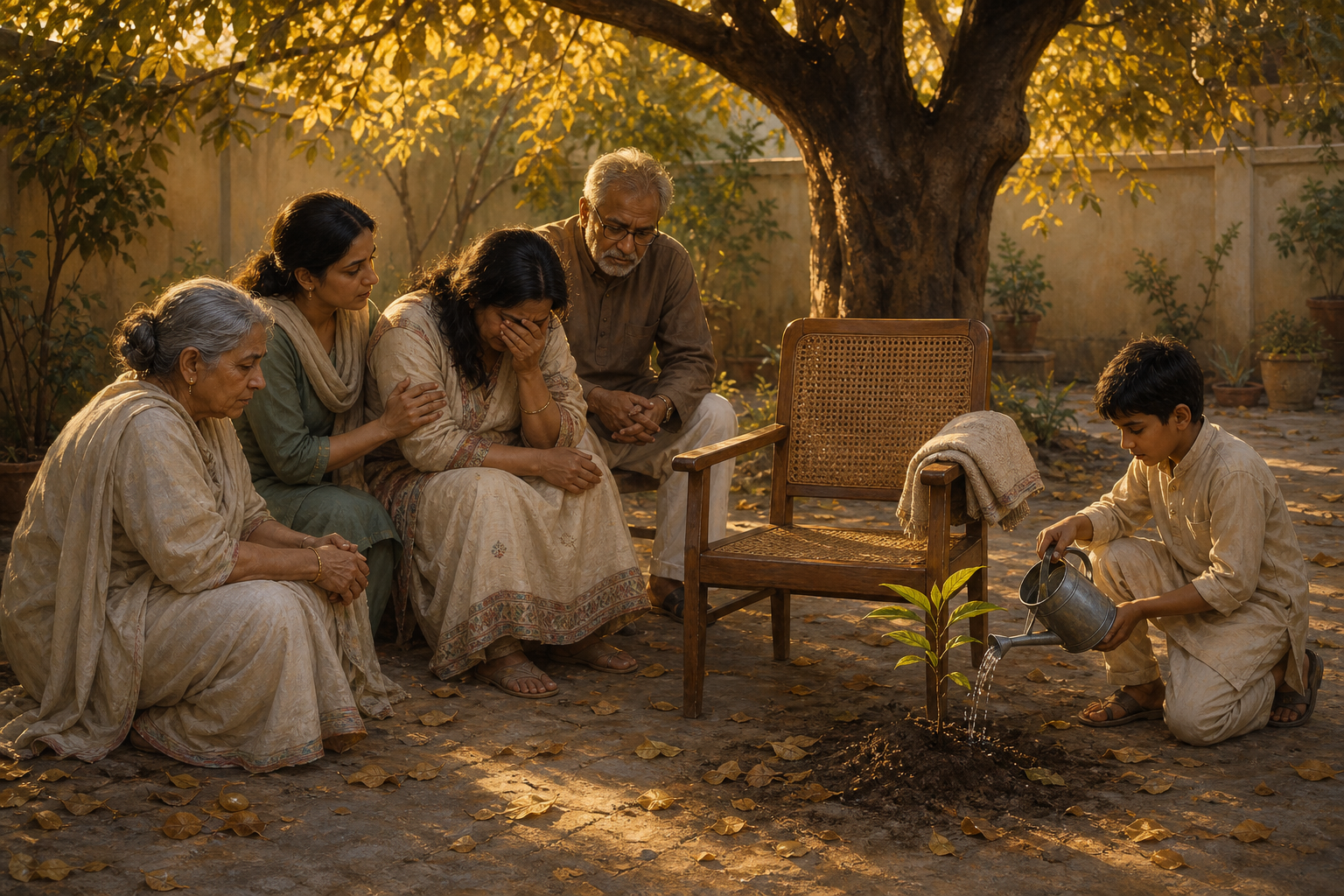
Fear of death intensifies when the whole person is identified with the body, social role, possessions, and remembered history. Hindu thought widens that identity. The Bhagavad Gita 2.22 compares the embodied self’s change of form to putting aside worn garments and taking up new ones. Within the wider framework of atman, samsara, karma, and moksha, bodily death is a transition rather than the annihilation of the deepest self.
That teaching is not a demand that you feel serene on command. Metaphysical conviction and human grief can coexist. You can affirm continuity and still miss a person’s voice. You can perform antyesti and remembrance rites while feeling disoriented. You can trust a sacred order and still need the community to sit beside you.
If you are grieving, four boundaries help protect that space:
- Do not use karma to speculate about why the person suffered or died. Your immediate duties are compassion, truthful remembrance, ritual care, and support for the living.
- Do not mistake non-attachment for an absence of love. Vairagya releases possessiveness; it does not erase relationship or gratitude.
- Let rites and community give form to days that otherwise feel formless. A meal, prayer, remembrance, visit, or shared silence can carry duty when words cannot.
- Resume ordinary responsibilities gradually and honestly. Grief and dharma are not rivals; caring for dependants, accepting assistance, and keeping necessary commitments can become expressions of remembrance.
If you are facing your own mortality, move the teaching from speculation into conduct. Ask what truth still needs to be spoken, what resentment can be released, what responsibility has been neglected, and where service remains possible. A life organised around ahimsa, satya, responsibility, study, and seva reduces the burden of avoidable remorse. The most credible preparation for death is not a last-minute performance of certainty. It is the character you rehearse while choices are still available.
The Dharmic traditions should not be collapsed into one doctrine here. Hindu traditions speak in varied ways about atman, rebirth, and moksha. Buddhism trains attention on anicca, the impermanence of conditioned experience, rather than simply restating the Hindu account of an enduring self. Jain practice joins karmic accountability to ahimsa and aparigraha. Sikh wisdom meets fear through alignment with hukam, remembrance, nirbhau, and the resilient spirit of chardi kala. Their metaphysical vocabularies differ, but each asks you to loosen the grip of ego, act ethically, and meet change through disciplined awareness rather than panic.
Choose the vocabulary native to your path instead of collecting comforting phrases from every tradition. Depth creates resilience. A mantra, teaching, vow, or form of remembrance becomes dependable when it has been practised before the crisis and understood within its living ethical context.
Train fear on ordinary days and before sleep

A crisis reveals the habits of attention already in place. If the mind has practised returning from distraction, a frightening thought is less likely to become an unquestioned command. If you have practised truthful self-review, humiliation is less likely to drive concealment. If you have served others, reversal is less likely to reduce your world to your own threatened status.
Build a small rule of practice that you can continue on an unimpressive day. It should include attention, understanding, ethics, and relationship:
- Attention: sit with the breath, practise mindfulness, japa, simran, or another discipline grounded in your tradition.
- Understanding: use svadhyaya to stay close to a short passage of scripture rather than consuming spiritual material without reflection.
- Ethics: review where fear distorted your speech or conduct, and decide on one repair.
- Relationship: maintain satsanga and perform concrete seva. Isolation makes private predictions feel final; trustworthy community restores proportion.
Night deserves particular care because unstructured attention can turn fear into rumination and disturbing imagery. A simple pre-sleep sequence of breath, mantra, and mindful attention gives the mind a stable object without requiring you to suppress every thought.
- Reduce screen exposure during the final hour before bed, and keep the room dark and cool.
- State a plain intention: rest safely tonight and meet tomorrow with clarity.
- Breathe evenly for one to three minutes. A four-count inhalation and four-count exhalation is one option if it feels natural.
- Repeat Om Namah Shivaya or Jai Gurudev softly or inwardly for three to five minutes, or for about 108 repetitions. If another established practice belongs to your tradition, use that instead.
- Conclude with an image of light or compassion. Once you lie down, return gently to the breath or mantra whenever fearful imagery resumes.
The point is consistency, not spiritual strain. Do not turn the routine into a test that you have failed whenever sleep remains difficult. Breath awareness, Buddhist metta, Jain pratikraman, Sikh simran, and Hindu japa are not interchangeable techniques, but each can place the unsettled mind inside a disciplined pattern of recollection and ethical orientation.
Contemplative practice must not be used as a substitute for appropriate care. If nightmares persist, intensify, or are connected with trauma, consult a qualified mental-health professional; structured therapy can accompany spiritual practice. If fear of death includes thoughts of harming yourself or an inability to remain safe, seek emergency or crisis support and tell a trusted person immediately. The next dharmic action in that moment is to protect life, not to manage the danger alone.
Key takeaways: what to do in the next difficult hour
- Steady the breath before making a sweeping interpretation of what happened.
- Separate the verified fact, the mind’s prediction, and the duty still available.
- Use dharma to choose conduct, not to demand a guaranteed outcome.
- Accept reality without approving injustice or surrendering to adharma.
- Make room for grief; do not weaponise karma or non-attachment against yourself or another person.
- Practise attention, study, ethical repair, and service before the next reversal arrives.
- Use professional or emergency support when fear, trauma, or danger exceeds what contemplative practice can safely hold.
Before this day ends, complete two sentences: The fact is… and My next dharmic action is… Keep the action small enough to perform: make the call, tell the truth, sit for japa, accept assistance, or keep the duty already in front of you. Fear may remain after you act. It simply will not have made the decision.
References
- DharmaRenaissance Blog — Essential Dharmic Insights to Transform Fear of Death: A Complete Hindu Guide
- DharmaRenaissance Blog — Proven Ramayana Lessons on Fortune’s Turns: Master Resilience, Dharma, and Equanimity
- DharmaRenaissance Blog — Proven Nighttime Practices to Transform Bad Dreams: An Essential Guide to Peaceful Sleep
